
Overview
Athboy sits on the gentle banks of the Yellow Ford River, about 15 km west of Navan and 50 km north‑west of Dublin. The town’s name – Áth Buí in Irish, meaning “yellow ford” – reflects its origins as a river crossing point that grew into a bustling agricultural market centre. Framed by low‑lying woodlands and the rolling County Meath countryside, Athboy feels both intimate and central to the wider Boyne Valley, making it an ideal base for exploring ancient sites, lively festivals and authentic Irish hospitality.
History
Athboy’s story stretches back to the sixth century A.D., when Druidic settlements occupied the nearby Hill of Ward (Tlachtga). The hill is famed as the original site of the Samhain feast, the precursor to modern Halloween, where ancient Celts lit the first bonfires to mark the turning of the year. In medieval times the town became a walled stronghold of the Pale; remnants of the town walls can still be seen behind St James Church of Ireland, which incorporates a 14th‑century Carmelite priory tower. The town’s strategic importance is underscored by the 1643 capture by Eoin Roe O’Neill and the 1649 encampment of Oliver Cromwell’s army on the nearby Hill of Ward.
Athboy also played a political role as a constituency in the Irish House of Commons from 1613 until the 1800 Act of Union. The Bligh family, later Earls of Darnley, dominated local landownership throughout the 18th and 19th centuries, shaping the town’s built environment and agricultural landscape. In 1909 the townspeople, through the Town Tenants League, collectively purchased their homes and businesses, a rare example of community‑led land reform in Ireland.
What to See & Do
Athboy Heritage Trail
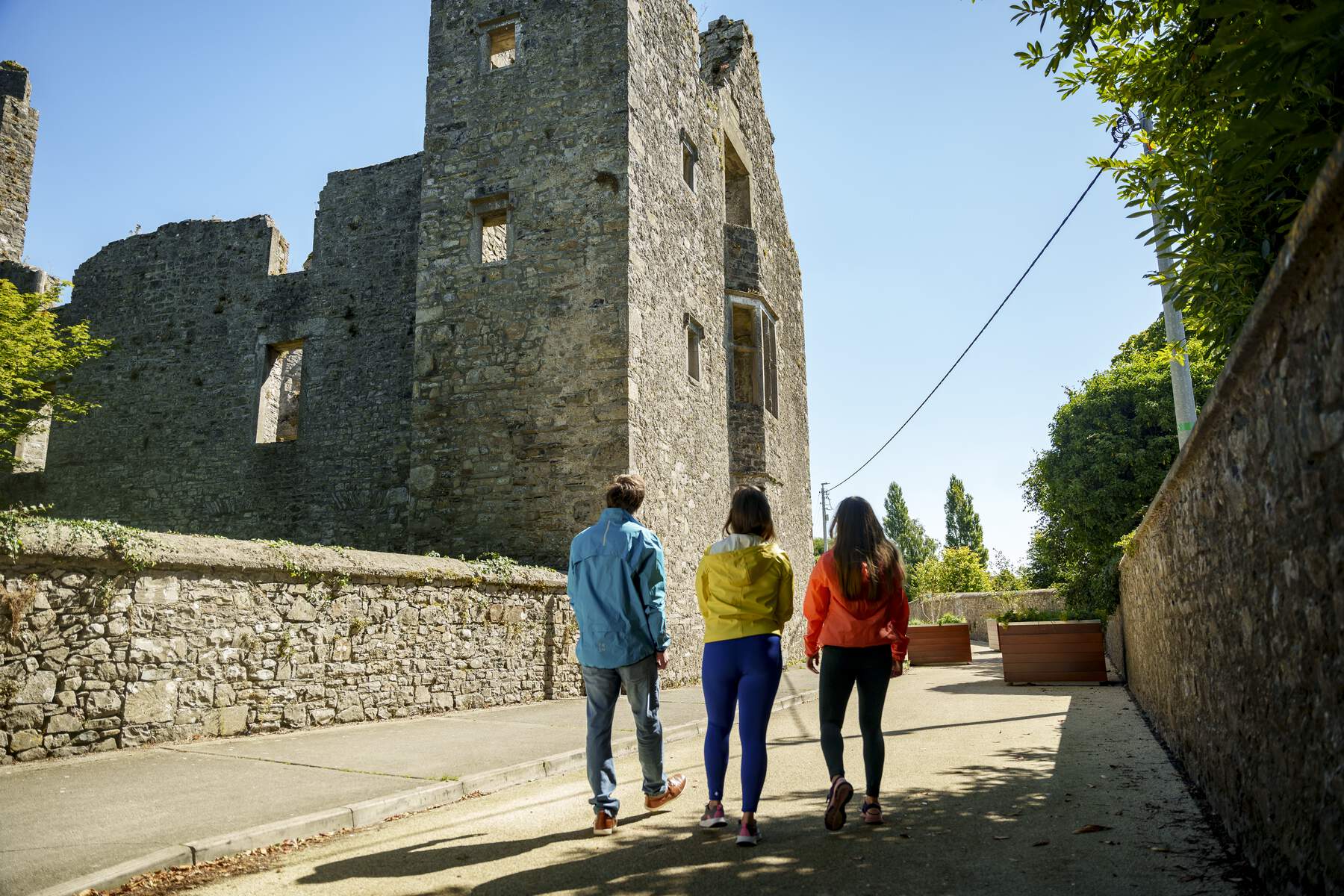
The self‑guided Athboy Heritage Trail is a 30‑minute walk that strings together thirteen key points of interest, each highlighted on a downloadable brochure (see the link below). Highlights include:
- St James Roman Catholic Church – a striking 19th‑century building that dominates the Fair Green.
- The Old Darnley Lodge Hotel – a historic inn that now offers comfortable accommodation.
- The Church of Ireland grounds – home to the medieval tower and town‑wall remnants.
- The Metal Footbridge and Engine House of the former railway station – reminders of Athboy’s once‑busy rail link.
- The Fair Green – the meeting point for the Living History Walking Tour and the site of the annual Blue Jean Country Queen Festival.
- The Hill of Ward (Tlachtga) – a short drive out of town, this ancient hill is the heart of Samhain celebrations; guided walks often include a stop at the statue of the Celtic goddess Tlachtga.
Download the Athboy Heritage Trail brochure
Living History Walking Tour
For a deeper immersion, the Living History Walking Tour, led by actress‑guide Fiona Dalton who embodies the goddess Tlachtga, offers a two‑hour narrated experience. The tour starts at the Tlachtga statue on the Fair Green, weaves through the town’s medieval sites, and includes a refreshment stop at a local hotel. Participants must be over 12 years old and wear sturdy walking shoes.
Festivals & Events
- Blue Jean Country Queen Festival – held each June Bank Holiday weekend, this lively competition draws contestants from across Ireland and abroad.
- Flame of Samhain Festival (launched 2018) – celebrates Athboy’s link to Halloween with fire‑lit processions on the Hill of Ward.
- Púca Festival (2020) – a larger regional celebration that spreads across Athboy, Trim and Drogheda, showcasing music, craft and folklore.
Architectural & Cultural Highlights
- St James Church of Ireland – the 14th‑century Carmelite tower and medieval tabletop are rare survivals of pre‑Reformation ecclesiastical art.
- Remains of Athboy Castle – modest earthworks that hint at the town’s fortified past.
- The Market House (now McElhinney’s Bridal Boutique) – a classic Georgian façade that still hosts occasional market stalls.
- Athboy Community School – a modern educational hub opened in 2016, reflecting the town’s ongoing investment in youth.
Sports & Recreation
Local clubs such as Clann na nGael (GAA), Athboy Celtic FC (soccer) and Athboy RFC (rugby) provide opportunities to catch a match or join a casual game. The dismantled Navan‑to‑Athboy railway line, though not yet a formal trail, offers a quiet corridor for adventurous walkers seeking off‑the‑beaten‑path scenery.
Practical Information
Athboy is well‑connected by road and bus. Regular Bus Éireann services (route 111) link the town to Trim, Dublin, Granard and Cavan, with a non‑stop service to Dublin added in recent years. Although the historic railway station closed in 1954, the former station building and engine shed now serve as private residences and can be viewed from the town centre.
Accommodation – The three‑star Darnley Lodge Hotel on Main Street provides en‑suite rooms, a lounge with open fires and a restaurant that showcases locally sourced Irish produce. The hotel’s website offers online booking and contact details.
Getting there – From Dublin, take the M3 motorway to Navan, then follow the R156 westward to Athboy. Parking is available on the town’s Fair Green and in the car park behind the Darnley Lodge Hotel.
Contact for tourism information – The Solstice Arts Centre and Tourism Information Point on Railway Street can provide maps, brochures and up‑to‑date event listings. Phone: +353 46 909 2300.
Accessibility – The town centre’s main streets are paved and level, making the heritage trail largely wheelchair‑friendly, though some historic wall sections involve uneven stone steps.
Seasonality – While the town is lively year‑round, the Samhain‑related festivals in late October and the Blue Jean Country Queen Festival in June are peak cultural moments that attract visitors from across the island.
Athboy blends medieval fortifications, Celtic myth and contemporary community spirit, offering a compact yet richly layered Irish experience.