
Overview
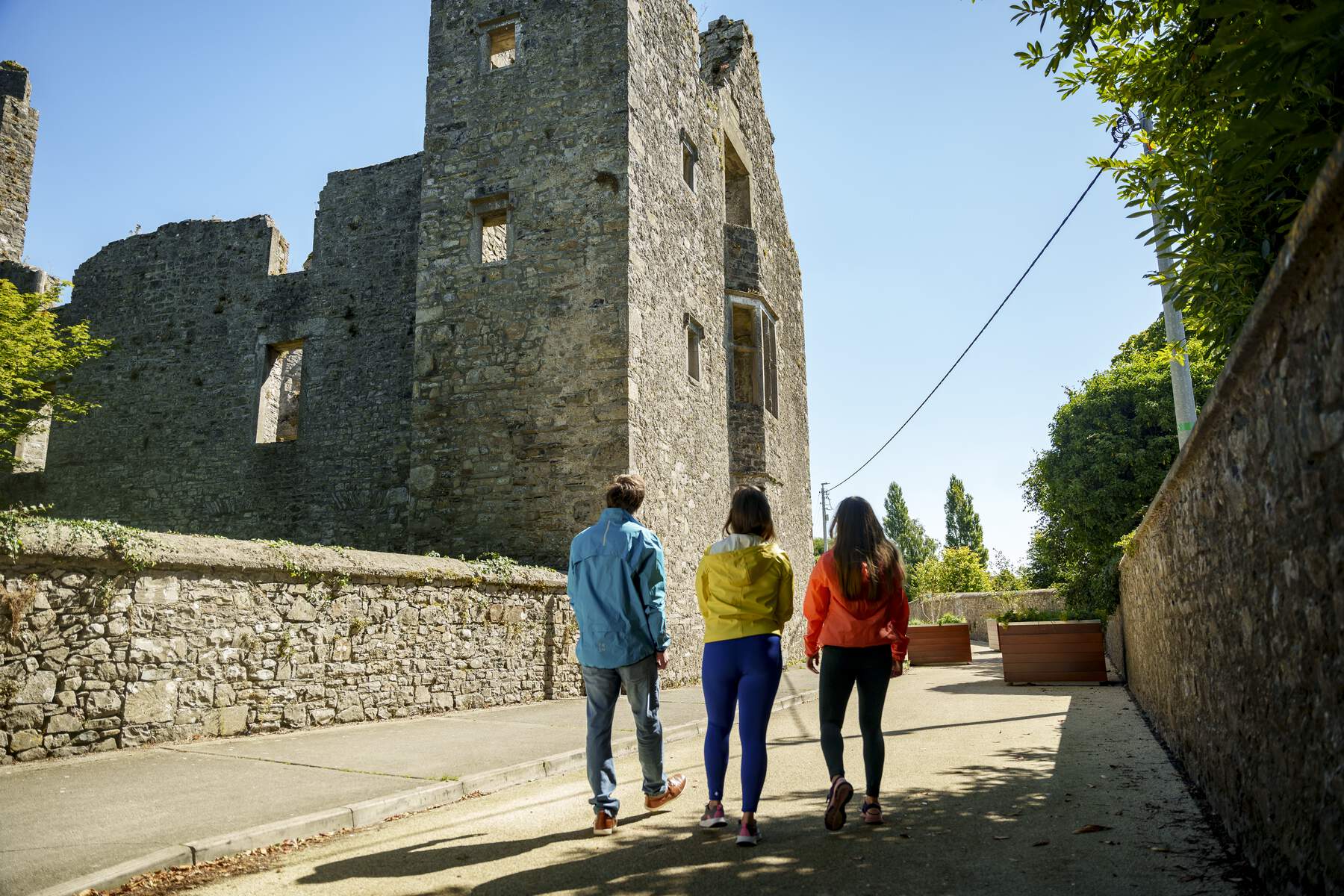
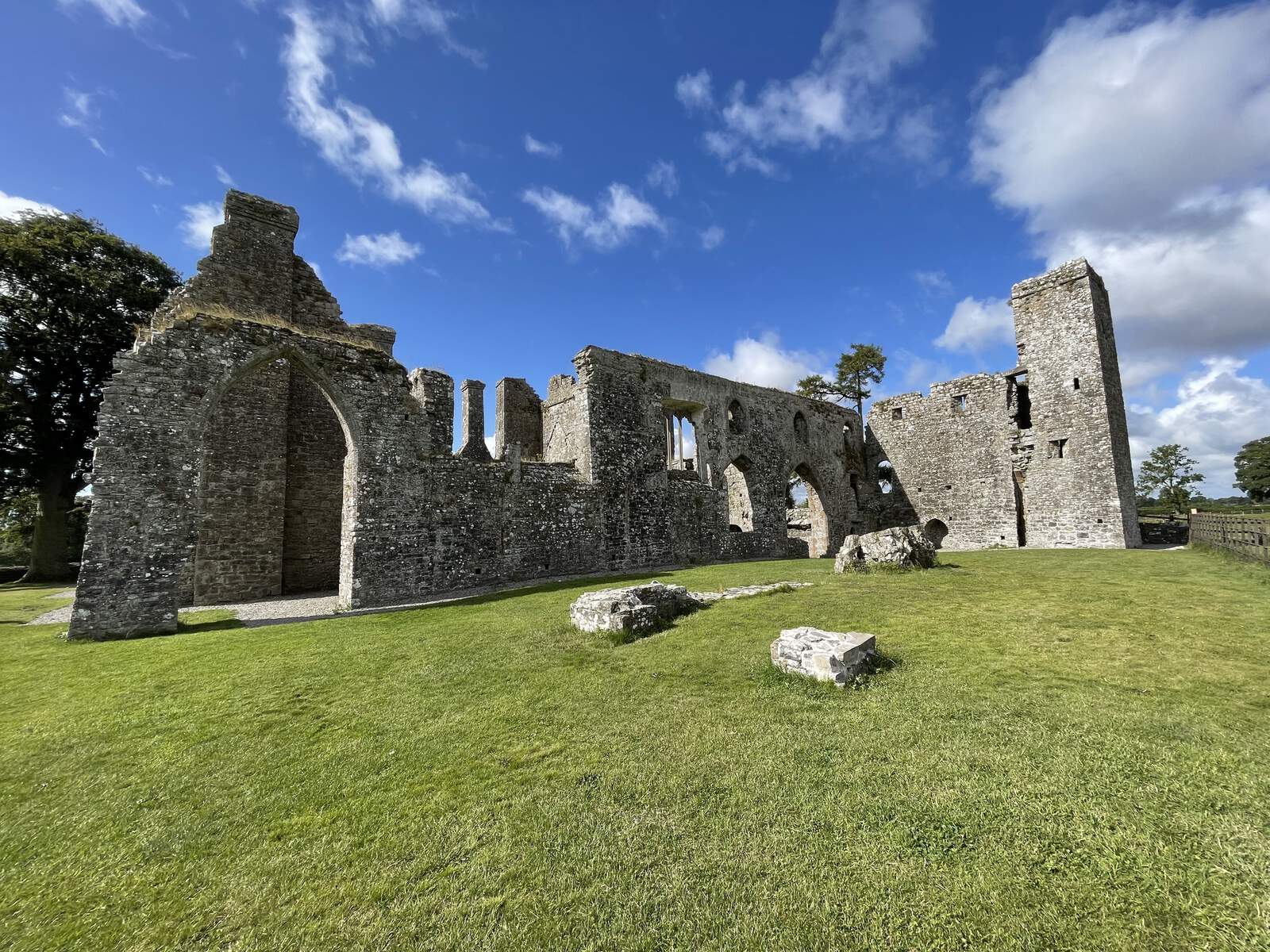
Athlumney Castle sits on the eastern bank of the River Boyne, just outside the town of Navan in County Meath. The site commands a strategic viewpoint where the Leinster Blackwater drains into the Boyne, a position that has been valued since the Norman era. Today the remains consist of a four‑storey 15th‑century tower house attached to a three‑storey Tudor‑style fortified manor house built in the late 16th or early 17th century. The castle is a National Monument under the guardianship of the Office of Public Works (OPW) and is open to visitors on an unguided, self‑service basis.
History
The name Athlumney derives from the Irish Loman’s ford, recalling the early Christian bishop St Loman, reputed nephew of St Patrick, who is thought to have crossed the river here.
Archaeological work has also uncovered an early Christian souterrain on the grounds, underscoring the site’s long‑standing significance.
The first fortification on the site was a Norman motte erected shortly after 1172 by Amauri de Feipo, a relative of Adam de Feypo, who received the land from Hugh de Lacy, Lord of Meath. The stone tower house that dominates the ruin was constructed in the 15th century by the powerful Dowdall family, who produced several senior judges in Tudor‑era Ireland. Its interior still shows the original spiral staircase, beam‑hole sockets on the first floor, and a barrel‑vaulted ground‑floor ceiling protected by a murder‑hole.
In the late 1500s or early 1600s a Tudor‑style four‑bay manor house was added to the south‑west face of the tower. This addition introduced square six‑pane mullioned windows, a modest limestone doorway, and an oriel window that looks toward the Boyne. Large ground‑floor kitchens with four huge fireplaces and two ovens provided heat for the first‑floor living quarters, a layout typical of the period when lords began to separate domestic comfort from defensive needs.
The castle suffered two deliberate burnings. In 1649, during Oliver Cromwell’s siege of Drogheda, the Maguire family who then held Athlumney set fire to the building to keep it from falling into Cromwell’s hands. After the 1690 Battle of the Boyne, Sir Launcelot Dowdall—who had supported the deposed King James II—burned the castle again before fleeing to France. Subsequent owners included the Somerville family (Barons Athlumney) and, later, Bishop Nulty, whose purchase for the Sisters of Mercy left a portion of the surrounding garden in religious hands.
A particularly intriguing feature is the secret mural chamber accessed via an eleven‑step stair from the south wall of the first floor. Scholars believe this was a priest‑hole, used to hide Catholic clergy during the Penal Laws.
What to See & Do
Visitors can wander among the stone ruins, tracing the evolution from medieval stronghold to Tudor manor. Highlights include:
- The Tower House Spiral Staircase – still intact, it offers a tactile sense of medieval vertical circulation.
- Murder‑hole and Barrel Vault – remnants of the original defensive entrance and ground‑floor ceiling.
- Oriel Window and Limestone Doorway – characteristic Tudor details that frame views of the Boyne.
- Secret Mural Chamber – a hidden space that sparks the imagination of those interested in Ireland’s religious turbulence.
- Projecting Corner Turrets – square turrets of varying sizes that punctuate the tower’s silhouette.
- Surrounding Landscape – the castle overlooks the confluence of the Blackwater and Boyne, providing picturesque riverbank scenery ideal for photography.
Because the site is unguided, visitors are encouraged to take a moment to read the interpretive panels placed near the gate and to explore the garden walls, where bricked‑up doorways hint at lost ancillary structures.
Practical Information
Athlumney Castle is accessed through a small gate on Convent Road, behind a tall wall that encloses a large garden owned largely by the Sisters of Mercy. The OPW does not staff the site, so entry is arranged privately:
| Step | How to Access |
|---|---|
| 1 | Contact the nearby B&B (Athlumney Manor) to place a modest deposit. |
| 2 | Receive a key from the B&B staff. |
| 3 | Unlock the gate on Convent Road and explore the grounds at your own pace. |
Contact OPW – The Office of Public Works should be contacted for any specific queries about the monument’s condition or permitted activities. Their standard disclaimer notes that visitors assume responsibility for their safety.
Parking – A free parking space is available in a green area of the Athlumney Castle housing estate adjacent to the ruins. The narrow one‑way Convent Road requires drivers to exit via the opposite end of the estate.
Directions – From Dublin, take the M3 towards Cavan, exit at junction 7, and follow signs for Navan. In Navan turn right onto Athlumney Rd (R153) toward Kentstown, then take the first right onto Convent Rd. The castle sits just off this road.
Map – You can view the exact location on Google Maps.
Further Research – For detailed archaeological and heritage data, consult the Historic Environment Viewer provided by Heritage Ireland.
Visitor Note – The site is unguided and the ruins are fragile; stay on established paths, avoid climbing on loose masonry, and respect the surrounding garden, which remains private property.
Athlumney Castle offers a rare glimpse into Ireland’s layered past—from Norman motte to Tudor domesticity—set against the tranquil backdrop of the Boyne River. Whether you are a history enthusiast, an architecture lover, or simply seeking a quiet spot to contemplate the Irish landscape, the castle’s stone walls and river‑side views make it a rewarding stop on any Meath itinerary.