
Overview
Ballincarroonig (Irish: Baile an Charrúnaigh) lies in the civil parish of Aghada, within the barony of Imokilly, County Cork. The townland sits at 51° 49’ 58” N, 8° 13’ 41” W (latitude 51.83402446, longitude ‑8.22215848) and forms part of the electoral division of Corkbeg. Though the settlement is modest in size, its landscape is a living chronicle of the waves of peoples who have shaped Ireland’s southeast coast.
History
From Viking Longphort to Medieval Stronghold
The earliest imprint on the area comes from the name Longeforde, recorded on a 1587 map. Linguists link this to the Irish longphort, a term denoting Viking naval encampments. The nearby Long Point preserves this memory, suggesting that Norse raiders once used the sheltered inlet as a base for ships and trade. As the Viking Age waned, the strategic value of the site attracted Anglo‑Norman lords who erected a stone fortification that would later appear on Tudor‑era maps as a castle.
Tudor‑Period Castle and Its Legacy
During the turbulent Tudor conquest of Ireland, the English Crown commissioned a network of fortifications to cement control over the southern coast. The castle at Ballincarroonig, appearing on late‑16th‑century cartography, served as a local stronghold overseeing the surrounding farmland and sea routes. Over the centuries the original stone walls fell into ruin, but the site’s outline remains discernible in the landscape, offering a tangible link to the period when English authority was being enforced across Munster.
Whitegate House – Georgian Elegance
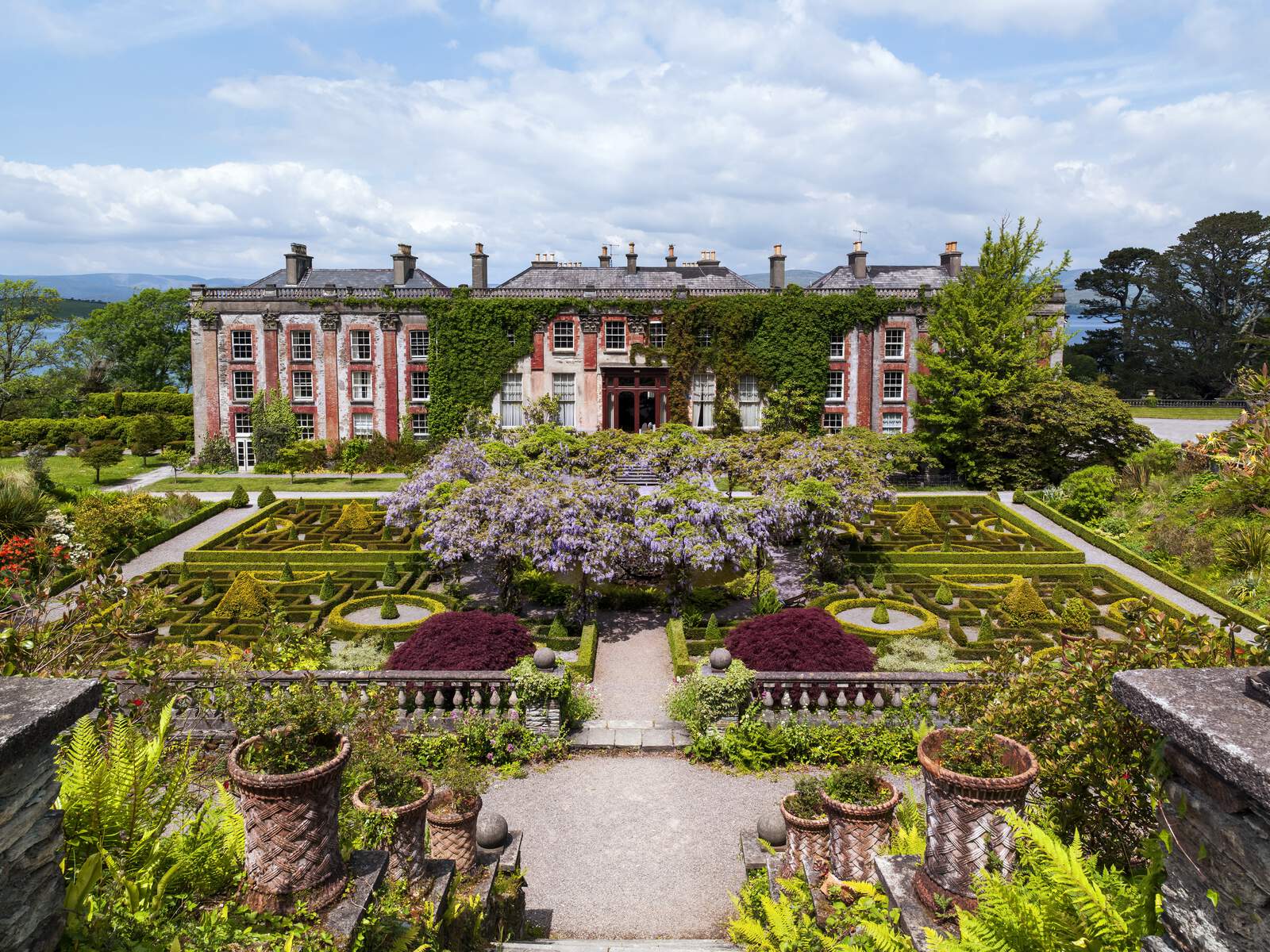
In the late 18th century, the area saw a shift from militarised architecture to genteel country living. Whitegate House, built circa 1780, stands as a prime example of late‑Georgian design in Cork. The detached four‑bay, two‑storey house features a decorative limestone‑masoned porch, hipped slate roofs, and striking bow windows that add depth to the façade. Internally, the house retains original timber sliding sash windows – six‑over‑three on the first floor and six‑over‑six on the ground floor – while later alterations introduced uPVC glazing on less prominent openings. The surrounding outbuildings, including a round‑headed carriage arch, reinforce the estate’s status as a local landmark.
What to See & Do
- Explore the Castle Site – While no standing walls survive, a short walk across the fields allows visitors to locate the earthwork foundations and imagine the defensive layout that once dominated the horizon. Interpretive signage (where available) points out the alignment of the former fort.
- Admire Whitegate House – The house is a private residence, but its exterior can be appreciated from the public road on Strand Road. Take note of the limestone cornice, the tripartite porch window with carved mullions, and the graceful bow extensions that break the otherwise rectilinear mass.
- Coastal Walks – Follow the public footpath that runs alongside Aghada Bay towards Long Point. The route offers uninterrupted sea views, opportunities for bird‑watching and, in late spring, a carpet of wildflowers across the long fields.
- Place‑Name Exploration – A brief stop at Long Point deepens appreciation of the Viking linguistic legacy, while the surrounding landscape illustrates the layered Norse, Norman and Tudor influences that define Ballincarroonig.
Nearby Attractions
A short drive east brings you to the village of Aghada, where a small harbour, cafés and a visitor information point provide a pleasant break. The Cork Harbour Trail passes close by, linking Ballincarroonig with other coastal highlights such as the historic Cobh and the scenic R600 drive.
Practical Information
Ballincarroonig is accessed most easily by car via the N28, which links Cork city to the port town of Cobh. The townland lies just a few kilometres east of Aghada village, where amenities such as cafés, fuel stations and public restrooms are available. Parking is free along the minor roads that border Whitegate House; however, visitors should respect private property and avoid trespassing onto the house’s grounds.
| Item | Details |
|---|---|
| Coordinates | 51.83402446, -8.22215848 |
| Nearest Town | Aghada (≈ 3 km) |
| Access | Private road off Strand Road; free roadside parking |
| Admission | No formal entry – site is viewed from public road |
| Heritage Record | Buildings of Ireland – Whitegate House |
Because the castle no longer stands and Whitegate House remains a private dwelling, there are no opening hours or ticket fees. The area is fully accessible on foot, though the terrain is uneven in places; sturdy footwear is advisable for the field walks. For those interested in genealogy, the townland is listed on the Irish place‑name database Logainm.ie, where historic spellings and land records can be consulted.
Getting There – From Cork city centre, follow the N28 south‑east toward Cobh, then turn onto the R600 towards Aghada. After passing the Aghada village centre, continue east on Strand Road; Whitegate House and the castle site are signposted. Public transport options are limited, so a rental car or taxi is recommended for flexibility.
Seasonal Note – The coastal fields are at their most vivid in late spring and early summer when wildflowers carpet the long fields, providing a colourful backdrop for photography and quiet contemplation.
Accessibility & Visitor Tips – The site is open countryside with no formal facilities. Dogs are welcome on the footpaths but should be kept under control. Bring water, a map or GPS, and be prepared for changing weather conditions typical of the Cork coastline.
Ballincarroonig may not boast a bustling tourist infrastructure, but its layered history, striking Georgian architecture and tranquil scenery make it a rewarding stop for the curious traveller seeking an authentic slice of Cork’s past.