
Overview
Ballyraine (Irish: Baile Uí Ráinne) lies just north‑west of Letterkenny town centre in County Donegal. The neighbourhood is anchored by the Ballyraine Linear Park – a green corridor that follows the line of the former port and offers benches, landscaped planting and views toward Lough Swilly. Though today the area is largely car‑dependent, its historic port still defines its character.
History & Heritage
The Port of Ballyraine was established in the late 18th century; an official 1775 report described it as “in its infancy”, lacking a quay or customs house. By the early 19th century vessels of up to 100 tons were loading iron, salt and colonial produce while exporting hides and butter. The 1850s saw a thriving corn trade – around fifty cargoes each season, totalling three to four thousand tons of grain. Timber for local building projects and, in the 1930s, wooden poles for the Rural Electrification scheme arrived via the quay, linking Ballyraine to the national drive to bring electricity to the countryside.
Ownership changed several times. In 1900 businessman William George McKinney bought the port and its warehouses, using the site to supply coal to St Conal’s Hospital and distributing up to 5 000 tons of coal locally each year. After McKinney’s death, the Kelly family took over in the 1940s, continuing imports of coal, salt, timber and fertiliser through the 1960s. The final commercial vessel, the Polarlight, arrived in 1980 with a cargo of salt, marking the end of commercial shipping.
The 19th‑century warehouses were demolished in 2001 to make way for a new roundabout. To commemorate the port’s contribution, the Polestar monument – designed by Derry artist Locky Morris – was erected in 2003 on the Port Bridge roundabout. Its dual silhouette of a boat hull and a locomotive symbolises the maritime and rail links that once powered Ballyraine. The sculpture is constructed from 104 reclaimed telegraph poles and galvanized steel, standing 12 metres high. Morris explains that the interlocking poles reference both the former railway line (the Strabane‑Letterkenny line that ran through the area in the early 20th century) and the Rural Electrification programme that dispatched those very poles through the port.
Railway & Rural Electrification Legacy
Locky Morris’s Polestar sculpture is more than a landmark; it is a visual narrative of two pivotal transport eras. The linear arrangement of the reclaimed telegraph poles mimics railway tracks, recalling the Strabane‑Letterkenny line that carried passengers and freight through Ballyraine in the 1910s. At the same time, the poles themselves were part of the 1930s Rural Electrification scheme – thousands of wooden poles were shipped through the port to bring electricity to Donegal’s farms and villages. The artist describes the work as a “guide star”, a fixed point that once steered ships, trains and, later, the electric grid across the region.
Art and Interpretation
The Polestar sculpture is illuminated after dark, creating a striking focal point for evening walks along the Linear Park. Its abstract form invites visitors to contemplate the intertwined histories of sea, rail and electricity that shaped Ballyraine’s development.
Walking the Linear Park
The Ballyraine Linear Park follows the former quay for about 1 km. The stone‑wall walkway is level, compacted gravel and fully wheelchair‑friendly, making it suitable for prams, mobility scooters and cyclists. Seasonal wildflowers, native grasses and occasional songbirds add colour and sound throughout the year. Along the route you will find:
- Interpretive panels that explain the port’s cargoes, the railway line and the Rural Electrification story.
- Benches placed at scenic viewpoints over the former harbour and towards Lough Swilly.
- Picnic spots on grassy edges, ideal for a family lunch.
The path is well‑lit during the longer daylight months, and the Polestar sculpture is highlighted by subtle lighting after dark, offering a pleasant stroll in summer evenings.
Cycling & Accessibility
Because the surface is smooth and the gradient is negligible, the Linear Park is a popular short‑distance cycling route for families and casual riders. The route’s width accommodates both cyclists and pedestrians, and the level surface ensures easy access for wheelchair users and prams.
Photography & Night‑time Viewing
The Polestar monument is especially photogenic after sunset when its integrated lighting casts a soft glow on the reclaimed poles. Photographers often capture the silhouette against the twilight sky from the roundabout or from the park’s benches. Spring provides a burst of wildflowers for foreground interest, while the long summer evenings give ample time for golden‑hour shots.
What to See & Do
- Polestar Monument – A striking 12 m high sculpture of 104 telegraph poles on the Port Bridge roundabout. Its abstract form evokes a boat hull and railway tracks, celebrating the town’s historic links to sea, rail and electricity. The piece is illuminated after dark, making it a focal point for evening walks.
- Ballyraine Linear Park – A well‑maintained stone‑wall walkway that follows the former port line for about 1 km. The path is level and wheelchair‑friendly, flanked by seasonal wildflowers, native grasses and occasional songbirds. Benches and interpretive panels are spaced along the route, offering spots for a picnic or a quiet break.
- Port Ballyraine Site – While the quay is no longer operational, interpretive signage around Port Bridge outlines the rise and decline of the harbour. The old coal yard remains as a tangible reminder of the area’s industrial legacy.
- Neighbourhood Highlights – Within a short walk are Ballyraine National School, a retail park, Dry Arch Park, the Cathedral of St Eunan and St Columba, and the Letterkenny Institute of Technology campus. A brief detour to Main Street provides cafés and eateries.
Nearby Attractions
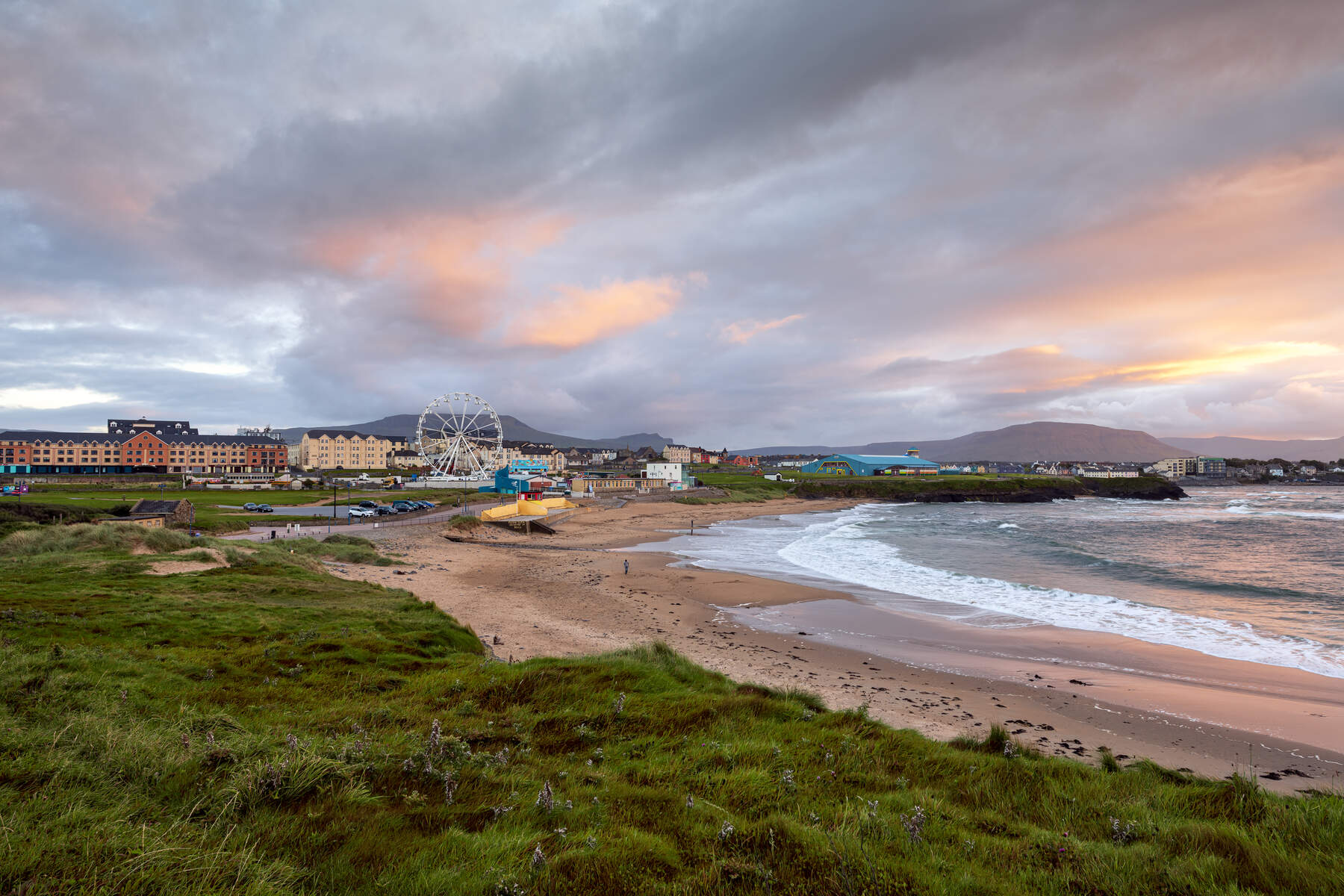
- Ballymastocker Bay – A Blue Flag beach just a few kilometres north, ideal for a coastal walk after exploring the Linear Park. Ballymastocker Bay
- Buncrana – A lively town on the Inishowen Peninsula with a scenic shore path and harbour. Buncrana
- Letterkenny Town Centre – Offers shopping, dining and cultural venues such as the Donegal County Museum.
Practical Information
- Access – The park is a 10‑minute walk from Letterkenny Bus Station (bus line 32). For drivers, limited roadside parking is available near the Port Bridge roundabout, and a larger public car park is adjacent to the retail park.
- Opening hours – Freely accessible year‑round, with no entry fee. The pathway is well‑lit during the longer daylight months, making summer evenings pleasant.
- Facilities – Benches, litter bins and interpretive panels are provided along the route. No restroom facilities are on site; the nearest public toilets are in the adjacent retail park.
- Accessibility – The stone‑wall walkway is level and suitable for wheelchair users and prams.
- Best time to visit – Spring brings buttercups and fresh greenery; summer offers longer daylight for photography of the Polestar monument and bird‑song along the reeds.
Tips for Families & Visitors
- Bring a picnic blanket – the park’s benches and grassy edges make a perfect spot for a family lunch.
- Dogs are welcome on a leash; the path is open to pets.
- Keep an eye on the interpretive panels for short stories about the port’s cargoes and the railway that once ran nearby.
- For cyclists, bring a lock – the roundabout area can be busy with local traffic.
- Evening visitors should carry a small torch to navigate the path safely after the lights dim.