
Overview
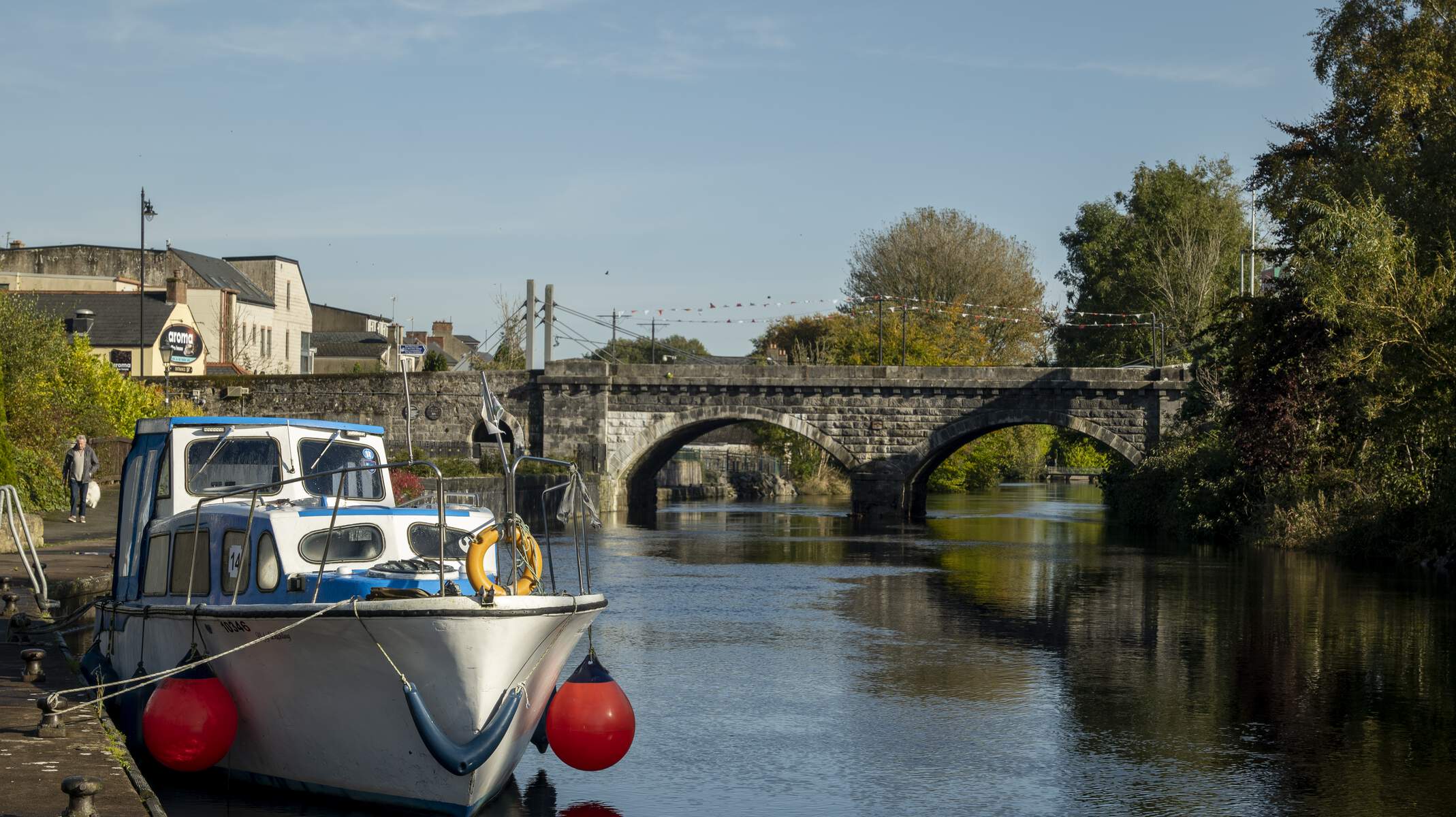
Banagher (Irish: Beannchar na Sionna) is a small but vibrant town on the east bank of the River Shannon, the longest river in Ireland. With a 2022 population of just under 2,000, it feels like a living museum: the river, the historic bridge and a cluster of forts tell the story of a strategic crossing point that has linked Leinster and Connacht for a millennium. Today the town’s modern marina supports river cruisers, anglers (especially pike) and a range of watersports, while its streets are dotted with Georgian houses, a Martello tower and the remains of several 15th‑century castles.
History
The settlement grew around a natural ford created by an esker that kept a strip of land flood‑free all year. By 1049 a stone bridge – reputedly the work of King Ruaidrí Ua Conchobair – spanned the Shannon, and the site became known in the annals as Áth Cróich, one of the three principal bridges in medieval Ireland. Over the centuries Banagher was a military prize: English forces seized it in the mid‑16th century, fortified it as Fort Falkland, and later rebuilt the bridge in 1685. The town’s charter of 1628 gave it the right to send two members to the Irish Parliament, a fact that fed the notorious phrase “that beats Banagher!”
During the 18th and early 19th centuries Banagher thrived as a grain‑export hub. The Grand Canal reached Shannon Harbour in 1804, and the weekly corn market on Fridays became one of the largest in the country. The population peaked at around 3,000 in the mid‑19th century before the Great Famine, the repeal of the Corn Laws and the decline of river trade caused a steep fall. By the late 19th century the town’s industry was limited to a maltings, a few small workshops and the railway terminus (opened 1884, closed 1963). The 20th century saw a shift toward tourism, with the marina, angling clubs and a growing interest in the town’s literary connections – Anthony Trollope wrote his first novel here, and Charlotte Brontë spent her honeymoon at the now‑lost Cuba Court.
What to See & Do
| Attraction | Highlights | Visitor Info |
|---|---|---|
| Banagher Bridge | Seven‑arch stone bridge (1841‑1843) designed by Thomas Rhodes; the only six‑arch masonry span in Offaly; historic “Duke’s Rail” under the old swivel arch. | Open to pedestrians and vehicles at all times. |
| Cromwell’s Castle | 17th‑century fort on the Canal Bank, restored by the Offaly Historical Society; offers river‑side walks and panoramic views. | Free entry; open year‑round. |
| Martello Tower | Small, round Napoleonic‑era tower on the Galway bank; provides a glimpse of coastal‑defence architecture. | Free entry; open year‑round. |
| Fort Eliza (The Salt Battery) | Five‑sided gun battery built c.1812 with a dry moat and original powder magazine. | Free entry; open year‑round. |
| St Rynagh’s Catholic Church | Built 1825, with a bell‑tower added 1872; notable stained‑glass lancets and a modern Madonna & Child sculpture by Imogen Stuart. | Free entry; open daily. |
| St Paul’s Church of Ireland | 1829‑built church with a tall spire and a “Window of the Resurrection” originally intended for Westminster Abbey. | Free entry; open daily. |
| Crank House | Restored Georgian bow‑fronted building now housing the West Offaly Partnership, a tourist office and a hostel. | Free entry; staff on‑site for information. |
| Charlotte’s Way (Hill House) | 1753 Georgian house now a B&B; former home of Charlotte Brontë’s husband’s family. | Open to guests; contact via website. |
| Banagher Great Fair | Held each second Sunday in September; one of Ireland’s oldest horse fairs, still drawing livestock traders and visitors. | No admission fee; check local listings for exact dates. |
| Marina & River Activities | Hire boats for pike fishing, canoeing or leisurely cruises; several operators based at the harbour. | Open seasonally; rates vary by provider. |
| Outdoor Swimming Pool | Recently upgraded community pool on the riverbank (see Banagher.ie). | Open summer months; free for residents, small fee for visitors. |
Literary Landmarks
- Anthony Trollope – The author arrived in 1841, worked from the Shannon Hotel and wrote The Macdermots of Ballycloran while walking the Shannon banks. A plaque on the former Shannon Hotel commemorates his stay.
- Charlotte Brontë – Married Arthur Bell Nicholls in Banagher and spent her honeymoon at Cuba Court (now demolished). A dedicated page on the town website celebrates her brief but memorable connection.
Practical Information
Getting there – Banagher is well‑served by road: the R356 links the N62/N65 to the town, while the R439 runs from Birr to the bridge. The nearest major towns are Athlone (≈30 km north) and Limerick (≈70 km south).
Public transport – Local Link operates the 840 service (six daily return trips to Tullamore) and the 850 service (six daily return trips between Athlone and Roscrea, also serving Birr and Clonmacnoise). Bus Éireann route 72 runs three times daily between Limerick and Nenagh, stopping in Banagher.
Parking – Free on‑street parking is available around the marina and the bridge; a small car‑park behind Crank House offers disabled spaces.
Accommodation – Options range from B&Bs such as Keeraun Hill (just outside town) to self‑catering cottages and the historic (though currently closed) Royal Shannon hotel.
Dining & Nightlife – Main Street hosts JJ Hough’s Singing Pub (open noon‑1 am) and McIntyre’s in Shannon Harbour. For a sit‑down meal, try Crank Road Restaurant or Angelo’s, both offering locally sourced Irish fare.
Opening hours & fees – Most historic structures (Cromwell’s Castle, Martello Tower, Fort Eliza) are free and open year‑round. The 15th‑century castle on the Connacht side of the bridge (often referred to in the Wikivoyage snippet) welcomes visitors on summer weekends from 12:00 to 17:00; a modest donation is appreciated.
Website – For up‑to‑date event listings, boat‑hire contacts and heritage information, visit the official town site: banagher.ie.
Accessibility – The town centre is largely flat; the bridge has a pedestrian walkway with handrails. Some historic sites have uneven stone surfaces, so visitors with limited mobility may prefer the riverside walk near Cromwell’s Castle, which is level and well‑maintained.
When to visit – The September Great Fair offers a lively glimpse of traditional Irish market life. Summer is ideal for boating, fishing and the outdoor pool, while autumn brings spectacular river reflections described by James Pope‑Hennessy as “golden mornings and scarlet sunsets”.
Banagher may be small, but its blend of river scenery, military heritage and literary lore makes it a rewarding stop for anyone exploring Ireland’s midlands.