Overview
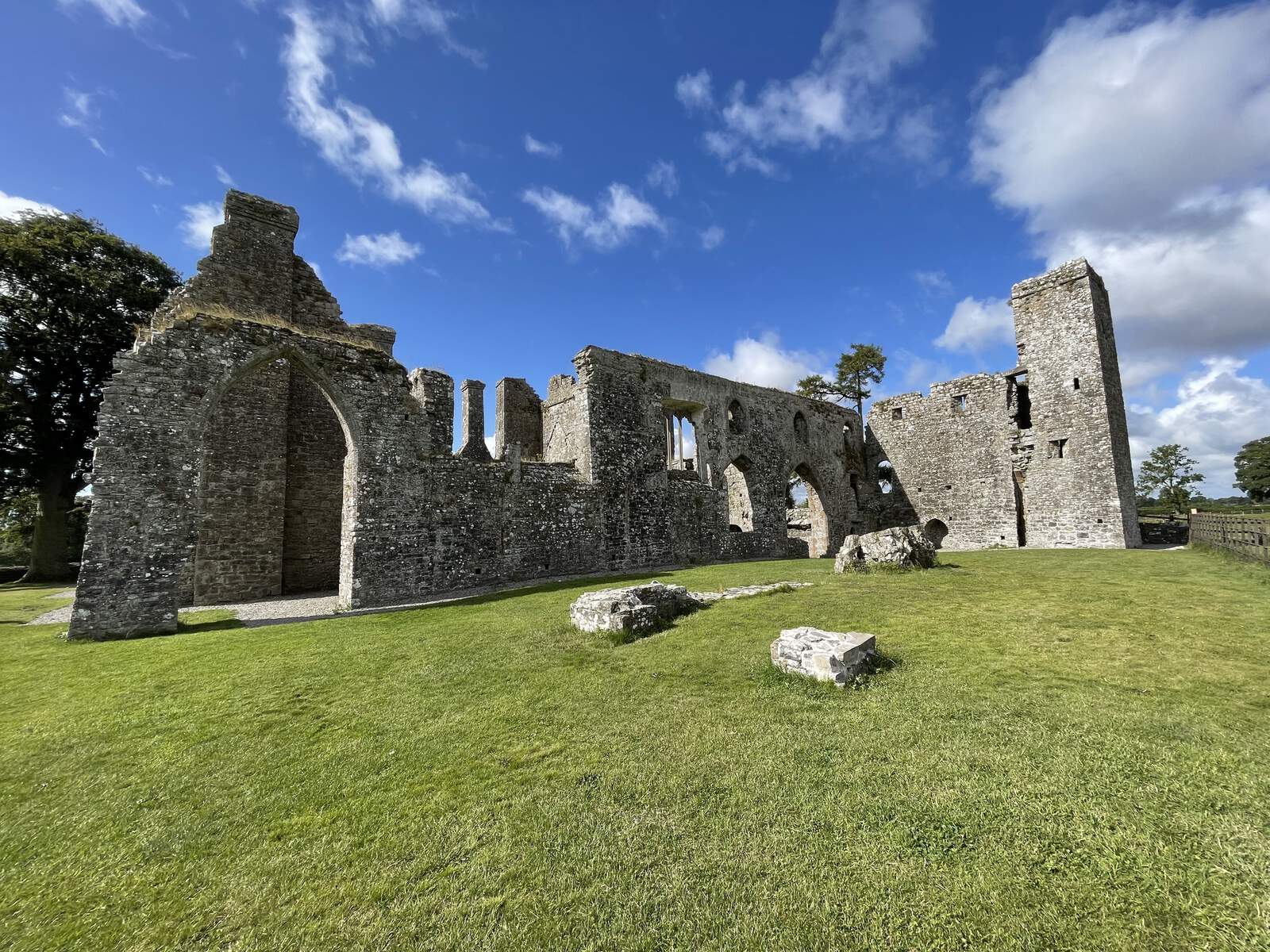
Perched on a high northern bank of the River Boyne, Bective Abbey is a striking reminder of Ireland’s medieval monastic power. Founded in 1147 by Murchad O’Maeil‑Sheachlainn, King of Meath, it was the second Cistercian house in the country and a daughter house of Mellifont Abbey. Today the ruin‑filled site, managed by the Office of Public Works, welcomes visitors to wander among 13th‑ to 15th‑century stonework, a well‑preserved cloister, and the remnants of a fortified manor house that later occupied the grounds.
History
The abbey’s early years were marked by rapid growth. Its abbot sat in the Parliament of the Pale, and the monastery housed a library of over five thousand manuscripts in Greek, Latin, Hebrew and Spanish. The cloister, raised in the late 13th century, showcases pointed gothic arches and intricate cinque‑foiled capitals cut from Ardbraccan stone.
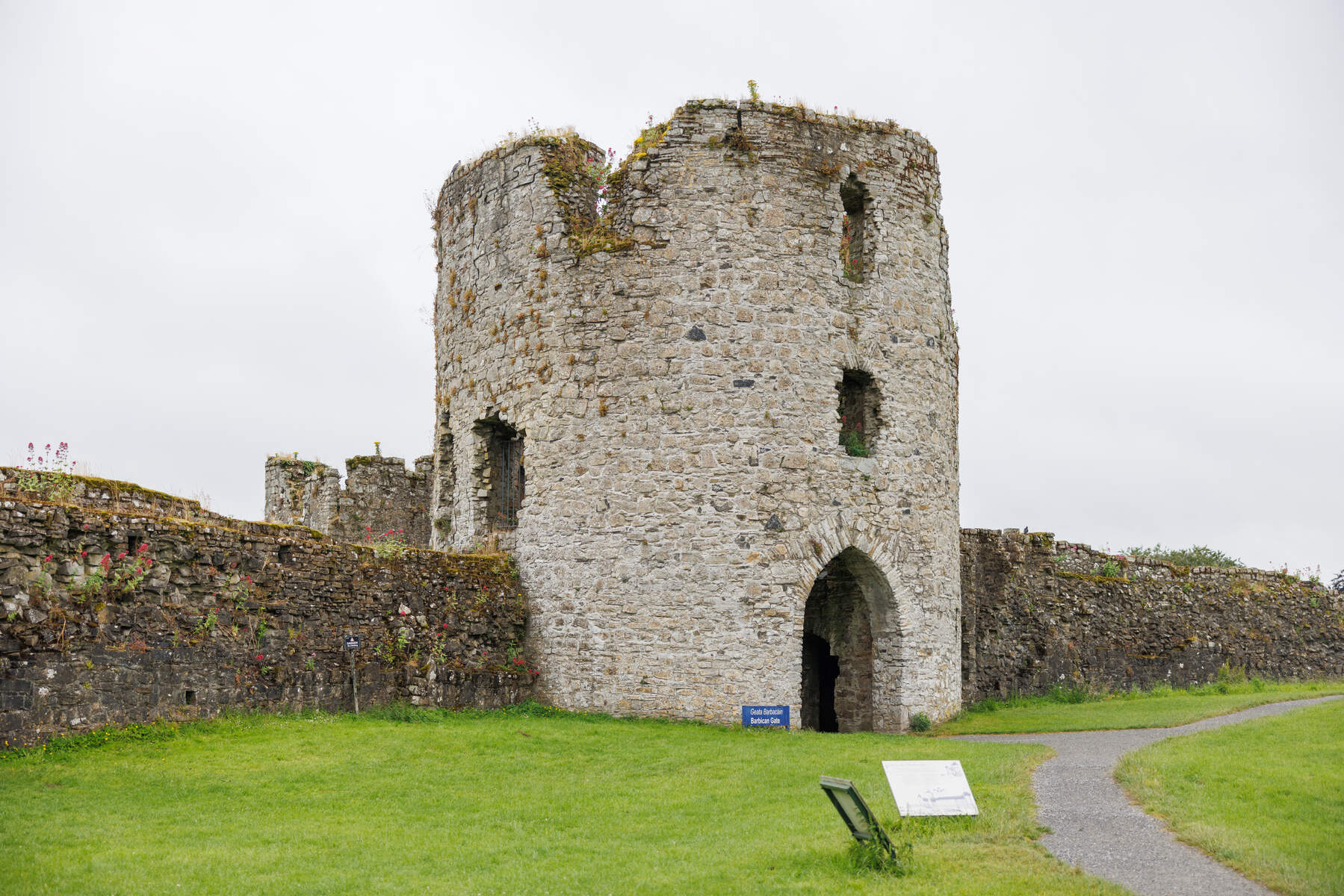
The Dissolution of the Monasteries under Henry VIII in the 1530s brought an abrupt end to monastic life at Bective. The property was seized, rented to Thomas Asgarde, and later bought by Andrew Wyse in 1552. Over the next centuries the abbey was converted into a fortified manor house, with a Tudor‑style tower and mullioned windows added in the 16th century. The Bolton family held the estate from the 17th century until the 19th‑century construction of nearby Bective House.
Archaeological work in the early 2000s, led by Geraldine and Matthew Stout, uncovered a large medieval barn that shed light on the agricultural practices of Cistercian communities. The site was taken into state care in 2012, listed as a protected structure and National Monument, and has since been made accessible to the public.
What to See & Do
| Feature | Highlights |
|---|---|
| Cloister | One of the best‑preserved Cistercian cloisters in Ireland, with gothic arches, clustered pillars and delicate foliage carvings. |
| Church Ruins | Remnants of the nave’s south arcade and south transept hint at the original layout of the abbey church. |
| Chapter House | A compact, vaulted space that once housed the daily meetings of the monastic community. |
| 16th‑Century Tower | A square crenellated tower that testifies to the site’s later use as a fortified manor. |
| Medieval Barn | Visible foundations from the 2009‑2012 excavations, illustrating the abbey’s role in rural farming. |
The cloister’s cinque‑foiled arches are especially photogenic, and the stone seats installed by the 19th‑century Bolton family still provide a quiet spot to contemplate the river’s flow. Film‑enthusiasts will recognise the cloister from three major productions: Captain Lightfoot (1955), Braveheart (1995) and The Last Duel (2020). The atmospheric ruins have proved a perfect backdrop for medieval epics, adding a pop‑culture layer to the historic experience.
Practical Information
Opening hours & admission
| Season | Opening hours | Admission |
|---|---|---|
| All year | Open daily – daylight hours | Free |
The site is unguided, so visitors move at their own pace. A small car park sits directly opposite the entrance; parking is free and there are no on‑site facilities, so plan accordingly.
Getting there
Bective Abbey lies just off the R161, a short 15‑minute drive from Navan and a similar distance from Trim. Major routes include:
- From the M1 motorway: exit at junction 10 onto the N51, then follow the R161 and turn left onto L4010 (Navan Road).
- From Dublin via the M3: take the N51 at junction 7, continue onto the R147 and then L4010.
- From Drogheda: join the N51 at the first round‑about exit, then the R161 and L4010.
A Google Maps link is available on the Discover Boyne Valley page: View location on Google Maps.
Contact
For enquiries, call (041) 988 0300 or email brunaboinne@opw.ie. The Office of Public Works oversees the site and can provide information on accessibility or special events.
Accessibility
The ground is uneven, with some blocked arches and uneven stone surfaces typical of a medieval ruin. While the car park is level, the interior pathways are best suited to visitors with moderate mobility. No formal wheelchair access is provided, but the open courtyard offers a relatively flat area for limited exploration.
Nearby attractions
Bective Abbey forms a natural stop on the Boyne Valley Drive. Within a short drive you can visit Trim Castle, the Hill of Tara, or the charming Bective Tea Rooms housed in the 19th‑century Bective House.
Whether you are tracing the footsteps of Cistercian monks, hunting for cinematic scenery, or simply enjoying a quiet riverside ruin, Bective Abbey delivers a layered experience of history, architecture and Irish myth.