
Overview
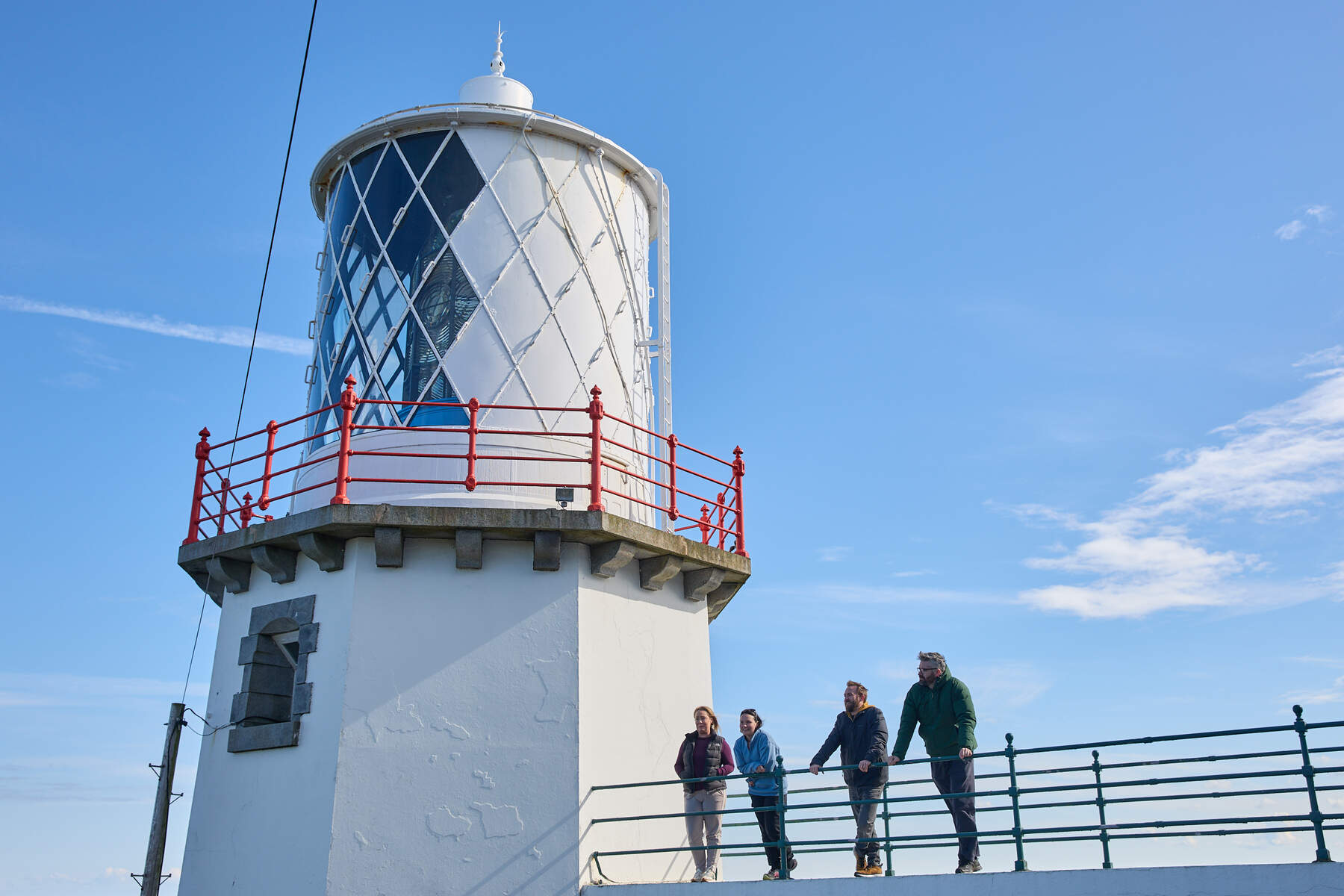
Blackhead Lighthouse dominates the northern tip of Belfast Lough, where the water opens into the North Channel between Northern Ireland and Scotland. Built in 1902, the octagonal stone tower rises from a steep cliff and still flashes a single white light every three seconds, visible for 27 nautical miles. Managed by the Commissioners of Irish Lights, the lighthouse is not only a vital aid to navigation but also a centerpiece of the “Great Lighthouses of Ireland” tourism initiative, offering visitors a blend of maritime heritage, dramatic scenery, and unique accommodation.
History
The push for a lighthouse at Black Head began in 1893 when the Belfast Harbour Board applied for a beacon to guide ships into Belfast Lough. After two refusals, funding was finally secured in 1898 through the Board of Trade and Trinity House, covering the £10,025 construction cost. The contract went to William Campbell and Sons, and the design was overseen by William Douglass, the chief engineer of the Commissioners of Irish Lights. Completed in 1902, the lighthouse featured an explosive fog signal and a first‑order Fresnel lens powered by a 400 W bulb.
Electrification arrived in 1965, and the station was automated in 1975, ending the era of resident keepers. The fog signal was silenced in 1972. Today the tower remains a Category B+ listed building, preserving its original stonework, lantern, and gallery. Its focal height of above sea level continues to guide both local traffic and offshore vessels navigating the busy North Channel.
What to See & Do
Coastal Walks
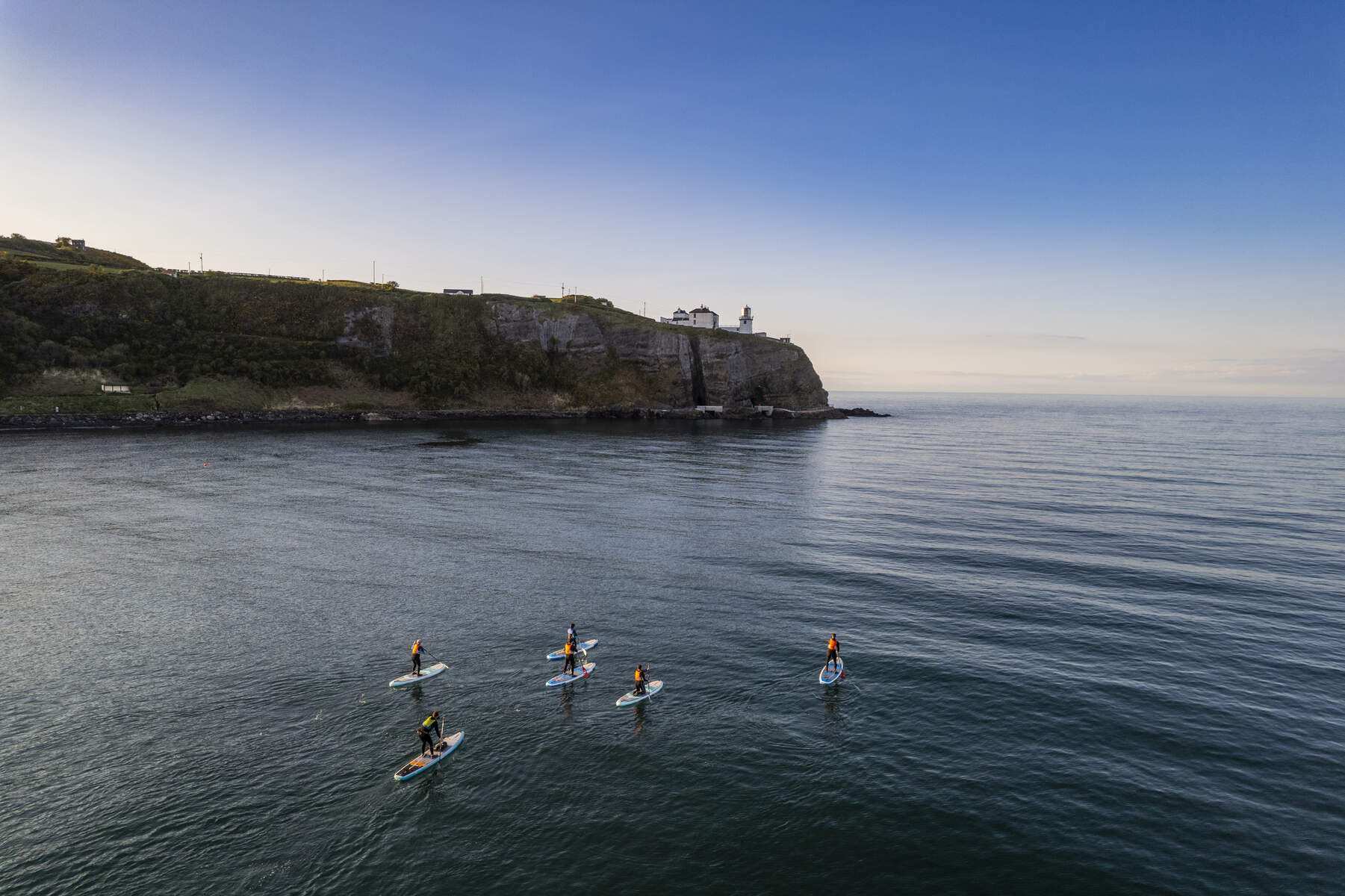
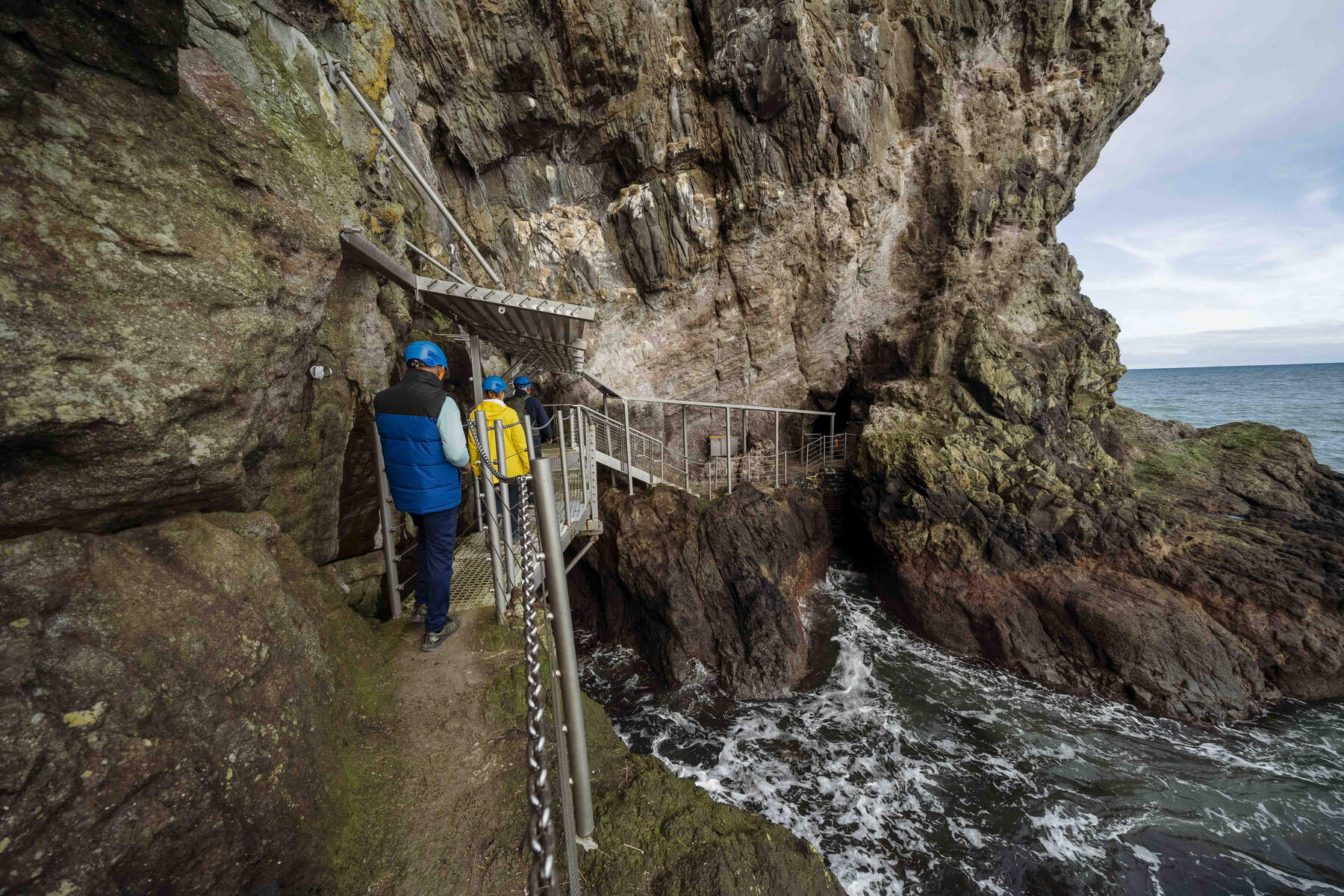
The lighthouse is reachable via the Blackhead Path, a 2.4 km (round‑trip) coastal walk that starts in the Victorian seaside town of Whitehead. Developed by engineer Berkeley Deane Wise, the path weaves over bridges, through two tunnels, and past sea caves, offering spectacular views of Belfast Lough and the surrounding cliffs. It serves as a quieter precursor to the more famous Gobbins Coastal Path a few miles north, making it ideal for walkers who prefer a less crowded route.
Birdwatching and Nature
Belfast Lough is designated an Area of Special Scientific Interest, renowned for its rich bird population. The cliffs around Blackhead provide nesting sites for gulls, terns, and other seabirds, offering keen birdwatchers excellent spotting opportunities.
Holiday Accommodation
Three restored keeper’s houses sit beside the tower, managed by the Irish Landmark Trust. Each cottage retains original maritime features such as antique furniture and the distinctive whistle‑pipe system used to summon off‑duty keepers. The properties are:
| Cottage | Sleeps | Rate (from) |
|---|---|---|
| Blackhead Light‑keepers House 1 | 5 | £398 |
| Blackhead Light‑keepers House 2 | 7 | £398 |
| Blackhead Cutter | 4 | £398 |
All rentals require a minimum stay of two nights. Guests can enjoy sunrise over the lough, watch the lighthouse beam sweep the sea, and explore the surrounding coastline at leisure.
Nearby Attractions
Whitehead’s Lighthouse Bistro offers locally sourced dishes, while the town’s artistic side shines at Natasha Swan Ceramics, a studio where visitors can watch pottery being crafted. The Gobbins Coastal Path, a dramatic cliff‑side walk with suspension bridges, lies a short drive north and makes for a rewarding day trip.
Practical Information
Address: 20 Blackhead Path, Whitehead, Co. Antrim, Northern Ireland.
GPS: 54.7669415, ‑5.6892919.
Access: The lighthouse is reachable on foot via the Blackhead Path from Whitehead. A narrow private road exists but is foot‑only for the public. Parking is available in Whitehead’s town centre; from there the well‑signposted trail leads to the cliff edge.
Accommodation Booking: Reservations are handled through the Irish Landmark Trust website. Direct link: Irish Landmark Trust – Blackhead Light‑keepers Houses.
Operating Status: The light remains active and is maintained by the Commissioners of Irish Lights. Visitors may view the tower and surrounding buildings at any time; there is no admission charge for external viewing.
Seasonality: The cottages are popular during the summer months, so early booking is advisable for peak periods. The lighthouse itself operates year‑round, and the coastal path is open in all weather conditions, though sections may be slippery after rain.
Further Reading: For detailed lighthouse specifications, see the Commissioners of Irish Lights page; for broader context on the Great Lighthouses of Ireland, visit the Great Lighthouses website.