
Overview
The Blasket Islands (Na Blascaodaí) sit about 2 km west of the Dingle Peninsula in County Kerry, forming Ireland’s most westerly archipelago. Six principal islands – Great Blasket (An Blascaod Mór), Inishtooskert, Inishvickillane, Inishnabro, Tearaght and Beginish – rise abruptly from the Atlantic as Devonian sandstone hummocks, their sheer cliffs and sea‑caves giving the group a stark, almost otherworldly character. The islands are a Special Area of Conservation, an Important Bird Area and home to Ireland’s largest grey‑seal colony, making them a magnet for wildlife enthusiasts.
History
Human presence on the Blaskets dates back to the late 16th century, with the Ferriter (Feiritéar) family holding a castle on Great Blasket in the 13th century. By the early 19th century the population swelled to 175 as evicted tenants sought refuge on the islands. Life was hard – the Atlantic could be unforgiving, and the community survived on fishing, modest farming and seabird eggs. The islands became a cultural beacon: Irish‑language writers such as Tomás Ó Criomhthain, Peig Sayers and Muiris Ó Súilleabháin recorded daily life in works that are now classics of Irish literature. The last families left in November 1953 after a tragic winter left a young man without medical help; the final family departed in 1954. Today the islands are uninhabited, but a few rangers‑caretakers remain on Great Blasket, and the Office of Public Works owns most of the land, preserving the landscape as a de‑facto national park.
What to See & Do
| Feature | Highlights |
|---|---|
| Ruined Village | The northeast landing beach (An Tra Ban) leads to the abandoned Lower and Upper Village – about 30 stone cottages clinging to the hillside, a restored ranger’s house, and the white‑sand beach where islanders once danced. |
| Literary Sites | Visit the restored cottage of Tomás Ó Criomhthain, see the Ogham stone from Inis Mhic Uileáin (now in TCD), and explore the beehive huts and oratories on Inishtooskert and Inishvickillane. |
| Wildlife | Grey‑seal colonies dominate the coast, while puffins, Manx shearwaters, storm petrels and kittiwakes nest on the outer stacks. Dolphin‑watching, minke‑whale spotting and occasional skua encounters are common on boat tours. |
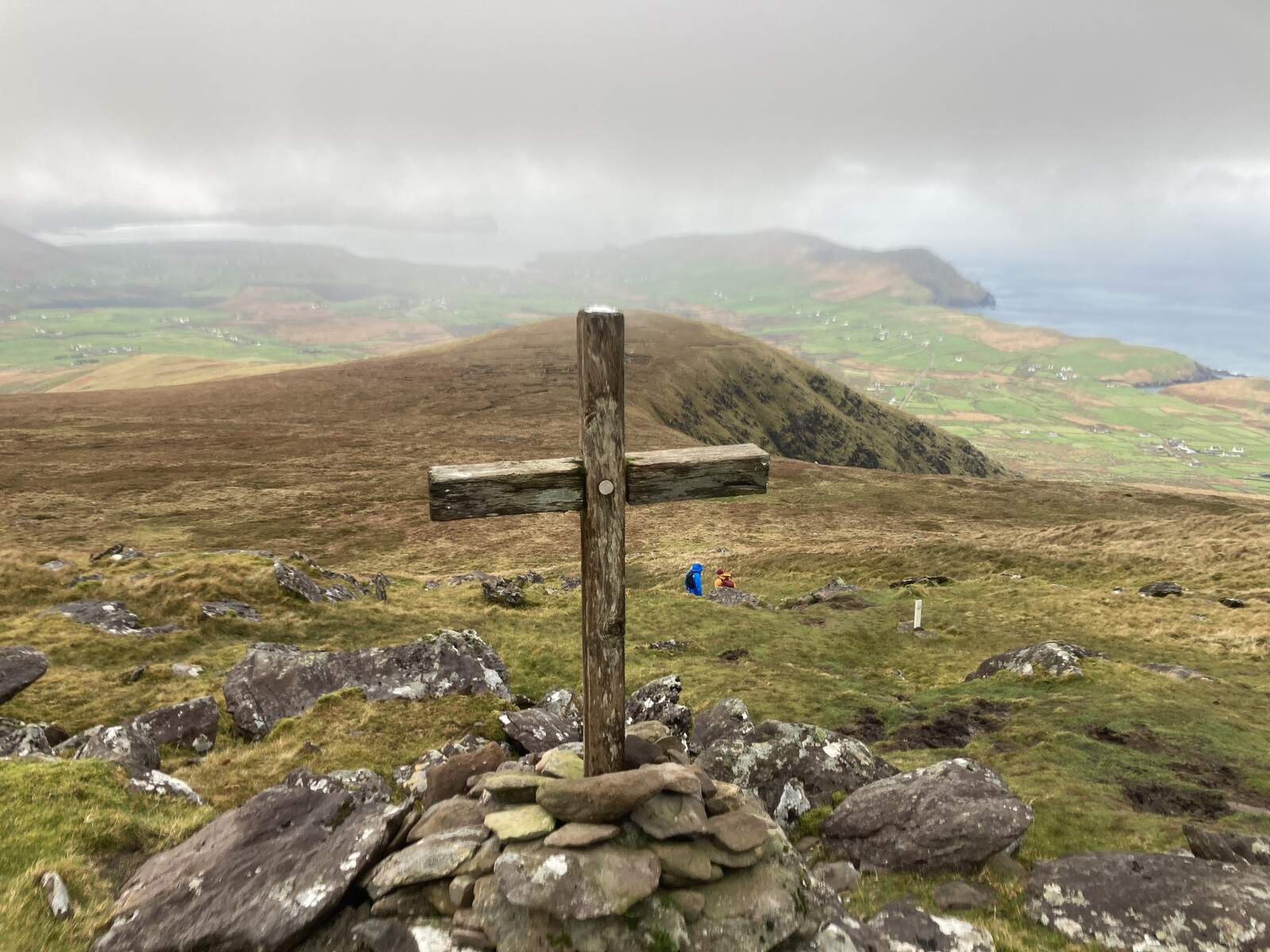
| Hiking | The main loop on Great Blasket starts at An Tra Ban, climbs the grassy cart track, and ascends Slieve Donagh (281 m) to the summit at An Cro Mor (292 m). The 4‑km ridge walk offers panoramic views of the Dingle Peninsula, the Atlantic, and the distant Tearaght lighthouse. |
| Accommodation | Three self‑catering cottages on Great Blasket provide running water, gas cookers and cold showers (no electricity). Camping is permitted anywhere, though level ground can be scarce and midges are abundant in summer. |
| Marine Tours | Eco‑Marine tours run from Ventry or Dunquin, using the RIB‑style “Blasket Princess” to chase dolphins, porpoises, whales and seabirds. Pre‑booking is essential; groups range from 4 to 44 participants. |
| Interpretive Centre | The Blasket Centre (Ionad an Bhlascaoid) in Dunquin offers exhibitions on island life, language, and the literary legacy, plus a small café. |
Wildlife Highlights
- Grey seals – the largest Irish colony, often seen basking on the rocks or playing in the surf.
- Birds – over 13 breeding seabird species, including puffins, choughs and fulmars; the outer islands are rat‑free, a crucial factor for ground‑nesters.
- Marine mammals – common and bottlenose dolphins, minke whales, and occasional humpbacks are sighted on the boat trips.
Practical Information
Getting There
The only regular passenger service is a seasonal ferry that calls at Great Blasket. Two main operators run the route:
| Operator | Departure Point | Typical Summer Schedule | Return Ticket (€) |
|---|---|---|---|
| Blasket Island Ferries | Dun Chaoin (Dunquin Pier) | 9:45, 10:45, 11:45, 12:45 (weather permitting) – 20‑40 min crossing | 50 |
| Blasket Islands Eco Ferry | Ventry Pier | 10:00 – 15:00 (morning) and 12:30 – 17:30 (afternoon) – when in season | 50 |
Ferry services operate from late April to early September and run only in good weather; rough Atlantic conditions can cancel sailings without notice. Passengers are transferred from the ferry to a small RIB (rigid inflatable boat) for the final landing, as the islands have no pier.
Accommodation & Facilities
- Cottages – three modern, self‑catering units on Great Blasket (capacity up to 7). No electricity; lighting is provided by battery‑powered lamps. Hot water is limited to cold showers.
- Camping – free on the island; most campers set up near the village facilities. Remember to bring a sturdy tent and a dry sleeping mat, as the ground can be damp.
- Water – running water is available at the ranger’s house; otherwise use spring water or bring your own.
- Food – a small café operates in the village during the summer months, serving simple meals and tea.
- Mobile signal – 4G coverage is generally available on the boat and on Great Blasket, but absent on the outer islands such as Tearaght.
Accessibility
The islands are intentionally low‑impact; there are no paved paths, wheelchair access is not possible, and the landing cove is accessed via a small inflatable boat. Dogs are permitted on a leash. The Blasket Centre on the mainland is fully accessible and provides wheelchair‑friendly restrooms.
Best Time to Visit
Summer (June‑August) offers the most reliable ferry service, longer daylight hours for hiking, and the peak of seabird breeding. Early autumn can still provide good weather and fewer crowds, but ferry frequency diminishes. Winter visits are not possible as the service ceases.
Booking & Contacts
- Ferry tickets – book online via the operator’s website (e.g., Blasket Island Ferries).
- Eco‑Marine tours – pre‑booking essential; see Discover Ireland Eco Marine Tours.
- Cottage accommodation – available through local holiday‑rental platforms; many listings reference the “Great Blasket Island experience”.
Safety Notes
The islands lack harbours; the landing area is exposed to the prevailing south‑westerly wind. Boats may be delayed or cancelled in strong seas. Visitors should carry waterproof clothing, a basic first‑aid kit, and a charged mobile phone. The terrain is uneven and can be slippery when wet; sturdy hiking boots are strongly recommended.
The Blasket Islands remain a place where history, literature and raw Atlantic nature converge. Whether you are tracing the steps of Peig Sayers, watching a pod of dolphins arc beside the hull, or simply breathing in the salty air from a windswept ridge, the islands offer a singular Irish experience that feels both timeless and profoundly alive.