Overview
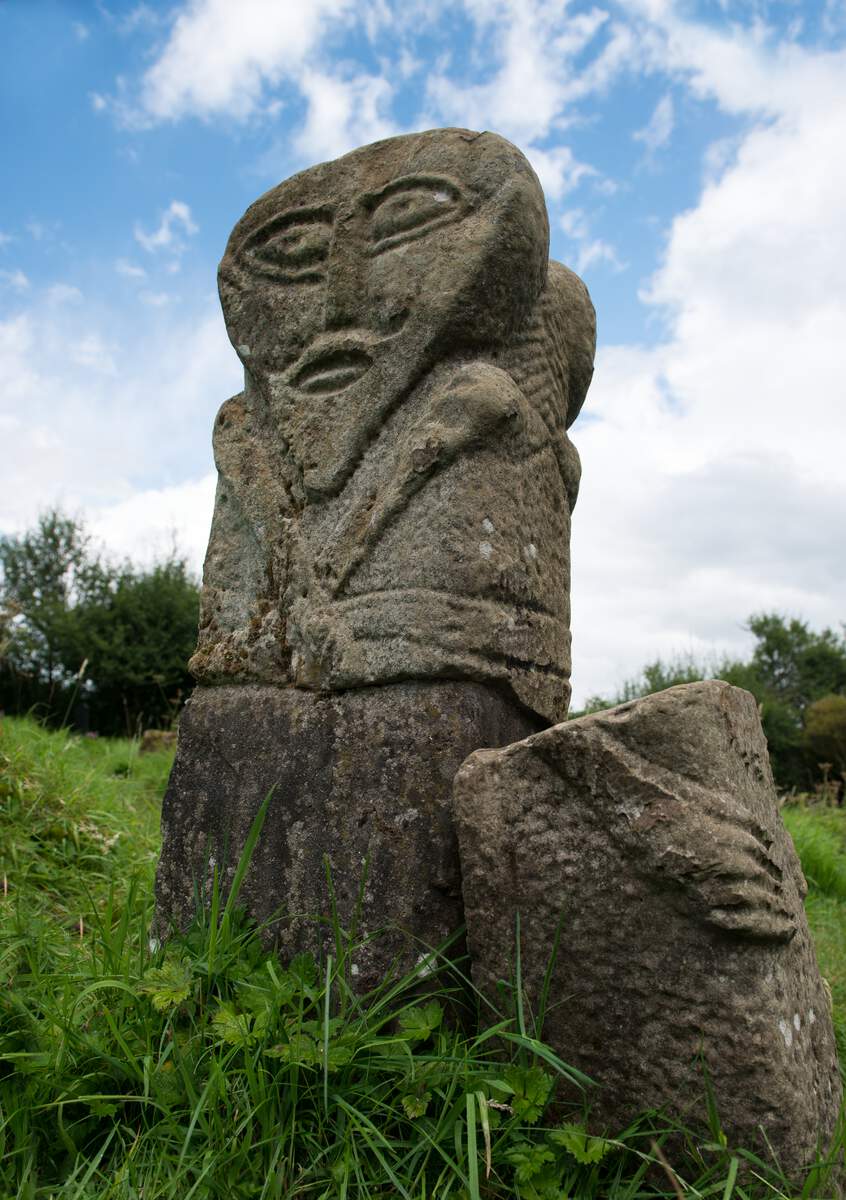
Perched on the tranquil banks of Lower Lough Erne, the Janus Figure (often called the Dreenan Figure) dominates the modest Caldragh Cemetery on Boa Island. Carved from a single block of stone, the sculpture is actually two almost identical figures placed back‑to‑back, each with a large oval face, bulging eyes, a straight nose and a half‑open mouth with a protruding tongue. The heads sit directly on the torso – there is no neck – and the square‑shaped bodies feature crossed arms, a belt and hunched shoulders. A later‑discovered base now props the stone, and a shallow groove at the top of the heads invites visitors to leave a coin as an offering.
Alongside the larger Dreenan Figure stands a smaller, single‑sided stone known as the Lustymore Man, recovered from neighbouring Lustymore Island. Though more weathered, it mirrors the larger figure’s straight‑nosed, open‑mouthed expression, with arms resting on its knees.
History
The stone figures have sparked scholarly debate for decades. First recorded in 1841 by 19th‑century painter and antiquarian George Victor Du Noyer, they were later highlighted by archaeologist Dorothy Lowry‑Corry in 1933. Early interpretations linked the sculptures to the pagan Iron Age, even dubbing them “Janus” figures after the Roman god of duality. Modern research, however, leans toward a later, possibly early‑medieval origin, noting that both were found within early Christian burial grounds – a context that would be unlikely for purely pagan idols.
The larger figure’s fierce visage is thought to embody the war goddess Badhbh, whose name means “carrion crow” in Irish. This connection is reinforced by the island’s own name: Inis Badhbha, literally “Badhbh’s Island”. The smaller Lustymore Man, while less elaborate, shares the same unsettling facial features, suggesting a shared cultural or mythological source.
What to See & Do
- Examine the two‑sided Dreenan Figure – Walk around the stone to view each face. Notice the interlace pattern that may represent hair where the two halves meet, and the elongated fingers of the broken lower hands, now displayed on a separate plinth.
- Compare with the Lustymore Man – The contrast between the weathered, single‑sided figure and its larger counterpart offers insight into differing carving techniques and perhaps distinct chronological phases.
- Explore Caldragh Cemetery – While the graveyard is still active, its quiet atmosphere adds a contemplative backdrop to the sculptures. The faint outline of an ancient enclosure can be traced on the northern side of the site.
- Enjoy the lakeside setting – Boa Island is linked to the mainland by bridges at both ends, and the surrounding waters of Lough Erne provide picturesque views, especially at sunrise or sunset.
Practical Information
| Detail | Information |
|---|---|
| Opening Times | Open all year round (no seasonal closures) |
| Admission | Free (parking charges may apply) |
| Accessibility | The cemetery has uneven ground and no formal paths; it is not wheelchair‑friendly. |
| Parking | Limited space on a working farm; park close to the road and avoid blocking tractors. |
| Coordinates | 54.50621, -7.86913 |
Getting There
From Enniskillen, follow the A32 north‑west, continue onto the B82 and follow signs for Boa Island/Kesh. The drive takes roughly 30 minutes. For those approaching from the south, take the N3 to Magheraboy and Belleek, then the A47 (Boa Island Road) until you see the sign for Caldragh Cemetery; turn right and follow the short lane to the site.
Visiting Tips Specific to the Site
Because the area is a working farm, visitors should park considerately and keep a respectful distance from any agricultural activity. The ground is uneven, so watch your step, especially near the stone’s base where the recent discovery of the original plinth lies half‑buried.
Nearby Attractions
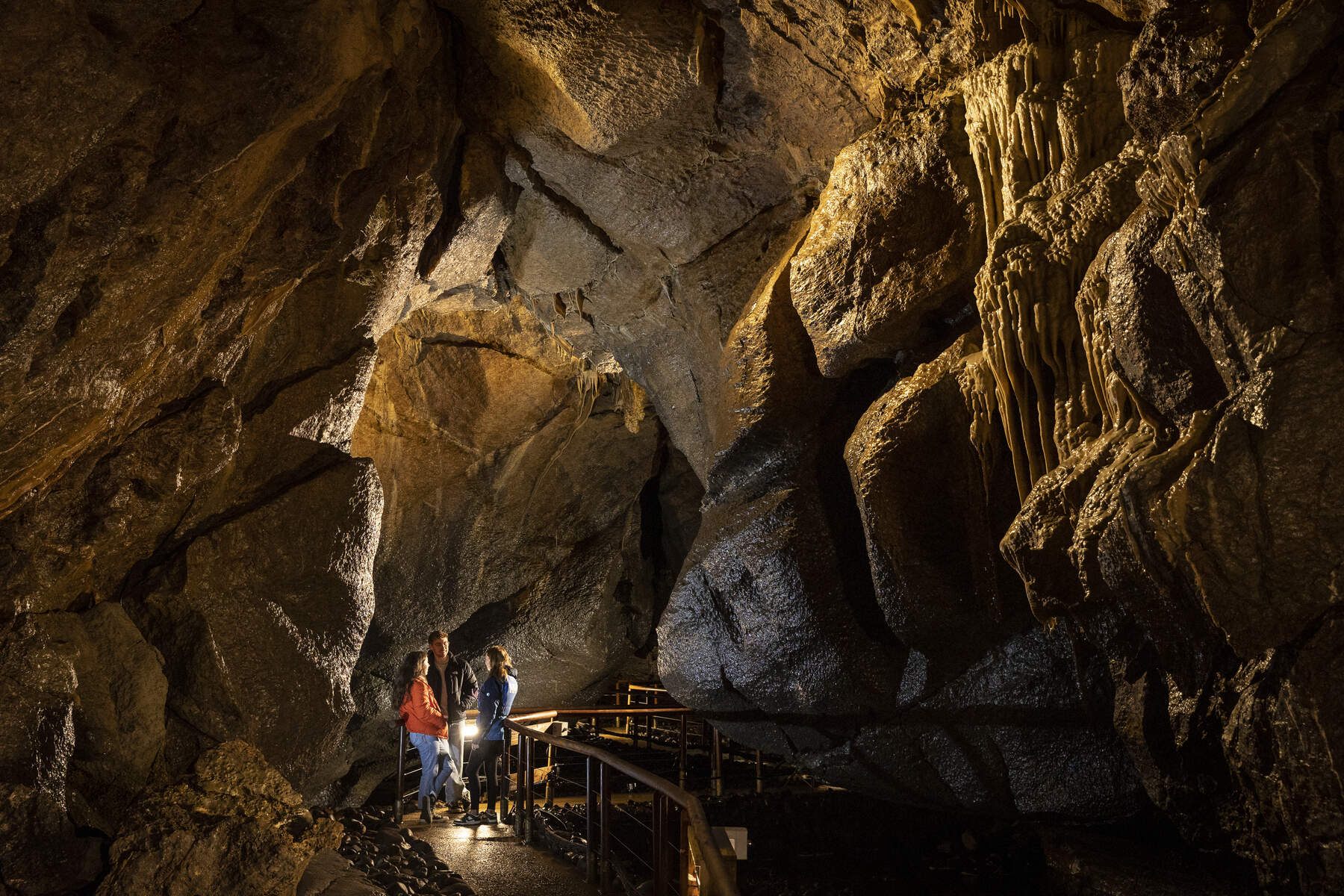
While you’re on Boa Island, consider a short walk to the Lustymore Island boat launch for a glimpse of the island that yielded the Lustymore Man. The broader Lough Erne region offers attractions such as the Marble Arch Caves
Further Reading & Resources
- Official visitor page: Discover Northern Ireland – Janus Figure, Boa Island
- Detailed place‑name analysis: The Northern Ireland Place‑Name Project
- Academic discussion of the figures’ dating: Dorothy Lowry‑Corry’s 1933 paper (available via JSTOR).
The Janus Figure remains one of Ireland’s most enigmatic stone sculptures, inviting visitors to ponder ancient myth, artistic skill, and the layered history of Boa Island. Whether you’re a seasoned archaeologist or a curious traveller, the silent stone guardians of Caldragh Cemetery offer a uniquely Irish encounter with the past.