Overview
Broadhaven Lighthouse sits on a peaceful bay at Gubbacashel Point, just outside the village of Ballyglass in north‑eastern Erris. The classic white‑painted stone tower rises 15 metres (about 50 ft) above sea level and its light can be seen up to 12 miles out to sea. Unlike its more exposed neighbours on Eagle Island, this harbour light enjoys a relatively sheltered position, making it a favourite spot for photographers and anyone seeking coastal solitude.
The lighthouse is owned and operated by Irish Lights, the state agency responsible for Ireland’s aids to navigation. The tower itself is not open for free roaming; visitors can experience the interior on a guided tour arranged by the local tourism team.
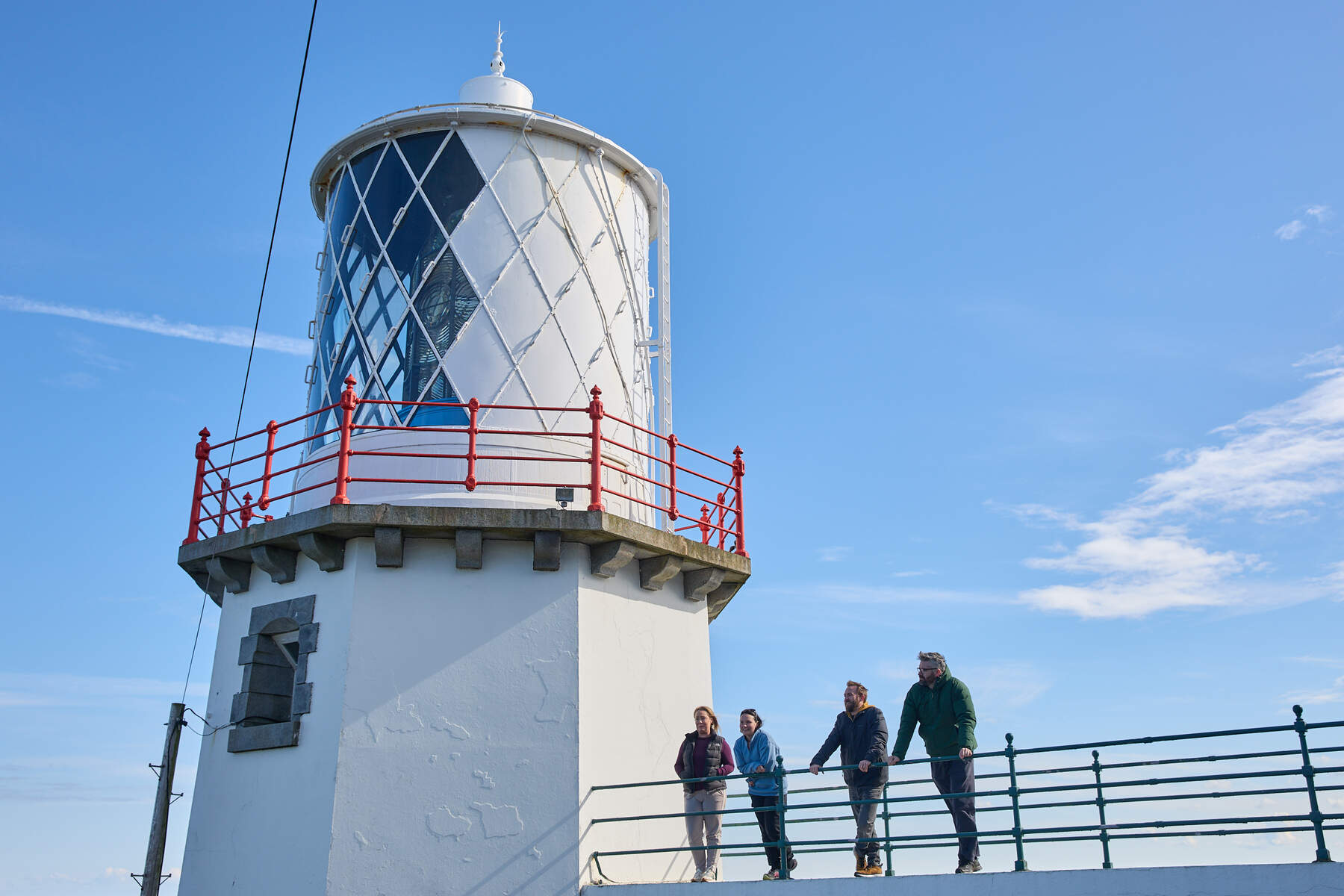
Image placeholder – replace with a photograph of Broadhaven Lighthouse.
Alternate Name
Locally the lighthouse is often referred to as Ballyglass Lighthouse. This name appears on the Irish Lights website and on tourism literature for the area.
History
The story of Broadhaven Lighthouse begins with a request from the Coast Guard in 1843 for a beacon to mark the dangerous western side of Broadhaven Bay. Inspector George Halpin of the Board of Trade recommended a beacon tower that could later be upgraded to a full lighthouse. After a series of delays over land acquisition, construction finally began in 1848 and the stone tower was completed that summer.
The light was officially established on 1 June 1855. It originally housed a fixed third‑order dioptric lens supplied by W. Wilkins of London, positioned 87 ft above high water and visible for twelve miles. The early light showed a white sector to the seaward side and a red sector to the western side of the haven, helping vessels avoid a hidden rock.
In 1924 the light was modernised with a seven‑jet acetylene burner, changing the character to an occulting 2‑second flash. By 1931 the tower was converted to an unwatched acetylene system, and in 1977 it finally received electric power, bringing the light to its present‑day configuration: an Iso WR 4 s characteristic with a range of 17 nm white and 12 nm red. The tower was also repainted white at that time, giving it the bright appearance seen today.
Because of its safe on‑shore location, Broadhaven became known as a “retirement station” for lighthouse keepers in their final years—a quiet end to a demanding career. The station is now looked after by an attendant who visits regularly for routine maintenance.
Local Landscape & Heritage
The lighthouse stands at the northern tip of the Mullet Peninsula. In the early 18th century Sir Arthur Shaen, a local landlord, attempted to link Broadhaven Bay with Blacksod Bay by digging a canal across the peninsula. The project aimed to drain marshland, create a new town at Belmullet and provide a sheltered maritime route. By the mid‑19th century the canal had silted up and was abandoned; today the former channel is a shallow stream that dries at low tide, offering a subtle reminder of the ambitious engineering effort.
Nearby, the RNLI station at Ballyglass Pier remains active, and the village once hosted a Lloyds of London office that reported on trans‑Atlantic shipping incidents.
Conservation & Wildlife
Broadhaven Bay is a designated Special Area of Conservation (cSAC) and a Special Protection Area (SPA). The bay supports a range of habitats – Atlantic salt‑marsh, tidal mudflats, reefs and shallow bays – and is important for wintering waterfowl and breeding terns. Notable birdlife includes guillemots, razorbills, peregrine falcons, terns and waders. The marine environment hosts all five of Ireland’s Annex II marine mammal species: common bottlenose dolphin, harbour porpoise, grey seal, harbour seal and European otter. Sightings of dolphins and seals are common, especially in the calmer waters of the harbour.
The Stags of Broadhaven – a group of five jagged islands off Benwee Head – lie a short distance offshore and provide nesting sites for puffins and storm‑petrels, making the area attractive to birdwatchers.
Best time for wildlife: Spring and autumn migrations bring the greatest number of seabirds, while marine mammals can be seen year‑round, with higher dolphin activity in summer.
Walking & Wildlife
A public footpath leads from the car park to the red‑gated entrance of the lighthouse, providing easy access for walkers of all abilities. The route forms part of the Erris Head Loop, a 7 km coastal walk that offers dramatic sea views, cliff‑top scenery and the chance to spot the bird species mentioned above.
Bird‑watchers will also appreciate the quiet harbour area, where terns and waders feed on the shallow waters of Broadhaven Bay. The walk can be combined with a visit to the nearby Ballyglass Pier and the historic Lloyds office for a fuller picture of the area’s maritime heritage.
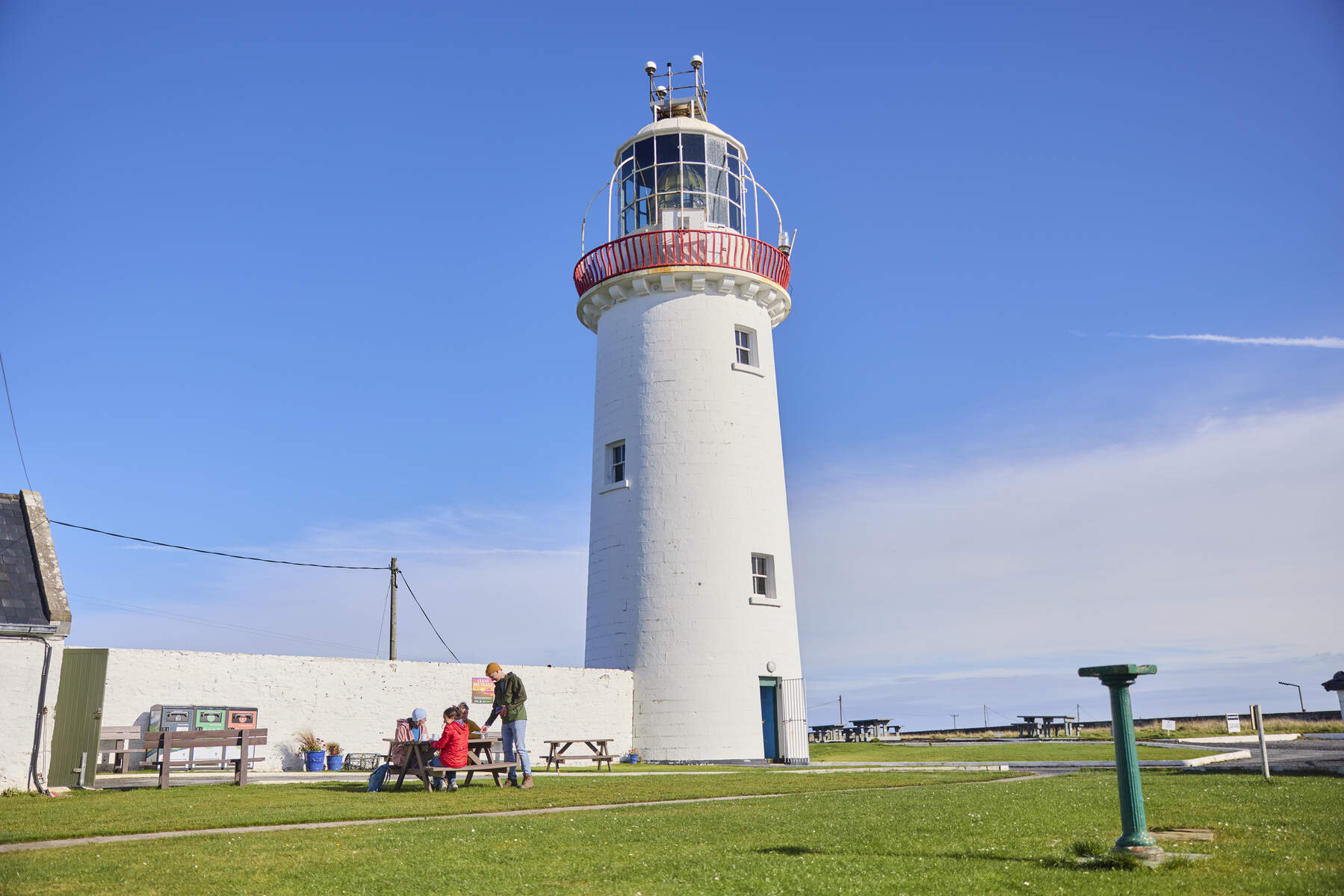
Image placeholder – replace with a view of the footpath or surrounding landscape.
Guided Tours
The most engaging way to experience the lighthouse is to join one of the guided tours offered by the local tourism team. Tours are led by knowledgeable guides who weave personal family stories with the broader maritime history of the area. During a tour you can:
- Explore the keeper’s cottage and storage buildings that flank the tower.
- Climb the internal staircase to the lantern room, where the historic lens and modern lighting equipment are displayed.
- Hear anecdotes about the RNLI station at nearby Ballyglass Pier, the former Lloyds office, and the lighthouse’s role in guiding trans‑Atlantic vessels.
- Enjoy sweeping vistas of Broadhaven Bay, the rugged coastline, and on clear days, the distant islands of the Erris Peninsula.
Bookings are made via the Enquire page on the tourism site. Tours run throughout the high season (generally May to September) and can be arranged for groups of all ages. No fixed opening hours are published; visits are by appointment.
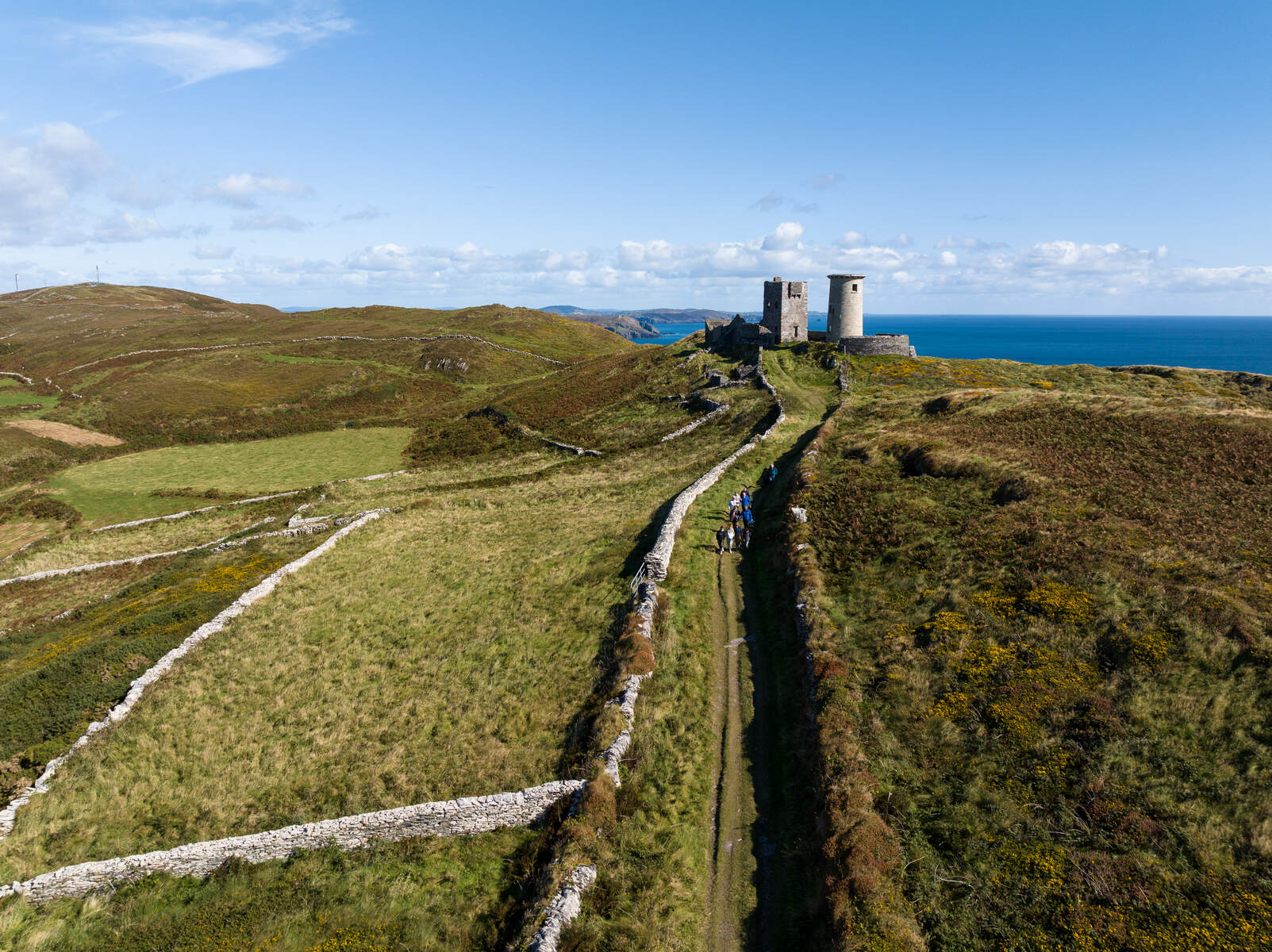
Image placeholder – replace with interior view of Broadhaven Lighthouse during a tour.
Great Lighthouses of Ireland
Broadhaven Lighthouse is part of the Great Lighthouses of Ireland (GLI) tourism initiative launched by the Commissioners of Irish Lights. The programme highlights a selection of historic beacons, offering heritage tours and, at some sites, overnight stays. While Broadhaven does not provide accommodation, its inclusion in GLI underscores its cultural importance and helps promote the lighthouse to a wider audience.
Navigation Details (for the curious)
| Specification | Detail |
|---|---|
| Height of Tower | 15 m |
| Height of Light (MHWS) | 27 m |
| Character | Iso WR 4 s |
| Range | White = 17 nm, Red = 12 nm |
| Sector Bearings | R 110°‑133° (23°), W 113°‑355° (222°), R 355°‑021° (26°) |
These technical details illustrate how the lighthouse continues to serve as a vital aid to navigation, guiding vessels safely into the anchorage while avoiding the sunken rock on the western side of the bay.
Practical Information
- Tours: Arrange in advance via the enquiry form on the tourism website. Tours are offered from May to September; exact dates vary according to demand.
- Access: The site is fenced with large red gates. The interior is accessible only with a guided tour. The surrounding footpath is open year‑round and is level, making it suitable for most visitors.
- Parking: Limited roadside parking is available in the village of Ballyglass. An additional small car park exists near the RNLI pier.
- Accessibility: The interior involves stairs and narrow passages; therefore it is best suited to visitors with normal mobility. The external viewpoint is wheelchair‑friendly via the level path.
- Facilities: No visitor centre or café on site. The nearby RNLI pier at Ballyglass offers a small shelter and public restroom.
- Nearby attractions: The town of Belmullet is a short drive away and provides accommodation, eateries and additional coastal walks.
- Contact: Use the enquiry form on the tourism site for specific questions. No direct phone number is listed.
- Coordinates: 54°16.065’ N, 09°53.330’ W (decimal 54.26775, ‑9.88883).
Whether you are a lighthouse enthusiast, a history buff, or simply looking for a tranquil spot to soak in the Atlantic scenery, Broadhaven Lighthouse offers a blend of heritage and natural beauty that is hard to match on the Irish west coast.
For more information on the other Erris lighthouses, see the regional guide on the North Mayo tourism site.