
Overview
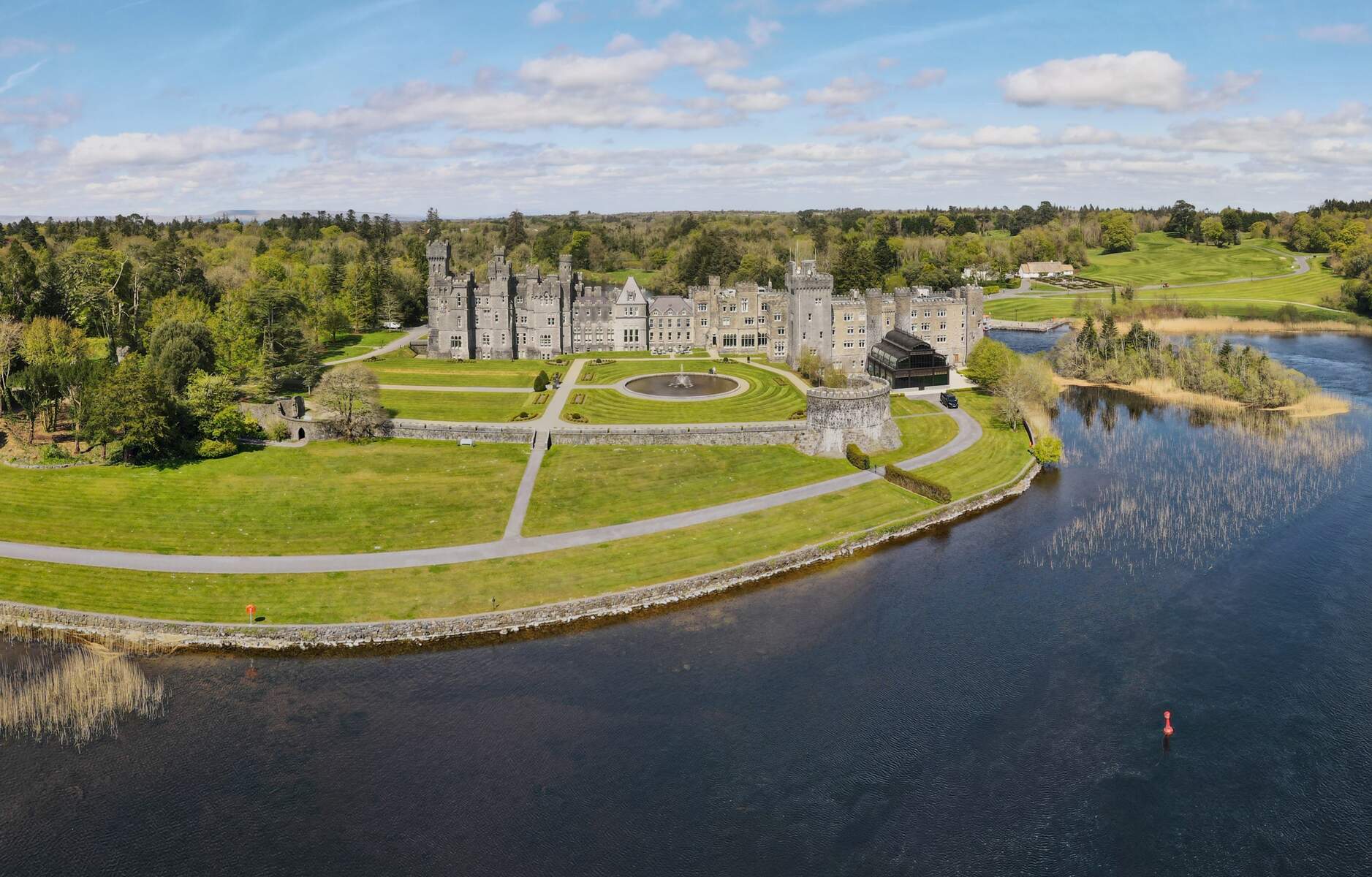
Carnew Castle dominates the main street of the border town of Carnew, offering sweeping views across the southern Wicklow countryside. The complex is essentially two buildings in one: a formidable four‑storey tower house dating from the late 1500s, and a later Georgian‑Gothic house added in the late 18th or early 19th century. The castle’s silhouette – a granite‑arched entrance, an angle tower with its own turret, and a castellated parapet – creates a brooding presence that still commands attention from passers‑by.
History
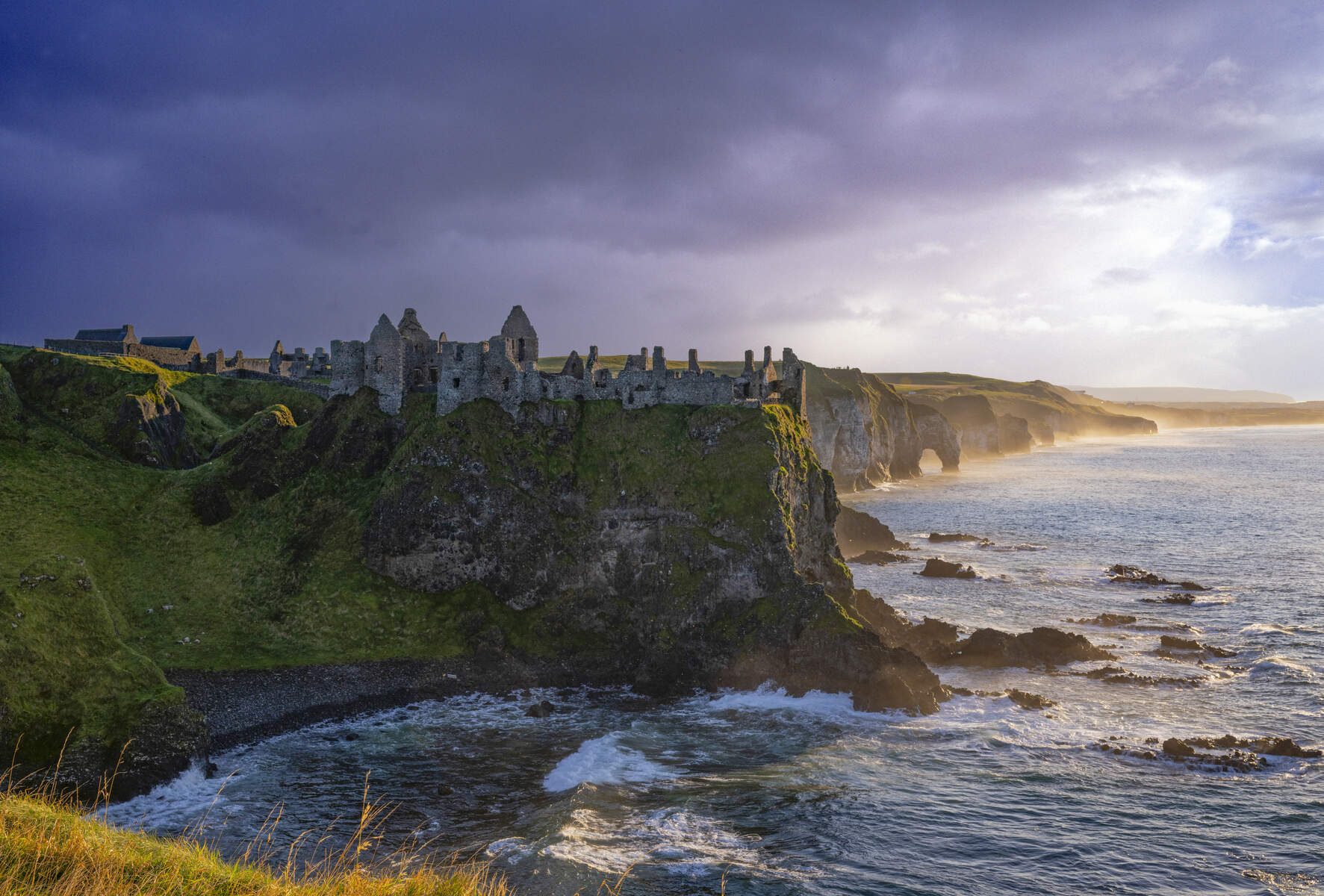
The original stone tower was erected between 1580 and 1620 as a defensive stronghold on the southern edge of the Pale. In 1619 the Welsh entrepreneur Calcott Chambre leased the property and turned the surrounding lands into one of Ireland’s largest deer parks, while also establishing a thriving iron‑smelting industry just outside the town.
During the 1641 rebellion the castle became a siege‑scene. Chambre and roughly 160 English settlers endured a 22‑week blockade by a force of about a thousand Irish insurgents. Starvation forced the besieged to eat carcasses from lime pits, and when they finally surrendered many were hanged or taken to Dublin. The castle changed hands repeatedly – held by the Knockloe O’Byrnes until 1649, taken by Sir Richard Talbot, and later battered by Cromwellian forces under Colonel Hewson, who destroyed its roof.
After lying in ruins for roughly a century and a half, the estate was revived in the early 19th century. The 4th Earl Fitzwilliam re‑roofed the tower and, in 1813, the building was adapted as a rectory for Rev. Richard Ponsonby, later Bishop of Derry. The Georgian‑Gothic façade – a recessed gothic‑arched doorway, sash windows and a castellated parapet – was added at this time, giving the castle its present‑day appearance. Post‑World War II the castle returned to private residential use and remains a family home today.
The castle’s walls also echo the turbulence of the 1798 rebellion. In May 1798 the dungeon was used to detain suspected rebels; 41 prisoners were later executed on the town’s streets. The surrounding town suffered repeated attacks, burning and reprisals, leaving Carnew Castle as a silent witness to those violent chapters.
Heritage Status
Carnew Castle is recorded on the National Inventory of Architectural Heritage (Buildings of Ireland) under reference 16324015. It is listed as a protected structure, recognising its importance as a rare example of a late‑medieval tower house that was later transformed into a Georgian‑Gothic residence. The listing notes the surviving medieval features – the angle tower, machicolations and garderobe chutes – alongside the 19th‑century alterations.
What to See & Do
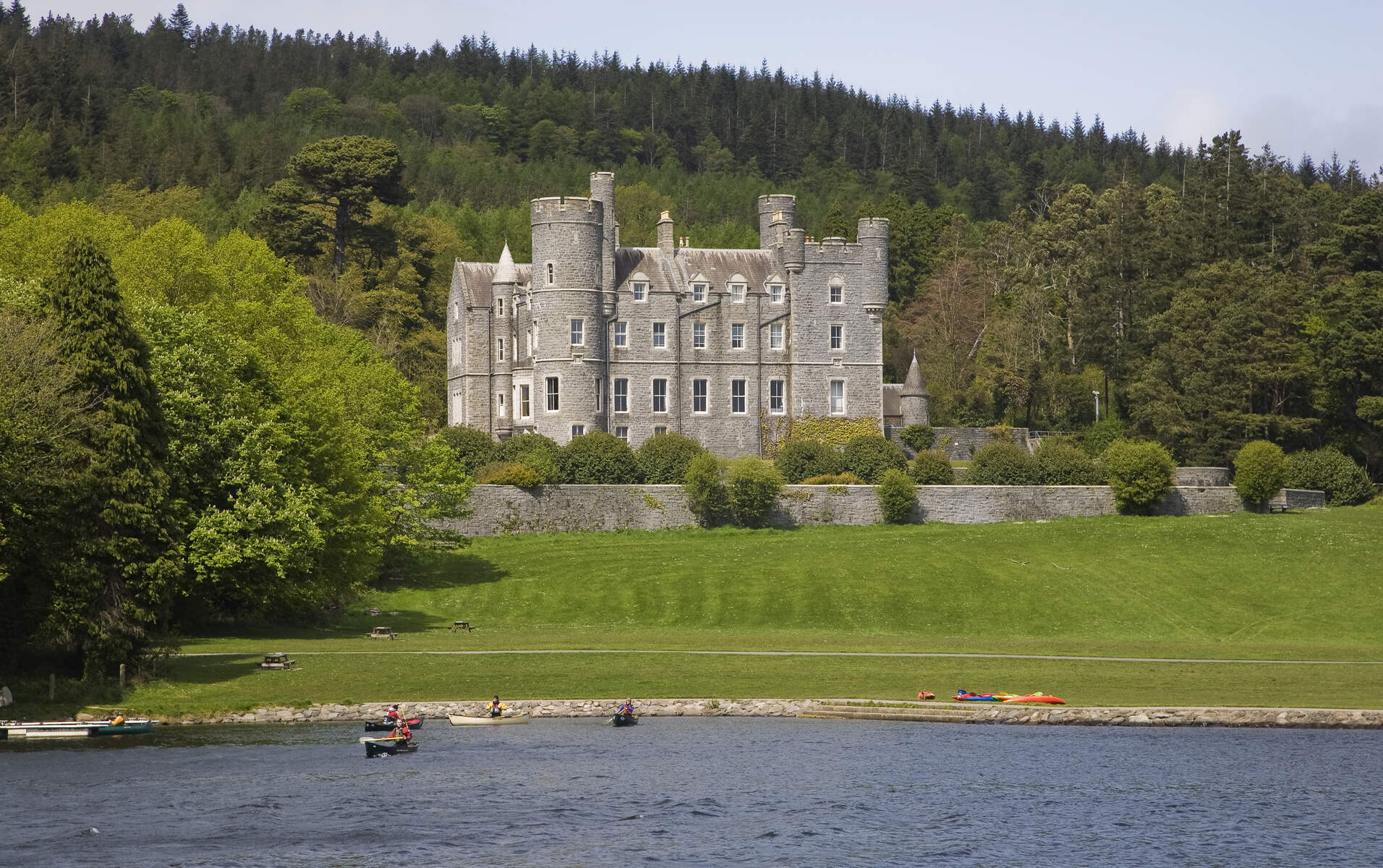
Visitors approaching from the R725 or R748 will first notice the imposing granite‑arched entrance set between two historic towers. The angle tower on the south‑west corner retains its original turret, while a smaller bartizan crowns the north‑west corner. Above the entrance, a machicolation once allowed defenders to drop missiles on attackers – the stonework is still visible and makes for a dramatic photo opportunity.
The exterior stonework reveals the castle’s layered history. Parts of the original granite rubble have been exposed where render has crumbled, offering a tactile sense of the medieval fabric. The garderobe chutes on the opposite side of the tower are rare survivals of medieval sanitation, still evident in the external masonry.
Although the interior is private, the owners occasionally allow brief guided walks around the perimeter when the north‑side gate is open. During a 2018 visit the gate was unlocked, and the owner, Christopher, escorted a small group around the courtyard, pointing out the 19th‑century window enlargements and the rebuilt section of the boundary wall that collapsed in a 2009 storm.
The surrounding landscape is equally rewarding. The castle sits on gently sloping ground that frames views of the Shillelagh oak forest to the south and the rolling fields of the Wexford border to the north. A short walk along the public footpath on Main Street leads to the remnants of Fitzpatrick’s moat, one of the original medieval moats that once surrounded the town’s fortifications.
Getting There
Carnew Castle is located at 52.709387 N, ‑6.499710 W (N 52° 42′ 34.6″ W 6° 29′ 58.3″). The site is easily reached by car via the R725 (Carlow‑Gorey road) or the R748. Parking is limited to the roadside on Main Street; visitors should respect local residents and avoid blocking driveways.
Public transport options:
- Bus Éireann route 132 – stops in Carnew on Thursdays.
- Wicklow Rural Transport – provides a regular service to Gorey and surrounding villages.
For cyclists, the R725 forms part of the Wicklow Way cycle route, offering a scenic, low‑traffic ride into the town.
Nearby Attractions
Carnew makes a convenient base for exploring the southern Wicklow region:
- Baltinglass Abbey – a well‑preserved Cistercian ruin only 12 km north, reachable via the R747.
- Avoca Village – famous for its hand‑weaving mill and the Meeting of the Waters, about 20 km east.
- Shillelagh Forest – extensive oak woodlands ideal for walking and wildlife spotting.
- Brittas Bay – a popular sandy beach on the east coast, roughly a 30‑minute drive.
Practical Information
Carnew Castle is a private residence and is not open as a museum; there is no admission fee. The most reliable way to experience the site is to view it from the public road or, when the north‑gate is open, to arrange a brief exterior tour with the owner. The gate is occasionally opened for local residents and interested visitors; checking the latest status with the Carnew Historical Society or a local shop can be helpful.
The site is easily reached by car via the R725 (Carlow‑Gorey road) or the R748, and is a short walk from the Carnew bus stop served by Bus Éireann route 132 on Thursdays and by Wicklow Rural Transport to Gorey.
For those interested in deeper research, the official heritage record (Buildings of Ireland) lists the castle under reference 16324015 and provides detailed architectural descriptions. Additional historical context can be found on IrishHistory.com’s dedicated page for Carnew Castle.
| Item | Details |
|---|---|
| Coordinates | 52.709387 N, ‑6.499710 W |
| Original construction | Late 16th century tower house |
| Major remodel | Early 19th century Georgian‑Gothic residence |
| Current use | Private home |
| Public access | Exterior view from Main Street; occasional guided walk when gate open |
While the interior remains off‑limits, the castle’s exterior offers a vivid lesson in how Irish fortified houses evolved from medieval strongholds into comfortable country homes. Whether you are tracing the story of the 1641 siege, the 1798 rebellion, or simply admiring the blend of stone‑age grit and Georgian elegance, Carnew Castle is a compelling waypoint on any Wicklow itinerary.