
Overview
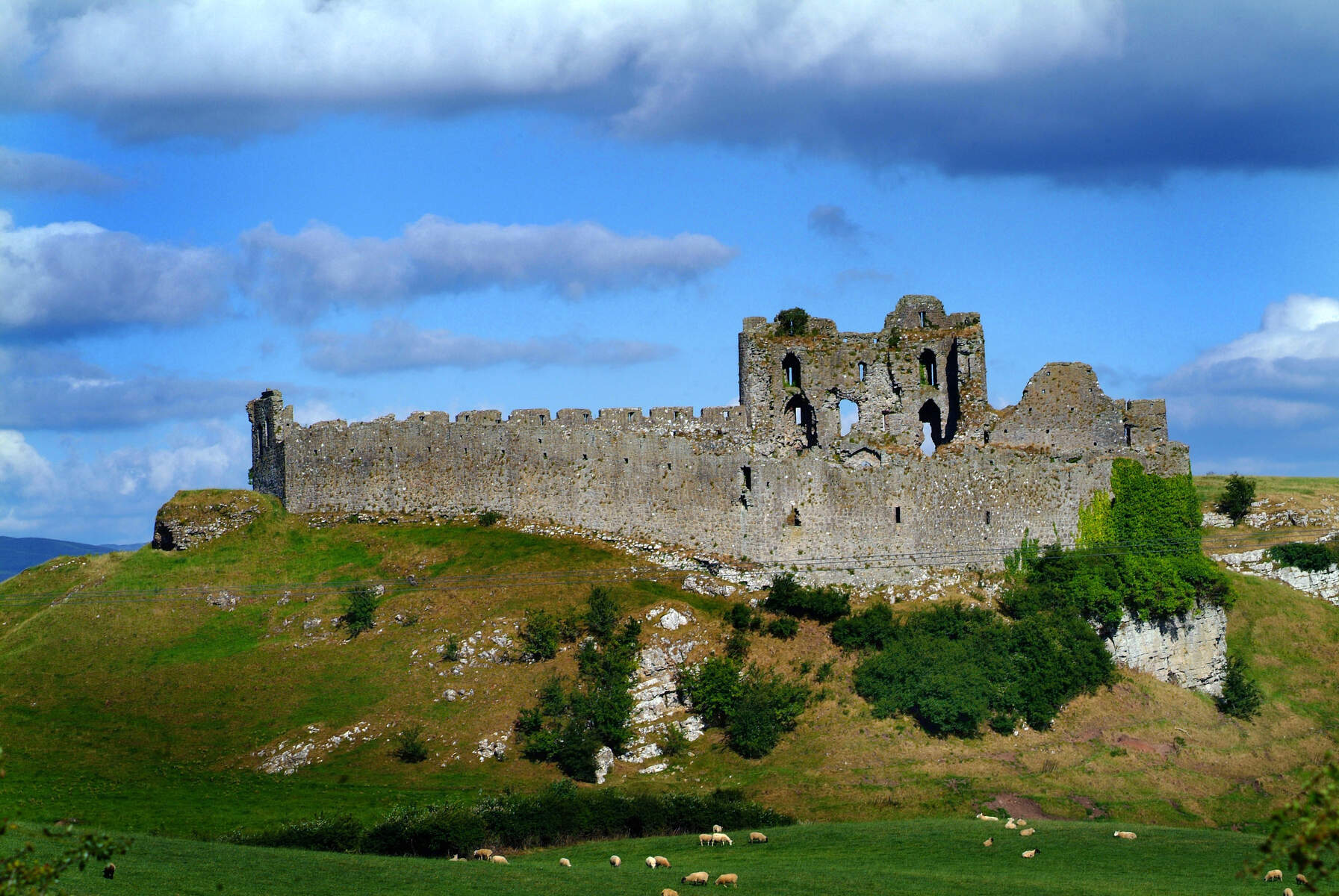
Castle Roche (Irish: Dún Gall) dominates a sheer limestone promontory about 10 km north‑west of Dundalk in County Louth. Built in 1236 by Lady Rohesia de Verdun, the castle marks the historic frontier between the Gaelic province of Ulster and the Anglo‑Norman Pale. Today the ruin is a free, unguided attraction that offers dramatic panoramic views of fields, hills and the distant South Armagh landscape. Its most infamous feature is the so‑called Murder Window, a legend‑laden opening through which Rohesia is said to have pushed her new husband to his death.
History
The de Verdun family arrived in Ireland with King John’s 1185 expedition. While Bertram de Verdun established a manor at Castletown Mount, it was his granddaughter Rohesia who commissioned the stone fortress on the rock. Contemporary records name the site Castellum de Rupe – “castle on the rock”. Rohesia’s marriage to Theobald le Botiller ended abruptly when he died in France; she then returned to Ireland, fortified her lands, and oversaw the construction of the castle.
Local folklore embellishes the history: Rohesia allegedly promised her hand to any architect who could meet her exacting standards, then, after a lavish wedding banquet, lured the newly‑wed husband to the bridal suite and pushed him from the large bedroom window. The blocked opening is now called the Murder Window and is said to be haunted.
Strategically, Castle Roche guarded a vital pass into what is now South Armagh. In 1561 it hosted a gathering of all English forces in Ireland, and during the Bruce Invasion (1315‑16) it served as a defensive stronghold. The castle fell into ruin after the Cromwellian conquest of 1641, leaving only its walls, gatehouse, and a few interior fragments.
What to See & Do
- Gatehouse and Twin Towers – The imposing gatehouse, flanked by two four‑storey towers, still frames the original entrance. Arrow‑slits and crenellated parapets hint at its defensive purpose.
- Curtain Walls – Roughly 72 m of the longest wall and a shorter 37 m section survive, outlining the triangular footprint dictated by the rock outcrop.
- Great Hall Remains – Foundations of the great hall, once three storeys high, can be traced on the southern side of the enclosure.
- Murder Window – Although now blocked, the window’s location is marked on the ruin; the story adds a dramatic narrative for visitors.
- Panoramic Views – From the highest points you can see the rolling patchwork of County Louth, the Cooley Peninsula, and on clear days the distant hills of South Armagh.
- Nearby Attractions – A short drive brings you to the Cooley Peninsula, Slieve Gullion Forest Park, Proleek Dolmen, and the historic town of Dundalk with its museum and vibrant food scene.
Photography enthusiasts will find countless angles: the twin towers against a moody sky, the deep rock‑cut ditch, and the sweeping countryside beyond. History buffs can imagine the 16th‑century English hosting or the 1641 Cromwellian siege while walking among the stone‑scarred walls.
Practical Information
- Access – The castle sits on private farmland. From the N1 or N53 take the narrow country lane toward Roche and follow the signposted farm gate. It is essential to close the gate after passing to avoid disturbing livestock.
- Parking – There is no dedicated car park. Visitors must park in the very tight roadside pull‑in spots near the gate. Do not block the road or the gate; park only where space allows.
- Opening Hours & Fees – The site is open all day, free of charge. As a National Monument under OPW guardianship, it is viewable externally only; interior access is restricted due to ongoing conservation work.
- Facilities – No visitor centre, toilets, or café on site. Bring water and any supplies you may need.
- Safety – The terrain is uneven, with steep drops on three sides. Sturdy walking shoes are recommended. Children should be supervised near the edges.
- Navigation – GPS coordinates: 54.0465285, ‑6.488355932. For a visual guide, see the Google Maps street view link.
- Nearby Services – If you need refreshments, Dundalk town (15‑minute drive) offers a range of pubs, cafés and restaurants. Accommodation options include Hotel Imperial and Ballymascanlon Hotel & Golf Resort.
Visiting etiquette: keep the historic fabric intact, avoid climbing on fragile masonry, and respect the private land by leaving gates as you found them. With its blend of stark medieval architecture, sweeping vistas, and a dark legend that still whispers through the stones, Castle Roche provides a uniquely atmospheric glimpse into Ireland’s turbulent past.