
Overview
The Cathedral of the Immaculate Conception, also known locally as St Mary’s Cathedral, dominates Temple Street in the heart of Sligo town. Its 70‑metre (230 ft) square, pyramid‑capped tower is a landmark on the Sligo skyline. Built in the years following Catholic Emancipation, the cathedral remains an active place of worship, a tourist‑friendly landmark, and a work‑in‑progress restoration project. Its Romanesque‑inspired façade of dark‑grey limestone and brick, together with richly coloured mosaic floors, creates a solemn yet uplifting atmosphere that draws both the faithful and architecture enthusiasts.
Name and Significance
Officially the Cathedral Church of the Immaculate Conception of the Blessed Virgin Mary, the building serves as the seat of the Roman Catholic Diocese of Elphin. Locally it is often referred to as St Mary’s Cathedral, reflecting its dedication to the Immaculate Conception of the Virgin Mary.
History
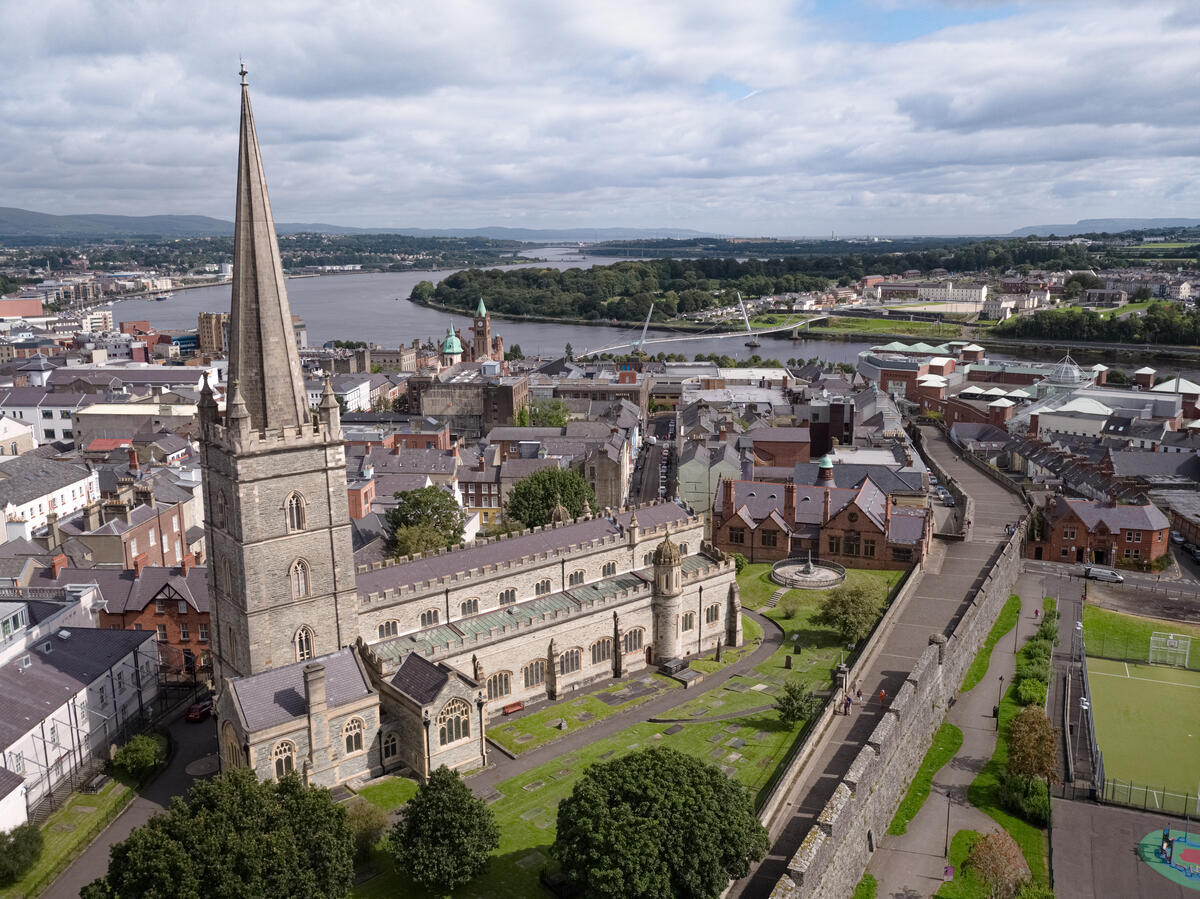
The cathedral’s story begins with Bishop Laurence Gillooly, appointed Bishop of Elphin in 1858. Recognising the growing wealth and size of his diocese, Gillooly commissioned English architect George Goldie (of Goldie & Child) to design a new cathedral that would replace the modest St John’s Parish Chapel, the former pro‑cathedral. The foundation stone was laid on 6 October 1868 and the building opened for divine worship on 26 July 1874 by Cardinal Paul Cullen of Dublin. Work continued until 1882, when the final touches – including the cross atop the spire – were installed by steeplejack Steve Scanavan, who tragically fell to his death during the installation.
A quirky twist in the cathedral’s siting: the land was originally bought by a Protestant owner who intended a garden allotment. When the Catholic Church’s intention to purchase the site was revealed, the seller imposed a condition that the main entrance face away from Sligo town centre, a detail still evident today.
Heritage Designation
The cathedral is listed on the National Inventory of Architectural Heritage (NIHA) under registration number 32012002, recognising its architectural and historic importance as a rare Irish example of a 19th‑century Romanesque‑Revival (Normano‑Romano‑Byzantine) cathedral.
Architecture & Features
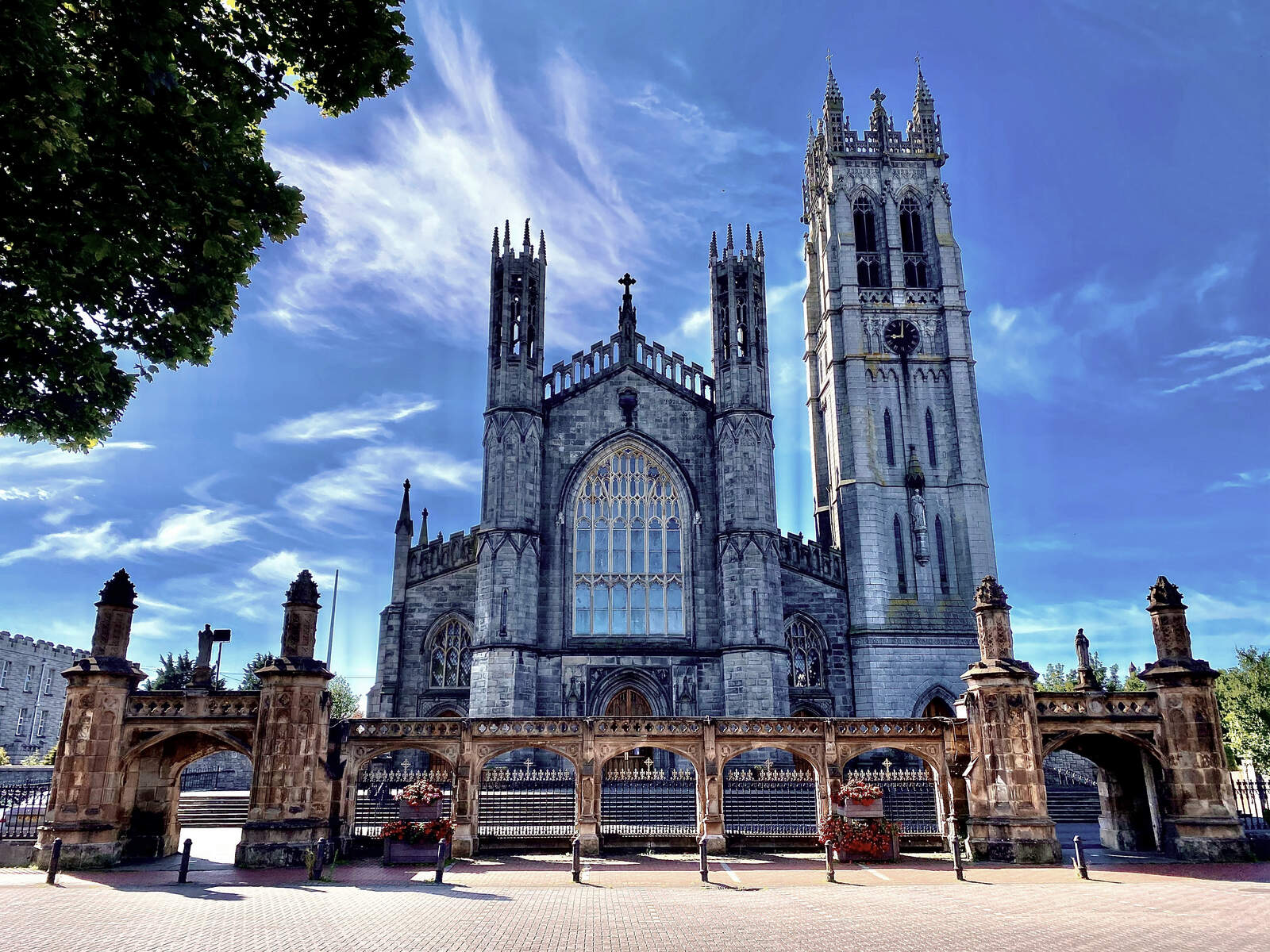
- Style: Romanesque Revival (Normano‑Romano‑Byzantine), the only 19th‑century cathedral in Ireland built in this style.
- Dimensions: Nave stretches 275 ft; the west tower rises 200 ft (≈ 70 m). The interior is supported by eighteen massive limestone pillars and can seat up to 4,000 worshippers.
- Stained‑glass: 69 windows, each casting a kaleidoscope of colour across the nave. The cathedral’s website runs a weekly “Window of the Week” feature, highlighting a different glass each week – the current focus is a depiction of King David in the western transept.
- Mosaic floors: Intricate coloured mosaics add subtle vibrancy to the otherwise dark interior.
- Bells: Nine bells cast by Murphy of Dublin, the largest weighing 1.5 tons; early ringing could be heard ten miles away in Grange.
- Relics: Small relics of several saints, including a fragment associated with St Mother Theresa, are displayed in a side chapel.
- Adoration chapel: A quiet sanctuary for personal prayer, frequently visited by locals and tourists alike.
- Circular baptistery: Set within the apse, originally intended as a mortuary chapel, now a striking focal point during baptisms.
Liturgical Life & Events
The cathedral hosts four Sunday Masses (08:30, 10:30, 12:00, 19:00) and daily weekday Masses. A First Friday Mass at 7 pm is accompanied by Altar Adoration in the sacristy, offering a welcoming opportunity for visitors to experience the parish community. Live streaming of Masses is available via the cathedral’s website for those unable to attend in person. In 2016 the cathedral was designated a Jubilee Church during the Extraordinary Jubilee of Mercy, highlighting its importance in the Irish Catholic landscape.
Recent Events
- January 2023 – Ordination of Deacons: Bishop Kevin Doran ordained two deacons from the Diocese of Kumba, Cameroon, on the Solemnity of the Epiphany. The ceremony was attended by clergy from both Ireland and Cameroon and was widely reported in local media.
- March 2009 – Cardinal Seán Brady’s Lenten Sermon: The then‑Archbishop of Armagh celebrated Mass and opened the Parish Mission of Prayer and Reflection, delivering a homily on “Hope in Challenging Times”.
Stained‑Glass Highlights
The cathedral’s “Window of the Week” series, published on its official website, invites visitors to discover the stories behind individual panes – ranging from biblical scenes to local saints. This initiative encourages repeat visits, as the highlighted window changes each week.
Community Events
Beyond the regular liturgy, the cathedral hosts special events such as:
- Parish Mission of Prayer and Reflection during Lent (e.g., 2009 Lenten mission led by Cardinal Brady).
- Deacon ordinations and other diocesan celebrations, which draw participants from across Ireland and abroad.
- Music concerts featuring the cathedral organ and choir, often advertised on the parish’s online calendar.
These events underline the cathedral’s role as a cultural hub for Sligo and the wider Diocese of Elphin.
Restoration Project
A multi‑year restoration programme is currently underway, focusing on stone cleaning, roof repairs, and the preservation of the historic stained glass. Information panels throughout the building explain the work to visitors, making the restoration itself an educational experience.
What to See & Do
Step inside to experience the cathedral’s austere beauty: the dark limestone walls contrast with the luminous stained glass, while the mosaic floor guides you toward the high altar. Explore the presbytery building, notable for its statue of Bishop Gillooly and a gabled window that exemplifies Goldie’s attention to detail. The circular baptistery set within the apse, originally designed as a mortuary chapel, now serves as a striking focal point during baptisms.
Visitors can:
- Attend a Sunday Mass or the First Friday 7 pm Mass and Adoration.
- Follow the “Window of the Week” series on the cathedral’s website.
- Observe the ongoing restoration work, with information panels on site.
- Browse the parish shop in Gillooly Hall (open Saturdays 11 am–2 pm) for souvenirs and local crafts.
- Join an occasional guided tour organised by the parish (check the website for dates).
Visitor Experience
Upon entering, the cool scent of limestone mingles with the hushed echo of footsteps beneath the towering spire. The acoustics amplify the choir’s chant, creating a reverent atmosphere that feels both historic and alive, especially where restoration work is visible.
Practical Information
The cathedral is open to visitors year‑round; there is no admission charge. Parking is available on‑site, including spaces for disabled visitors. While the building is primarily a place of worship, it welcomes non‑religious guests who wish to appreciate its architectural and historical significance.
Contact
- Phone: 071 916 2670
- Email: info@sligocathedral.ie
- Website: http://www.sligocathedral.ie/
Accessibility & Services
- Wheelchair access: Ramps are provided at the main entrance; interior aisles are wide enough for mobility aids.
- Facilities: Restrooms are located near the presbytery building. No dogs are permitted inside the cathedral.
- Guided tours: The parish organises occasional guided tours; check the website or inquire at the parish office for dates.
Visiting Tips
- Dress modestly out of respect for the liturgical setting (shoulders and knees covered).
- Photography is allowed in most areas, but flash is discouraged to protect the stained‑glass.
- Best time to visit is early morning on a weekday, when the nave is quiet and the light through the windows is at its most striking.
- Combine with nearby sites: Within walking distance are several historic sites, including Sligo Abbey (≈ 0.6 km) and the Friary of the Holy Cross (≈ 350 m). The cathedral also serves as a convenient base for exploring the surrounding countryside, such as Benbulben and the Carrowmore Megalithic Cemetery on the Coolera Peninsula.
Nearby Attractions
Within walking distance are several historic sites, including Sligo Abbey (≈ 0.6 km) and the Friary of the Holy Cross (≈ 350 m). The cathedral also serves as a convenient base for exploring the surrounding countryside, such as Benbulben and the Carrowmore Megalithic Cemetery on the Coolera Peninsula.
Getting There
The cathedral is centrally located in Sligo town and is easily reachable on foot from most hotels and B&Bs. Public transport routes stop nearby on Temple Street; Bus Éireann services 71, 70 and 71A pass the cathedral en route to and from Dublin, Galway and local towns. The town is also served by the Sligo Mac Diarmada railway station, with regular Irish Rail services from Dublin Connolly. For drivers, on‑street parking is available in the adjacent car park and there are designated disabled bays.
Sunday Mass schedule (all times are local):
| Time | Service |
|---|---|
| 08:30 am | Sunday Mass |
| 10:30 am | Sunday Mass |
| 12:00 pm | Sunday Mass |
| 07:00 pm | Sunday Mass |
Live streaming of Masses is offered via the cathedral’s website for those unable to attend in person. The parish shop in Gillooly Hall opens Saturday 11 am–2 pm, providing souvenirs and local crafts.
The cathedral’s restoration project is ongoing, with major improvements aimed at protecting the building’s structural integrity and enhancing visitor experience. No special tickets are required; simply respect the liturgical schedule and any signage indicating work zones.
Events & Music
The cathedral’s excellent acoustics make it a popular venue for organ recitals and choral concerts throughout the year. Performances are listed on the parish calendar and often feature local and visiting musicians. These concerts are open to the public and provide a cultural complement to the liturgical schedule.
Guided Tours & Visitor Experience
Guided tours, usually run on Saturday mornings, are led by parish volunteers who explain the cathedral’s history, architecture and the ongoing restoration. Tours are free, but booking in advance via the website is recommended, especially during peak tourist periods. Visitors are encouraged to explore the Window of the Week displays and to pause in the quiet Adoration chapel for personal reflection.