
Overview
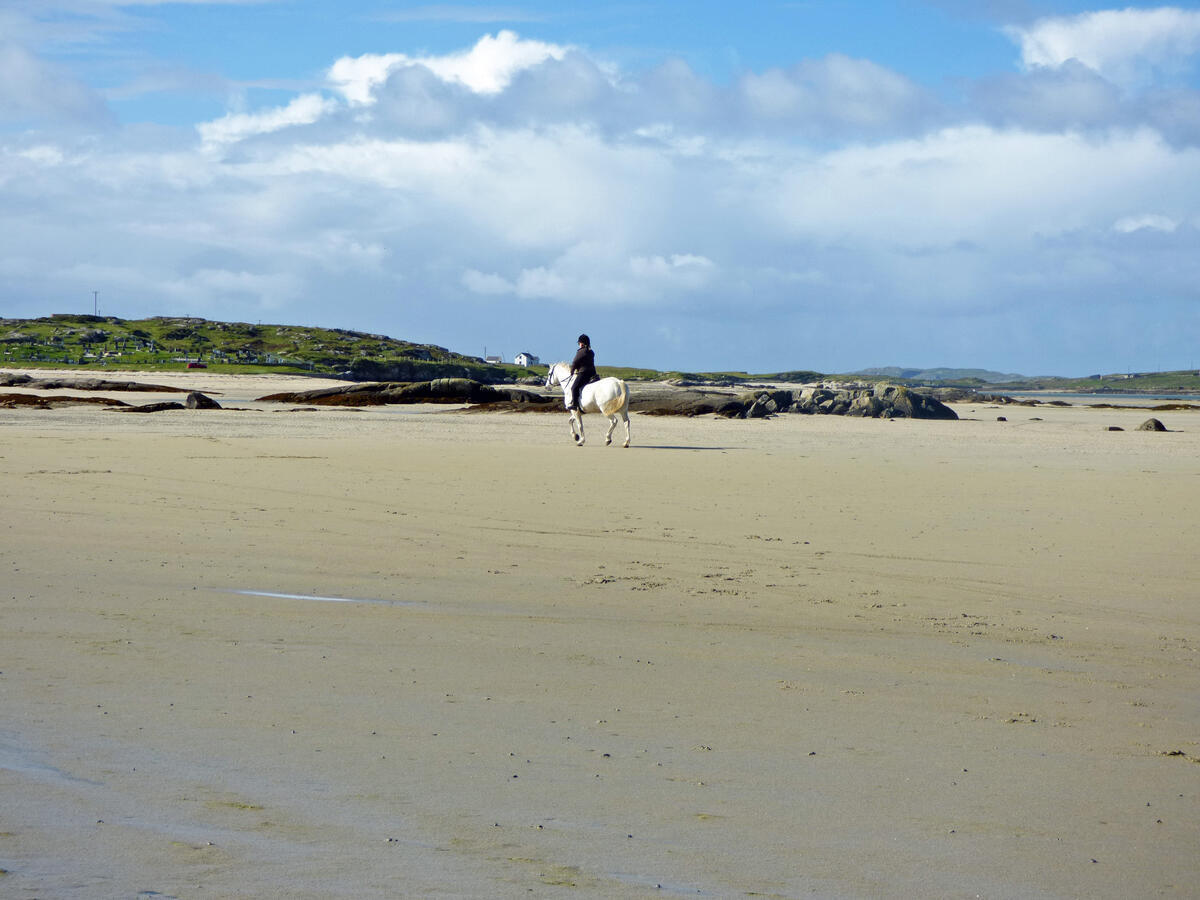
The Cleggan Disaster Memorial Cross stands on Omey Strand, a sweeping, tide‑kissed beach that stretches between the villages of Cleggan and Claddaghduff on the rugged Connemara coastline. The cross is a tall, hand‑carved Celtic monument that dominates the small graveyard at the edge of the sand. Its stark silhouette against the Atlantic sky makes it an unmistakable landmark for anyone walking the strand at low tide, and a powerful reminder of a night when the sea turned deadly for a close‑knit fishing community.
History
On 27 October 1927 a sudden, ferocious gale swept across the Atlantic waters off Cleggan. Twenty‑five local fishermen – sixteen from the now‑abandoned village of Rossadilisk, nine from the island of Inishbofin, and ten from County Mayo – were out mackerel‑fishing when the storm struck without warning. The gale capsised their boats, and all twenty‑five men were lost to the sea. The tragedy devastated the small coastal settlements that relied on fishing for their livelihood.
In the aftermath, funds were raised across the United Kingdom, the United States and Australia to support the bereaved families. A permanent memorial was erected on Omey Strand, the very place where many of the bodies were recovered. The Celtic cross bears the names of the sixteen Rossadilisk victims and the other men who perished, ensuring that each family’s loss is recorded for posterity. The site has become a focal point for annual remembrance ceremonies, most recently on the 90th anniversary in 2017, when over five hundred people gathered for masses and commemorations.
What to See & Do
- The Celtic Cross – The cross itself is a striking example of traditional Irish stone carving. Its upright shaft rises several metres above the graveyard, and the inscribed names are still legible despite the salty air. Take a moment to read each name; the stone tells a personal story of a community forever altered by the sea.
- Omey Strand Graveyard – The cross sits within a small, tide‑besieged burial ground. The quiet rows of headstones, many weathered by wind and sand, add a contemplative atmosphere. The site is also the final resting place for several of the disaster’s victims.
- Tide‑Driven Access – During low tide the strand is exposed, allowing visitors to walk (or, with local permission, drive) across the 1 km stretch of sand to Omey Island. The crossing is a unique experience, but be sure to check the tide tables – the sea can return quickly.
- Nearby Attractions – While you’re on Omey Strand, consider exploring the 7th‑century St Feichin’s Church ruins on Omey Island, the ancient burial ground, and the holy well that also bears his name. The island’s rugged cliffs and panoramic views of the Twelve Bens, the Aran Islands and the Mayo coastline make for excellent photo opportunities.
- Cultural Context – The disaster has inspired poems, songs and a documentary by TG4. If you’re interested in deeper research, the Wikipedia entry on the Cleggan Bay Disaster provides a concise overview, and local book‑shops in Cleggan stock Marie Feeney’s The Cleggan Bay Disaster for a more detailed narrative.
Getting There – Public Transport
- By Coach – Citylink operates a service from Galway to Cleggan. Check the latest timetable on the Citylink website as frequencies can vary seasonally.
- By Car – From Galway, take the N59 west past Clifden, then follow local signs to Cleggan and the turn‑off for Claddaghduff. Parking is available near the village pier; from there it is a short walk to the strand.
- By Bus – Local Bus Éireann routes serve the Cleggan area, though services are limited; plan ahead and confirm times.
Practical Information
| Item | Details |
|---|---|
| Admission | Free entry – the site is open to the public at all times. |
| Opening Hours | Accessible 24 hours; the cross can be visited any time the tide permits safe access to the strand. |
| Accessibility | Reachable on foot from the parking area at the edge of Omey Strand. The terrain is sandy and uneven; sturdy shoes are advisable. Access is tide‑dependent, so plan visits around low‑tide windows. |
| Getting There | See the ‘Getting There – Public Transport’ section above. |
| Website | Cleggan Bay Disaster – Wikipedia |
Visiting Tips Specific to the Site
- Check Tide Tables – The strand is only exposed for a few hours around low tide. Local tide tables are available online or at the Cleggan tourist office. Missing the window can leave you stranded on the sand until the water recedes again.
- Respect the Graveyard – The memorial cross and surrounding burial ground are places of remembrance. Keep noise to a minimum and avoid stepping on headstones.
- Seasonal Events – The annual Omey Races, a unique horse‑racing event held on the exposed strand, may coincide with your visit. If the races are on, the beach will be lively, and the cross will be a quiet counterpoint to the festivities. (Fact‑check required)
- Photography – The cross is especially photogenic at sunrise or sunset when the low‑angle light accentuates the stone’s texture. The backdrop of the Atlantic adds dramatic contrast.
Why It Matters
The Cleggan Disaster Memorial Cross is more than a stone marker; it is a tangible link to a community’s collective memory. It tells the story of a night when the Atlantic claimed twenty‑five lives, reshaping the social fabric of Cleggan and its neighbouring islands. For visitors, the site offers a blend of natural beauty, historical depth, and a moment of quiet reflection amid the ever‑changing Irish seascape.
Whether you are tracing the footsteps of the fishermen, exploring the wider Connemara landscape, or simply seeking a poignant spot on the Wild Atlantic Way, the memorial cross at Omey Strand provides a moving encounter with Ireland’s maritime heritage.