
Overview
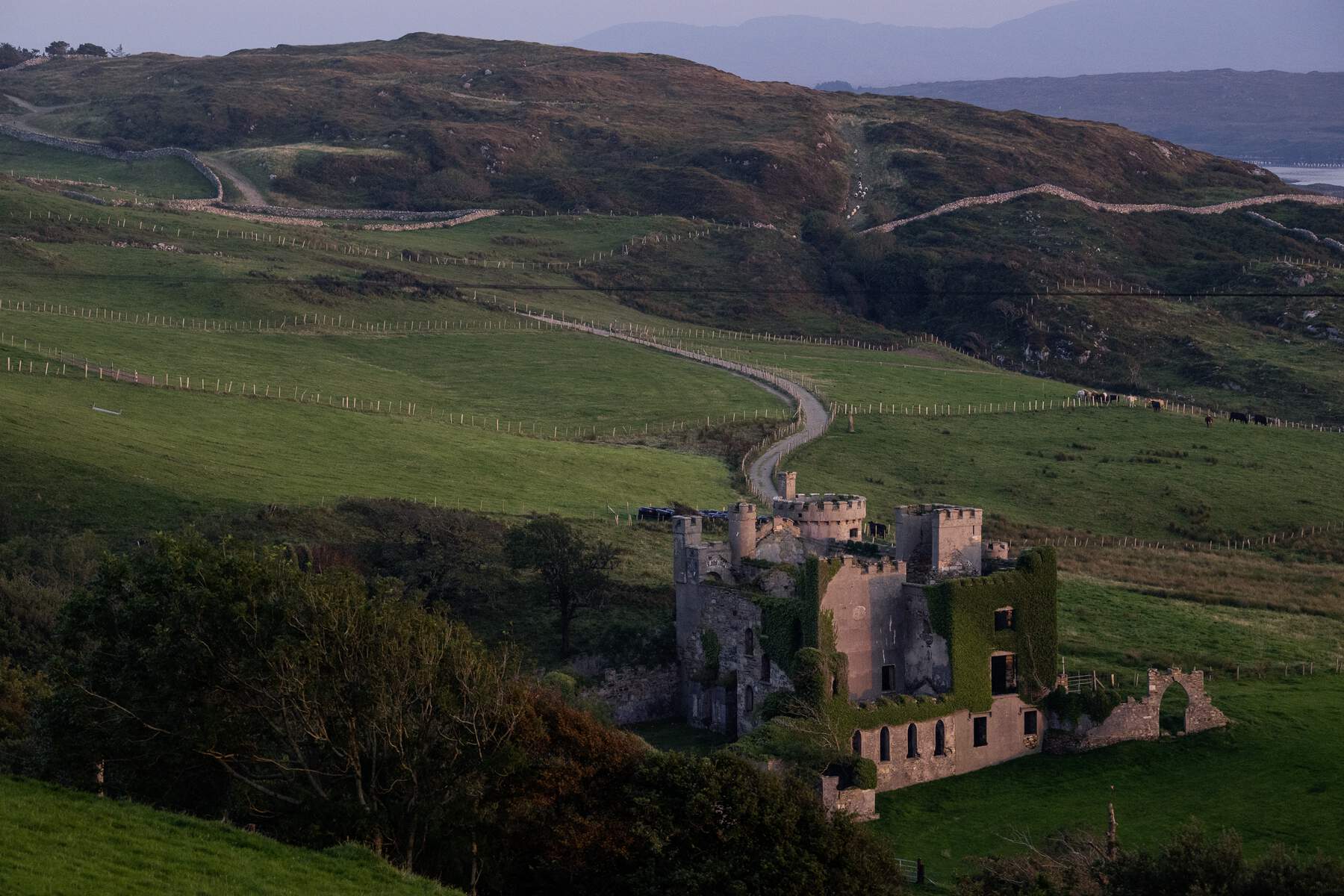
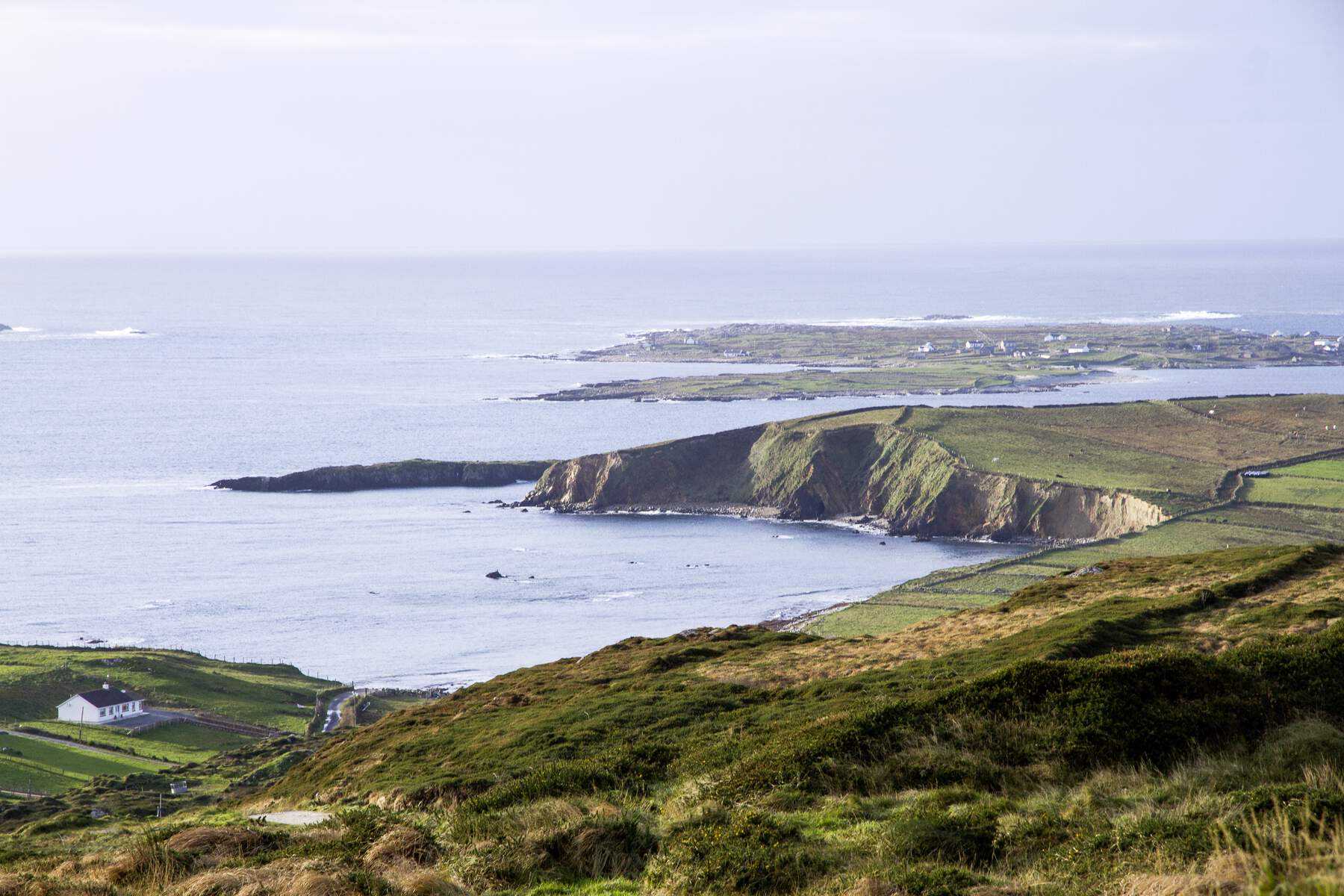
Clifden Castle sits on a south‑facing ridge of the Sky Road, just under a kilometre from the tiny parking area that marks the entrance to the estate. The ruined stone shell, once a grand Gothic Revival manor house, dominates the view over Clifden Bay and the Twelve Bens, making it a natural photo stop for anyone travelling the Wild Atlantic Way. Although the building is roofless and the interior is inaccessible, the surrounding demesne – with its mock standing stones, walled garden remnants and a historic gateway – offers a tangible sense of the estate’s former splendour.
History
The castle was commissioned around 1818 by John D’Arcy, the founder of the nearby town of Clifden. Built in the early Gothic Revival style, the house featured a rounded southeast tower, a square tower and an entry tower with twin round turrets. D’Arcy also erected four standing stones along the approach as a personal tribute to his children.
After John’s death in 1839, his son Hyacinth inherited the estate, but the Great Famine of the 1840s devastated the family’s rental income. The D’Arcy estate went bankrupt and was sold in 1850 to the Eyre brothers of Bath. The Eyres used the house as a holiday home, adding a new roof and altering the façade in the 1850s‑60s. When John Joseph Eyre died in 1894 the house was left uninhabited; agents ran the surrounding lands while the manor fell into disrepair.
In the early 20th century the property changed hands several times, most controversially when local butcher J.B. Joyce bought it in 1917. Fierce local opposition led to a protracted legal battle, and the land was finally transferred to a cooperative of tenants in 1920. The cooperative stripped the roof, windows, timber and lead, accelerating the ruin. In 1935 the Land Commission passed ownership to the tenants, who still hold the castle jointly today.
What to See & Do
- The Ruined House – Walk around the exterior to admire the surviving towers, pointed arches and the ivy‑clad stonework. The south‑facing façade offers sweeping views of Clifden Bay and the Atlantic horizon.
- The Gateway – The impressive stone archway with two towers marks the entrance to the demesne. It is visible from the Sky Road and makes an excellent backdrop for photos.
- Standing Stones – Five stones line the winding path from the gate to the house. Four of them were placed by John D’Arcy; the fifth may be a genuine prehistoric stone that was incorporated into the landscape.
- Enclosed Farmyard & Walled Garden – Remains of a grain store, stable, workers’ cottages and a walled garden with a well and pond can be glimpsed to the west of the main house.
- Marine Temple – A curious shell‑made structure on the stream east of the castle adds a whimsical touch to the ruin.
The site is a popular launch‑point for the Sky Road scenic drive, a 16 km loop that offers dramatic coastal vistas. Many visitors combine a walk to the castle with a stop at Eyrephort Beach or a quick detour into Clifden town for food and culture.
Practical Information
Getting There
Clifden Castle is accessed via the Sky Road, about 2.5 km west of Clifden town. From the N59, follow signs for the Sky Road; the castle gate appears shortly after the first hairpin turn. The site is roughly 80 km (≈1 h 20 min) from Galway city and 1 km from the small parking area.
Parking
The parking area is a narrow triangular gravel patch that accommodates three to four cars. It is easy to miss, so keep an eye out for the stone archway with two towers. The exact location can be viewed on Google Maps.
| Feature | Details |
|---|---|
| Capacity | 3‑4 cars |
| Surface | Gravel |
| Visibility | Easy to miss; look for the gate arch |
| Fees | Free |
Walk to the Ruins
From the parking spot, follow the winding gravel track through horse‑pastured fields. The walk takes about 15‑20 minutes (≈1 km) and is suitable for most fitness levels, though the ground can become muddy after rain. The path passes the five standing stones and the original gatehouse before opening onto the castle’s south‑facing façade.
Visiting Rules
- The castle is on private land; respect signage and stay on the designated path.
- Entry to the interior is prohibited – the roof has been removed and the structure is unstable.
- No facilities (toilets, café) are available on site; plan accordingly.
- Dogs are allowed on a leash, but be mindful of grazing livestock that may be present.
Nearby Attractions
- Sky Road Drive – A 16 km loop with panoramic sea and mountain views.
- Clifden Town – Restaurants, pubs and the John D’Arcy Monument are a short drive away.
- Eyrephort Beach – A quiet sandy beach 10 minutes by car.
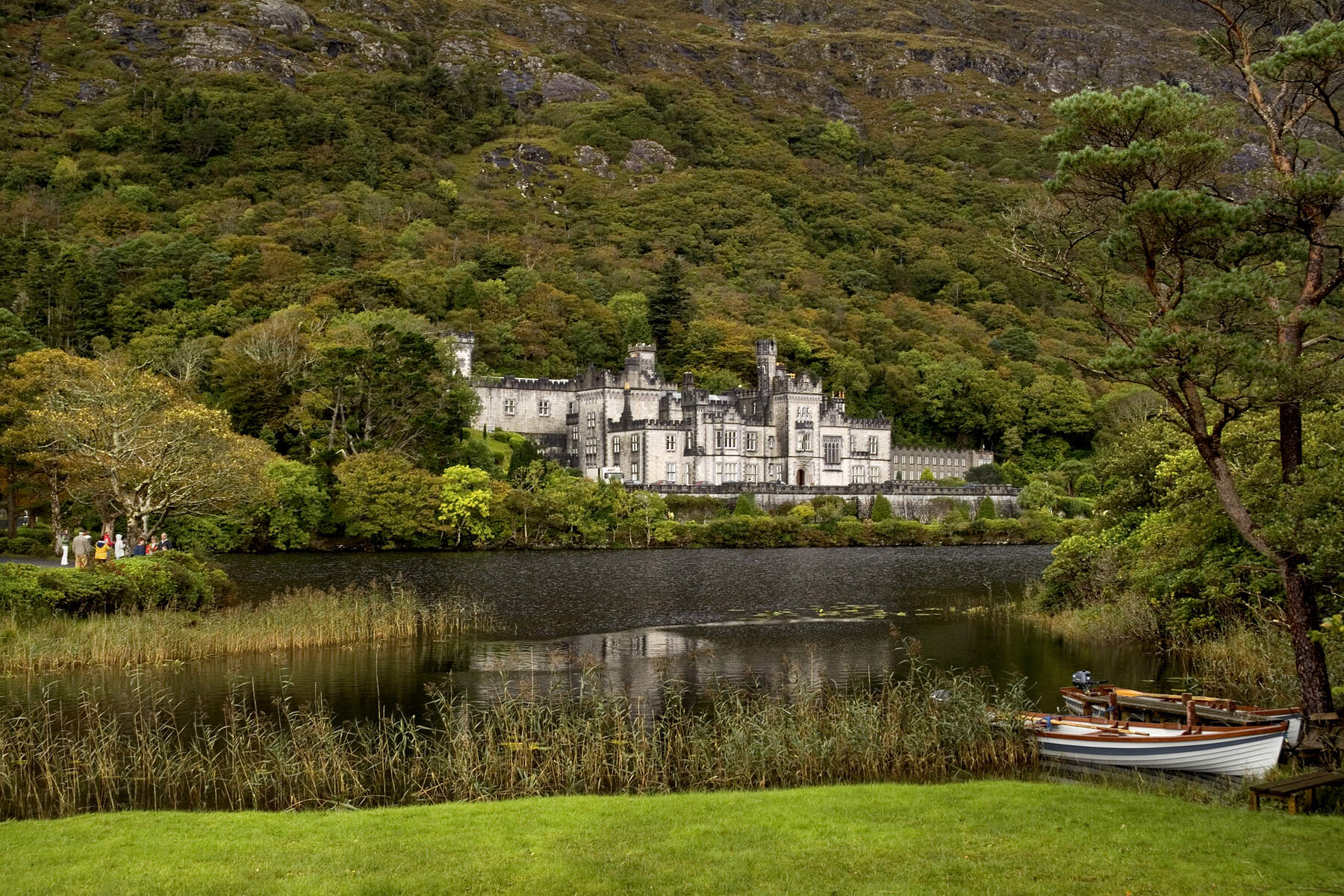
- Kylemore Abbey – A 25 min drive to a spectacular Victorian abbey and walled garden.
For more detailed history, see the Wikipedia entry and the official Galway tourism page linked above.
Clifden Castle is free to visit, but the experience is enriched by a respectful approach to the historic landscape and the surrounding Connemara scenery.