
Overview
Cloch Chléire (pronounced Cloch Khlay‑reh) is one of Cape Clear Island’s most enigmatic treasures. Dating to around 3000 BC, this 5,000‑year‑old carved stone is a passage‑tomb slab that bears intricate spiral and zig‑zag motifs. Its design links the island to the Neolithic Boyne Valley civilisation—an unexpected connection, as no other artefacts of that culture have been found in Munster. The stone was deliberately buried for millennia, suggesting an ancient effort to erase its presence, yet it has survived to become a focal point for archaeology enthusiasts and curious travellers alike.
History
The stone’s origins lie in the late Neolithic period, a time when communities across Ireland erected megalithic monuments to mark burial sites and ritual landscapes. Unlike the more famous passage graves of the Boyne Valley, Cloch Chléire is a solitary slab, yet its decorative language—tight spirals, chevrons and zig‑zag patterns—mirrors the artistry seen at Newgrange and Knowth. Scholars believe the stone may have marked the entrance to a now‑lost burial chamber, its symbolism possibly representing the journey of the soul or the cycles of nature.
During the early 20th century, local folklore recorded that the stone had been moved from its original setting after a storm exposed it on a beach. It was then re‑erected in a concrete base near the island’s tourist office, a location that protects it from the sea but also places it within easy reach of visitors. The act of re‑burial centuries ago, combined with its later relocation, adds layers of mystery: why was the stone hidden, and what stories were its makers trying to conceal?
What to See & Do
- Examine the carvings up close – The stone’s surface is still legible enough to trace the spirals and zig‑zags. Take a moment to compare them with the motifs at the Boyne Valley sites; the similarity is striking.
- Visit the Cape Clear Heritage Centre – Just a short walk from the stone, the Heritage Centre houses a 3‑D multimedia display on the Fastnet Rock Lighthouse and a rotating exhibition of artefacts, including the O’Driscoll archive. The centre provides deeper context for Cloch Chléire and other prehistoric sites on the island.
- Combine with a walking trail – The Red Loop (Lúb an Ghleanna) and Green Loop (Lúb na Cnoiciní) both pass near the stone, allowing you to weave a day of scenic cliff‑top walking with a stop at this ancient monument.
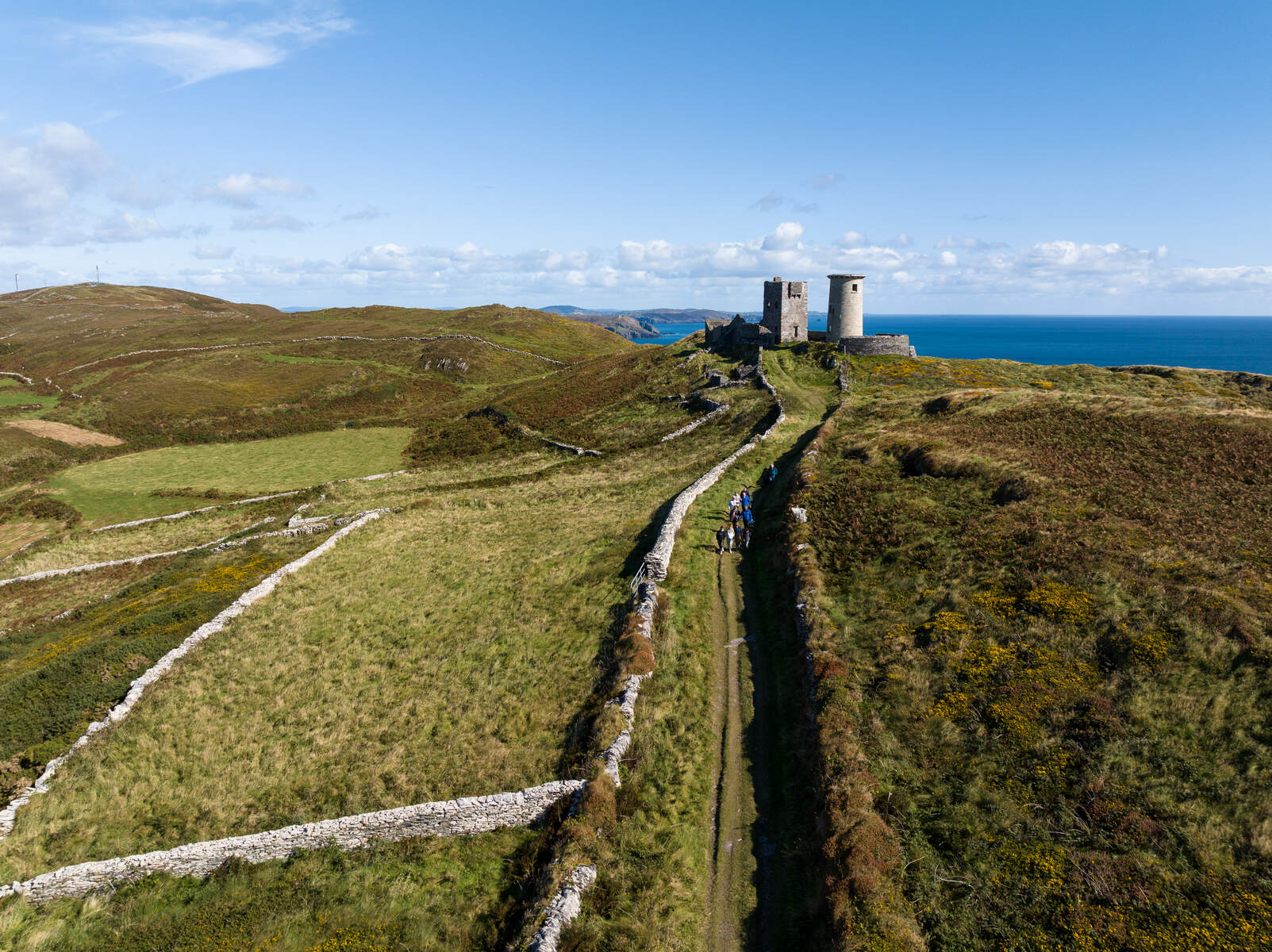
- Photography – The stone’s stark silhouette against the Atlantic sky makes for dramatic photos, especially at sunrise or sunset when the light accentuates the carvings.
- Learn from locals – The island’s bilingual community often shares oral histories about the stone. Stop by the tourist office to hear anecdotes that aren’t recorded in any guidebook.
Practical Information
Cloch Chléire is an outdoor monument with free entry and no formal opening hours; it can be visited year‑round. The stone sits on a concrete plinth near the North Harbour tourist office, making it accessible from the main ferry landing. While the immediate area is level, the surrounding terrain can be uneven, so sturdy shoes are advisable.
| Feature | Details |
|---|---|
| Opening Hours | Open all year (no restrictions) |
| Admission | Free |
| Nearest Parking | Tourist office car park (free) |
| Accessibility | Ground‑level access; uneven ground may be challenging for wheelchairs |
| Best Visiting Times | Early morning or late afternoon for softer light |
Getting there – Ferries from Baltimore (≈ 40 minutes) and Schull bring you to North Harbour. From the dock, follow the signposts to the tourist office; the stone is a short walk away. If you’re exploring on foot, the island’s electric bus service also stops near the site during the summer season.
Nearby amenities – The tourist office houses a small shop selling locally‑produced crafts, goat’s cheese, and Cape Clear gin. A café nearby offers a spot to rest after admiring the stone. The island’s weekly farmers’ market (Sundays, summer) is also within walking distance, providing fresh produce and handmade souvenirs.
Further reading – The Digital Archive on the Cape Clear Heritage website (capeclearheritage.ie) includes high‑resolution images of Cloch Chléire and scholarly articles on its significance. For those interested in a deeper dive, the books The Natural History of Cape Clear by Tim Sharrock (1973) and its 2020 update by Steve Wing contain chapters on the stone’s archaeological context.
Seasonal notes – While the stone is accessible year‑round, the island’s visitor centre operates daily from June to September and by appointment outside those months. If you plan a visit outside the summer window, it’s wise to call ahead at +353 283 9119 to confirm opening times for the Heritage Centre and any guided talks about Cloch Chléire.
Nearby prehistoric sites
Cloch Chléire forms part of a wider network of Neolithic monuments across Cork, such as the Altar Wedge Tomb and the famous Drombeg Stone Circle further inland. Visiting these sites together offers a broader perspective on Ireland’s ancient stone‑working traditions.
Cloch Chléire stands as a silent ambassador of a prehistoric world that once stretched from the Boyne Valley to the southern tip of Ireland. Whether you are an archaeology buff, a casual history lover, or simply a traveller seeking a touch of mystery, the stone offers a rare glimpse into a civilisation that deliberately tried to hide its legacy—only for it to re‑emerge, inviting you to ponder the stories etched in stone.