
Overview
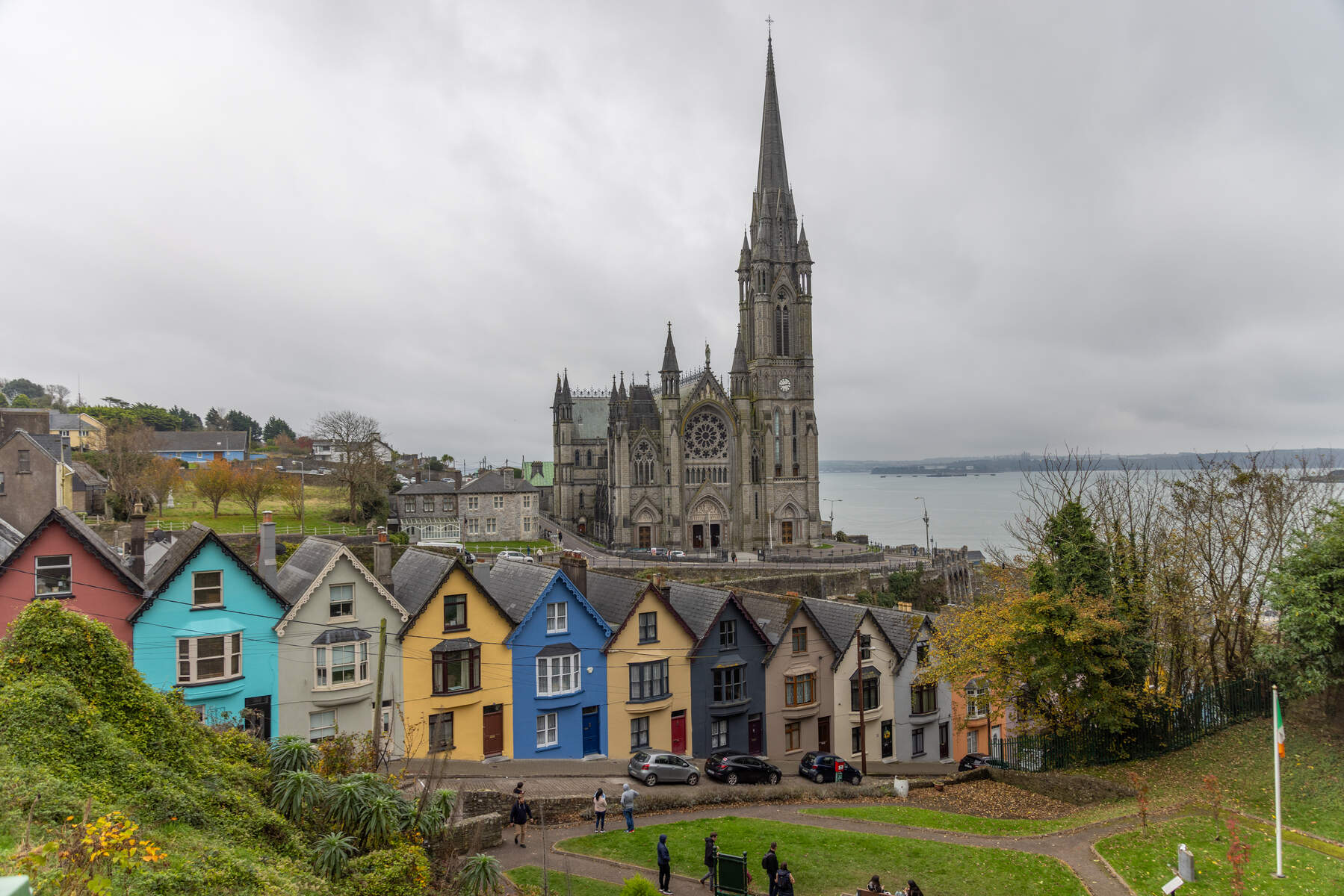
St Colman’s Cathedral, commonly known as Cobh Cathedral, crowns Cathedral Place and watches over Cork Harbour from a dramatic hilltop. Completed in 1919, its 91.4 m (300 ft) octagonal spire makes it the tallest church in the Republic of Ireland. Built in a French‑inspired Gothic Revival style, the structure is a striking blend of blue Dalkey granite, Mallow limestone dressings and a roof of Belgian blue slate. The cathedral’s silhouette – rose‑windowed west front, red Aberdeen granite pillars and a bronze‑capped spire – is one of the most photographed landmarks on the Irish coast.
History
The cathedral’s origins lie in a modest “Pro‑Cathedral” erected on the site in 1769. After the 1856 death of Bishop Timothy Murphy, the dioceses of Cloyne and Ross were split and Bishop William Keane resolved that Cloyne needed a proper cathedral. In 1867 a diocesan committee selected the partnership of Edward Welby Pugin & George Ashlin, despite a modest £25,000 cost limit.
Construction began on 30 September 1868, but Bishop Keane’s demand for a more elaborate design added flying buttresses, traceried parapets and ornate niches, inflating the budget. Work stalled in 1883 when funds ran out, only to resume in 1889 under Bishop John McCarthy. The west front was finished in 1890 and interior work – Bath and Portland stone cladding and a pitch‑pine vaulted roof – began in 1893.
The iconic spire rose between 1911 and 1915, reaching its final height of 90 m and being topped with a 3.3‑m bronze cross blessed by Bishop Robert Browne. The cathedral finally opened in 1919, having cost £235,000, and was consecrated on 24 August 1919 in the presence of three of Ireland’s archbishops.
What to See & Do
Exterior splendor
- The spire – At 91.4 m it is the tallest in the Republic, visible for miles across the harbour and crowned with a bronze cross.
- Rose windows – Two massive rose windows sit in high pointed arches on the west façade and transepts, flanked by octagonal turrets.
- Red Aberdeen granite pillars – These vivid pillars frame the west front, contrasting with the blue Dalkey granite walls.
- Panoramic views – From the cathedral steps you can photograph the iconic “Deck of Cards” row of colourful houses with the spire in the background – a favourite spot for Instagrammers.
Interior marvels
- Aisled nave – Seven bays of nave, a triforium and clerestory flood the space with coloured light from the stained‑glass windows.
- Marble shrines – Red Middleton marble forms the two main shrines and the first confessionals in each aisle; other confessionals are of red Aberdeen granite.
- Stained glass – Vibrant windows depict biblical scenes in vivid colour, adding a kaleidoscope of light to the sacred space.
- Woodwork – Intricate carvings line the roof and altar area, showcasing the craftsmanship of the period.
The carillon – Ireland’s only
The tower houses a 49‑bell carillon, installed in 1916 and restored in 1998. It includes Ireland’s largest bell, St Colman, weighing 3.6 tons. An automated mechanism strikes the hour and quarter‑hours, while a live carillonneur can perform concerts, filling the harbour with resonant tones.
Climbing the tower
Visitors may purchase a modest ticket to ascend the spire’s internal staircase. The climb rewards you with sweeping views over Cobh, the colourful “Deck of Cards” houses and the expanse of Cork Harbour – a perspective not available from ground level.
Visiting Tips
- Dress modestly – As a functioning place of worship, shoulders and knees should be covered.
- Quiet zones – Respect signage indicating areas where silence is requested, especially during Mass.
- Photography – The west façade and the steps provide excellent sunrise and sunset light; the “Deck of Cards” houses make a striking foreground.
- Carillon concerts – Live performances are scheduled periodically; check the cathedral’s website or local listings for times.
- Facilities – Restrooms are available in the parish centre adjacent to the cathedral. Wheelchair access is limited: the pier and nearby train station are fully accessible, but the steep streets leading up to the cathedral can be challenging for wheelchair users. Confirm specific access needs before arrival.
Practical Information
- Location: Cathedral Place, Cobh, County Cork – a short walk from the harbour, the town centre and the cruise terminal.
- Access: Easily reached on foot from the main ferry/cruise terminal or by local bus services that stop near the town centre. The Cobh railway station is attached to the cruise pier, making the cathedral a 5‑minute walk for arriving passengers.
- Admission: Free entry to the cathedral and its grounds.
- Opening hours: [to be confirmed]
- Accessibility: Pier and train station wheelchair‑friendly; steep approach streets may limit access to the cathedral itself. Verify with the parish before visiting.
- Carillon: The bells chime automatically every hour; live concerts are listed on the website.
Nearby Attractions
While in Cobh, consider a short walk to the Spike Island ferry terminal – the island’s historic prison and panoramic harbour views are reachable by a regular ferry service (check the operator’s timetable). The Titanic Experience sits a few minutes’ walk from the cathedral, offering interactive exhibits about the ill‑fated liner’s final port of call. Both sites are within comfortable walking distance and are popular stops on a full day of cultural exploration in Cobh.
Cobh Cathedral stands as a testament to perseverance, architectural ambition and the spiritual heart of the town – a must‑see for anyone exploring Ireland’s southern coast.