
Overview
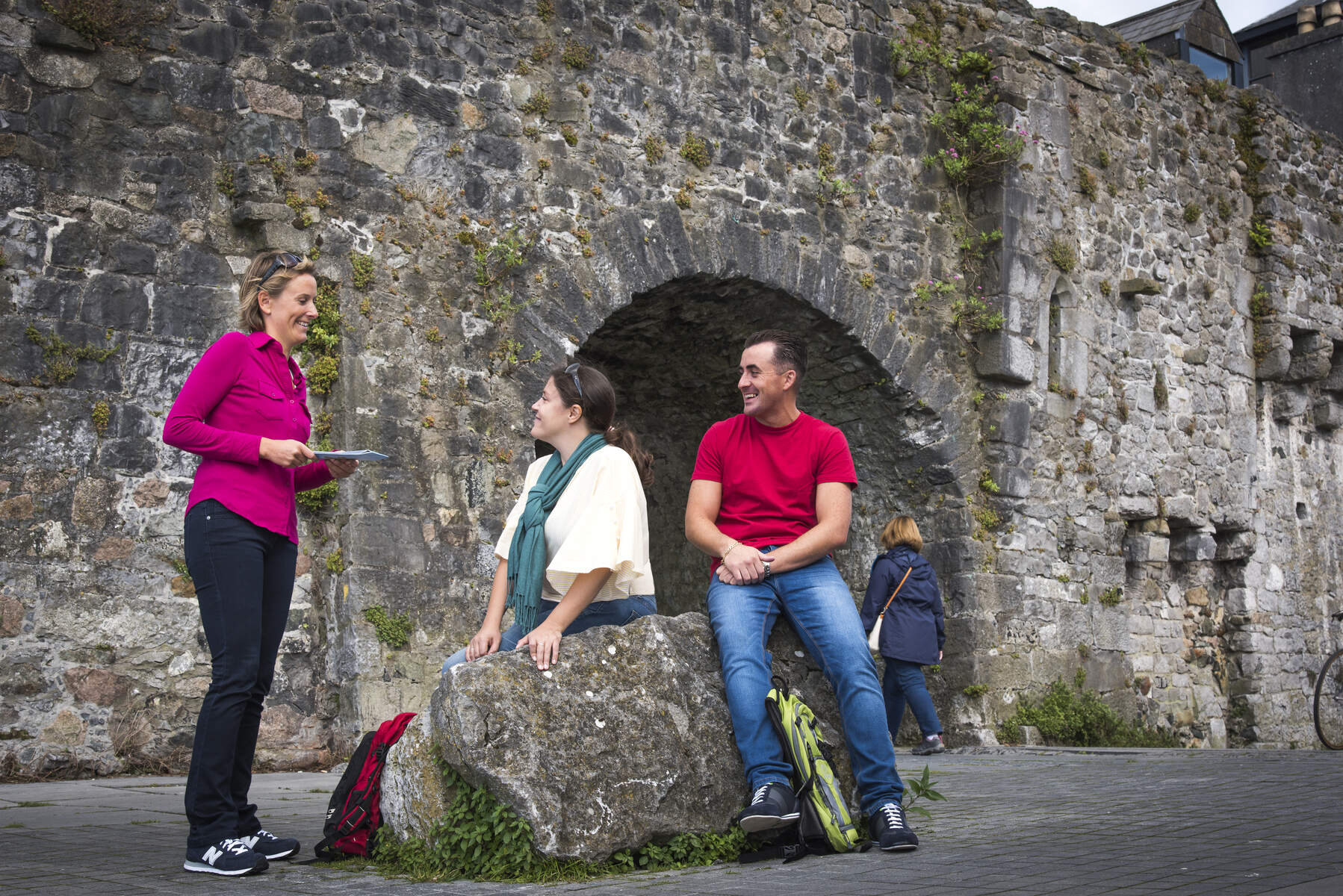
Comerford House stands on the edge of Galway’s historic Spanish Arch, a surviving fragment of the medieval town wall. Built around 1800, the detached three‑bay, two‑storey house with an attic is a fine example of Georgian urban architecture, distinguished by its full‑height projecting entrance bay and later 1947 Venetian‑style window insertions. The house’s location is unique: the south‑west end of the façade incorporates two arches of the Spanish Arch, creating a seamless link between the city’s medieval past and its Georgian streetscape.
History
The house was originally commissioned as a private residence for the Comerford family, later passing to the Greenwood family. In 1948 the sculptor, journalist and writer Clare Consuelo Sheridan – a first cousin of Sir Winston Churchill – moved in. Sheridan lived at Comerford House until 1954, converting one room into a private chapel and installing a carved limestone doorcase taken from Ardfry House. Her presence added an artistic layer to the building’s story; among the items she contributed to the early museum collection is a carving of the Madonna and Child.
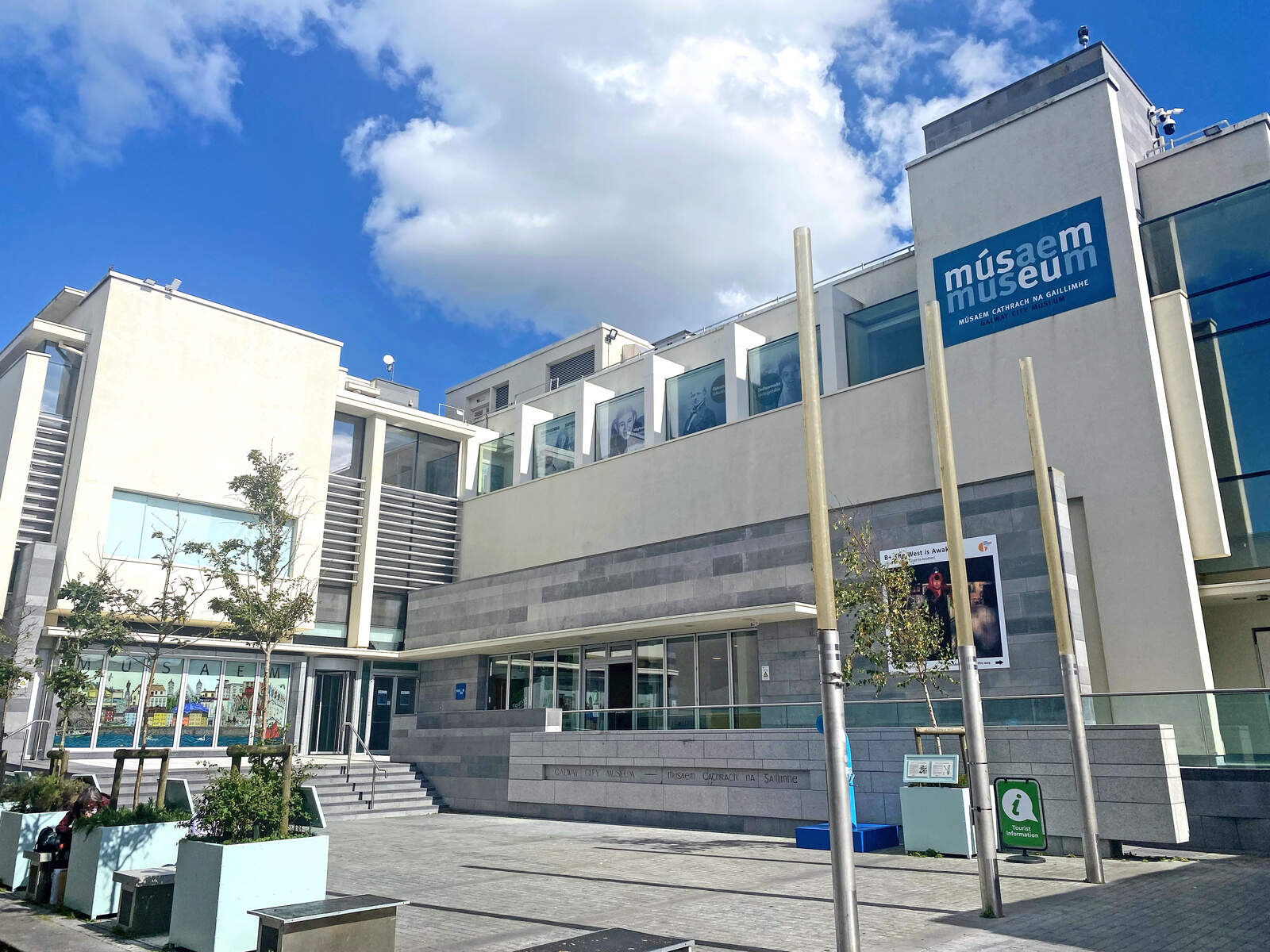
In the 1970s the building entered a new chapter when the Galway City Council received it as a donation from the Comerford family for community use. The council repurposed the house as the first home of the Galway City Museum, which opened in 1976. The museum’s initial collection – a trove of medieval stones gathered by Sheridan – was displayed within the house’s rooms. For nearly three decades the museum operated from Comerford House, showcasing folk‑life, industrial and militia artefacts that reflected Galway’s rich past. The museum closed its doors in 2004, and a purpose‑built museum building was opened behind the site in April 2007, but the legacy of Comerford House as the museum’s birthplace remains a point of pride.
What to See & Do
While Comerford House itself is not a standalone visitor attraction, its exterior and the surrounding plaza offer several points of interest:
- Architectural Details: Observe the hipped slate roof of the entrance projection, the rendered chimneystacks, and the distinctive limestone doorcase with pilasters, moulded lintel and open‑bed pediment. The round‑headed sash windows and the later Venetian‑style openings provide a visual timeline of the building’s evolution.
- Spanish Arch Integration: The two northern arches of the medieval Spanish Arch are built into the rear yard of the house, allowing visitors to see how the Georgian townhouse literally embraces the older fortifications.
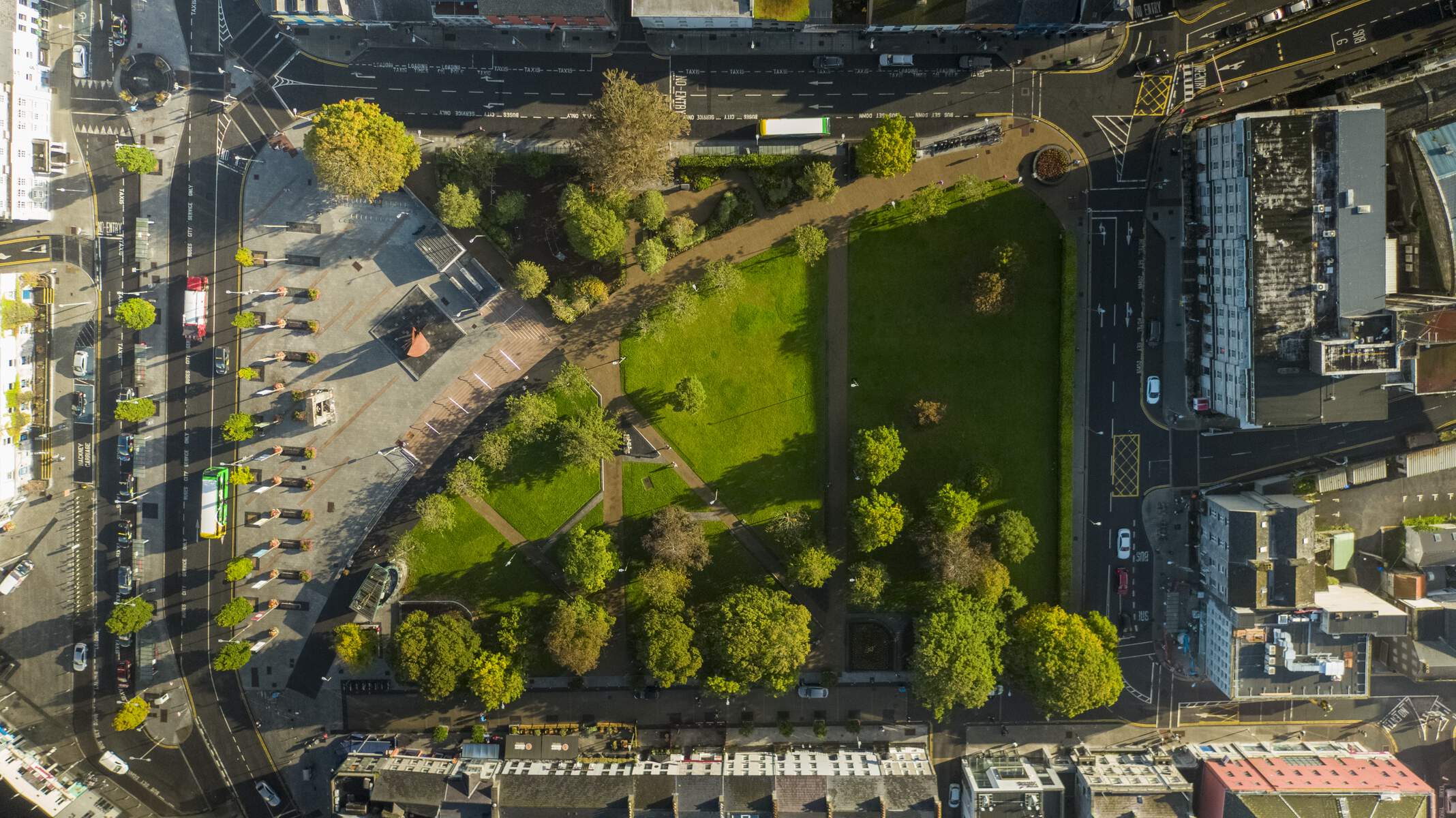
- Public Plaza: Between the museum’s new building and the Spanish Arch, a small square created by the council serves as a gathering spot for civic events, street performances, and seasonal markets. It’s an ideal place to pause and soak up the river Corrib’s ambience.
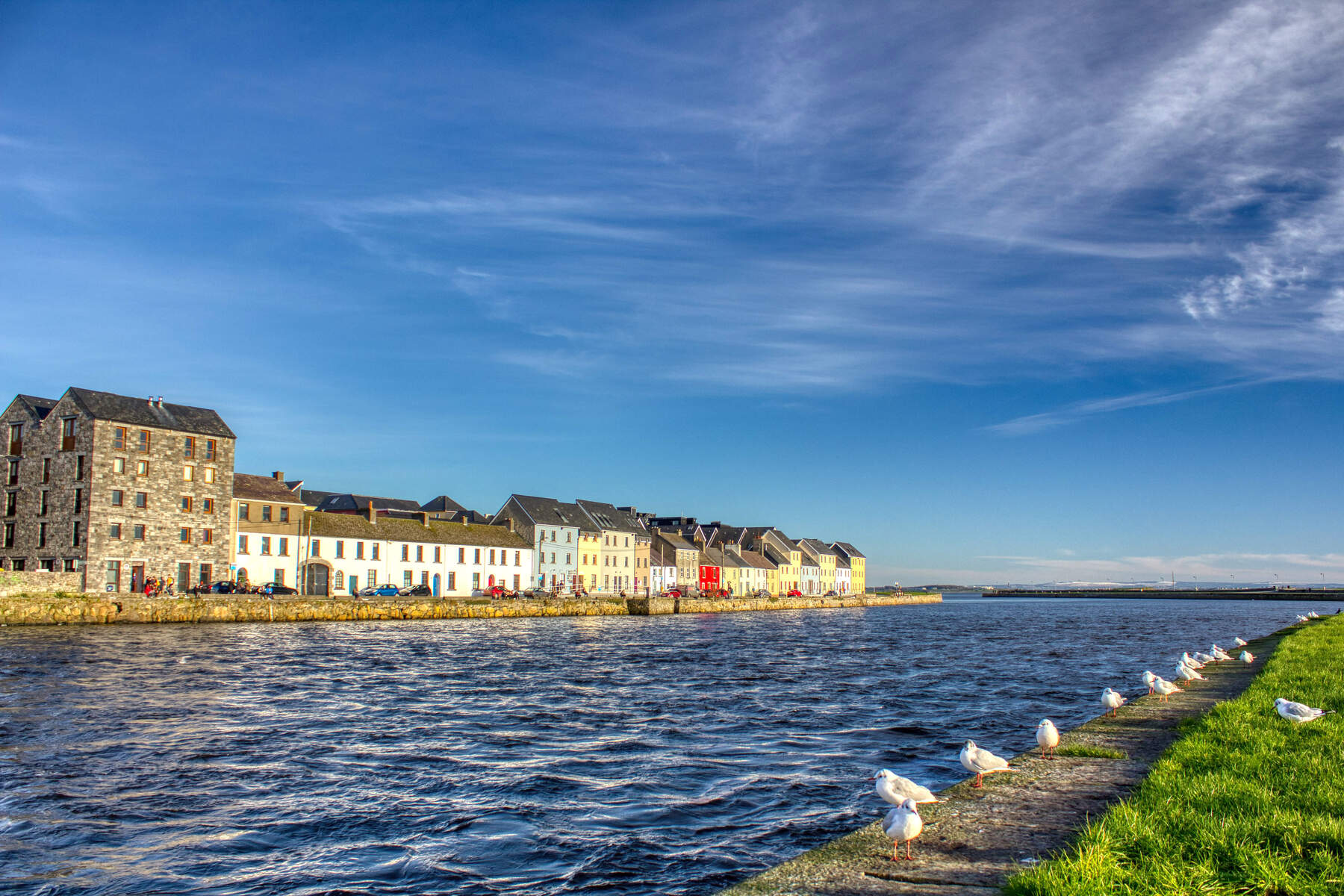
- Nearby Attractions: A short walk brings you to the River Corrib’s waterfront, the Claddagh village’s historic quay, and a variety of cafés and pubs that line the Spanish Parade. The Long Walk promenade and the iconic statue of writer Pádraic Ó Conaire are also within easy reach.
Practical Information
Comerford House forms part of the Galway City Museum complex. The museum’s opening hours and free admission apply to the site, allowing unrestricted access to the exterior of the house and the adjoining plaza.
| Day | Opening Hours |
|---|---|
| Tuesday – Saturday | 10:00 am – 5:00 pm |
| Sunday (seasonal) | 12:00 pm – 5:00 pm |
| Monday | Closed |
Admission to the museum and its surrounding area, including the view of Comerford House, is free. Donations are welcomed but not required.
Contact
- Phone: +353‑091‑532460
- Email: museum@galwaycity.ie
- Website: www.GalwayCityMuseum.ie
Getting There Comerford House is situated on Spanish Parade, a short walk from Galway’s main railway station (Iarnród Éireann) and the city bus station. Parking is available on nearby streets, and the area is well‑served by city bus routes.
Accessibility The museum’s ground‑floor galleries are wheelchair‑accessible, and the public plaza in front of Comerford House is level and suitable for visitors with reduced mobility.
Preservation Status The building is listed in the National Inventory of Architectural Heritage (Reg No 30319025) and is recognised for its archaeological, architectural, historical and social significance. Its integration with the Spanish Arch contributes to the protected status of the medieval wall remnants.
Visiting Tips
- Check the museum’s website or contact the information desk for any temporary closures or special events that may affect access to the plaza.
- Street parking can be limited during market days; consider using nearby public car parks such as the one on Quay Street.
- The area is pedestrian‑friendly, but cobblestones around the Spanish Arch can be uneven – wear comfortable shoes.
- Free guided walks are occasionally offered by Galway City Council; ask at the museum reception for the latest schedule.
- Bring a camera to capture the unique blend of medieval arches and Georgian façade, but be mindful of any signage restricting photography inside the museum galleries.
Visiting Comerford House offers a tangible connection to Galway’s layered history – from its medieval defenses to its Georgian domestic life, and finally to its role as the cradle of the city’s modern museum. Whether you are a history enthusiast, an architecture lover, or simply strolling along the riverfront, the house provides a quiet yet compelling backdrop to Galway’s vibrant cultural scene.