
Overview
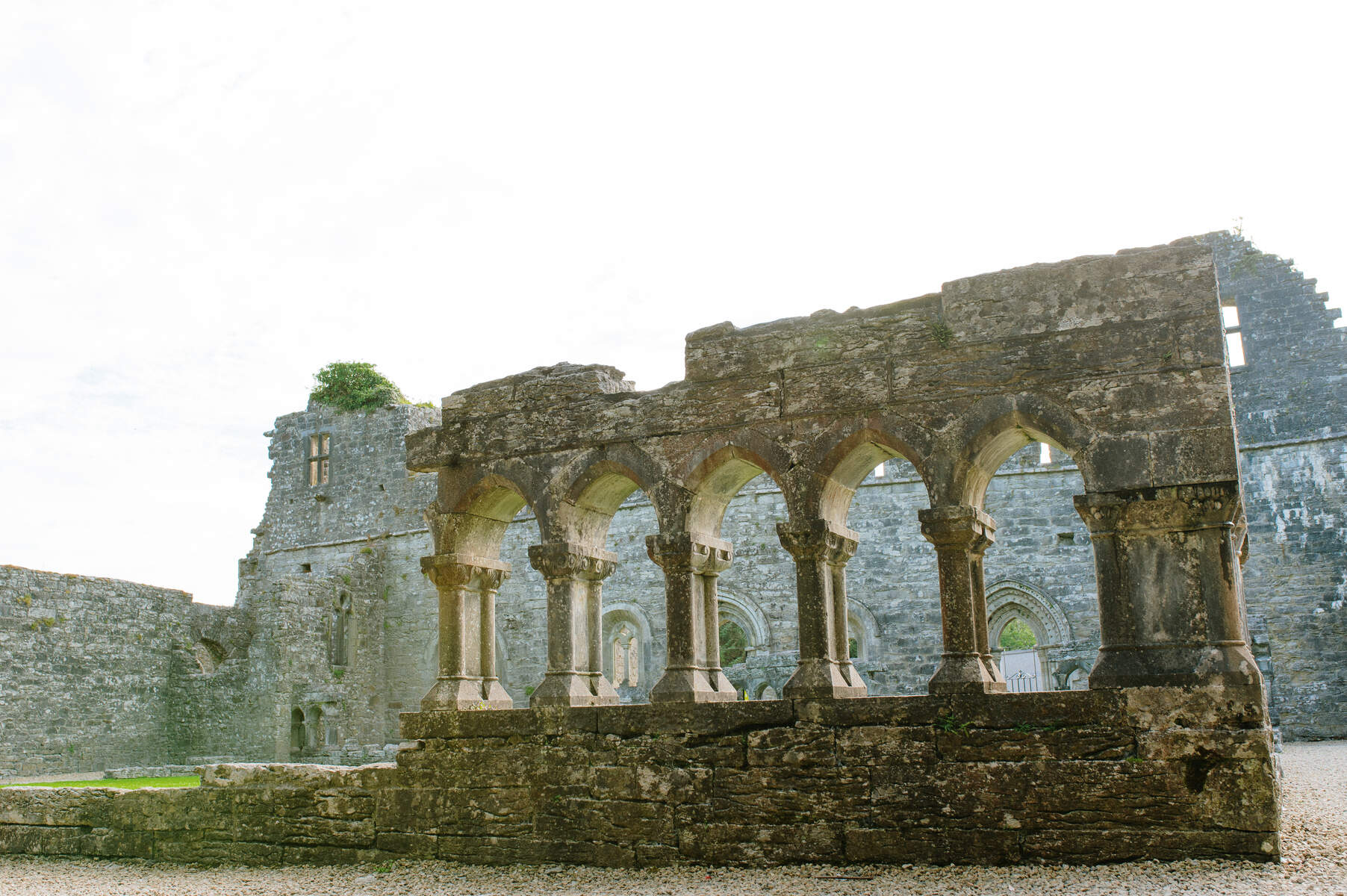
Cong Abbey sits on a narrow isthmus between Lough Corrib and Lough Mask, overlooking the River Cong in the charming village of Cong, County Mayo. The site is a national monument managed by the Office of Public Works and is open to the public all year. Its ruins showcase some of Ireland’s finest early‑Gothic stonework, while the nearby Monk’s Fishing House adds a touch of medieval ingenuity.
History
The spiritual lineage of Cong begins in the early 7th century when Saint Feichín founded a modest church on the island now known as Cunga Fheichin – “the Isthmus of St Feichín”. The original structure was destroyed by fire in 1114. Within a few decades, the High King of Ireland, Turlough Mor O’Connor, refounded the site as an Augustinian abbey (c.1137) – the first of its order in Connacht.
The abbey endured raids (Munster raiders in 1137, William de Burgo in 1201‑04) and was repeatedly rebuilt. In 1198, Ruaidrí Ua Conchobair, the last High King of Ireland, retired to Cong and spent his final years there; he was briefly buried on the grounds before being re‑interred at Clonmacnoise.
Throughout the 13th century the abbey was expanded and dedicated to St Mary. It flourished as a centre of learning, with contemporary accounts suggesting up to 3,000 monks, scholars and craftsmen lived and worked on the site. The O’Duffy ecclesiastical dynasty oversaw the abbey from 1097 to 1501, and the Cross of Cong – a masterpiece of 12th‑century metalwork – was commissioned by the O’Connor kings and later housed here.
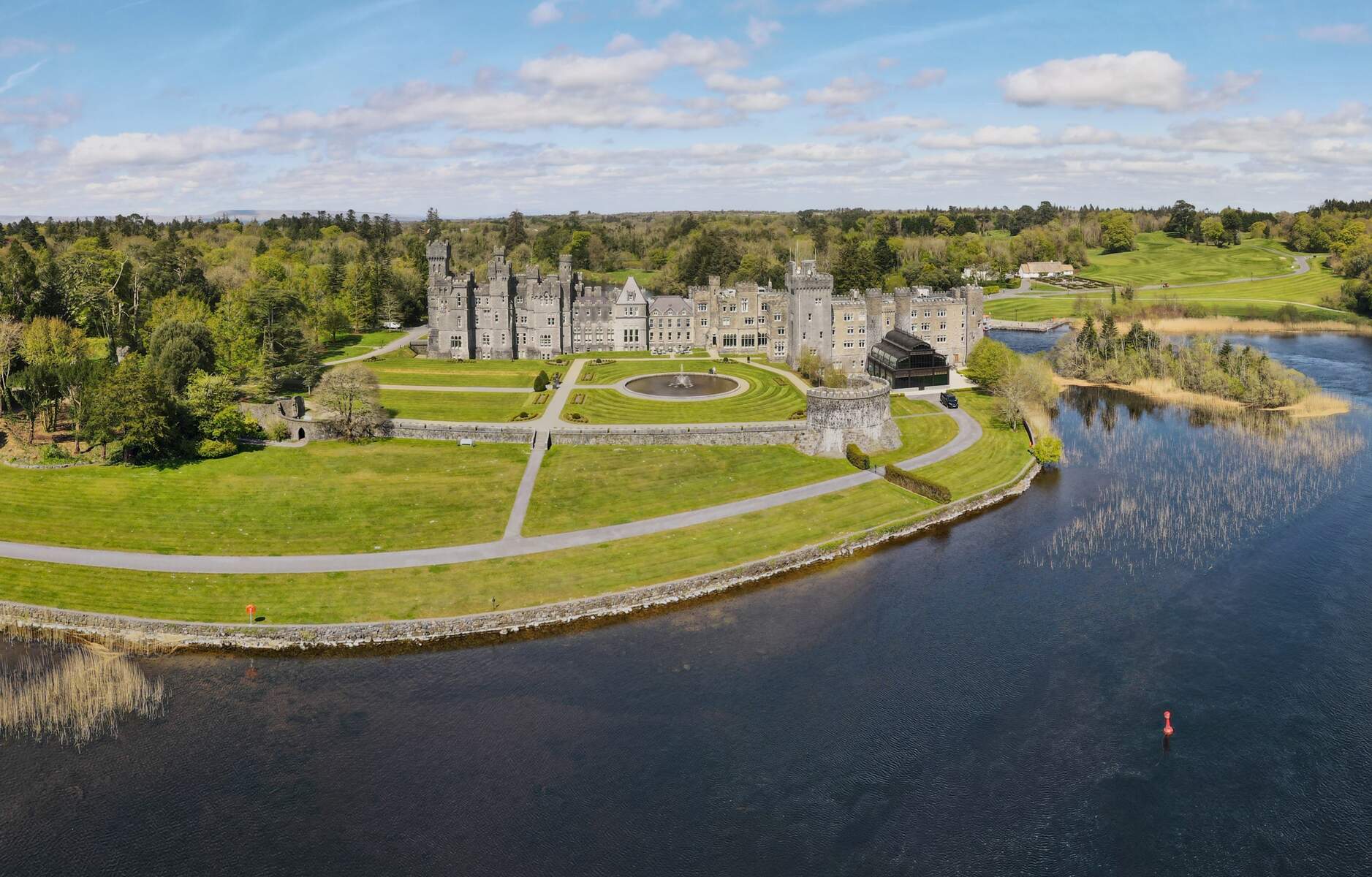
After the Dissolution of the Monasteries (mid‑16th century) the abbey fell into ruin. The first modern restoration began in 1855 under Sir Benjamin Lee Guinness, who also owned nearby Ashford Castle. Today the surviving walls, cloister fragments and the iconic Gothic doorway are protected as a national monument.
What to See & Do
- The Church Ruins – Walk through the north‑wall and admire the late‑Romanesque doorway that was repositioned in the 19th century. The nave and choir retain pointed arches and delicate foliate capitals typical of the “School of the West”.
- Cloister Arches – Although only a couple of arches survive, they hint at the once‑extensive cloister that stretched over a hundred feet in each direction.
- Gothic Doorways – The western façade once featured three distinct portals: a Romanesque library entrance, a Gothic chapter‑house doorway and a second Gothic passage to the refectory. The surviving Gothic doorway, with its finely carved capitals, is a highlight for architecture enthusiasts.
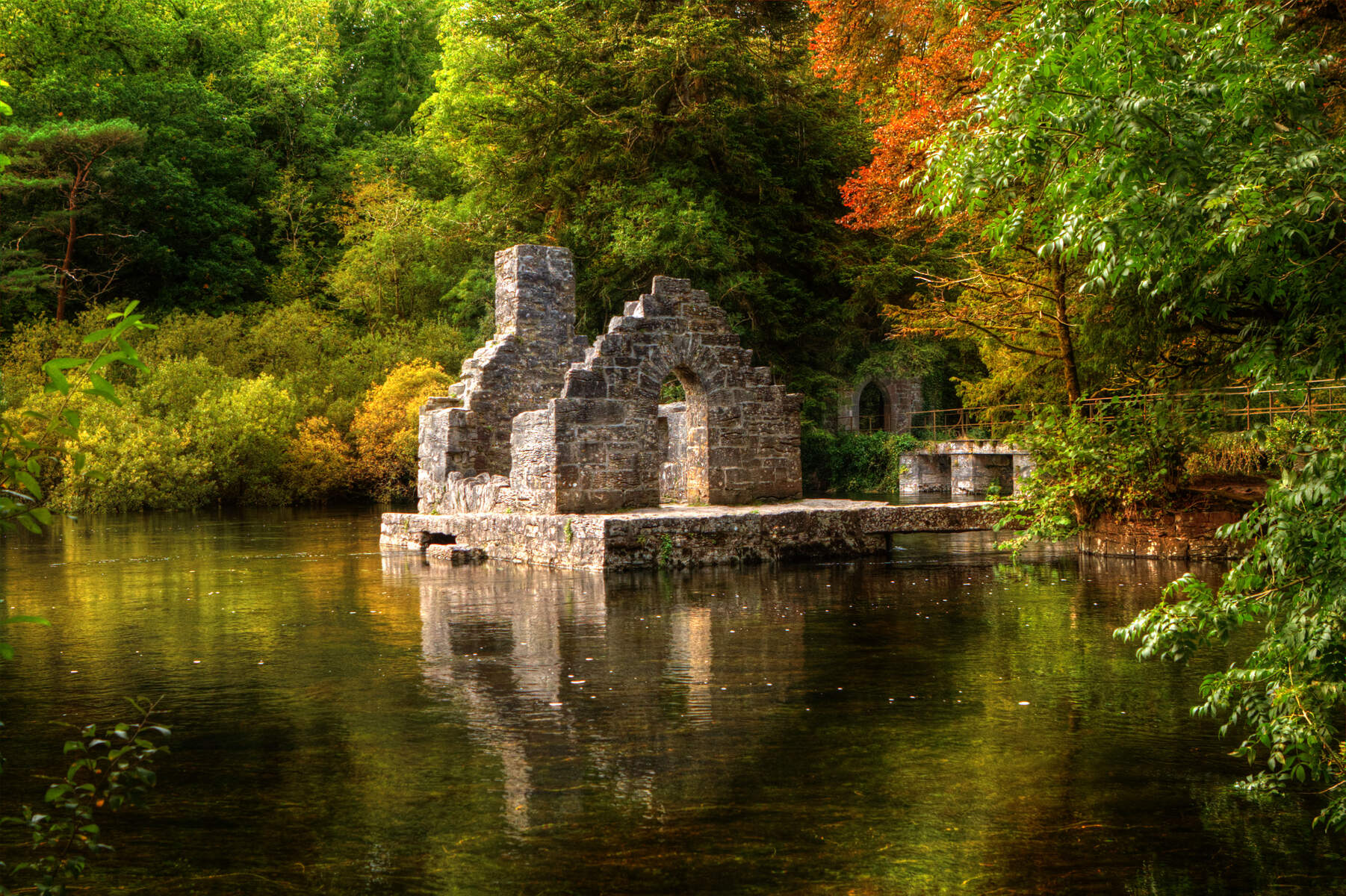
- Monk’s Fishing House – About 90 m west of the abbey, this stone platform sits on the River Cong. A trap‑door in the floor once allowed monks to lower a net into the water, while a fireplace kept them warm. The structure is roofless today but remains a photogenic spot that sparks the imagination of younger visitors.
- Graveyard & Inscriptions – The church floor contains early gravestones, including the 1709 inscription for Abbot James Lynch. Look for the “sedilia” niche where dignitaries once sat during ceremonies.
- Surrounding Landscape – The abbey’s setting offers tranquil riverside walks and easy access to the wider Cong area, including Ashford Castle, Lough Corrib, and the scenic Cong Forest Nature Trail.
Practical Information
Cong Abbey is free to enter and open year‑round. There is no ticket office; the site is self‑guided.
| Service | Details |
|---|---|
| Opening hours | Open all year round |
| Admission fee | Free |
| Parking | Free parking available in the village or at the nearby church car‑park. |
| Accessibility | The site has a number of steps and level changes, making it difficult for wheelchair users. |
| Dog policy | Not an ideal site for dogs due to the historic ruins and river proximity. |
| Suitable for children | Yes – the ruins and fishing house are engaging for young visitors, though supervision near the river is advised. |
Getting there – Cong lies on the Bus Éireann Route 422 (Castlebar ↔ Headford) with a timetable available here. By car, the N84 from Galway (≈45 km) or the M6‑N7 corridor from Dublin (≈3.5 h) provide the most direct routes. Parking is free in the village or at the visitor‑centre car‑park a short walk from the abbey.
Nearby attractions – After exploring the abbey, consider a stroll to Ashford Castle, a boat cruise on Lough Corrib, or a walk along the Cong Forest Nature Trail (3.8 km, easy). The village also offers film‑history sites from The Quiet Man and several cosy cafés.
Further reading – The official regional tourism page provides a concise overview: Visit Galway – Cong Abbey.