
Overview
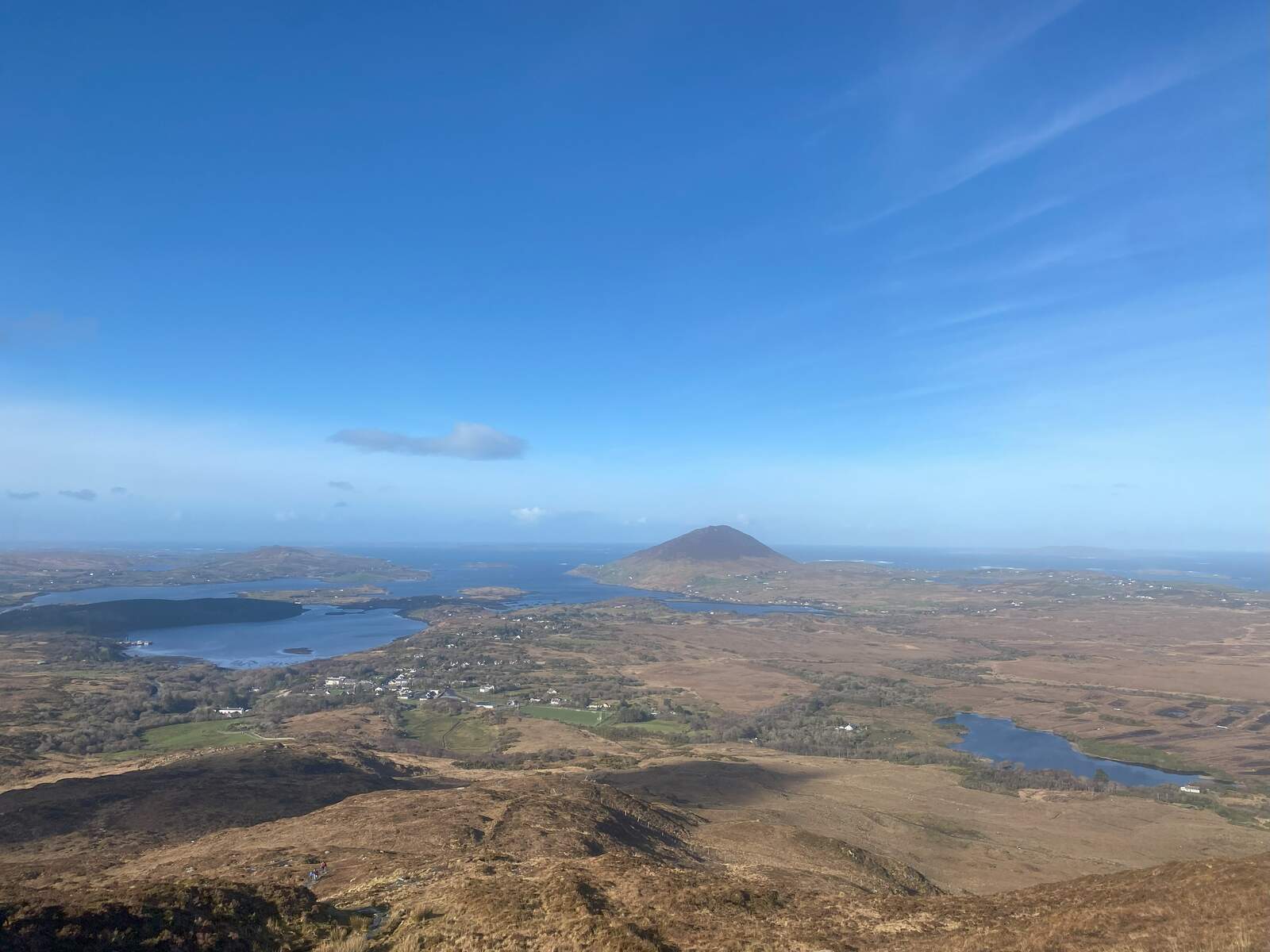
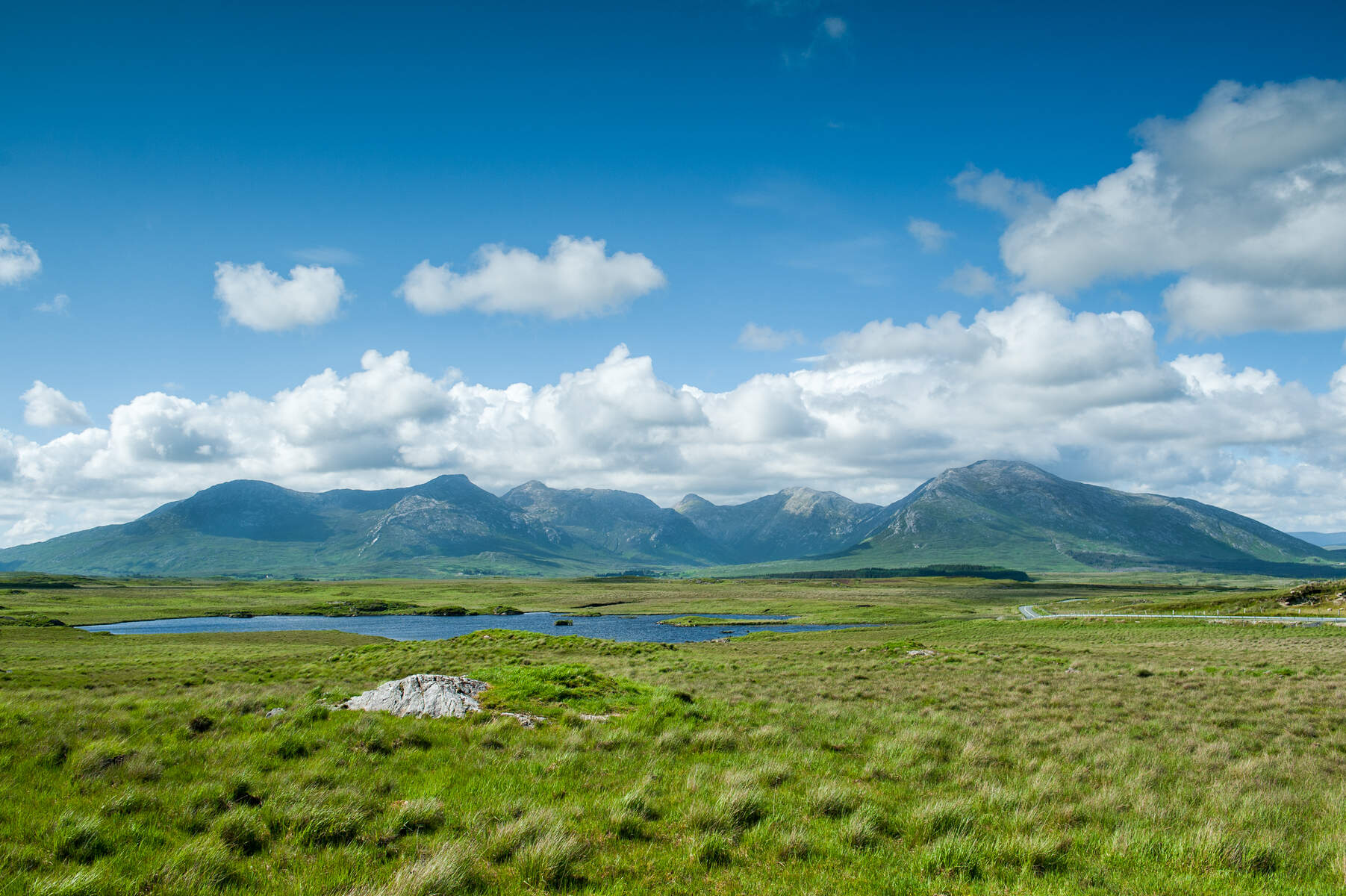
Connemara National Park sits on the north‑west edge of County Galway, just outside the village of Letterfrack. Opened to the public in 1980, the park protects about 2 000 ha of mountains, blanket bog, heathland, grassland and native woodland. Four of the Twelve Bens – Benbaun, Bencullagh, Benbrack and Muckanaght – rise within its boundaries, while the iconic Diamond Hill (442 m) dominates the visitor centre skyline. The park is free to enter and is managed by the National Parks and Wildlife Service.

History
The land that now forms Connemara National Park was once part of the Kylemore Abbey estate and, earlier, the Letterfrack Industrial School (the visitor centre occupies the former school infirmary). Scattered across the park are a 19th‑century graveyard and 4 000‑year‑old megalithic court tombs, testifying to human activity from the Neolithic onward. In the 19th century the estate was owned by Richard “Humanity Dick” Martin, a pioneer of animal‑rights advocacy. After the Irish state acquired the land in the late 20th century, the park was officially opened in 1980 as a national effort to safeguard Ireland’s unique habitats.
What to See & Do
Walking & Hiking
The park’s trail network is fully way‑marked and ranges from short family loops to demanding mountain traverses.
| Trail | Distance | Difficulty | Typical duration | Highlights |
|---|---|---|---|---|
| Ellis Wood Nature Trail (Green) | 0.5 km | Easy | 15‑30 min | Woodland waterfall, native wildflowers |
| Sruffaunboy Nature Trail (Yellow) | 1.5 km | Easy | 30 min | Views of Ballinakill Harbour, Connemara ponies at the centre paddock |
| Lower Diamond Hill Loop (Blue) | 3 km | Moderate | 1‑1.5 h | Bogland, glacial boulders, vistas of Kylemore Lough and Tully Mountain |
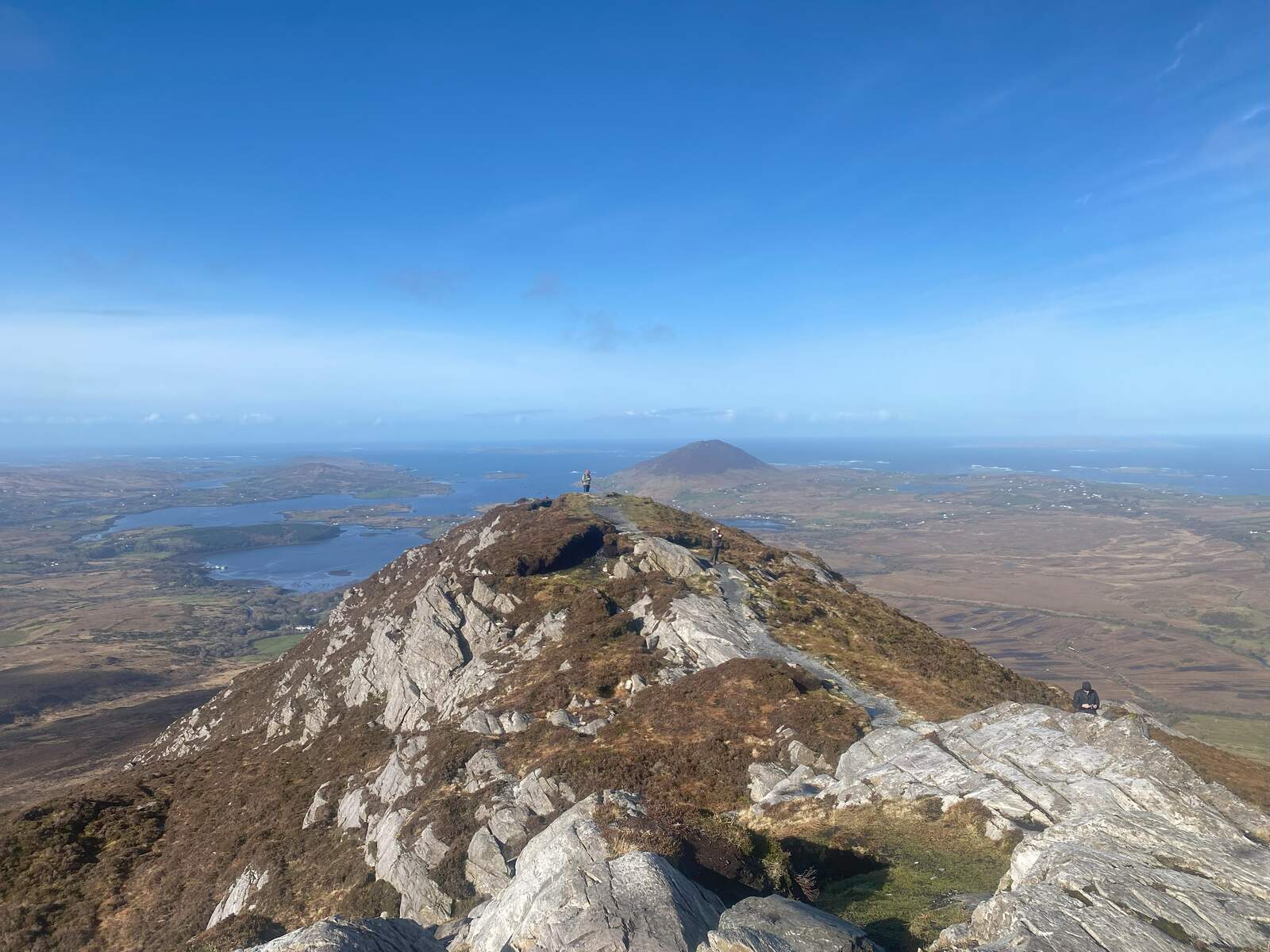
| Upper Diamond Hill Loop (Red) | 3.7 km (plus 3 km return) | Moderate‑Hard | 2.5‑3 h | 360° summit panorama of the Twelve Bens, Kylemore Abbey and the Atlantic |
| Diamond Hill & Muckanaght Route (Purple) | 19 km | Hard | 6‑7 h | Full‑day adventure to the remote peak of Muckanaght, sweeping views of the whole Connemara landscape |
The Diamond Hill summit offers a sweeping outlook that, on a clear day, includes the islands of Inishbofin and Inishturk, the turreted spires of Kylemore Abbey, and the full sweep of the Twelve Bens. The trail to the top is a mix of boardwalk, stone steps and well‑maintained gravel; the upper sections become steep and rocky, so a reasonable level of fitness is advisable.
Wildlife & Nature
Connemara’s blanket bogs and heath support a rich flora: purple moorgrass, bog cotton, sundew, butterwort, orchids and a carpet of lichen. Birdwatchers can spot meadow pipits, skylarks, stonechats, kestrels, sparrowhawks, and, less frequently, merlins and peregrine falcons. Mammals are more elusive but include Connemara ponies, a herd of re‑introduced red deer, foxes, pine martens, stoats, bats and the occasional otter.
Heritage & Visitor Centre
The visitor centre, housed in the former farm buildings of the Letterfrack Industrial School, provides a free exhibition on the park’s geology, flora and fauna, plus a 20‑minute audio‑visual film on conservation. Amenities include a café (the “Hungry Hiker”), clean toilets, a playground, and several picnic tables. A small heritage pony centre opened in 2025, showcasing the native Connemara pony breed.
Nearby Attractions
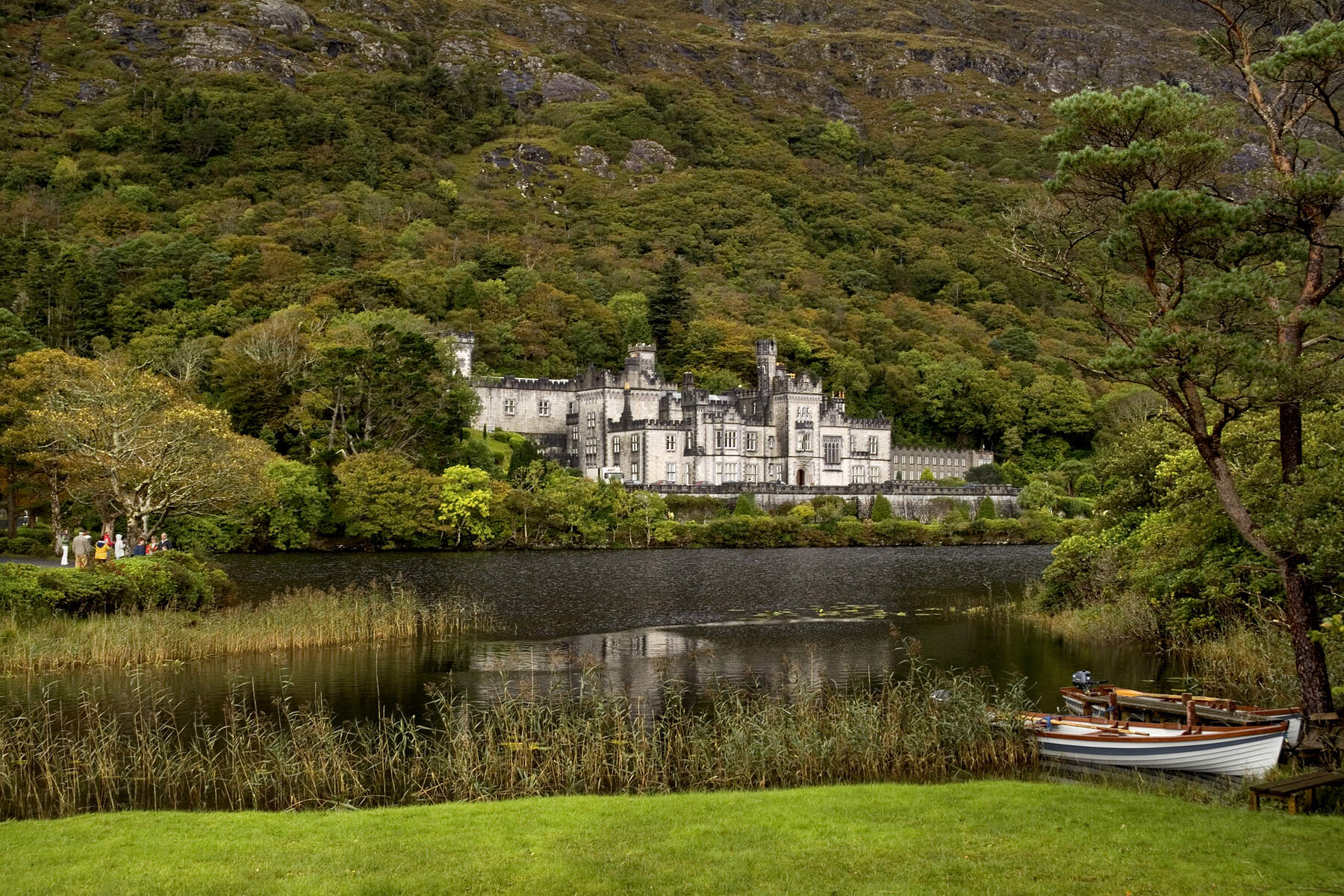
A short drive brings you to Kylemore Abbey, the Victorian walled garden and neo‑Gothic castle that dominate the valley.
Practical Information
Opening Hours & Admission
The park is open year‑round. The visitor centre operates daily from 09:00 – 17:30, closing on Christmas Day and St Stephen’s Day. The grounds may be temporarily closed during orange or red weather warnings.
| Facility | Opening Times |
|---|---|
| Visitor Centre | 09:00 – 17:30 (year‑round, excl. 25 Dec & 26 Dec) |
| Park Grounds | Open all year; may close on weather warnings |
Admission: Free for all visitors; parking at the visitor centre is also free but can fill quickly on sunny weekends.
Getting There
- By car: From Galway take the N59 towards Clifden, then follow signs to Letterfrack (≈ 1 h 20 min). The R344 scenic route via Lough Inagh is a popular alternative. Parking is available at the visitor centre.
- By bus: Citylink route 923 (Galway ↔ Clifden ↔ Letterfrack) runs 3‑4 times daily; TFI route 423 connects Westport to Letterfrack. Buses stop in Letterfrack, a short walk from the entrance.
- Guided tours: Day‑trip tours from Galway (≈ €45) include transport, a stop at Kylemore Abbey and a guided walk in the park.
Accessibility
A short section of the trail network near the visitor centre is suitable for mobility‑impaired users (smooth surface, gentle gradient). Most of the longer routes – especially the Upper Diamond Hill and Muckanaght routes – involve steep ascents and uneven terrain and are not wheelchair‑accessible.
Rules & Regulations
- Dogs: Allowed on all trails but must be kept on a lead and owners must clean up after them.
- Fires & Drones: Both are prohibited to protect the fragile habitat.
- Camping: No designated campsites inside the park; wild camping is permitted only in remote zones and must follow the National Parks’ guidelines.
- Safety: In an emergency call 112 or 999; the park provides a map and emergency contact numbers at the visitor centre.
Contact & Online Resources
- Phone: 095 41054
- Website: https://www.connemaranationalpark.ie/
- Social: Facebook, Twitter and Instagram links are listed on the official site for up‑to‑date trail closures and events.
Best Time to Visit
Spring and summer (April‑September) offer the longest daylight hours and the most reliable weather for summit walks. Autumn brings spectacular colour change across the bogs and woodlands, while winter provides solitude and the chance to see migratory bird species, though daylight is limited and some higher‑level sections can be icy.
Connemara National Park is a living museum of geology, ecology and human history. Whether you’re tracing ancient stone circles, chasing a Connemara pony across a meadow, or standing on Diamond Hill’s summit looking out over the Atlantic, the park delivers a raw, unforgettable Irish experience.