
Overview
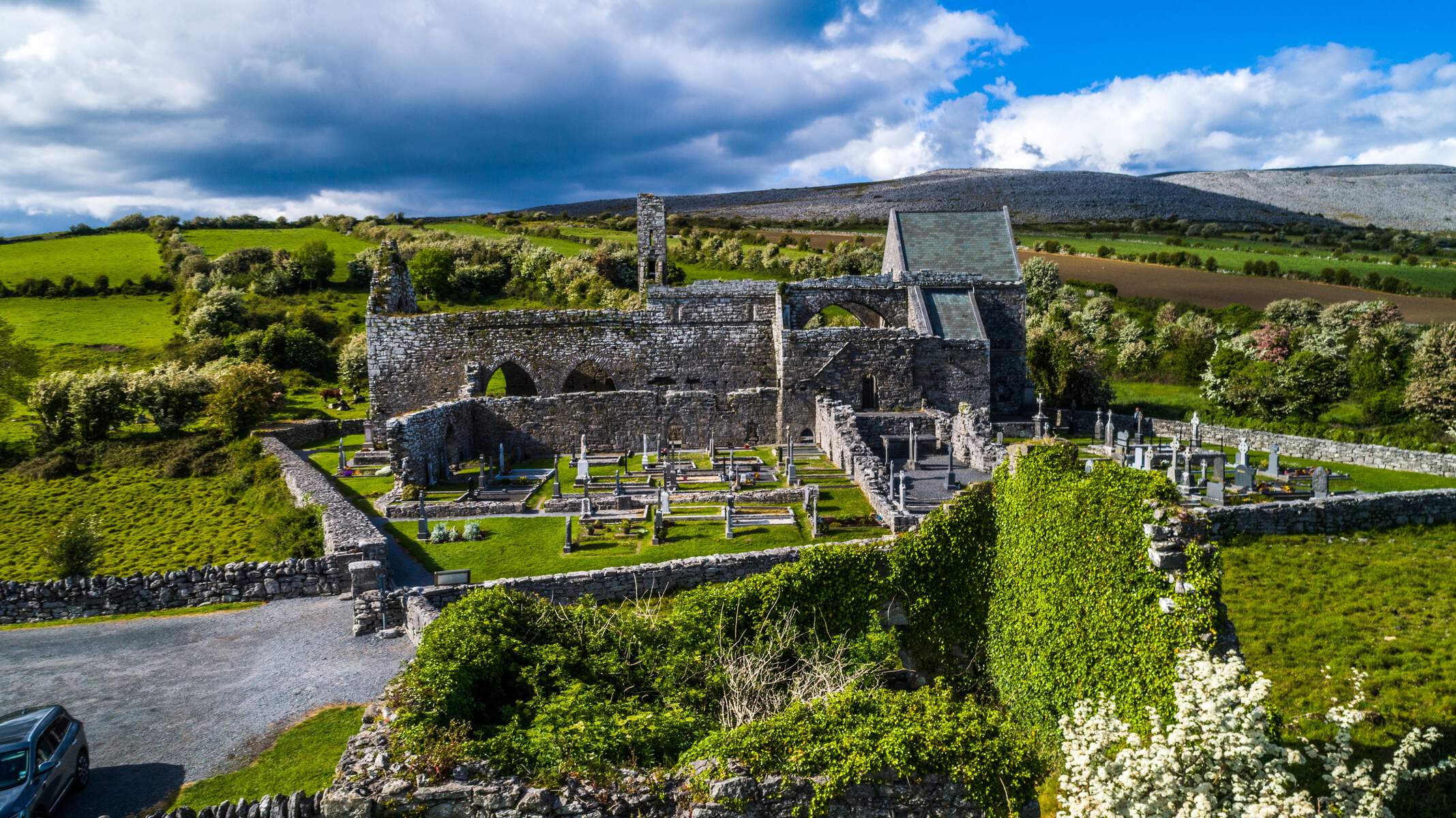
Corcomroe Abbey sits amid the stark, limestone‑strewn landscape of the Burren, a few kilometres east of the tiny harbour village of Bellharbour. Known historically as St. Mary of the Fertile Rock, the abbey was founded around 1195 as a daughter house of Inislounaght Abbey in County Tipperary. Though roofless today, the cruciform church remains largely intact, its stone walls still echoing the austere elegance of early Cistercian design. The site is a National Monument and is freely accessible to the public, offering a rare glimpse into medieval monastic life set against one of Ireland’s most iconic natural backdrops.
History
The Cistercian order arrived in the Burren in the late 12th century, bringing with them a building programme that favoured simplicity, light and the use of local stone. While the exact founding date of Corcomroe is debated (sources cite 1180–1200), the prevailing scholarly view places construction between 1205 and 1210. The abbey’s patronage is linked to the O’Brien dynasty; legend even tells that King Conor na Siudane Ua Briain ordered the execution of the five masons who completed the church to prevent them from replicating its beauty elsewhere.
Throughout the 13th and 14th centuries the abbey thrived as a spiritual centre and a modest economic hub, benefitting from the region’s wool trade. By the 15th century, however, internal family politics and the broader decline of monastic wealth led to a reduction in the size of the church – the nave was shortened by 13 metres and the monks’ dormitory fell into disuse.
The English Reformation sealed the abbey’s fate. In 1554 the property was granted to Murrough O’Brien, Earl of Thomond, and the monastic community was dissolved. A handful of commendatory abbots held the title in name only during the 17th century, but the buildings continued to deteriorate. The Office of Public Works finally took over the ruins in 1879, stabilising what remains for today’s visitors.
What to See & Do
- The vaulted sanctuary – Look up to admire the ribbed vault supported by intricately carved capitals. Narrow lancet windows once flooded the chancel with filtered light, and the surviving stonework still hints at that original illumination.
- Carved capitals and arches – The crossing arches display a surprising variety of motifs: human heads, poppies, lily‑of‑the‑valley, and even lotus flowers. These details are considered among the finest Cistercian stonework in Ireland.
- The effigy of Conor O’Brien – Situated in an arched recess at the east end, this near‑life‑size limestone tomb is one of the few contemporary representations of an Irish chieftain. Though vandalised in the early 19th century, the monument remains in good condition and offers a tangible link to the O’Brien legacy.
- The O’Loughlin family tomb – A later Neoclassical addition, this tomb lies on the floor in front of the king’s effigy and reflects the continued reverence for the site into the 18th‑19th centuries.
- Cloister remnants – While only fragments of the cloister court survive, the surrounding high wall outlines the original five‑acre monastic precinct, giving a sense of the abbey’s former scale.
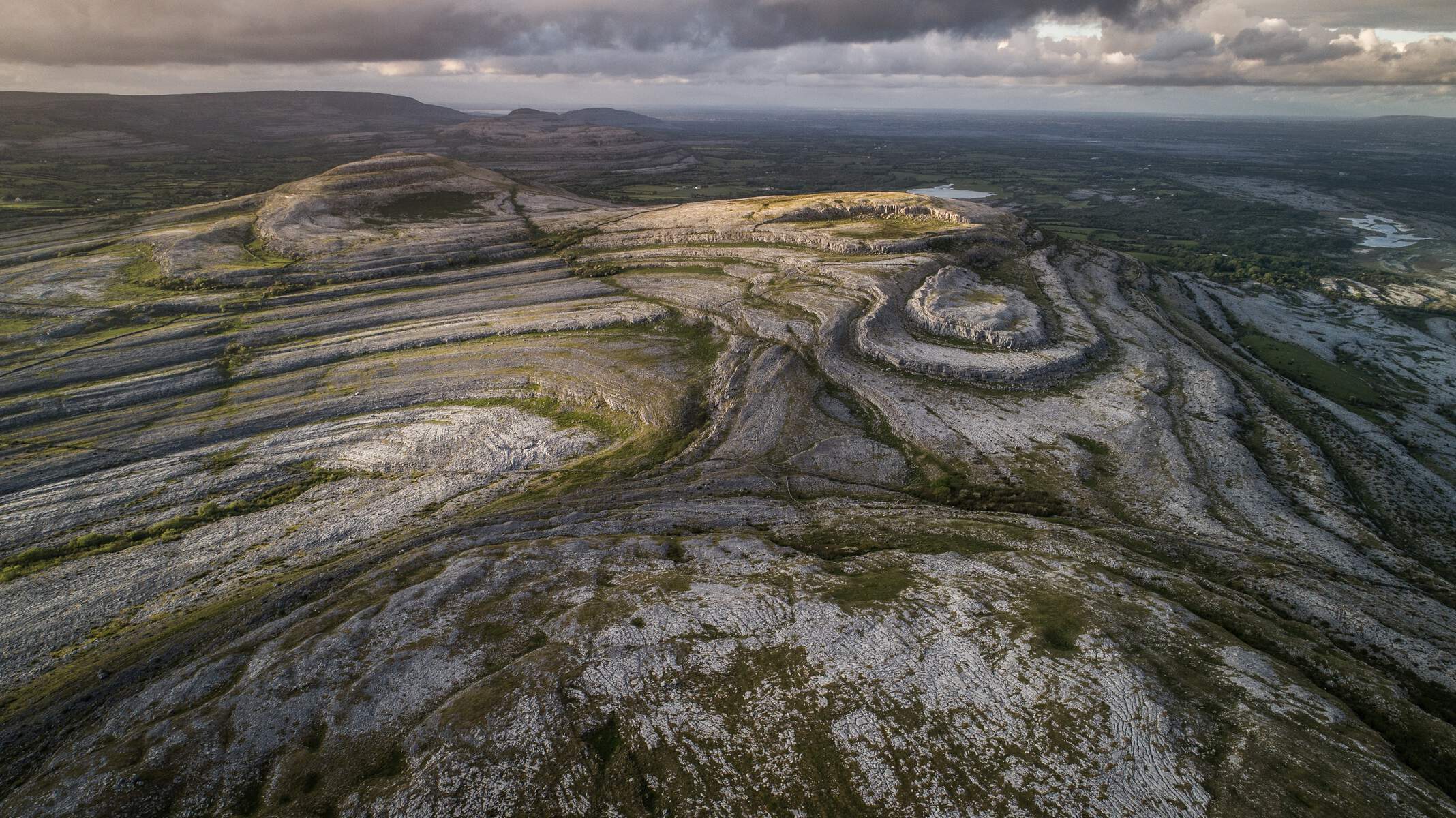
The surrounding Burren landscape is itself a draw: limestone pavements, rare flora and sweeping views of Galway Bay can be explored on foot after your visit to the abbey.
Practical Information
Corcomroe Abbey is free to enter and open year‑round. There are no ticket offices or staffed facilities on site, so visitors can explore at their own pace. Parking is available on the roadside near the L1014, a short walk from the ruins. The site is managed by the Office of Public Works, and basic signage provides historical context.
| Item | Details |
|---|---|
| Admission | Free |
| Opening hours | Open daily, daylight hours |
| Website | Visit Clare – Corcomroe Abbey |
| Nearest village | Bellharbour (≈ 800 m) |
| Accessibility | The ground is uneven; limited wheelchair access due to stone steps and uneven terrain |
Because the abbey is an outdoor ruin, the experience can vary with the weather. The Burren’s micro‑climate often brings clear skies, but occasional rain can make the stone surfaces slick. Visitors with mobility concerns should note that the path to the church includes uneven limestone and a few low stone walls.
For those interested in deeper research, the National Monuments Service holds detailed records, and the Clare County Library maintains an archive of historical documents related to the abbey.
Corcomroe Abbey offers a rare combination of medieval architecture, poignant history and the stark beauty of the Burren. Whether you are a history enthusiast, an architecture lover, or simply seeking a quiet spot to reflect amid ancient stone, the abbey provides a memorable stop on any County Clare itinerary.