
Overview
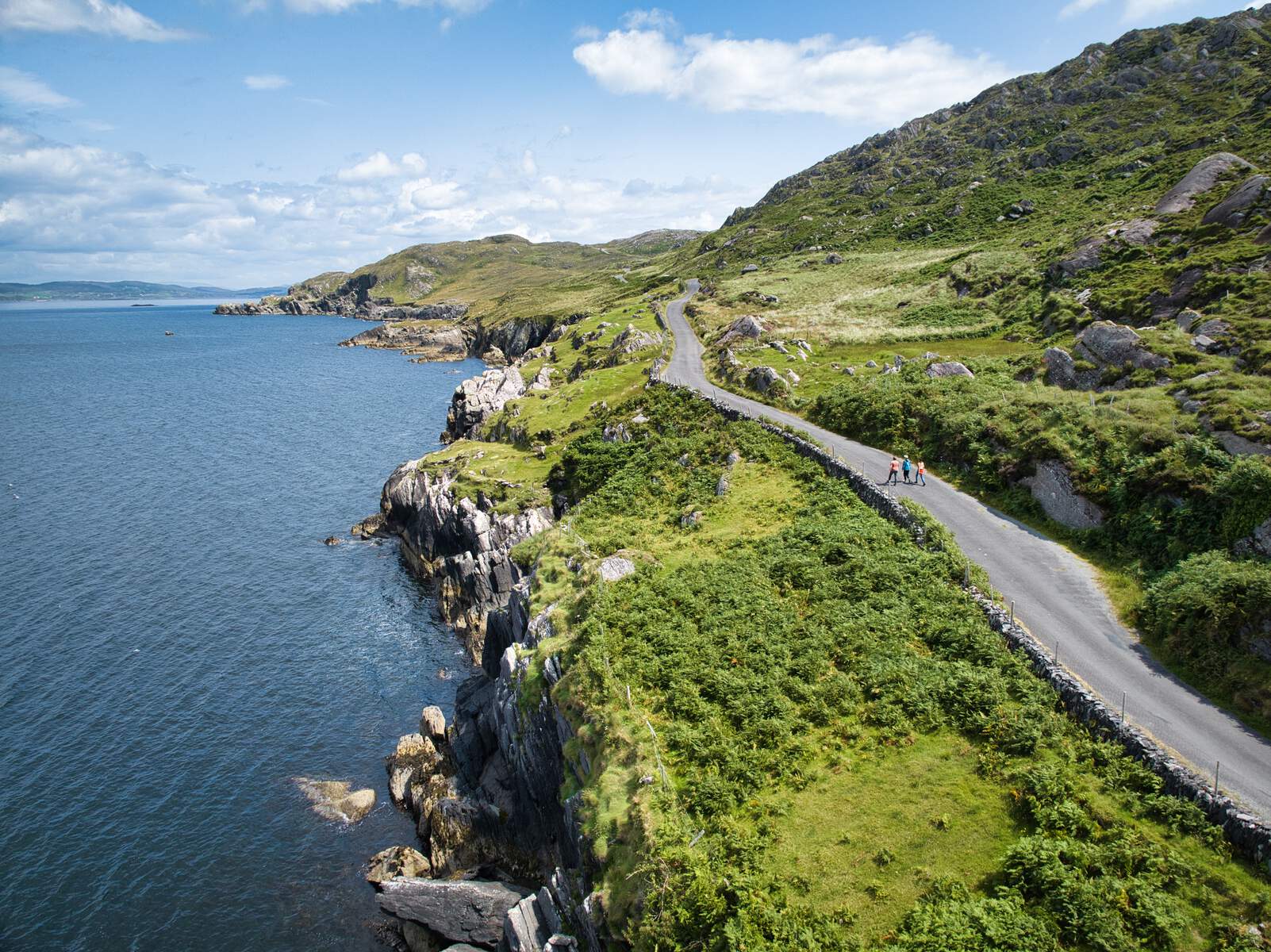
Coulagh Stone Circle sits in a neatly mown paddock near the village of Eyeries on the Beara Peninsula, County Cork. The site is modest in scale – a public‑published diameter of roughly 8 m (about 26 ft) – but its fragmented state gives a vivid impression of how many Irish stone circles have weathered millennia of change. Today only two stones remain upright, both noticeably leaning, while a handful of larger stones lie prostrate, some in a small heap to the south‑west of the presumed portal stones.
Location & Access
The circle is reached by driving along the R575 from Castletownbere, then turning off onto a narrow lane that leads directly to the paddock. The lane is single‑track but passable for most cars; a small lay‑by on the left provides convenient roadside parking. The stones appear on the left a short distance beyond the turn‑off, about two fields up as described by local walkers. The site is on private agricultural land but has been traditionally open to the public.
History & Background
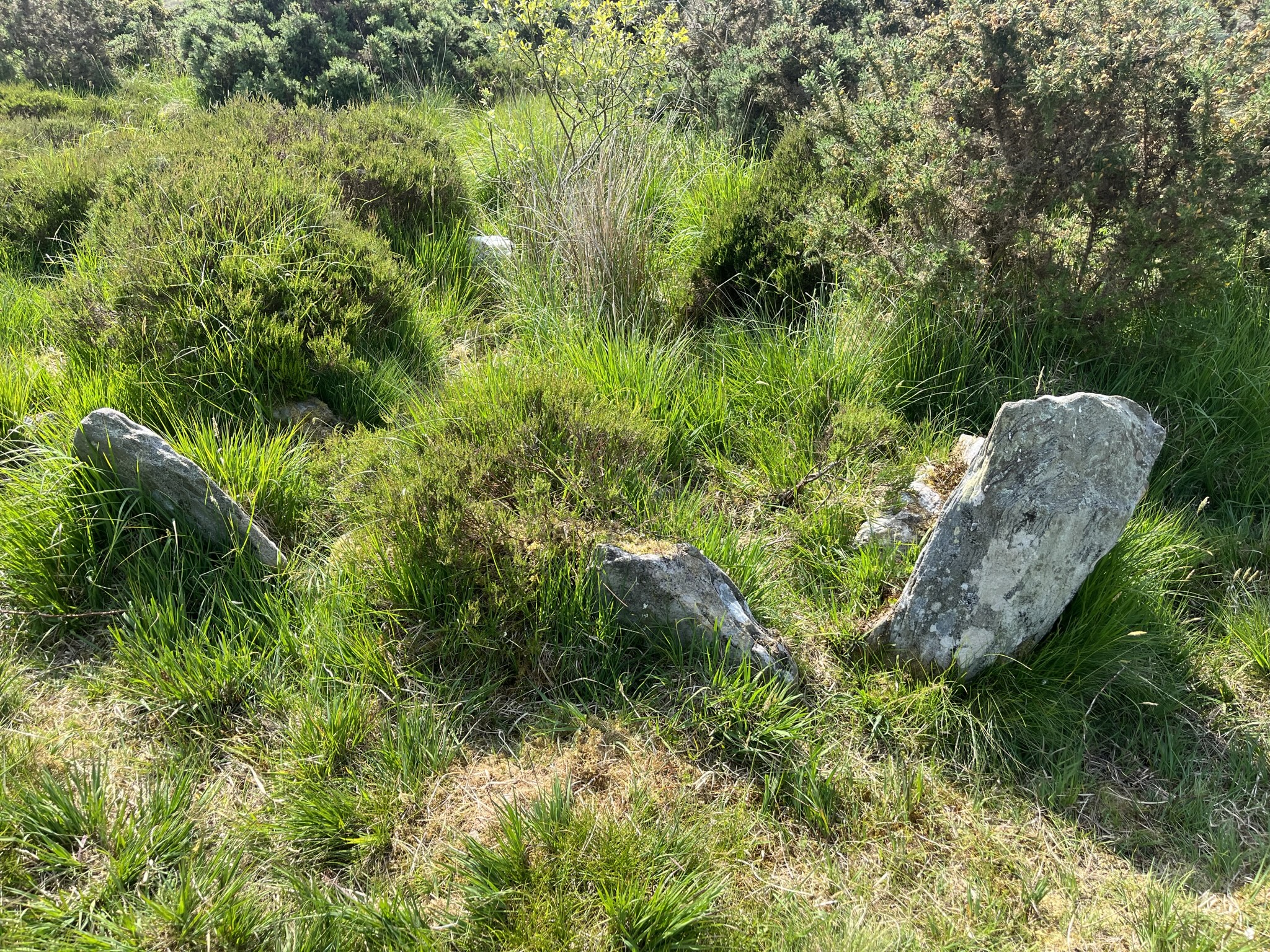
The monument is thought to belong to the late Neolithic or early Bronze Age, a period when communities across Ireland erected stone circles for gatherings, rituals and possibly astronomical observations. Scholarly opinion varies on the original form of Coulagh. Photographs from July 1998 and later visitor reports describe it as a “ruined five‑stone recumbent circle” – a type where a pair of taller stones (the portal stones) flank a low, recumbent stone that marks a particular direction. The two leaning stones at Coulagh are likely the original portal stones, set tangentially to the circle’s perimeter. In addition to these, at least seven sizable stones are now prostrate: three lie singly, while the remainder form a heap southwest of the portal candidates. Researchers such as Jack Roberts argue that the site was originally a true five‑stone recumbent circle.
Significance
Recumbent stone circles are far more common in the north‑eastern islands of Scotland; in Ireland they are rare, making Coulagh an important example of this monument type on the island. Its isolated setting on the Beara Peninsula offers a clear view of the stones against the rolling hills, allowing visitors to imagine the prehistoric landscape that once surrounded the circle.
What to See & Do
Visiting Coulagh offers a quiet, contemplative experience rather than the crowds of more famous circles like Drombeg. The two standing stones, each leaning at a pronounced angle, dominate the immediate view and invite speculation about their original purpose. Look for the cluster of fallen stones to the south‑west; their size and placement suggest they were once integral to the circle’s structure. The surrounding paddock provides a gentle, open landscape that frames the stones against the rolling hills of the Beara Peninsula.
A short drive north brings you to the Ardgroom stone circle, while the Beara Way long‑distance trail passes close by, offering additional walking opportunities. The nearby villages of Adrigole and Allihies are also worth a stop for a coffee or a glimpse of the historic copper‑mining landscape.
Fun anecdote: a 2004 travel diary records that a visitor hired a donkey as a photo‑model at Coulagh, highlighting the site’s charm for quirky, off‑beat travellers.
Practical Information
Access – R575 turn‑off, narrow lane, small roadside lay‑by.
Opening – Open year‑round; there are no formal opening hours.
Condition – Ruinous (condition rating 2 on the Megalithic database). Stones are stable but leaning; prostrate stones are scattered.
Entry – Free.
Parking – Limited roadside space; no dedicated car park.
Facilities – None on site – bring water, snacks and a map.
Accessibility – Uneven ground; not suitable for wheelchair users.
Dog policy – Dogs are permitted but must be kept on a leash.
| Item | Details |
|---|---|
| Coordinates | 51.679583 N, 9.978848 W |
| Estimated Diameter | ~8 m (26 ft) |
| Standing Stones | 2 (both leaning) |
| Prostrate Stones | At least 7 |
| Access Road | R575 turn‑off, narrow lane, roadside lay‑by |
| Admission | Free |
| Best Visiting Time | Early morning or late afternoon for softer light |
| Opening | Open all year, no restricted hours |
Nearby Attractions – In addition to Ardgroom, the Beara Way, and the villages of Eyeries, Adrigole and Allihies, the area hosts a series of wedge tombs and standing stones within a few kilometres, making Coulagh a convenient stop on a self‑guided heritage trail.
Visitor Tips – The lane can become muddy after rain, so sturdy shoes are advisable. As there are no facilities, pack any necessities. Respect the paddock’s boundaries and avoid moving stones.
Coulagh may not boast the grandeur of larger sites, but its quiet isolation and the palpable sense of ancient labour make it a rewarding stop for anyone tracing Ireland’s prehistoric landscape.