
Overview
Cromwell Point Lighthouse sits at the northern entrance of Valentia Harbour on the rugged Skellig Coast of County Kerry. Operated by the Commissioners of Irish Lights, the white‑painted stone tower rises 15 metres above the ground and its lantern sits 16 metres above mean high water springs. The light flashes a white‑red (WR) pattern every two seconds, reaching 17 nautical miles in the white sector and 15 nautical miles in the red. As one of the twelve sites in the Great Lighthouses of Ireland initiative, the lighthouse is a focal point for visitors seeking both maritime history and dramatic Atlantic scenery.
History
The lighthouse’s story begins long before the tower was erected. In the 17th century a Cromwellian fort was constructed on the headland, one of two such forts on Valentia Island. The fort’s outline, complete with bastions and an internal barrack, is still visible within the lighthouse’s enclosure wall and can be traced from the air. After the Restoration the fort was maintained, with State Papers recording repairs between 1663‑1665, before being disestablished in 1669.
Recent research and local heritage interpretation identify the original structure as Cromwell Fleetwood Fort, believed to have been built in the mid‑16th century under the direction of Charles Fleetwood and Henry Cromwell, Lords Deputy during the Cromwellian campaign in Ireland. The name therefore reflects the fort’s founders rather than Oliver Cromwell himself.
The modern harbour light was first proposed on 30 March 1828 by Right Honourable Maurice Fitzgerald, Knight of Kerry. After a decade of deliberation, construction began in 1838 under the design of George Halpin Senior, a leading lighthouse engineer of the era. The tower, built of cut stone and painted white, was completed and first exhibited on 1 February 1841. Initially the light was a fixed white beam of 2 000 candlepower, visible for 12 miles.
Technological upgrades followed the pattern of Irish lighthouses. In 1947 a carbide‑water acetylene generator was installed and the station was automated, changing the character to a flashing red sector with a white safe passage. Electrification arrived on 8 July 1966, boosting the white sector’s candlepower to 34 500 and adjusting the flash pattern to Fl 2 s. The most recent sector change occurred on 30 November 1995, establishing the current red (304°‑351°) and white (104°‑304°) bearings.
The lighthouse was originally staffed by a single keeper and his family. Automation eliminated the resident keeper, and a part‑time attendant now looks after the site.
The Lightkeeper’s House – Holiday Let
Behind the tower lies the former lightkeeper’s house, a two‑storey listed building erected in 1910. By the early 2000s the house had fallen into severe disrepair. A conservation project led by the Irish Georgian Society and the Irish Landmark Trust restored the property, repairing original sash windows and stabilising the stonework. Today the house operates as a short‑term holiday let, offering a unique stay within the lighthouse compound. Guests can enjoy self‑catering accommodation while soaking up the dramatic coastal setting. (Official booking details can be added once the Landmark Trust URL is confirmed.)
Conservation & Restoration
The Irish Georgian Society contributed over €2,000 in 2007 to repair two original sash windows, replacing rotted timber and using hydraulic lime mortar to match the historic fabric. The Irish Landmark Trust’s broader restoration, completed in the early 2000s, repaired the stonework, reinstated original window profiles and installed a new roof, ensuring the building meets modern safety standards while retaining its historic character.
What to See & Do
- Guided tours – Since opening to the public in June 2013, the lighthouse offers guided tours from May to September. Guides explain the engineering behind the light, the daily life of keepers, and the strategic importance of the harbour entrance.
- Fort ruins – Walk the perimeter of the old Cromwell Fleetwood Fort. The stone bastions and the faint outline of the original barrack provide a tangible link to 17th‑century military history.
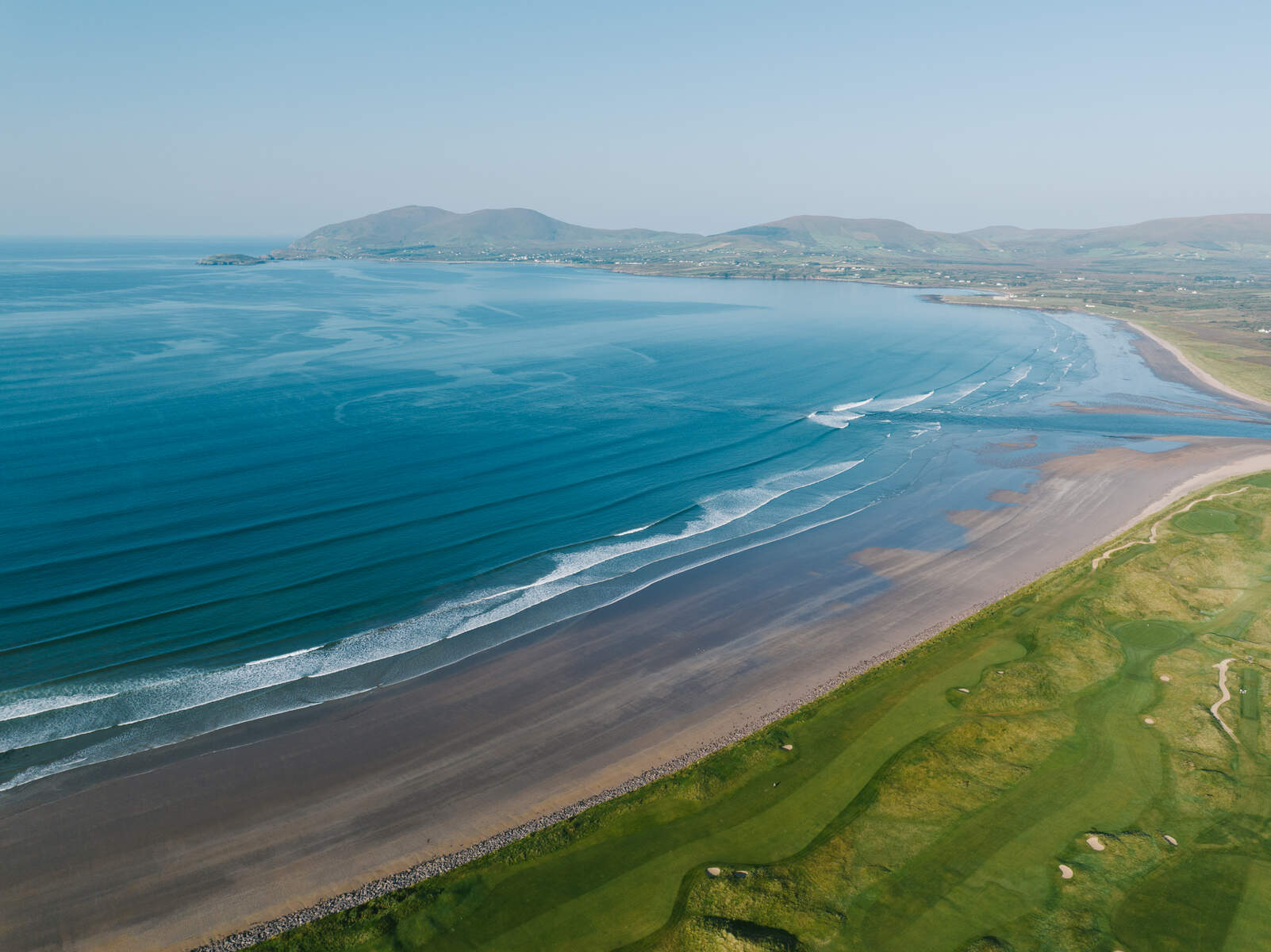
- Panoramic views – Climb the internal staircase to the lantern gallery for sweeping vistas of the Skellig Coast, Valentia Harbour, and, on clear days, the distant Skellig Islands.
- Great Lighthouses of Ireland passport – Collect a stamp at Cromwell Point as part of the national lighthouse trail, encouraging visits to the other eleven sites.
- Café & refreshments – A small café on the hill overlooking the point serves tea, coffee and light snacks – perfect for a break after the climb.
- Photography – The white tower against the dark Atlantic is striking at sunrise; sunset casts a golden glow on the cliffs. Bring a wide‑angle lens to capture the sea‑stack formations.
Walking & Outdoor Activities
A well‑marked 1 km walk starts from the car park south of the lighthouse and follows a coastal track to the tower, offering dramatic sea views and opportunities to spot seabirds. The route links to the wider Valentia Island walking network, allowing extensions to the ancient priory at Ballinskelligs, the historic Valentia Cable Station and the scenic Glenbeigh‑Rossbeigh Loop. The walk is suitable for families and can be combined with a visit to the nearby Knightstown ferry terminal for boat trips to the Skellig Islands.
Recent Highlights & Media
Cromwell Point Lighthouse features in the new Tourism Ireland campaign promoting the Great Lighthouses of Ireland partnership. Short videos and social‑media clips showcase the lighthouse’s architecture, the surrounding Skellig Coast scenery and activities such as boat tours offered by Kerry Aqua Terra. The lighthouse also appears in the annual lighthouse passport programme, which has attracted increasing numbers of international visitors.
Practical Access & Transport
- Parking – A small car park sits beside the lighthouse enclosure. Spaces are limited, especially in summer, so arrive early.
- Public transport – The nearest bus stop is in Knightstown, a short walk from the lighthouse. From Tralee, Bus Éireann route 279 serves Knightstown during the summer season.
- Boat tours – Seasonal boat trips from Knightstown ferry terminal head to the Skellig Islands; many operators also offer coastal wildlife tours that pass the lighthouse.
- Wheelchair access – The visitor centre and exhibition area are wheelchair‑friendly. The internal tower climb involves stairs and is not accessible for those with limited mobility.
- Weather – The site is exposed to Atlantic winds; tours may be cancelled in severe conditions. Check the official website or contact the attendant before you travel.
- Booking – Tickets can be bought on‑site or in advance via the official booking page on the lighthouse website. Group bookings and school visits should be arranged ahead of time.
- Facilities – Restrooms are available near the car park. No public toilets inside the tower.
Visiting Tips & Accessibility
- Parking – A small car park sits beside the lighthouse enclosure. Spaces are limited, especially in summer, so arrive early.
- Wheelchair access – The visitor centre and exhibition area are wheelchair‑friendly. The internal tower climb involves stairs and is not accessible for those with limited mobility.
- Weather – The site is exposed to Atlantic winds; tours may be cancelled in severe conditions. Check the official website or contact the attendant before you travel.
- Booking – Tickets can be bought on‑site or in advance via the official booking page on the lighthouse website. Group bookings and school visits should be arranged ahead of time.
- Facilities – Restrooms are available near the car park. No public toilets inside the tower.
Nearby Attractions
- Valentia Harbour – The sheltered harbour is a hub for boat trips to the Skellig Islands and for kayaking along the coastline.
- Knightstown – A short walk from the lighthouse, this village offers a handful of cafés, a post office and a ferry terminal to the Skelligs.
- Kells – The historic village on the Ring of Kerry provides additional dining options and craft shops.
- Skellig Islands – While a boat trip is weather‑dependent, the islands are a UNESCO World Heritage Site famed for their monastic ruins and seabird colonies.
- Valentia Island Development Centre – Hosts occasional cultural events and exhibitions related to the island’s maritime heritage.
- Valentia Cable Station – An interactive museum telling the story of the first trans‑Atlantic telegraph cable.
Practical Information
Cromwell Point Lighthouse welcomes visitors May‑September. Opening times are Tuesday to Saturday 11:00‑17:30 and Sunday 12:00‑18:30, though they may be altered by severe weather. Admission is €5.00 per adult, €2.50 for children under 12, and a family ticket (2 adults + 3 children) for €15.00. Tickets can be purchased on‑site or via the official booking page linked on the lighthouse website.
Parking is available in a small lot adjacent to the lighthouse enclosure; the site is wheelchair‑accessible up to the visitor centre, though the internal tower climb involves stairs and is not fully accessible for those with limited mobility. The on‑site attendant provides safety briefings and ensures that visitors stay on designated pathways, preserving both the historic fabric and the natural environment.
For those travelling by public transport, the nearest bus stop is in Knightstown, a short walk from the lighthouse. Private‑car visitors should follow the narrow, scenic road from the main Kerry‑Kells route, allowing ample time for the winding approach.
Contact: For group bookings or special events, reach out via the lighthouse’s website contact form.
Key specifications
| Feature | Detail |
|---|---|
| Height of tower | 15 m |
| Height of light (MHWS) | 16 m |
| Light character | Fl WR 2 s |
| Range | White 17 nm, Red 15 nm |
| Sectors | Red 304°‑351°, White 104°‑304° |
| Coordinates | 51°56.022’ N, 10°19.280’ W |
Plan your visit to Cromwell Point Lighthouse to experience a living piece of Ireland’s maritime legacy, set against some of the most spectacular coastal scenery in the country.