
Overview
Dowth (Irish: Dubhadh) sits on the northern bank of the River Boyne, just a short drive from the villages of Donore, Slane and Drogheda. The mound measures roughly 85 m (280 ft) in diameter and rises 15 m (50 ft) high, making it comparable in size to its more famous neighbours Newgrange and Knowth. Unlike those sites, Dowth is not accessed through the Brú na Bóinne Visitor Centre; a modest car park sits at the western edge of the monument and visitors can walk directly to the mound free of charge. The site forms part of the UNESCO World Heritage Landscape of Brú na Bóinne, a complex of Neolithic tombs, standing stones and henges that date from around 3200 BC.
History
The original construction of Dowth is believed to belong to the later phase of the Boyne Valley tomb‑building tradition, roughly between 2500 BC and 2000 BC, although it has never been independently dated. The monument consists of a central cairn surrounded by a kerb of up to 115 stone slabs; fifteen of these survive today, many bearing intricate megalithic art such as spirals, chevrons, lozenges and rayed circles. The most celebrated is kerbstone 51, nicknamed the “Stone of the Seven Suns”, whose radial carvings echo the solar symbolism found throughout the complex.
In 1847 the Royal Irish Academy carried out a poorly supervised excavation that involved dynamiting a large crater through the centre of the mound. The damage was never repaired, leaving a permanent scar that is still visible. Later archaeological work (2012‑2015) and a 2018 excavation of a nearby passage tomb at Dowth Hall revealed additional rock‑art motifs, confirming Dowth’s importance within the wider ritual landscape.
Mythology also surrounds the site. The medieval Dindsenchas recounts that King Bresal Bó‑Díbad forced the people of Ireland to build a tower to the heavens in a single day; when the spell that halted the sun failed, darkness fell and the name Dubhadh – “darkening” – was coined. This legend is often linked to the winter‑solstice alignment that still operates at Dowth.
What to See & Do
- The Mound and Kerbstones – Walk around the grassy cairn and locate the surviving kerbstones. Look for the spiral and flower‑like motifs on the entrance to Dowth South and the sun‑radiating patterns on stone 51.
- Passage Tomb Entrances – Three stone‑lined passages cut into the western side: Dowth North (18.2 m long, cruciform chamber with decorated orthostats), Dowth South (3.5 m long, circular chamber now capped with a concrete roof), and an early‑Christian souterrain dating to the 10th‑11th century.
- Winter‑Solstice Light Show – From November to February the setting sun penetrates the passage of Dowth South; on the winter solstice the low sun sweeps along the left side of the passage, illuminates three stones in the circular chamber, and reflects off a convex central stone into a dark recess. The effect lasts about two hours.
- Landscape Photography – The mound rises above a patchwork of pasture, hedgerows and occasional sheep, offering dramatic silhouettes at sunrise and sunset.
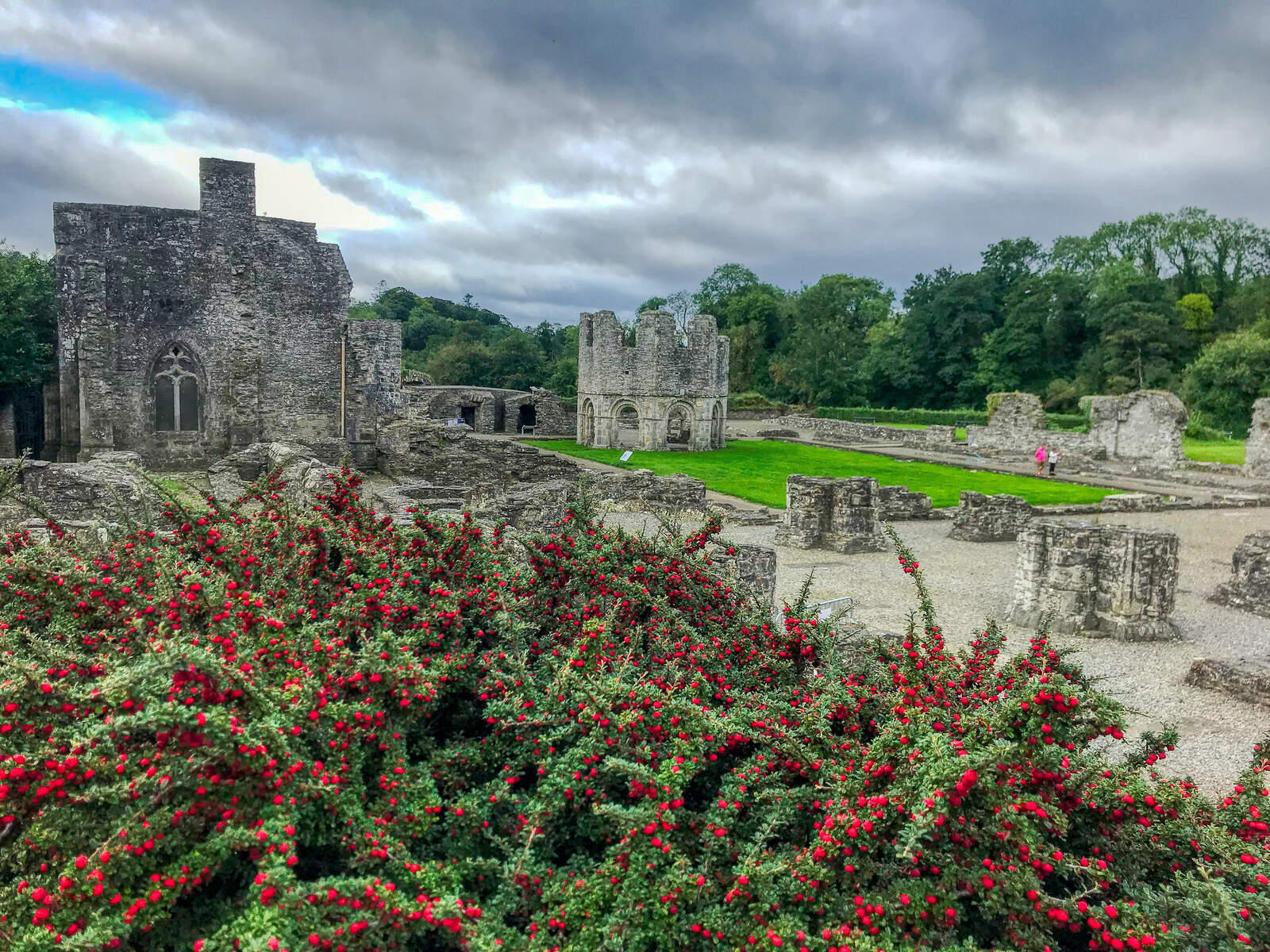
- Nearby Attractions – After exploring Dowth, the Boyne Valley Drive provides easy access to Newgrange, Knowth, Old Mellifont Abbey, Slane Castle and the Hill of Slane, all within a 10‑minute drive.
Practical Information
Dowth is free to visit and does not require a ticket. The site is open during daylight hours; the surrounding countryside is accessible year‑round, though the visitor centre on the south bank of the Boyne (Eircode A92 EH5C) follows seasonal opening times for its exhibitions and tours.
| Service | Details |
|---|---|
| Opening | Open whenever daylight permits; no specific hours for the mound itself |
| Admission | Free – no ticket required |
| Parking | Small car park directly opposite the entrance (use the off‑road space to avoid blocking the lane) |
| Access | Exterior mound is reachable on foot; interior chambers are closed and protected by metal grilles |
| Contact | +353 (0) 41 988 0300 – Brú na Bóinne office |
| Website | https://www.newgrange.com/dowth.htm |
Getting there – From Dublin take the N2 north via Ashbourne, then follow signs for Donore and the Brú na Bóinne Visitor Centre; turn left onto the L21 and follow the brown and white signage to the Dowth car park. The site is also reachable by bus (Route 163 from Drogheda) or by the TFI Local Link Route 188, which stops near Donore.
Accessibility – The mound’s exterior can be walked on uneven ground; there is no wheelchair‑accessible route to the interior chambers. Visitors who need special assistance should email brunaboinne@opw.ie in advance.
Seasonal notes – The most spectacular illumination occurs during the winter solstice (21 December). While the sun’s path has shifted slightly over the millennia, the light still reaches the chamber for a few hours each evening from late November to early February.
Further reading – For a deeper dive into the solar alignment, see Martin Brennan’s research on the site’s winter‑solstice phenomenon (Knowth.com – Martin Brennan). The official Brú na Bóinne visitor‑centre site provides up‑to‑date booking information for Newgrange and Knowth tours, which can be combined with a self‑guided visit to Dowth.
Enjoy the quiet mystery of Dowth, where ancient stone, lingering myth and the slow march of the sun converge in a landscape that feels both timeless and intimately Irish.