
Overview
Perched on a windswept ridge a kilometre from the Atlantic, Drombeg Stone Circle is one of the most photographed Bronze Age monuments in Ireland. Locally called the Druid’s Altar, the circle comprises 17 standing stones set in a roughly 9‑metre diameter. The site commands sweeping views of the sea and the surrounding farmland, making it a magnet for photographers, history enthusiasts and families alike.
The circle is easily reached from the villages of Rosscarbery, Glandore and Union Hall, and a modest car park sits just a few minutes’ walk away. Because the monument is open all year and admission is free, it fits effortlessly into a day‑trip along the Wild Atlantic Way.
History
Archaeologists date the construction of Drombeg to the middle or later Bronze Age, roughly 3,000 years ago (c. 1100–800 BC). The name derives from the Irish Droma Bhig – “the small ridge”.
Excavations in 1957‑58 uncovered a compact gravel floor at the centre of the circle, a pit containing the cremated remains of an adolescent, and a broken pot wrapped in thick cloth. Around the pit lay 80 shattered sherds, four pieces of shale and ash‑laden sweepings, indicating a ritual burial.
A second feature, a fulacht‑fiadh (ancient cooking pit), lies just west of the stones. Tests have shown that the heated‑stone method could bring 70 gallons of water to a boil for nearly three hours, suggesting communal feasting or ceremonial use.
The circle’s most striking astronomical trait is its alignment with the winter‑solstice sunset. When viewed from the entrance, the sun sets behind a conspicuous notch in the distant hills and aligns with the midpoint of the recumbent stone – a deliberate, though not perfectly precise, design noted by Boyle Somerville in 1923.
What to See & Do
- The standing stones – Seventeen tall stones, two of which serve as portal stones over two metres high, frame the circle. The largest recumbent stone, often called the Druid’s Altar, lies on the western side and bears two cup‑marks.
- The central pit – While the burial pit itself is not exposed, interpretive panels explain the discovery of the cremated remains and the broken pot, giving visitors a glimpse into Bronze Age funerary rites.
- Fulacht‑fiadh – The stone‑lined trough and surrounding hearth are clearly visible. Information boards describe how red‑hot stones were dropped into water to create a boiling bath, a technique that could have been used for cooking, bathing or ritual purification.
- Bronze Age hut foundations – Roughly 40 metres from the circle, the stone foundations of two round huts can be traced, hinting at a settlement that may have hosted seasonal gatherings.
- Sunset viewing – On 21 December (or any clear winter evening) the setting sun aligns perfectly with the recumbent stone, creating a dramatic beam of light across the circle – a photographer’s dream.
- Scenic backdrop – The Atlantic horizon, rolling fields and distant hills provide a constantly changing canvas, especially in the golden hours of sunrise and sunset.
Practical Information
| Detail | Information |
|---|---|
| Opening hours | Open all year round (no specific closing times). |
| Admission fee | Free entry. |
| Location | Glandore, County Cork, Ireland – approx. 4.5 km SW of Rosscarbery. |
| Coordinates | 51.564561 N, 9.086998 W |
| Parking | Small car park off a quiet lane; a short 0.17 km walk (≈150 m) to the stones. |
| Accessibility | Gravel path of about 150 m followed by a firm grassy field; partially wheelchair‑accessible in dry conditions. |
| Dog policy | Dogs are permitted on a leash; the site is fenced off from livestock. |
| Family suitability | Suitable for children, though supervision is needed near the water‑filled trough at the fulacht‑fiadh and the raised rocky area. |
Visitors arrive via the R597 road from Rosscarbery, turning left after entering the village of Drombeg and following signs for the stone circle. The narrow lane leading to the car park is shared with local traffic, so a slow, courteous drive is advisable.
The site has no on‑site facilities such as a café or restroom, so plan accordingly. Because the area is open countryside, the ground can become soft after rain; the grassy field remains relatively firm under normal conditions.
For further details, see the official tourism page at Discover Ireland or the heritage‑focused site Tuatha.ie.
Nearby Attractions
While Drombeg makes a compelling half‑day stop, the surrounding West Cork coastline offers additional highlights:
- Owenahincha Beach – a Blue Flag sandy beach with surf schools and rock pools.
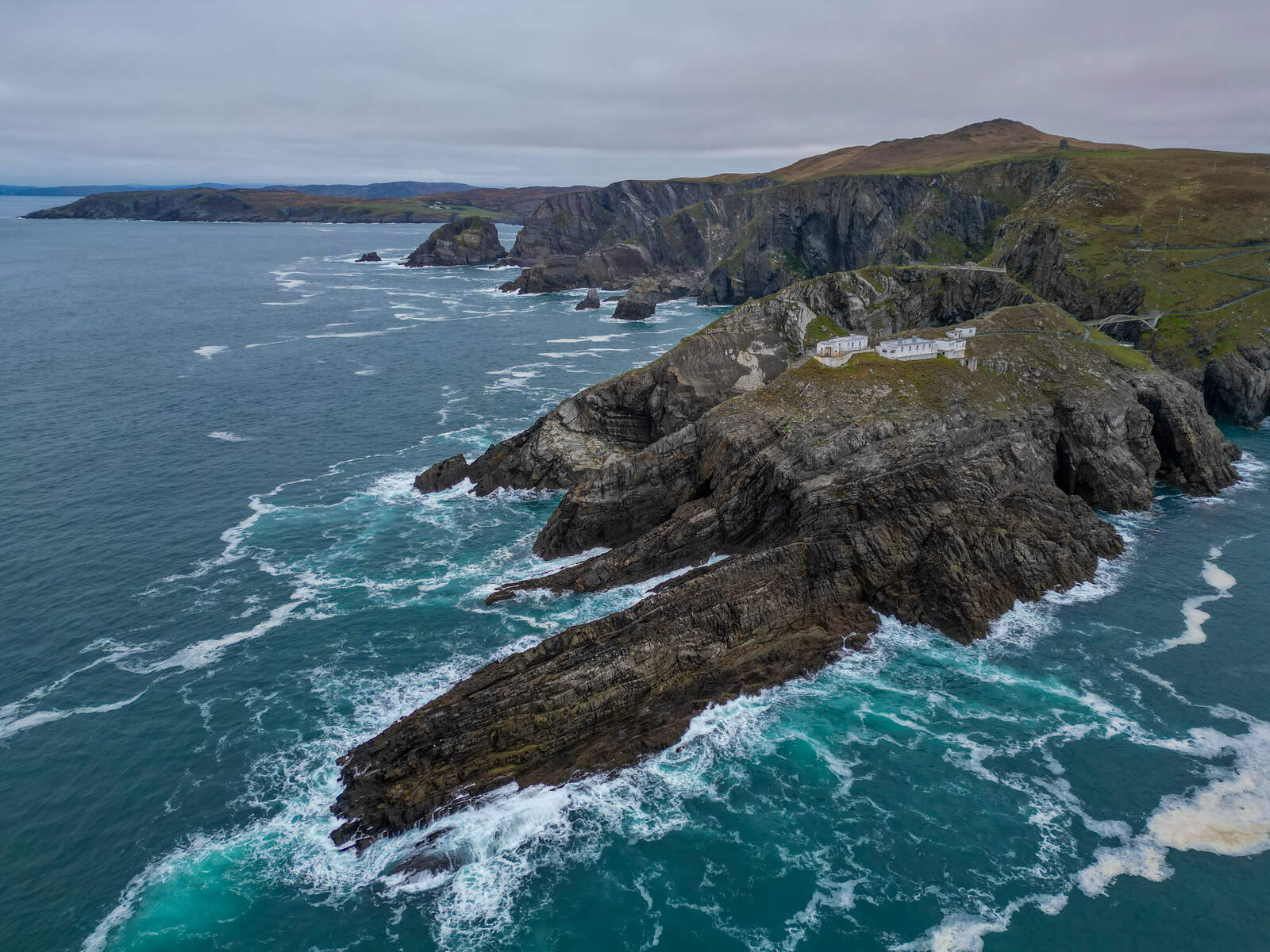
- Mizen Head – Ireland’s most south‑westerly point, featuring dramatic cliffs and a historic signal station.
- Rosscarbery – a historic village with a 6th‑century monastic site and lively pubs.
- Glandore – a charming harbour village perfect for a seafood lunch.
These sites are all within a short drive, allowing visitors to weave Drombeg into a broader West Cork itinerary.
Whether you are tracing ancient rituals, chasing the solstice light, or simply soaking in the Atlantic panorama, Drombeg Stone Circle offers a timeless encounter with Ireland’s prehistoric heart.