
Overview
Drumlane Abbey lies a mile outside the village of Milltown, just off the R201 on the tranquil banks of Garfinny (Garfinny) Lough. The monastic complex is part of the Marble Arch Geopark and is managed by the Office of Public Works (OPW) as a National Monument. Visitors are greeted by the buttressed ruin of the medieval church, the solitary round tower that rises 11.6 m above the ground, and a quiet graveyard that still serves local families. Swans and whooping cranes often glide across the lake, making the setting as photogenic as it is historic.
History
The spiritual roots of Drumlane stretch back to the mid‑6th century. Saint Columba is credited with introducing Christianity to the site around 555 AD, and Saint Mogue (Máedóc of Ferns) later founded an early monastery there. The Ó Faircheallaigh family supplied a line of abbots for centuries, cementing the abbey’s role as a religious centre in the Kingdom of Breifne.
During the Viking age the abbey suffered a raid in 836, and later, in 1246, a feud between the O’Rourke and O’Reilly clans saw the church burned. The site endured further conflict in the 13th and 14th centuries, including battles in 1261, 1314 and 1338. By the 15th century the priory was a flourishing Augustinian house under the patronage of St Mary’s Abbey, Kells.
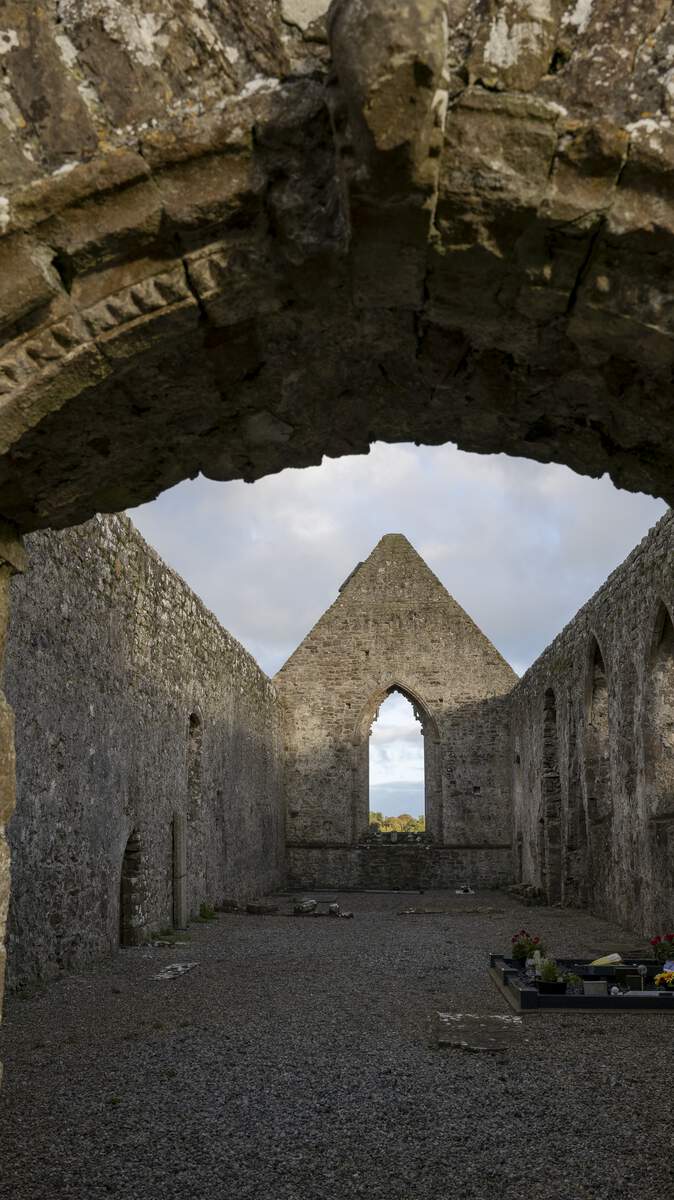
The Dissolution of the Monasteries in the mid‑16th century confiscated the property, and it passed into the hands of the Anglican Diocese of Kilmore. The old church continued as a parish church until a new St Columba’s was built in 1821; the medieval building was then un‑roofed and fell into ruin. In 1882 the state took ownership, and the OPW has overseen its conservation ever since. Major stabilisation work on the east gable wall – including lime‑mortared repointing, stainless‑steel ties and protective scaffolding – was carried out between 2014 and 2017, ensuring the structure’s long‑term stability.
What to See & Do
- The Round Tower – The only surviving round tower in the Diocese of Kilmore, it stands 11.6 m tall with a base circumference of 15.8 m. The entrance sits roughly nine feet above ground, accessed originally by a wooden ladder that could be drawn up during attacks. The lower half displays finely cut stonework, while the upper half is more modest, reflecting two phases of construction.
- The Church Ruins – The long nave and screened chancel measure 32.6 m by 6.1 m internally. Notable features include a dog‑tooth west doorway, chevron‑carved Romanesque fragments, a three‑light east window with flamboyant tracery, and carved stone heads of a bearded king, his queen and a bishop/abbot set into the east wall.
- Gravestones and Tomb Slabs – The surrounding graveyard contains 18th‑century headstones still in use by local families, as well as a medieval tomb slab set against the north wall of the church.
- St Mogue’s Holy Well – A short walk north‑west of the abbey leads to a holy well traditionally associated with St Mogue, where many ancient kings of Breifne were reputedly baptised.
- Lakeside Walks – The lough offers gentle walking routes with opportunities to watch swans, whooping cranes and the occasional otter. The view across the water frames the abbey dramatically, especially at sunrise.
- Interpretive Signage – On‑site panels explain the monastic life, the round‑tower’s defensive purpose, and the recent conservation efforts.
Practical Information
Drumlane Abbey is free to enter and is open year‑round; there are no ticket charges or timed entry slots. A modest car park sits beside the R201, providing convenient access for visitors travelling by car. The site is wheelchair‑accessible on the main paths, though the uneven stone floor of the church ruin may be challenging for some users. No visitor centre exists on‑site, but the OPW maintains a small information board with contact details for further enquiries.
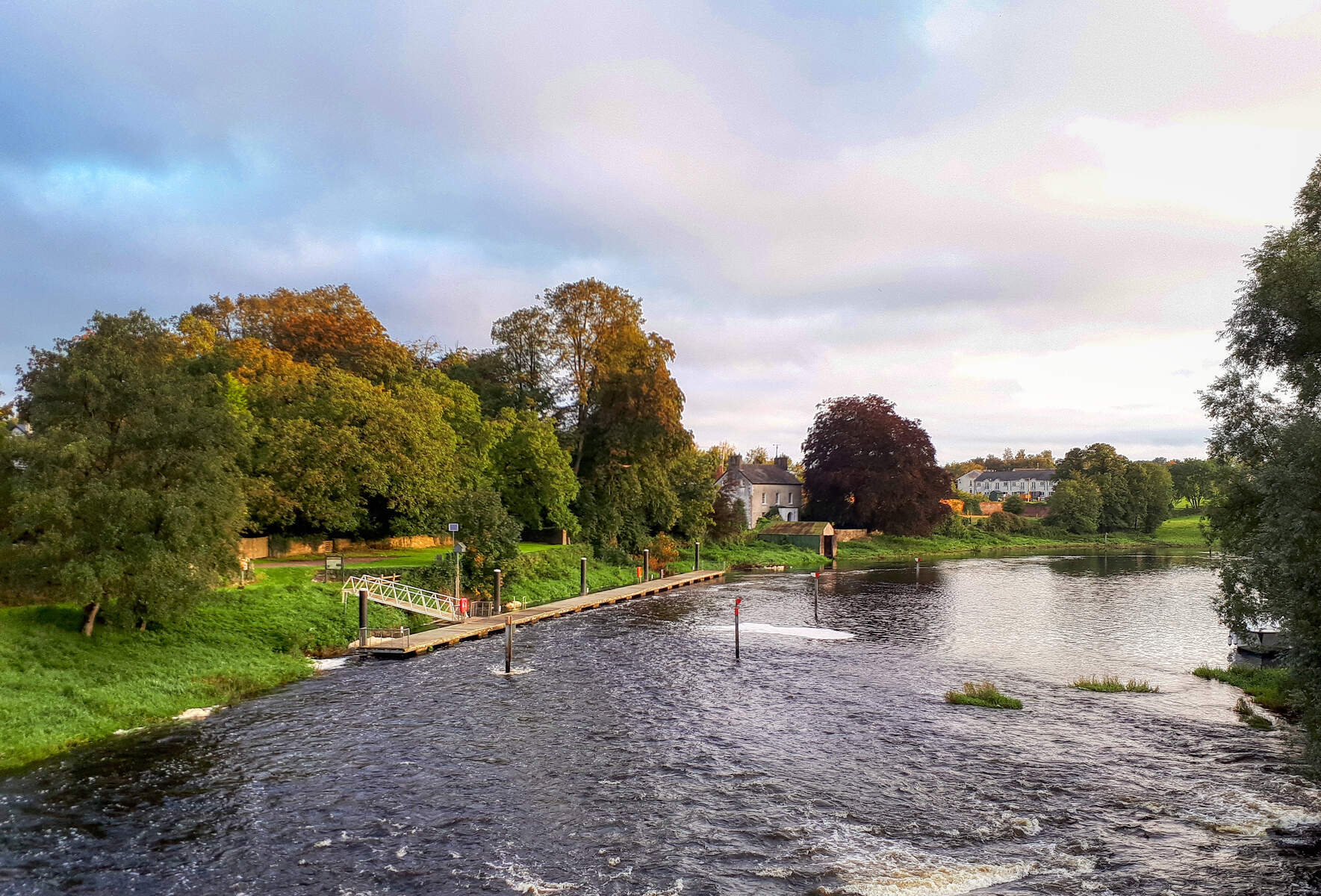
Getting there – From Belturbet, follow the R201 north‑west for about 5 km; signs for Drumlane Abbey appear shortly before the turn‑off to the car park. Public transport options are limited, so a private vehicle is recommended.
Facilities – Parking is free. There are no cafés or restrooms within the immediate grounds, so visitors may wish to stop in Belturbet or Milltown before or after their visit.
Further information – Details on conservation work, opening times and accessibility can be found on the Heritage Ireland page Drumlane Abbey and Round Tower and the Discover Ireland guide Visit Drumlane Abbey and Round Tower.
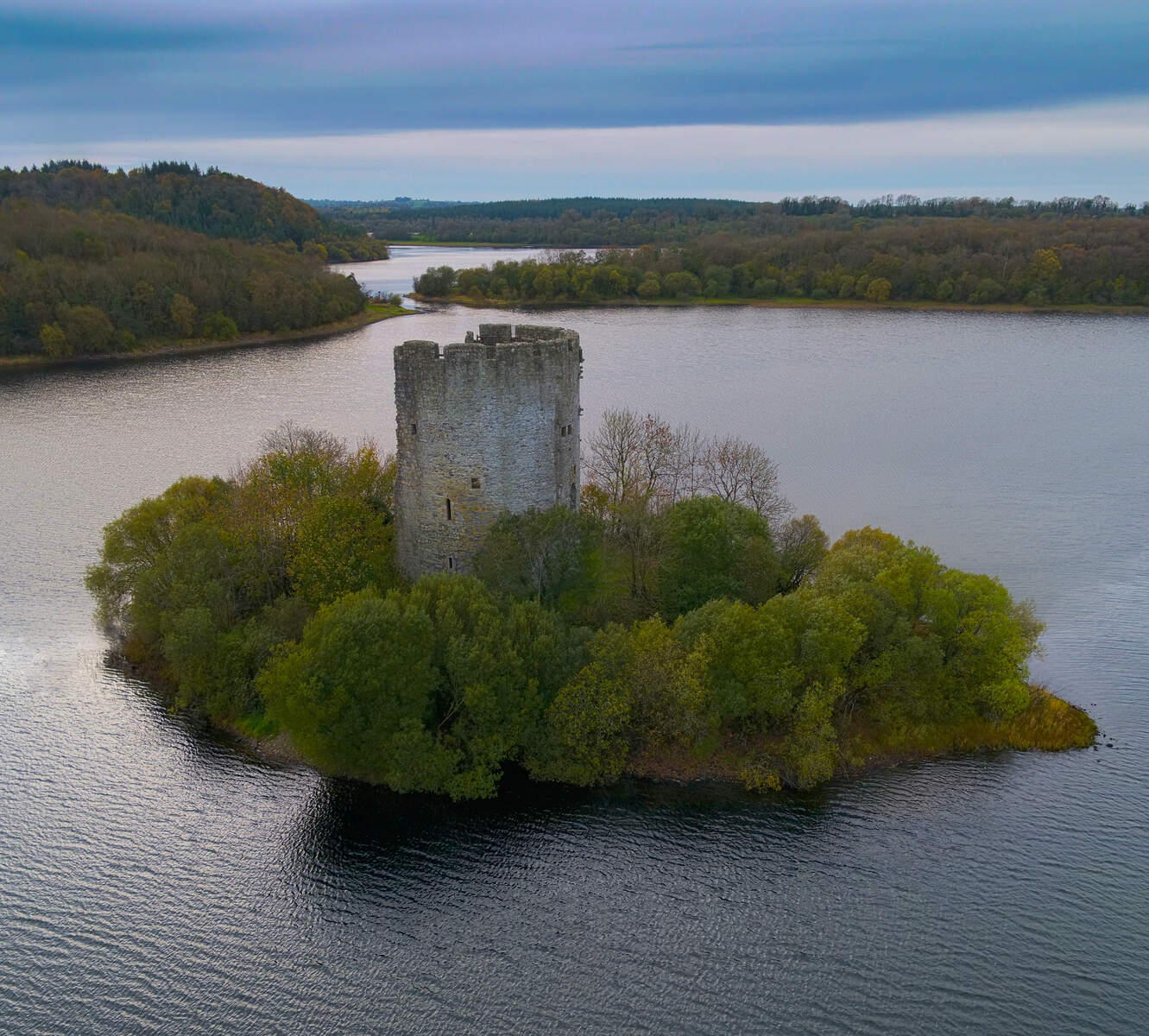
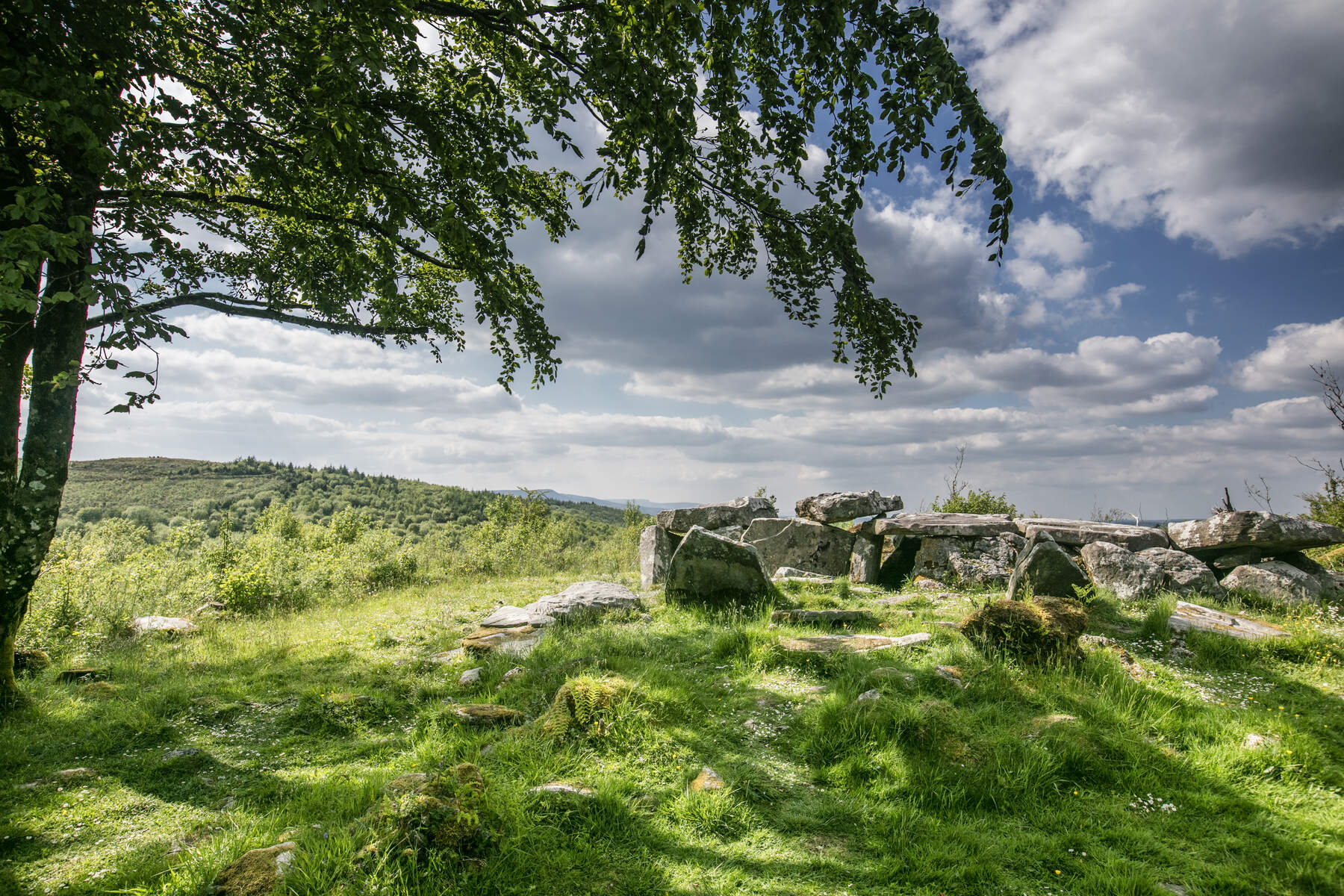
Nearby attractions – The Marble Arch Geopark offers additional geological and cultural sites, including the Cavan Drumlins landscape, Clough Oughter Castle and the Woodford River Walk, all within a short drive.
Enjoy a quiet morning or an afternoon of reflection among the stones, the lake and the lingering echoes of centuries‑old prayers at Drumlane Abbey.