
Overview
The Dublin Exhibition Palace was conceived in the early 1860s as the flagship venue for the International Exhibition of Arts and Manufactures, a world’s fair that attracted almost one million visitors in 1865. Situated on the former Coburg Gardens between Hatch Street, Harcourt Street and Earlsfort Terrace, the complex combined a brick‑and‑stone main building, a stone annex with an iron roof, and a striking iron‑and‑glass Winter Garden inspired by London’s Crystal Palace. While the original structures were demolished in the early 20th century, the site now houses the National Concert Hall and the beautifully restored Iveagh Gardens, preserving the spirit of the original exhibition.
History
In 1862 the Duke of Leinster, Lord Talbot de Malahide and brewer Benjamin Guinness formed the Dublin Exhibition Palace and Winter Garden Company. Guinness contributed the 15‑acre Coburg Gardens and leased an additional two acres for the fairgrounds. A design competition capped at £35,000 attracted many submissions, but only the plans of architect Alfred G. Jones were ultimately accepted after revisions.
Construction began in 1863. The final layout featured three distinct buildings:
- A brick and stone structure with cement lining.
- A stone building capped by an iron roof.
- An iron‑and‑glass Winter Garden, the most visually dramatic element, echoing the Crystal Palace’s transparency.
The exhibition opened on 8 May 1865 (some sources cite 9 May) by the Prince of Wales. To test the iron structure’s resilience, 600 soldiers marched through the galleries on 31 March 1865. The fair displayed 4,781 cases of fine arts, textiles, manufactured goods and raw materials from the British Isles and abroad, drawing an average of 5,000 day visitors and 3,000 evening visitors.
After the exhibition, the buildings served various purposes. The main palace became examination halls for the Royal University of Ireland, and in 1914 the site was redeveloped. Following the 1911 re‑organisation, the building along Earlsfort Terrace was incorporated into what is now the National Concert Hall, while the Winter Garden’s surrounding grounds were transformed into the Iveagh Gardens. A rustic grotto, several statues and a decorative grotto survive in the gardens, offering tangible links to the 1865 event.
What to See & Do
National Concert Hall
The former exhibition palace now forms the core of Dublin’s premier concert venue. Visitors can attend classical concerts, chamber music, and contemporary performances in a building that blends Victorian grandeur with modern acoustics. The hall’s interior retains elements of the original design, such as the grand central hall and ornate cast‑iron detailing, providing a historic backdrop to today’s cultural programme. The NCH also offers guided backstage tours on select days – check the official website for times and booking details.
Iveagh Gardens
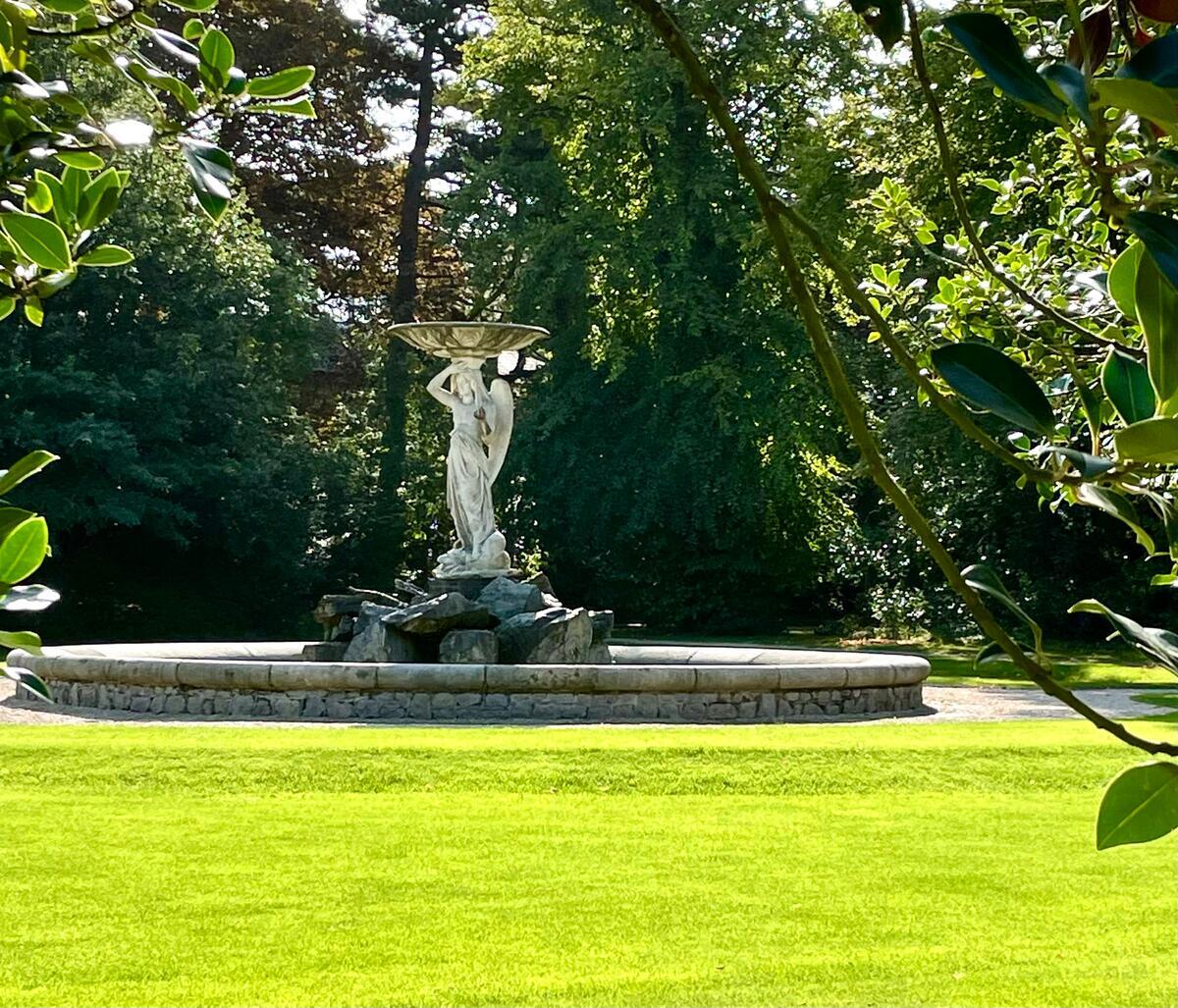
Just behind the concert hall lies Iveagh Gardens, described by Heritage Ireland as Dublin’s “secret garden”. Designed by Ninian Niven in 1865 as the exhibition’s pleasure grounds, the gardens feature:
- A rustic grotto and sunken formal lawns centred around a fountain.
- A maze, a rosarium, an American garden, rockeries and archery grounds.
- Woodlands and a broad terrace that once linked the Winter Garden to the city.
The gardens are open year‑round (closed on 25 December and 17 March) and provide a tranquil escape within walking distance of the city centre. Entry is free.
Architectural Remnants
While most of the original palace structures have been replaced, visitors can still appreciate the scale and ambition of the 1865 design through the surviving stone piers, granite gate entrances and the layout of the surrounding gardens. The iron‑and‑glass Winter Garden’s footprint is evident in the garden’s long, straight avenues and the location of the former exhibition hall.
Guided Tours & Visitor Services
- National Concert Hall tours – Free guided tours run on Saturdays (subject to change) and give insight into the building’s Victorian architecture and modern performance spaces.
- OPW visitor point – A small information kiosk in Iveagh Gardens provides maps, details of the garden’s history and advice on nearby amenities.
Seasonal Highlights & Events
- Summer music series – The gardens occasionally host open‑air concerts and cultural festivals during the summer months, complementing the NCH’s indoor programme.
- Winter lights – Around the festive period the garden’s pathways are illuminated with decorative lighting, creating a pleasant evening stroll.
- Floral displays – Spring brings a burst of colour in the rosarium and the American garden, making it a popular spot for photography.
Practical Information
The Dublin Exhibition Palace site is centrally located in Dublin’s south‑city district. The National Concert Hall’s main entrance is on Earlsfort Terrace, with additional accessible entry points via Clonmel Street and Hatch Street, as noted by Heritage Ireland for the adjacent Iveagh Gardens.
Getting there – The site is a short walk from St Stephen’s Green. Dublin Bus routes 46A, 145 and 145A stop nearby, and the Luas Green Line (St Stephen’s Green stop) provides easy tram access. Parking is limited in the immediate area; visitors are advised to use nearby public car parks such as the St Stephen’s Green Car Park.
Accessibility – Accessible entry is provided through Clonmel Street and Hatch Street. The concert hall offers wheelchair‑friendly seating and assistance services; the gardens have paved paths suitable for most mobility devices.
Opening times – The National Concert Hall follows a performance‑based schedule; check the hall’s programme for specific concert times. Iveagh Gardens are open daily from 08:00 to 16:00 (seasonal variations apply), with occasional early closures for events or weather.
Facilities – On‑site cafés, restrooms and a gift shop are available within the concert hall. The gardens provide benches, water fountains and a small visitor information point.
Nearby attractions – Within a 1 km radius you’ll find Dublin Castle, St Stephen’s Green, Government Buildings, the Abbey Theatre and the historic streets of the city centre, making the site an ideal base for a cultural day out.
Contact – For enquiries about the National Concert Hall, visit https://www.nch.ie or call +353 1 676 5000. For garden‑related questions, email parkmanager@opw.ie or call 01 475 7816.
The Dublin Exhibition Palace may no longer stand in its original form, but its legacy lives on through the vibrant cultural life of the National Concert Hall and the serene beauty of Iveagh Gardens. Whether you’re attending a concert, strolling through the historic gardens, or simply admiring the Victorian architecture that frames the space, the site offers a unique window into Dublin’s 19th‑century ambition and its continued relevance today.