
Overview
Dundrum Castle dominates a rocky hill north‑west of the village of Dundrum, near Newcastle in County Down. The ruin, which crowns a ridge that commands views over Dundrum Bay, the Mourne Mountains and the plains of Lecale, is a State Care Historic Monument and is free to the public. Its dramatic silhouette – a circular keep, a twin‑towered gatehouse and the remnants of an outer bailey – makes it a favourite stop for families, history buffs and anyone seeking a scenic outlook on the Irish Sea coast.
History
The site originally hosted a motte and wooden tower erected by the Anglo‑Norman invader John de Courcy around 1177, shortly after his seizure of Ulster. The name Dundrum derives from the Irish Dún Droma – ‘the fort on the ridge’. De Courcy’s early fortifications were likely timber and earth, but the stone curtain wall of the upper ward was probably added at the start of the 13th century.
After de Courcy was expelled in 1203, the castle fell into the hands of Hugh de Lacy, who reinforced it with a massive round keep – a design imported from the Welsh Marches. The keep originally rose at least three storeys, with a ground‑level storage cellar, a cistern‑well at its base, a great chamber on the first floor and private chambers above. A strong gatehouse was inserted around 1260, and a lopsided twin‑tower gatehouse (similar to Pembroke Castle) was added later, protecting the approach from the south‑west.
By the mid‑14th century the Mac Aonghasa (Magennis) dynasty controlled the castle, adding a lower ward in the 15th century and a 17th‑century house for the Blundell family after the Plantation of Ulster. The castle changed hands repeatedly – captured by the Earl of Kildare in 1517, by Lord Deputy Grey in 1538, and finally surrendered to Lord Mountjoy in 1601. Parliamentarian forces dismantled much of the structure in 1652, but the ruins were placed in State Care by the seventh Marquess of Downshire in 1954.
The site gained modern fame when the archaeology programme Time Team filmed an episode there in February 2013, uncovering the rock‑cut cistern and shedding light on the layered construction phases.
What to See & Do
- The Circular Keep – The most striking feature, the keep’s massive drum shape still dominates the skyline. Visitors can walk around its base and peer into the surviving stone‑work, imagining the original three‑storey tower that once housed a lord’s great hall.
- Gatehouse and Curtain Walls – The twin‑tower gatehouse, with its asymmetrical design, offers a tangible sense of medieval defence. The remaining curtain walls outline the former outer bailey, where a 15th‑century lower ward once stood.
- Rock‑Cut Cistern – Excavations have revealed a deep well at the keep’s foot, ensuring a reliable water supply for defenders during sieges – a rare feature still visible today.
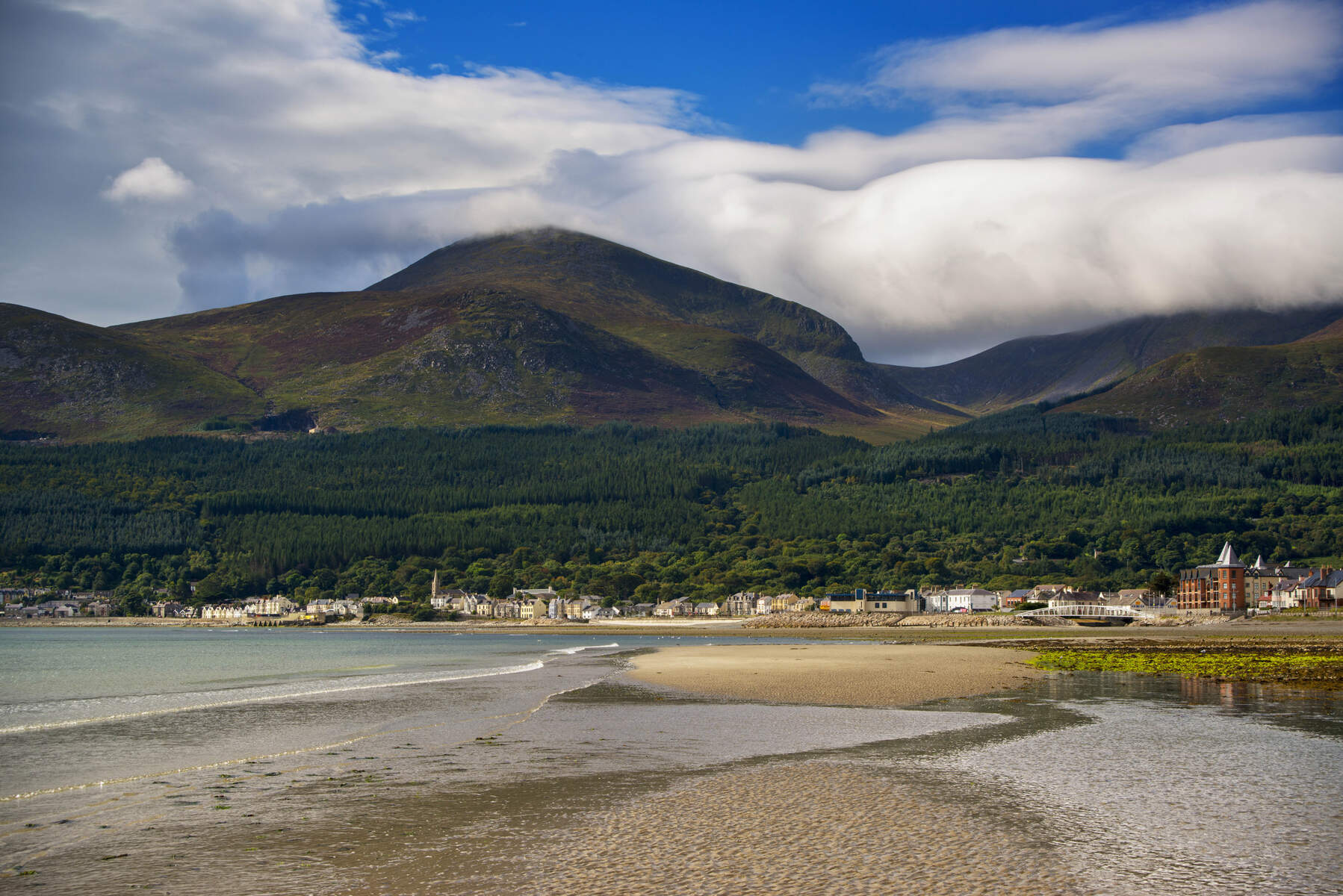
- Panoramic Views – From the hilltop you can see south over Dundrum Bay, the Mourne Mountains, Slieve Croob to the west and the flat expanse of Lecale to the east. The vista is especially striking at sunset.
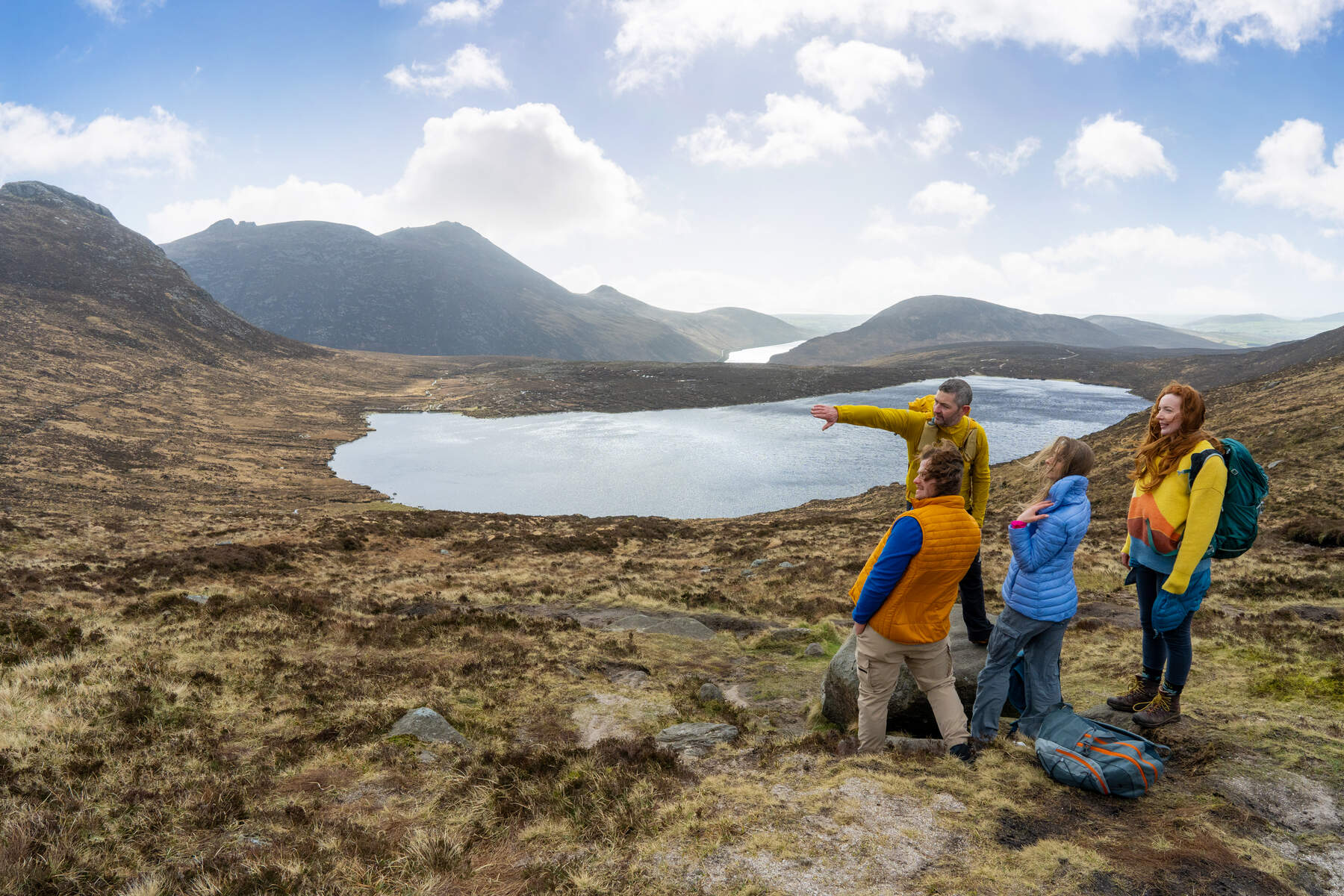
- Surrounding Woodlands – A small, lightly wooded area at the base of the hill provides a pleasant walking circuit. The nearby Dundrum Castle Woods Trail links the ruin to coastal paths and the village.
- Educational Value – The site is a regular destination for school groups, and the Time Team episode (available on YouTube) offers an engaging visual supplement for visitors interested in archaeology.
Practical Information
| Season | Days | Opening Times |
|---|---|---|
| Winter (1 Jan 2025 – 31 Dec 2026) | Tuesday‑Sunday, Bank Holidays | 09:00 – 16:00 |
| Summer | Tuesday‑Sunday, Bank Holidays | 09:30 – 17:00 |
| Monday | Closed |
Admission – Free of charge. Parking on‑site is available at no cost, though spaces can fill quickly during peak summer weekends.
Accessibility – The approach to the castle is a gravel path up a sloping rocky knoll, which can be challenging for wheelchair users. The interior of the keep is accessed via steep stone steps and is therefore inaccessible to those with limited mobility.
Contact – Phone: +44 (0) 28 9082 3207. For the latest updates, visit the official page: Discover Northern Ireland – Dundrum Castle.
Getting There
- By Car – From Newcastle, travel north on the A2, turn left onto Manse Road (signposted for the castle), then right onto Castle Hill. The car park sits on the right after about 0.2 miles.
- Public Transport – Translink Goldline Route 237a runs between Belfast Europa Buscentre and Newcastle; alight at the Dundrum Spar stop and walk 10‑15 minutes up the steep path. Ulsterbus Route 520 also serves Dundrum village, though less frequently.
Nearby Attractions – The castle sits within walking distance of the Dundrum Castle Woods Trail, Murlough National Nature Reserve, and the coastal village of Newcastle, making it an ideal hub for a day of exploring County Down’s natural and historic treasures.
Visitor Note – Children under 16 may enter, but must be accompanied by a responsible adult at all times due to the uneven terrain and steep steps.
Coordinates – Latitude 54.26257, Longitude -5.84558 (Irish Grid Ref. J 40464 36886).