
Overview
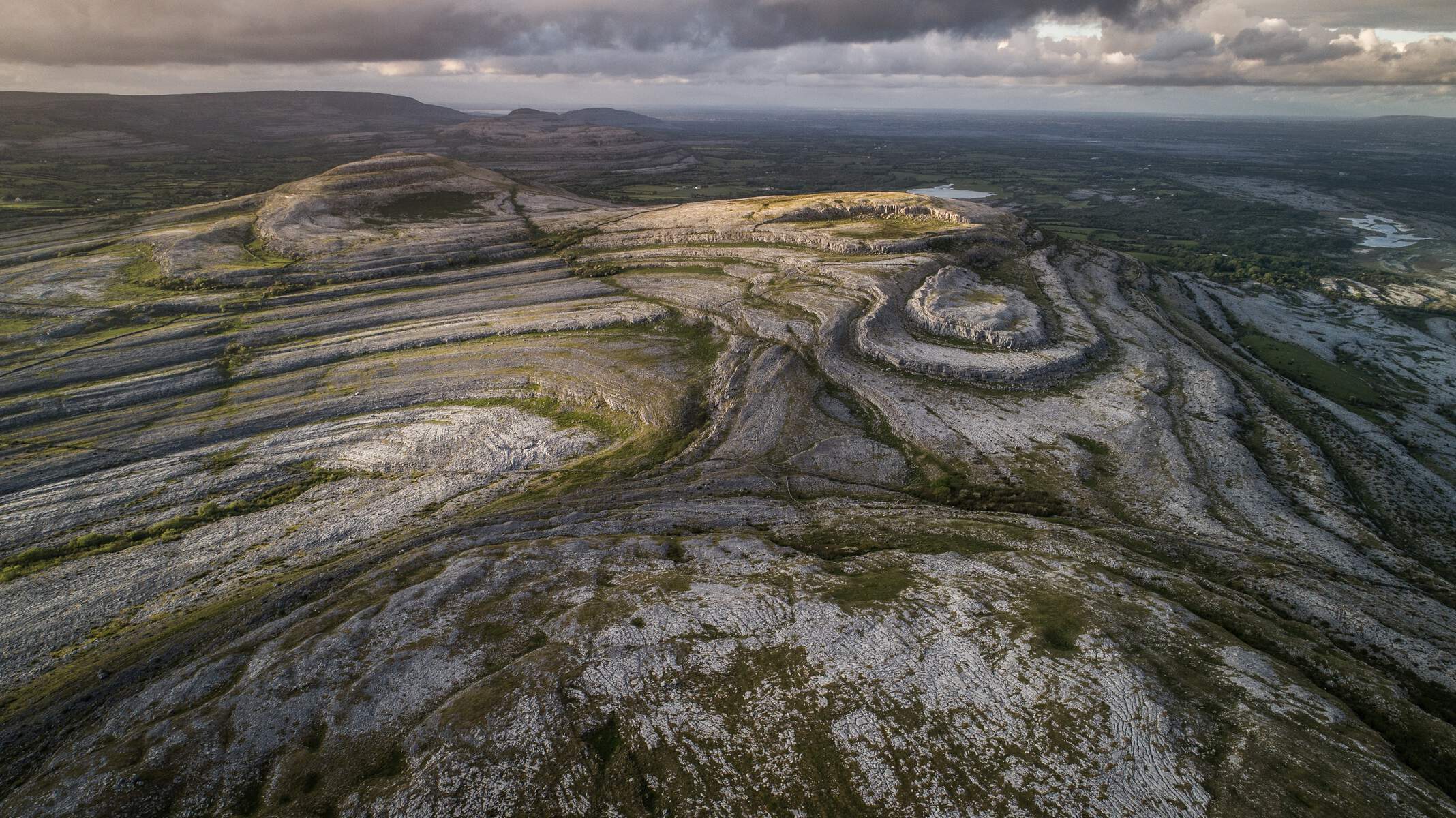
Dysert Castle, officially Dysert O’Dea Castle, crowns a dramatic limestone outcrop five kilometres south of Corofin and eleven kilometres north of Ennis – the gateway to the Burren. The compact historic complex comprises a meticulously restored 15th‑century Gaelic tower house, a 12th‑century church with an illuminated Romanesque doorway, a finely carved high‑cross, the stump of a round tower, and a 4 km archaeology trail linking 25 field monuments that span from the Bronze Age to the 19th century. Free on‑site parking for cars and coaches, restroom facilities, a small tea room, and a bookshop make the site comfortable for families, school groups and heritage enthusiasts.
History / Background
The O’Dea clan, Lords of Cineal Fearmaic, erected the tower house between 1470 and 1490 (traditionally dated to 1480) as their stronghold. The castle survived a turbulent early modern period: seized by the Earl of Ormond in 1570, reclaimed by the O’Deas in 1584, and finally battered by Cromwellian troops in 1651, who smashed the battlements, upper floors and staircase. Earlier, the surrounding lands bore witness to the 1318 Battle of Dysert O’Dea, a decisive Gaelic victory over the Anglo‑Normans that is commemorated along the long‑distance trail.
After centuries of ruin, John O’Day of Wisconsin purchased the site in the 1970s and commissioned a full restoration. The work rebuilt the missing upper floors, repaired the staircase and reinstated the roof‑walk. In 1986 the restored tower reopened as the Dysert O’Dea Castle Archaeology Centre, earning several national heritage awards for its interpretation and conservation.
Adjacent to the castle, the 12th‑century Dysert O’Dea Church stands on the footprint of an early Christian monastery. Its most striking feature is the illuminated Romanesque doorway, while a high‑cross re‑erected in 1683 by Conor O’Dea depicts a stylised Christ with outstretched arms. The churchyard retains the stump of a round tower and a medieval graveyard.
Awards and Sustainability
The restoration project has been recognised with multiple national heritage awards, highlighting the quality of the conservation work and the visitor‑focused interpretation on site. Dysert O’Dea Castle also participates in County Clare’s Global Sustainable Tourism certification programme, demonstrating a commitment to environmentally responsible tourism and community benefit.
What to See & Do
Castle Interior
- Ten rooms spread over four floors, each furnished to illustrate the lifestyle of a Gaelic noble household.
- Great Hall – massive medieval fireplace and period furnishings.
- Modern History Room – artefacts tracing the region from 1700 AD to the present.
- Archaeology Museum – objects ranging from a 1 000 BC stone axe to 19th‑century domestic items.
- Audio‑visual presentation – a short film that brings the castle’s turbulent past to life.
- Roof‑walk – an enclosed parapet walk offering panoramic views of the Burren, the church and scattered field monuments.
Church and High Cross
A short stroll leads to the 12th‑century church. Visitors can admire the intricately carved Romanesque doorway, the round‑tower stump and the high‑cross, one of Ireland’s finest examples of its type.
Archaeology Trail
The 4 km Dysert O’Dea Archaeology Trail encircles the castle and connects 25 monuments. Two marked routes are available:
- Short Trail (≈300 m) – family‑friendly walk past the high‑cross, Romanesque doorway, round‑tower stump, a sacred well and the medieval graveyard.
- Long Trail (≈5 km) – a more extensive hike that passes the ruins of Rath Castle, two medieval earthen forts and other prehistoric sites, with interpretive signs and a guide map provided at the entrance.
Seasonal Opening & Visitor Information
Dysert O’Dea Castle operates seasonally from May to September. Opening hours are 10:00 – 17:00 every day during this period. Outside the May‑Sept window the site is closed to the public, although the surrounding landscape remains accessible for walkers on the Burren Way.
Guided Tours & Family Activities
During the summer months the castle runs a programme of guided tours and hands‑on activities:
- Audio‑visual guide – a narrated film shown in the visitor centre introduces the castle’s history and the 1318 battle.
- Craft workshops – July heritage workshops feature traditional weaving, stone‑carving and Celtic knot‑drawing for children and adults.
- Guided archaeology walks – knowledgeable guides lead small groups along the archaeology trail, pointing out Bronze Age tombs, medieval forts and the battlefield markers.
- Evening storytelling – in August a fire‑pit (weather‑dependent) hosts local historians who recount legends of the Battle of Dysert O’Dea.
All activities are free with admission; families with children under 12 receive a reduced entry fee.
Educational programmes
The site is a popular venue for school groups and university field trips. Structured tours align with the Irish curriculum, offering interactive activities such as mock excavations, artefact handling and role‑play of medieval court life. Teachers can book a dedicated classroom space in the castle’s modern history room, and all groups receive printed activity sheets.
Getting there
- By car – The site is accessed via the R460 from Corofin or the N85 from Ennis. Ample free parking is available for cars and coaches.
- Public transport – Bus Éireann route 333 links Ennis and Corofin; the nearest stop is a short 10‑minute walk from the castle entrance.
- Cycling – The surrounding roads are quiet and form part of the Burren Way, making the castle a popular waypoint for cyclists exploring the limestone landscape.
Practical Information
- Location: 5 km south of Corofin, County Clare (gateway to the Burren).
- Parking: Free car and coach parking on site.
- Facilities: Restrooms (toilets not wheelchair accessible), tea room, on‑site bookshop, and picnic blankets are welcome.
- Accessibility: The roof‑walk is enclosed and safe, but interior rooms are accessed via stairs and are not wheelchair‑friendly.
- Visitor services: Audio‑visual guide, printed maps and trail guides are available at the castle entrance.
- Opening hours & admission: Open May‑September, 10:00–17:00 daily. Admission: Adult €6, Child €4, Student/Senior €4.
- Tips: Wear sturdy walking shoes, bring a rain‑coat (Burren weather changes quickly), and a water bottle. Dogs are welcome on a lead. Photography is encouraged – the roof‑walk provides sweeping views of the limestone landscape, especially at golden‑hour.
- Visit duration: 1.5–2 hours is recommended to explore the castle, church, high‑cross and complete at least part of the archaeology trail.
Nearby attractions
- Aillwee Cave – a spectacular limestone cave and birds of prey centre a short drive away.
- Burren Way – long‑distance walking route that passes close to the castle.
- Corcomroe Abbey – medieval Cistercian ruins set in the Burren landscape.
- Clare Abbey – well‑preserved Augustinian abbey near Ennis.
- Bunratty – a larger, fully furnished castle with folk park, ideal for a day‑trip.
Plan a visit to Dysert Castle to step back into medieval Gaelic life, explore centuries of archaeology, and enjoy some of the most striking vistas the Irish limestone landscape has to offer.