
Overview
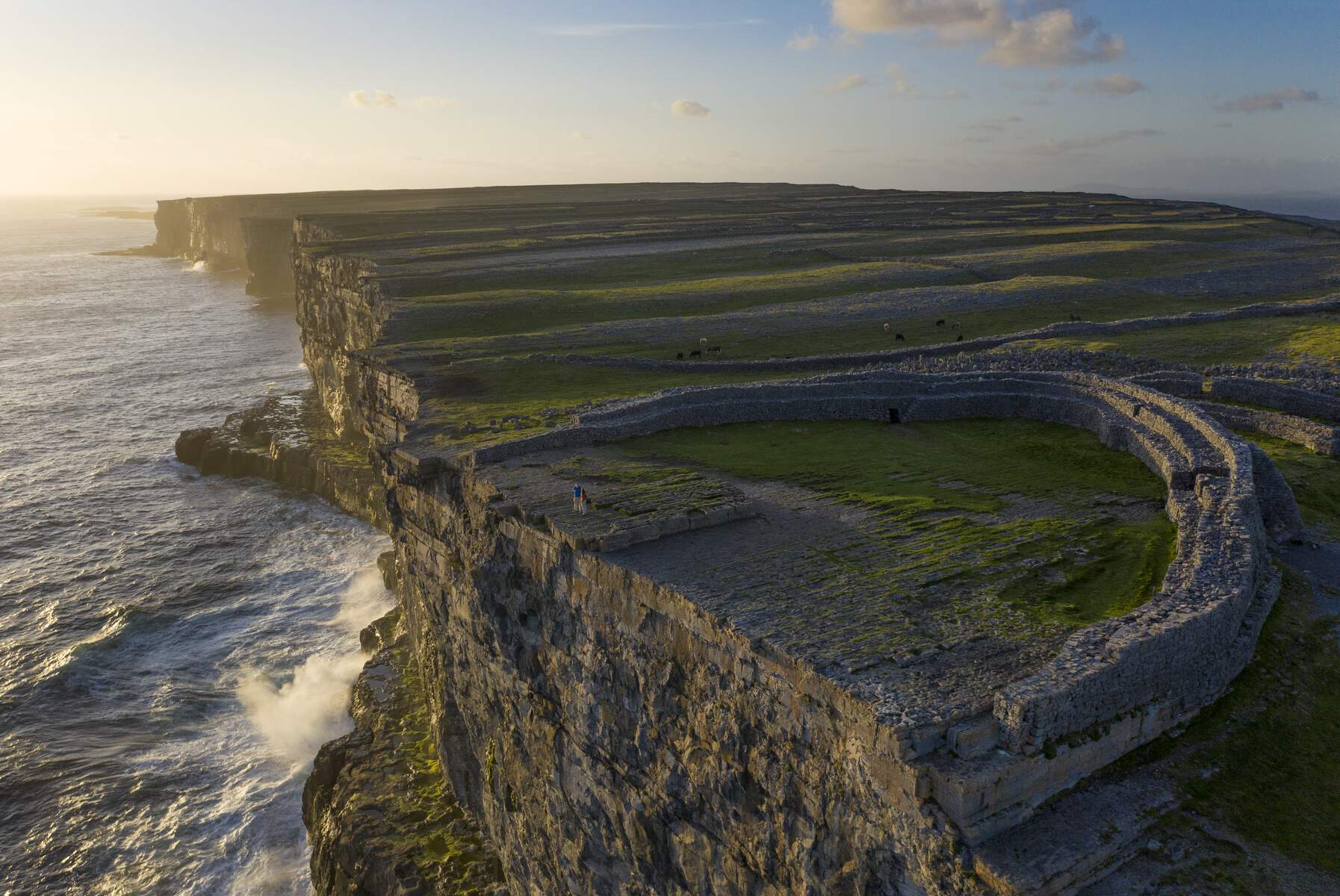
Perched on the highest point of Inis Meáin, Dún Crocbhur (Conor’s Fort) commands sweeping views of the Atlantic Ocean and the rolling landscape of the Aran Islands. Classified as a National Monument, it is celebrated not only for its size—being the largest stone fort on all three Aran Islands—but also for the striking elegance of its construction. Visitors describe the experience as a blend of awe‑inspiring scenery and a palpable sense of ancient mystery.
History
The origins of Dún Crocbhur are shrouded in legend and scholarly debate. Archaeologists date the structure to the Iron Age or possibly earlier, yet no definitive record explains who built it or why. The fort’s name offers two clues: “Dún Chonchúir” links it to the legendary Ulster king Conor Mac Nessa, while local folklore tells of a giant named Croc who hurled stones to create the massive walls.
The fort is oval, measuring roughly 70 metres by 35 metres, and rises up to 7 metres in height. Its most distinctive feature is the pair of concentric limestone walls, each punctuated by steps and terraces that ascend to the summit. These terraces would have provided defenders with elevated platforms and offered a ceremonial promenade for any occupants. The exact purpose remains contested—some scholars argue for a defensive stronghold, others suggest a ceremonial site, and a third theory proposes it served as a chieftain’s residence.
Legends and Folklore
Local tradition weaves two vivid tales around the stone walls. The first ties the site to Conor Mac Nessa, the 1st‑century BC king of Ulster, who is said to have used the fort as a lookout point while leading raids across the western seaboard. The second story speaks of a giant called Croc, who, in a fit of anger, flung massive limestone blocks from the cliffs, forming the double‑wall structure that still stands today. Interpretive panels at the site recount these myths, giving visitors a sense of the fort’s place in Ireland’s oral heritage.
What to See & Do
Walk the Walls
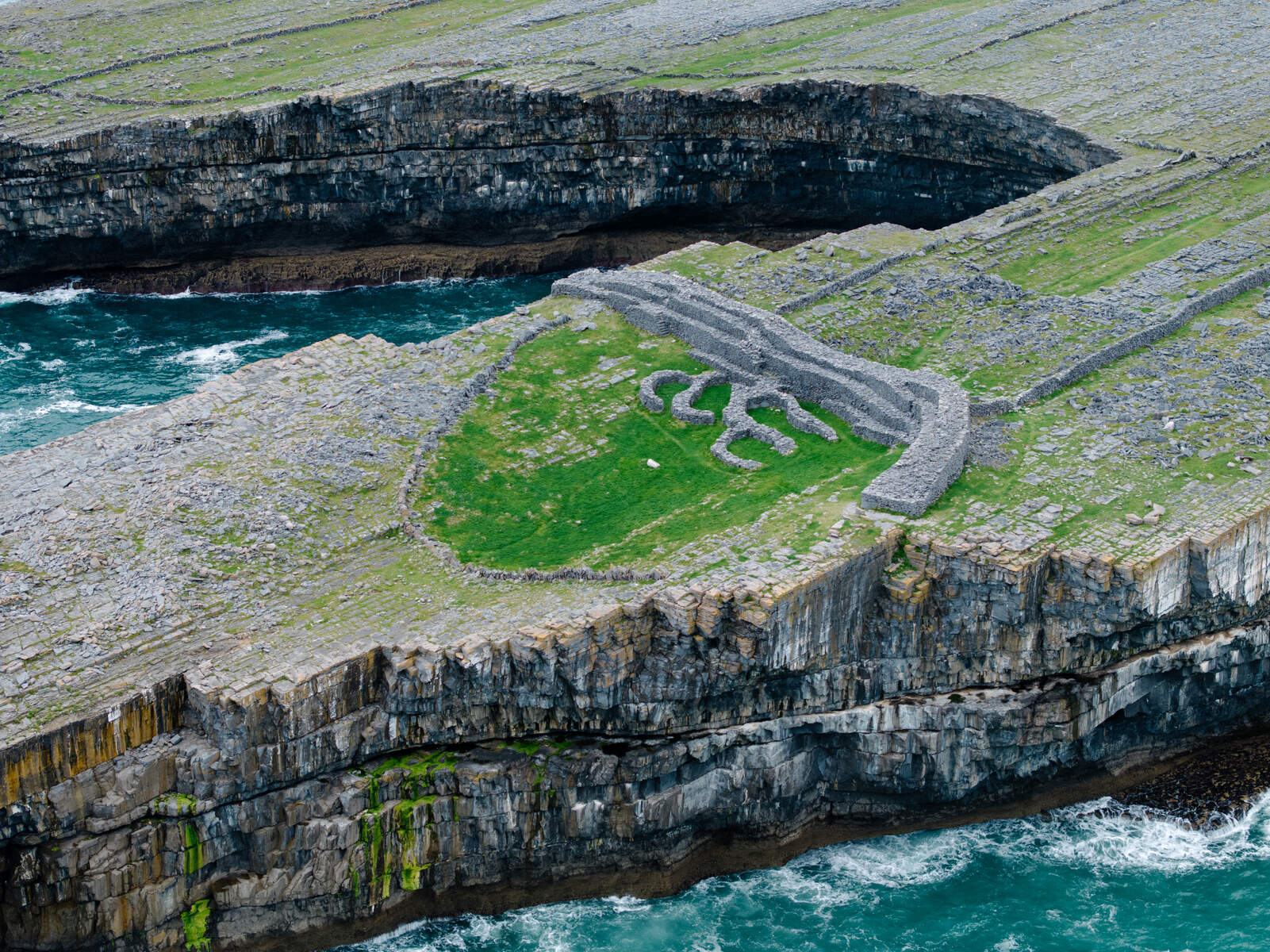
The double‑wall layout invites exploration. The inner and outer walls are linked by a series of stone steps that lead to a flat terrace at the top. From here, you can gaze out over the Atlantic, spotting the rugged cliffs of the western coast and, on clear days, the distant silhouettes of the other Aran islands.
Interpret the Legends
Take a moment to read the interpretive panels that explain the Conor Mac Nessa and giant Croc legends. The storytelling adds a layer of cultural depth, turning the stonework into a living narrative of Irish myth.
Photography
The fort’s position makes it a natural photography hotspot. The contrast between the weather‑worn limestone and the ever‑changing sea backdrop creates dramatic compositions, especially during sunrise or the golden hour.
Guided Tours
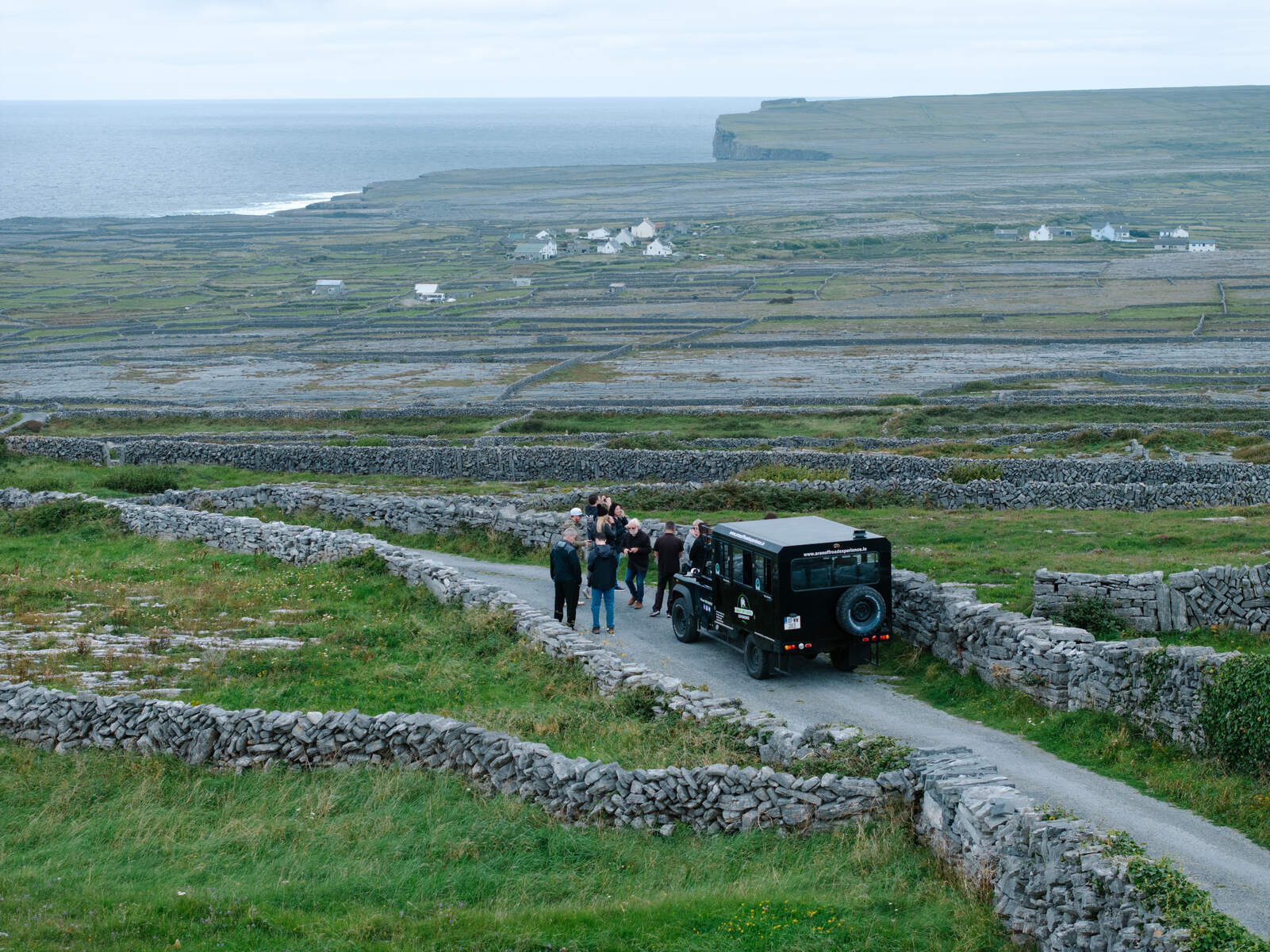
Local guides offer tours that weave together archaeology, mythology, and the natural environment. These tours often include anecdotes about the fort’s construction techniques and its role in the island’s social fabric.
Nature & Wildlife
Inis Meáin is a haven for botanists and birdwatchers. Over 400 wild‑flower species thrive on the limestone‑rich soils, including the dense‑flowered orchid, Irish saxifrage, purple milk vetch and mountain pansy. The island’s cliffs and heath support seabirds such as gannets, plovers, herons and, in good weather, the occasional peregrine falcon. A walk around the fort therefore offers both cultural and natural rewards.
Other Forts on Inis Meáin
The island is home to two notable dry‑stone forts. The older Dún Fearbhai (sometimes rendered “Ferboy’s Fort”) is a D‑shaped structure dating from the 1st–7th centuries AD and can be seen from several points around the island. Dún Crocbhur, the larger double‑wall fort described above, dominates the central ridge and is visible from many of the island’s walking routes.
Nearby Attractions
While you’re on the hill, consider a short detour to:
- Ceann Gainimh Beach – a white‑sand beach with clear waters, ideal for a quick dip or a picnic.
- Synge’s Chair – a cliff‑side perch reputedly favoured by playwright J. M. Synge for its dramatic sea views.
- Inis Meáin Knitting Company – a small workshop where traditional Aran knitwear is produced; the shop sells scarves and sweaters that make perfect souvenirs.
- The island’s walking network – several marked trails link the forts, beaches and the village of Kilronan, offering varied lengths for all fitness levels.
Getting Around Inis Meáin
Inis Meáin is car‑free, so visitors explore on foot, by bicycle or via the traditional pony‑and‑trap (horse‑drawn wagon). Bike hire is available near the harbour, and the pony‑and‑trap provides a charming way to reach the village and the fort for those who prefer not to walk the entire ascent.
Seasonal Highlights
The fort can be visited any time of year, but the period from May to September offers the most reliable weather and the longest daylight hours. Summer brings a fuller schedule of local events on the island, while winter visits reward you with dramatic sea‑spray and fewer crowds.
Practical Information
Dún Crocbhur is easily reachable on foot or by bicycle from the main village of Inis Meáin. The path to the fort is well‑marked and takes about 15‑20 minutes of steady walking uphill. For those preferring a structured visit, several operators on the island provide guided tours that include transport from the harbour area.
A modest entry fee is collected on site; the proceeds support the fort’s ongoing preservation. While the exact amount varies seasonally, visitors can expect a small contribution rather than a full‑price ticket.
The fort is open year‑round, though access may be limited in extreme weather. No specific opening hours are posted, so it is advisable to arrive during daylight.
Getting There
Ferries to Inis Meáin run year‑round from Rossaveal (County Galway) and seasonally from Doolin (County Clare). Once on the island, follow the signs from the harbour to the village and then continue up the hill toward the fort.
Coordinates
- Latitude: 53.083396
- Longitude: -9.594793
Further Information
- Official Aran Islands page: Dún Crocbhur – Conor’s Fort
- Galway tourism overview: Visit Galway – Dún Crocbhur