
Overview
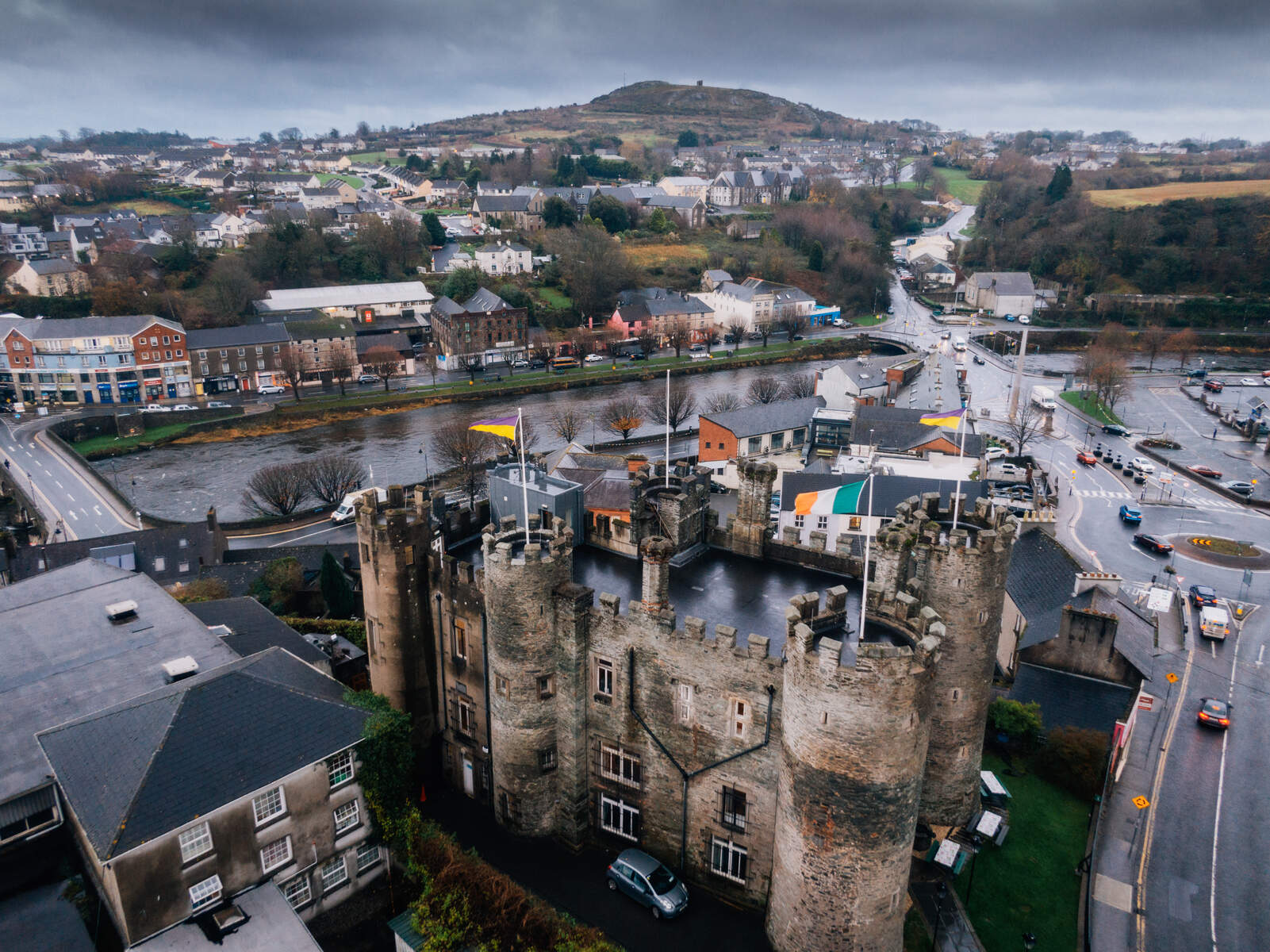
Enniscorthy Castle stands at the head of the River Slaney in the heart of Enniscorthy, County Wexford. The four‑towered Norman stronghold, rebuilt and restored over centuries, now houses a museum that tells the story of the castle’s many lives – from a 12th‑century fortress to a 20th‑century family home. Visitors can wander through permanent and temporary exhibitions, climb to the rooftop battlements for panoramic views of Vinegar Hill and the Slaney valley, and discover rare medieval wall art in the dungeon.
History
The first stone structure was erected in the late 1190s by the French‑Norman knight Philip De Prendergast and his wife Maud. Their descendants occupied the castle until the 1370s, when Art MacMurrough Kavanagh seized it during a local power struggle. The MacMurrough Kavanagh dynasty held the castle until 1536, when it was surrendered to Lord Leonard Grey.
In the Elizabethan era the castle suffered a partial burn by the Earl of Kildare (1569) and was later refurbished by Sir Henry Wallop, Ireland’s vice‑treasurer. The turbulent 17th century saw the castle change hands between Cromwellian forces, Irish Confederates and Monarchists. During the 1798 Rebellion it served as a prison for United Irishmen and later for the British after the Battle of Vinegar Hill.
The 20th century brought peace. From 1903 to 1951 the Roche family made the castle their private residence, extending and restoring the building. After the family vacated, the structure became home to the Wexford County Museum. A major refurbishment in 2006–2011 restored the interiors and enabled the castle to reopen as a modern heritage attraction.
What to See & Do
Architecture and the Dungeon
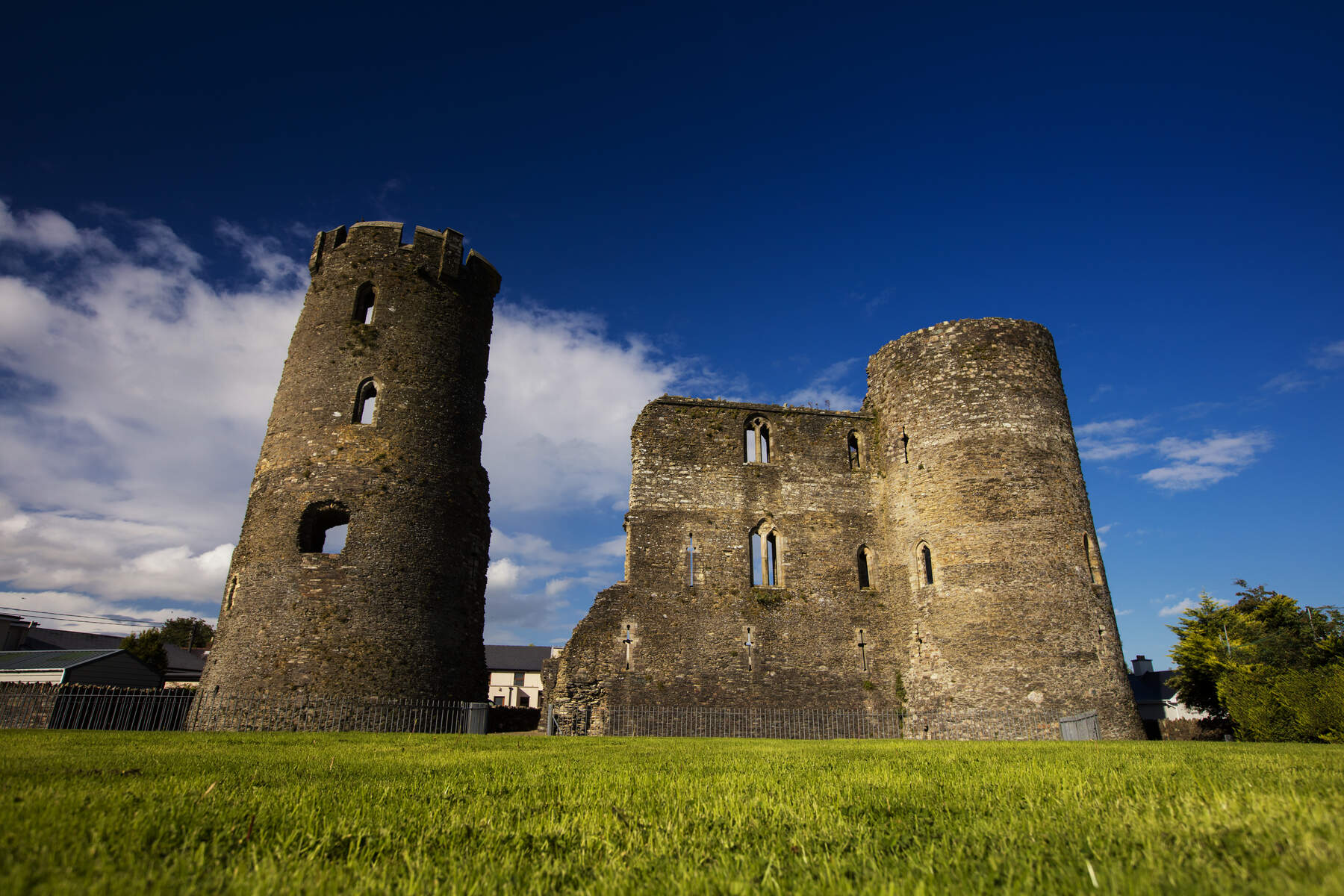
The castle’s four‑storey rectangular keep and corner towers echo the style of nearby Ferns and Carlow castles.
Exhibitions
- Ground floor – Enniscorthy Industries – traces the town’s commercial growth from the early 1600s.
- First floor – The Roche Family – recreates domestic life of the early‑20th‑century owners.
- Second floor – Eileen Gray – showcases furniture and design by the pioneering modernist born near Enniscorthy, alongside rotating local‑culture exhibits.
Roof and Views
Guided rooftop tours, offered at 1 pm and 3 pm on weekends and bank holidays (Easter to September), give access to the battlements. From there visitors enjoy sweeping vistas of the town, the historic battlefield of Vinegar Hill, and the winding River Slaney. The roof is wheelchair‑accessible, and staff accompany all visitors for safety.
Group and Private Events
The castle can be hired for meetings, workshops, corporate dinners or civil ceremonies. Dedicated event staff help tailor the space to the occasion, whether in a period‑styled drawing‑room or the grand hall.
Practical Information
Enniscorthy Castle welcomes guests seven days a week. Opening times vary between weekdays and weekends:
| Day | Opening Hours |
|---|---|
| Monday – Friday | 09:30 – 17:00 |
| Saturday, Sunday & Bank Holidays | 12:00 – 17:00 |
The last admission is taken at 16:30 each day.
Admission fees (2024 rates) are:
| Category | Price |
|---|---|
| Adult | €10 |
| Senior / Student | €8 |
| Child (under 12) | €6 |
| Family (2 adults + 2 children) | €30 |
Tickets can be purchased online via the official booking portal Book Tickets or on‑site at the visitor desk.
The castle is fully wheelchair‑accessible, with lifts to all exhibition floors and the roof, and accessible toilets are available near the entrance. A craft and gift shop, baby‑changing facilities and free Wi‑Fi are also on site.
Wexford town is a short drive from Enniscorthy (20 min), Gorey (30 min) and New Ross (30 min). Parking is available in the town centre car parks within walking distance of the castle. For a deeper dive into the 1798 Rebellion, consider the Saver Ticket that combines entry to the National 1798 Rebellion Centre with the castle – valid for six months.
Website: https://enniscorthycastle.ie/ Contact: not listed.