
Overview
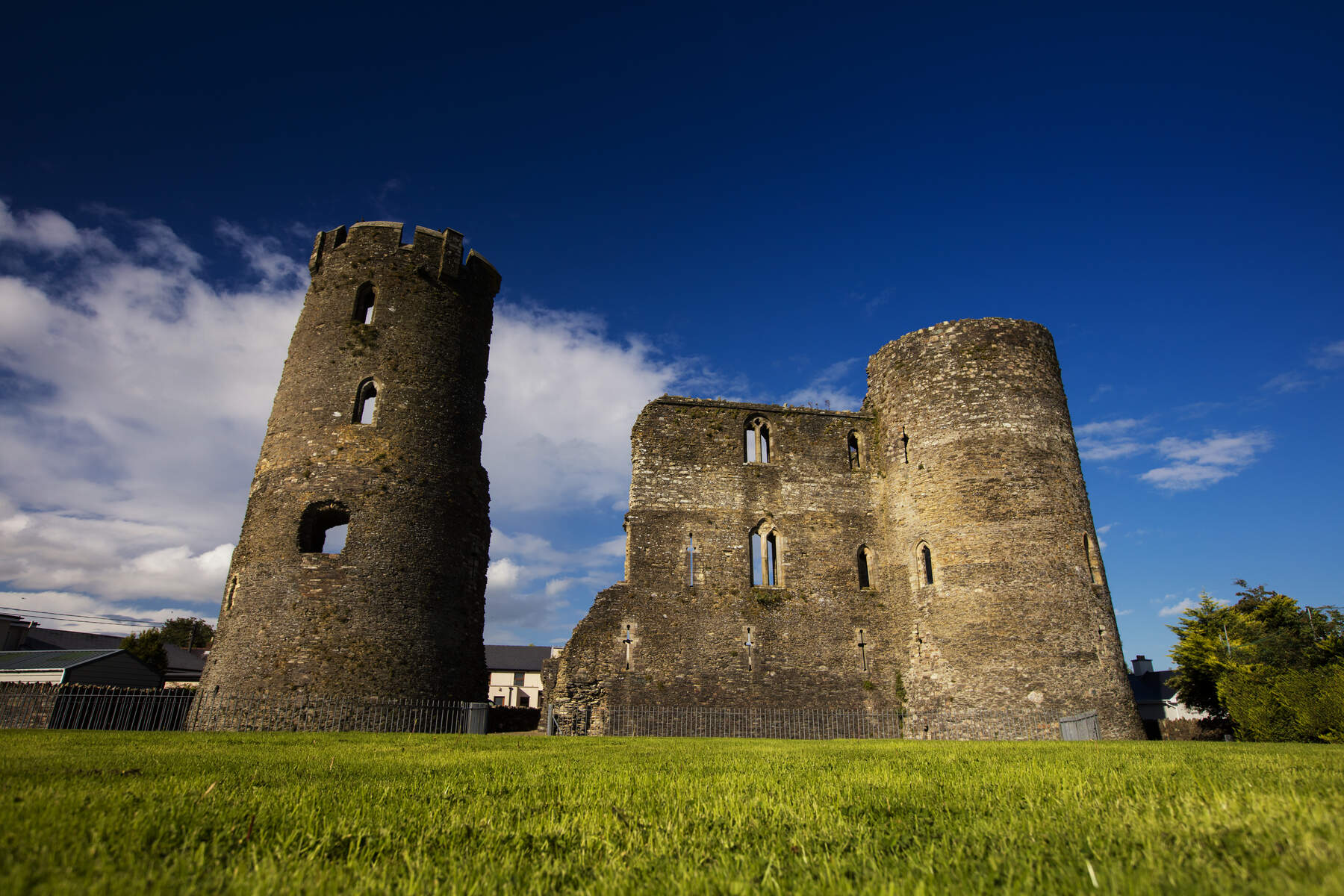
Perched on the historic townland of Ferns in north‑County Wexford, Ferns Castle is a compact yet striking reminder of Ireland’s Anglo‑Norman past. Built around the year 1200, the fortress originally formed a perfect square surrounded by massive corner towers. Today only half of the original structure survives, but the remaining tower is a showcase of medieval craftsmanship: a circular chapel with carved ornamentation, original fireplaces, and a vaulted basement that once stored provisions for the garrison. From the top of the tower visitors are rewarded with sweeping views across the rolling countryside of Wexford, a perspective that would have been vital for early defenders keeping watch over the surrounding lands.
The site is complemented by a modern visitor centre that houses the celebrated Ferns Tapestry – a 15‑metre, 25‑panel embroidered narrative that traces the town’s story from the arrival of Saint Aidan in 598 AD through the Norman invasion and beyond. Stitched by local volunteers, the tapestry is both an artistic marvel and a community‑driven celebration of heritage.
History
Before the Normans arrived, Ferns was the political heartland of Diarmait Mac Murchada, the 12th‑century king of Leinster. The town’s strategic importance made it a natural target for the Anglo‑Norman expansion that followed the 1169 invasion. William, Earl Marshall – later known as William Marshal, First Earl of Pembroke – is credited with erecting the stone castle around 1200, establishing a fortified base that would dominate the local landscape for centuries.
The original design featured a square plan with four imposing corner towers, each serving as both defensive stronghold and residential space. Archaeological excavations have uncovered a rock‑cut ditch encircling the outer walls, a typical medieval defensive feature that added an extra layer of protection against siege engines.
Over the ensuing centuries the castle changed hands numerous times, reflecting the shifting political and military allegiances of the region. Despite periods of neglect, the most complete surviving tower retained its circular chapel, a rare example of a sacred space integrated within a defensive structure. The chapel’s carved ornamentation hints at the skilled stone‑carvers who worked on the castle, while the original fireplaces speak to the daily domestic life of its medieval occupants.
In the 20th century the property came under the stewardship of the Office of Public Works (OPW) through a long‑term agreement with the Donovan family, who retain historic ownership. Today the OPW manages the site, ensuring that both the ruins and the visitor centre are maintained for public enjoyment.
What to See & Do
The Tower and Chapel – Climbing the remaining tower is the highlight of any visit. Inside, the vaulted basement reveals the stone ribs that once supported heavy timber floors. The circular chapel, still intact, offers a quiet space where the interplay of light through narrow slit windows creates a contemplative atmosphere. Original fireplaces line the walls, giving a tangible sense of the warmth that would have filled the tower during harsh winters.
Ferns Tapestry – The visitor centre’s centerpiece, the Ferns Tapestry, stretches 15 metres across a wall and is divided into 25 embroidered panels. Each panel depicts a pivotal moment in local history, from early Christian missionaries to the Norman conquest and later medieval life. The tapestry is a community project, stitched by volunteers using traditional crewel wool techniques, and it provides a vivid visual timeline that complements the stone ruins outside.
Archaeological Features – The rock‑cut ditch surrounding the castle walls is visible from the visitor centre’s interpretive displays. While the ditch itself is not open for walking, the explanatory panels illustrate how it functioned as a defensive moat, adding depth to the visitor’s understanding of medieval fortification strategies.
Surrounding Heritage Trail – Ferns Castle sits within a rich heritage landscape that includes St Mary’s 12th‑century Augustinian priory, the remnants of a 13th‑century cathedral incorporated into the present Church of Ireland building, St Peter’s small nave and chancel, and several high crosses scattered across the cathedral grounds. Although the castle guide focuses on the fortress, the proximity of these sites makes Ferns an excellent base for a self‑guided historical walk.
Practical Information
Opening Hours – The castle and visitor centre operate year‑round, opening daily from 10:00 am to 5:00 pm. Seasonal variations may apply, so checking the official website before travel is advisable.
Admission Fees – Ticket prices are modest, reflecting the site’s commitment to accessibility while supporting ongoing conservation work. The current rates are:
| Category | Price (EUR) |
|---|---|
| Adult | 1.50 |
| Child | 0.75 |
| Student | 0.75 |
| Senior | 1.00 |
| Family* | 4.25 |
| Group** | 1.00 |
*Family ticket admits two adults and up to three children. **Group rate applies to parties of ten or more. Admission is free for guests arriving with a Discovering Ireland Vacation package.
Facilities – The site provides a small on‑site restaurant serving light meals and refreshments, a car park with spaces for cars and coaches, and disabled parking close to the visitor centre entrance. While the visitor building is fully accessible, the historic tower has restricted access for visitors with mobility impairments due to the narrow staircases and uneven stone floors. Signage at the entrance clearly indicates the level of access available.
Getting There – Ferns Castle lies just a short walk from the centre of Ferns village, which is reachable via the N11 road that links Dublin and Wexford. Public transport options include regular Bus Éireann services to Ferns, with a stop a few minutes’ walk from the castle gates. For those driving, the car park is free of charge and provides easy access to the main entrance.
Visitor Resources – A downloadable social guide (PDF) is available from the Heritage Ireland website, offering detailed information for families, groups, and visitors with developmental or learning disabilities. The guide includes maps, suggested routes, and contact details for on‑site assistance.
Contact & Further Information – For the most up‑to‑date details on opening times, special events, or accessibility queries, visit the official Heritage Ireland page at heritageireland.ie/places-to-visit/ferns-castle.
Ferns Castle provides a compact yet richly layered experience: the stone remnants speak of medieval warfare and daily life, while the vibrant tapestry weaves together a millennium of community memory. Whether you are a history enthusiast, a family looking for an educational outing, or a traveller seeking a scenic viewpoint over County Wexford, the castle’s blend of tangible ruins and artistic storytelling makes it a must‑see destination on any Irish itinerary.