
Overview
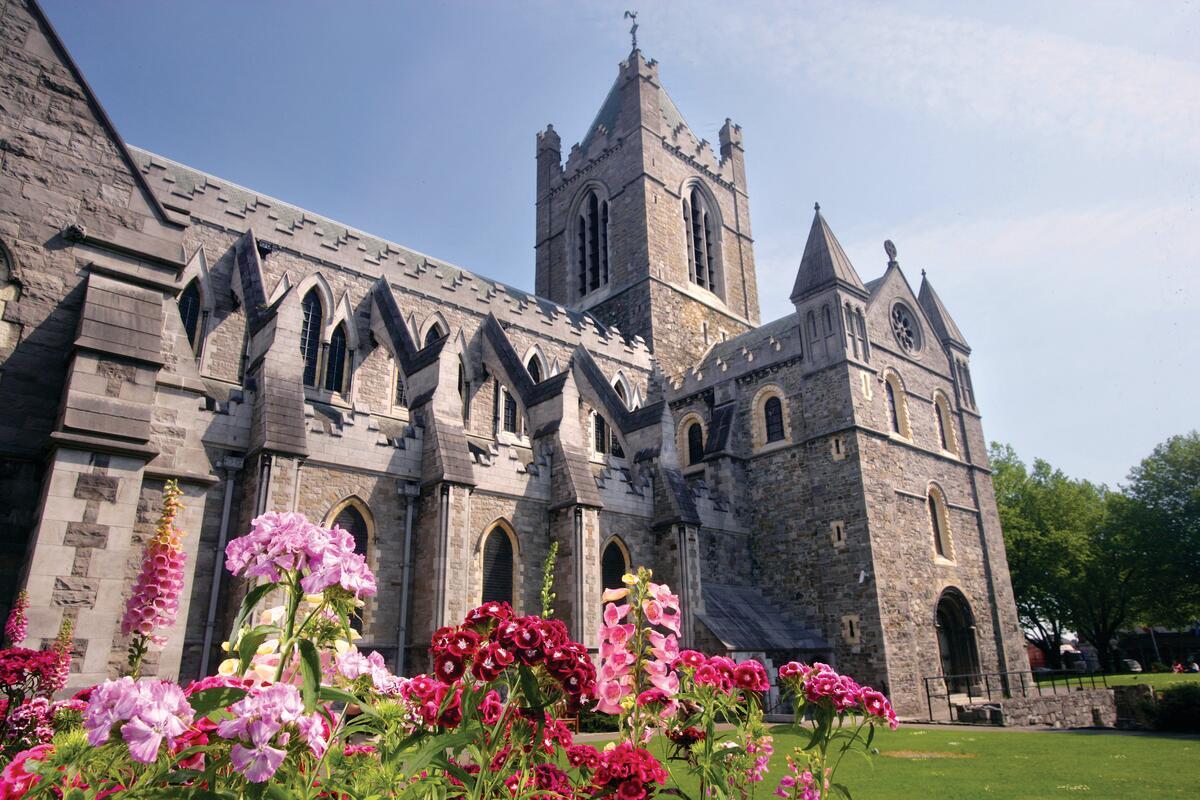
Nestled on the north‑east corner of Parnell Square (formerly Rutland Square) in Dublin’s historic Georgian quarter, Findlater’s Church – formally known as Abbey Presbyterian Church – is one of the city’s most striking Gothic‑style landmarks. Its 180‑foot (≈ 55 m) spire rises above the square, acting as a visual anchor for the surrounding streets and a reminder of Dublin’s 19th‑century religious and architectural ambition. The church is free to enter, welcomes visitors of all faiths, and serves as a shared worship space for Presbyterian, Romanian Pentecostal and Eritrean Orthodox congregations.
History
The story of Findlater’s Church begins with a Dublin merchant‑philanthropist, Alexander Findlater (1797‑1873). In the early 1860s, the growing Presbyterian congregation needed a new home after decades of worship on Capel Street, a site once occupied by St Mary’s Abbey. Findlater purchased a plot at the corner of what was then Rutland Square and North Frederick Street, previously the location of Headfort House, the Dublin residence of the Earl of Bective.
Architect Andrew Heiton of Perth, Scotland – also responsible for the Presbyterian churches of Rathgar and Kingstown – was commissioned to design the new building. Construction began in 1862 and the church opened its doors in November 1864, costing roughly £14,000. Contemporary reports described the interior as a 90 ft by 50 ft hall divided by two stone piers, with an octagonal turret housing a stair to a modest gallery. The exterior is marked by three gabled bays on the North Frederick Street façade, each pierced by richly traceried windows, and a towering spire that reaches 180 ft.
Literary fame followed quickly: James Joyce referenced Findlater’s Church in two of his novels, cementing its place in Dublin’s cultural imagination. Over the following century the building survived the 1916 Rising, the merging of the Union Chapel congregation in 1918, and numerous restorations, most recently celebrating its 160th anniversary in 2024 with a full spire refurbishment.
Architecture & Design
Findlater’s Church is a fine example of mid‑Victorian Gothic Revival. Key features include:
- Pointed arches and ribbed vaulting – evident in the nave’s lofty ceiling.
- Traceried lancet windows – the north‑side façade showcases three large windows with intricate stonework.
- Octagonal turret – houses the stairwell to the gallery and adds vertical emphasis.
- 180‑ft spire – one of the tallest church towers in Dublin, visible from many points in the city centre.
- Granite façade – the muted grey stone gives the building a solemn, austere character that contrasts with the bustling square.
These elements combine to give the church a striking silhouette that photographers love, especially at sunset when the spire catches the golden light.
Cultural Significance
Beyond its architectural merit, the church is woven into Dublin’s literary heritage. James Joyce mentions the building in Ulysses and A Portrait of the Artist as a Young Man, making it a stop on the city’s literary trail. Its location amid the Hugh Lane Gallery, the James Joyce Centre and the Writers’ Museum creates a cultural corridor that draws both tourists and scholars.
What to See & Do
- The Spire – At 180 ft, the spire is one of Dublin’s tallest church towers. Its silhouette is especially photogenic against a sunset sky, and the surrounding square offers excellent angles for street‑level photography.
- Gothic Details – Look up to admire the pointed arches, traceried windows and the stone piers that support the roof timbers.
- Stained‑Glass Windows – While the interior is traditionally Presbyterian in its simplicity, a few stained‑glass windows add colour and narrative depth, reflecting the church’s 19th‑century origins.
- Multicultural Worship – If you happen to be in the building during a service, you may witness a unique blend of worship styles: the traditional Presbyterian service, a vibrant Romanian Pentecostal gathering, or an Eritrean Orthodox liturgy.
- Cultural Night Events – The church regularly hosts heritage events, such as the 2024 Culture Night celebration of its 160‑year history, featuring self‑guided tours, a second‑hand book sale, a children’s treasure hunt, and a talk on the life of Alexander Strain, a notable Dublin builder.
Nearby Attractions
Parnell Square is a hub of cultural venues. While you’re in the area, consider visiting:
- Abbey Theatre – Ireland’s national theatre, just a short walk south‑west of the church.
- Hugh Lane Gallery – Home to the famous The Little Street by Vermeer, located on the north side of the square.
- James Joyce Centre – Dedicated to the author who mentioned Findlater’s Church in his work.
- Garden of Remembrance – A peaceful park commemorating those who gave their lives for Irish freedom, situated on the north side of Parnell Square.
These sites can easily be combined into a half‑day walking tour of the Georgian Quarter.
Visiting Tips
- Photography – The best light for the spire is just after sunset or in the early morning when the square is quieter.
- Quiet Times – Services are typically held on Sundays and weekday evenings; visiting outside these times ensures a peaceful experience.
- Wheelchair Access – A temporary ramp can be arranged in advance by contacting the church (see contact details below).
- Guided Audio – Occasionally the church offers a self‑guided audio tour during Culture Night; check the website for upcoming dates.
Practical Information
Findlater’s Church is open to the public at all times; there are no formal opening hours, and admission is free. The building is actively used for worship, so visitors may encounter congregations in session. Respectful silence is appreciated during services.
Getting there – The church sits on Parnell Square North, a short walk from Dublin’s main rail stations (Connolly and Tara Street) and well‑served by Dublin Bus routes 46A, 46 and 123. Taxi and rideshare services also stop nearby. Parking is limited on the square; street parking is available on a pay‑and‑display basis.
Accessibility – Guide dogs are welcome. Wheelchair access can be arranged in advance; a temporary ramp is provided for visitors who need it.
Contact & Further Details
| Item | Details |
|---|---|
| Website | Abbey Presbyterian Church |
| Phone | +353 1 837 8600 |
| Coordinates | 53.3544617, -6.263824 |
| Admission | Free |
| Accessibility | Guide dogs; wheelchair ramp by arrangement |
For the most up‑to‑date information on special events, service times, or to arrange wheelchair access, visitors are encouraged to call the church or check the official website.