
Overview
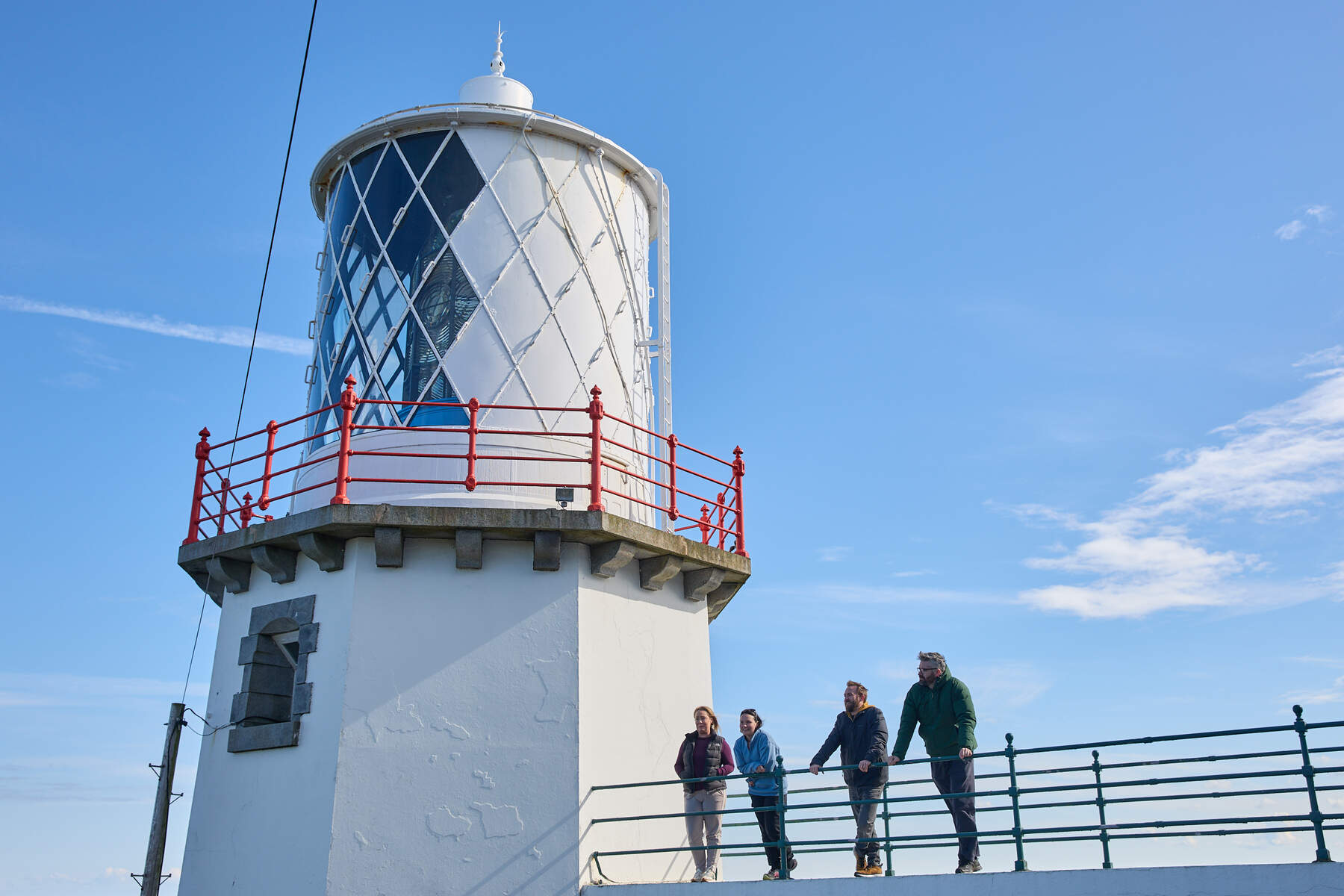
Gleninagh lies at the north‑west tip of the Burren, County Clare, where a rugged valley drops dramatically to Galway Bay. The landscape is a patchwork of limestone pavement, steep mountains and a bold headland crowned by the Black Head lighthouse. From the low‑lying valley floor to the summit of Gleninagh Pass, the area offers panoramic views of the Aran Islands, Connemara hills and the sweeping curve of the bay.
History & Background
The Irish name Gleann Eidhneach (or Cluain Eidhneach) means “valley of ivy”, a reference to the thick ivy that once cloaked the medieval parish church. The O’Loghlen (O’Loughlin) clan, styled the “Kings of the Burren”, erected an L‑plan tower house – Gleninagh Castle – in the early 16th century. Although the lands were briefly granted to Richard Harding in 1544 and later held by James Lynch of Galway, the O’Loghlens reclaimed the castle and occupied it until about 1840.
The castle is a four‑storey limestone tower house with a square stair‑tower, round bartizans on three corners and a machicolated entrance. By the 19th century the ground floor served as a barn and the upper floors as a dovecote; a vaulted third storey and a dark basement hint at its original defensive role.
The surrounding parish contains a modest medieval church (recorded by tax lists in 1302) that was still in good repair in the late 1800s but now lies in ruin, accessible via a footpath. Two holy wells – Tobar na Croiche Naoimh (Well of the Holy Cross) with its Gothic‑arch well‑house, and Tobar Cornain in a 19th‑century well‑house near Gleninagh North – were pilgrimage sites for cures, especially of eye ailments. Scattered across the valley are the stone ringfort “Caher doon Fergus”, a lime kiln (formerly misidentified as a fulacht fiadh), and the striking Black Head lighthouse that marks the mouth of the bay.
What to See & Do
| Feature | Highlights |
|---|---|
| Gleninagh Castle ruins | A well‑preserved L‑shaped tower house with stair‑tower, bartizans and machicolations; excellent for photography and a tangible link to 16th‑century Gaelic lordship. |
| Gleninagh Pass | The high point of the 11 mi (17.7 km) Black Head Loop; offers sweeping sea, island and mountain panoramas. |
| Limestone pavement | Classic Burren karst terrain, a botanist’s paradise with rare flora and a lunar‑like surface. |
| Holy wells & medieval church | Small, atmospheric sites that reveal early Christian devotion; the Well of the Holy Cross features a stone‑capped Gothic arch. |
| Black Head lighthouse | A striking beacon on the bold headland, visible from the lower sections of the loop. |
| Ringfort & lime kiln | Remnants of earlier settlement and industry, adding depth to the historic landscape. |
Suggested Walks
- Black Head Loop (11 mi / 17.7 km): Start at the Black Head car‑park, follow the coastal path past the lighthouse, ascend to Gleninagh Pass for the summit views, descend past the castle ruins and return via the valley footpaths.
- Gleninagh Castle & Church Trail (2 mi / 3.2 km): A shorter walk from the road to the castle, then on to the medieval church and the two holy wells.
Practical Information
- Access: The area is reached via the R479 road from Ballyvaughan. A small car‑park at Black Head provides free parking (limited spaces). Trailheads are sign‑posted.
- Difficulty: The Black Head Loop is moderate – steady ascents to the pass and uneven limestone ground. Good walking shoes and a waterproof jacket are recommended.
- Season: Late spring to early autumn offers the best weather and the fullest display of Burren flora. Winter walks are possible but can be wet and windy.
- Facilities: No cafés or toilets on the loop; bring water and snacks. The nearby village of Ballyvaughan offers amenities.
- Safety: The cliffs can be sheer; stay on marked paths and keep dogs on a lead near the lighthouse and cliff edges.
- Guided tours: Local heritage groups run occasional guided walks focusing on the O’Loghlen history and the holy wells; check the Clare County Council website for dates.
Visiting Tips
- Arrive early in the summer months to avoid the limited car‑park filling up.
- The terrain can be slippery after rain; sturdy footwear is essential.
- Bring a map or download a GPS track of the Black Head Loop, as parts of the limestone pavement are easy to lose the trail.
- While there are no permanent facilities on the walk, the village of Ballyvaughan (about 5 km away) has a café, restroom and a small shop for supplies.
- Dogs are welcome but must be kept on a lead near the lighthouse and cliff edges for safety.
Enjoy the blend of natural drama and layered history that makes Gleninagh one of the Burren’s most compelling destinations.