Overview
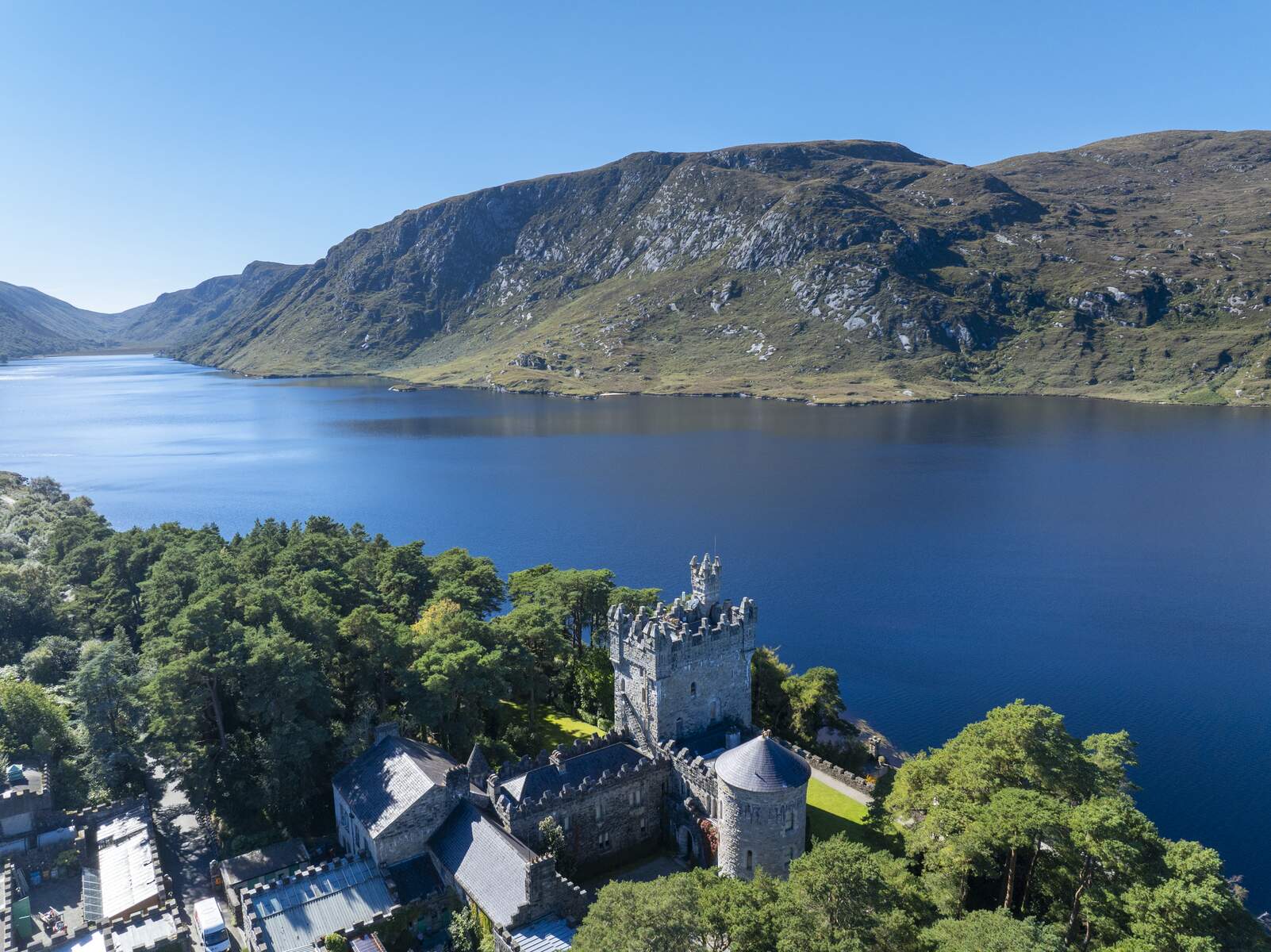
Glenveagh National Park lies in the heart of County Donegal, nestled among the Derryveagh Mountains. Covering roughly 170 km² (16,000 ha), the park encompasses the U‑shaped glen of Lough Veagh, rugged mountain peaks, blanket bogs and ancient oak woodlands. Its remote location – about 30 minutes north‑west of Letterkenny – gives it a wild, untouched feel, while the Victorian‑style Glenveagh Castle and its exotic gardens provide a striking contrast of cultivated beauty.
History
The estate that became Glenveagh was assembled in the 1850s by Captain John George Adair, an Anglo‑Irish businessman who made his fortune in the United States. Adair’s ambition was to create a hunting retreat that could rival Balmoral, but his ruthless eviction of 44 families during the 1861 famine earned him the nickname Black Jack and left a scar in local memory. After his death in 1885, his American wife Cornelia Adair expanded the gardens, introducing exotic shrubs and a glasshouse.
In 1929 the estate passed to Harvard archaeologist Arthur Kingsley Porter, whose mysterious disappearance in 1933 added a layer of intrigue. The final private owner, Henry Plumer McIlhenny of Philadelphia, bought the property in 1937, enriched the gardens further and, in the 1970s, bequeathed the castle and grounds to the Irish state. The National Parks and Wildlife Service officially opened Glenveagh National Park in 1984, making it the only national park in Ulster.
What to See & Do
Wildlife
- Red deer – the park hosts Ireland’s largest herd; they roam the high ground in summer and descend to the valleys in winter.
- Golden eagles – re‑introduced in 2000; sightings are rare but possible, especially in the upland areas.
- Birdlife – meadow pipit, stonechat, grouse, raven, peregrine, merlin, siskin, treecreeper, wood warbler and crossbill are common. Peat‑bogs support curlew, dunlin and migratory geese.
Glenveagh Castle & Gardens
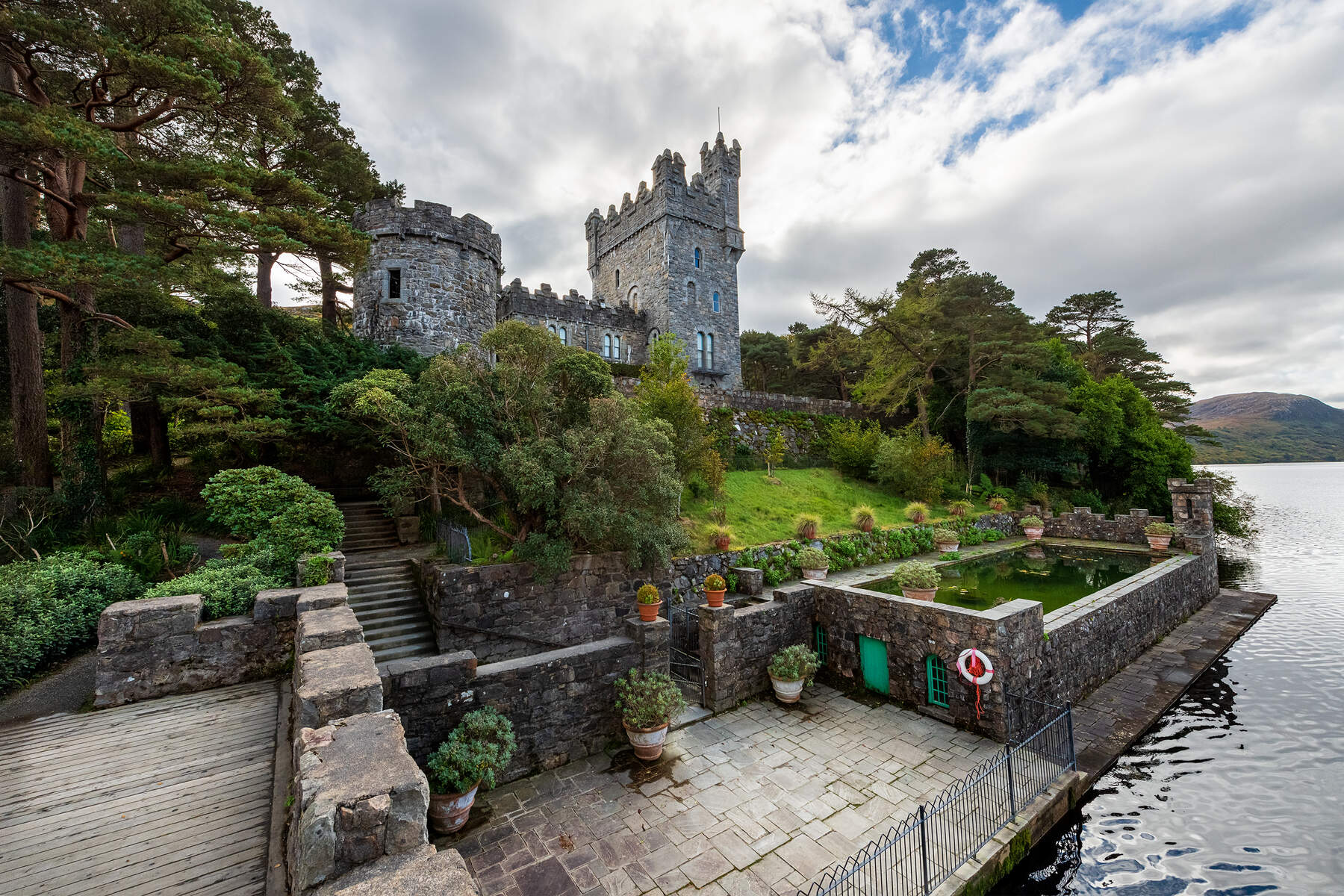
The castellated mansion, built between 1867‑1873, sits on the shores of Lough Veagh. Self‑guided tours run Tuesday, Wednesday, Thursday, Saturday and Sunday (closed Monday, Friday and bank‑holiday Mondays). Highlights include the drawing‑room, music room, library and the outdoor pool beneath a tower.
The castle gardens span over 11 ha and are divided into the Pleasure Gardens, Walled Garden, Gothic Orangery, Italian Terrace and Tuscan Garden. Rhododendrons blaze in May‑June, while the Walled Garden offers dramatic autumn colour.
Walking & Hiking
| Trail | Distance | Difficulty | Highlights |
|---|---|---|---|
| Lakeside Walk | 3.5 km | Easy | Lakeshore to the castle, birch woodland |
| Garden Trail | 1 km (loop) | Easy | Full tour of the Victorian gardens |
| Derrylahan Nature Trail | 2 km (loop) | Moderate | Blanket bog, Scots pine woodland |
| Viewpoint Trail | 1 km (loop) | Moderate | Panoramic vista over castle, lake and mountains |
| Glen / Bridle Path Walk | 8 km (linear) | Moderate | Remote glen, historic settlements |
| Lough Inshagh Walk | 7 km (linear) | Moderate | Wildlife spotting, quiet lake side |
| Bridle Path (extended) | up to 8 km | Moderate | Longer mountain trek |
The Walkers Bus (Saturday & Sunday, 10:00 am) drops walkers at Lough Inshagh or the Glen Walk for a small fee.
Cycling
Grass‑Routes operates a bike‑hire hub near the bus shelter. Prices for a 3‑hour hire are:
- Electric bike: €22.50
- Road bike: €16.50
- Small adult bike: €12.00
- Kids’ bike: €10.00
- Ability bike & electrically assisted wheelchair: Free
Visitor Centre & Interpretation
The Visitor Centre (open 09:15 – 17:30, daily) offers free exhibitions on the park’s geology, the Derryveagh evictions and the golden‑eagle re‑introduction project. Accessible toilets are available here.
Practical Information
Opening Hours
| Facility | Summer (Mar‑Oct) | Winter (Nov‑Feb) |
|---|---|---|
| Visitor Centre | 09:15 – 17:30 | 09:15 – 17:30 |
| Castle (self‑guided) | 09:45 – 17:15 (last tour 16:45) | 10:00 – 17:15 (last tour 16:45) |
| Castle (guided) | 09:45 – 17:15 | 10:00 – 17:15 |
| Tea Rooms (Castle) | 10:00 – 17:00 (7 days) | 10:00 – 17:00 |
| Restaurant (Visitor Centre) | 10:00 – 17:00 (Apr‑Sep) | Closed (winter) |
Admission & Fees
- Park entry – Free
- Car parking – Free (EV charge point available)
- Castle self‑guided tour – Adult €10, Child (under 6) FREE, Concession €7, Family (2 adults + up to 4 youths) €30
- Guided castle tour – Adult €15, Concession €12, Family €40
- Shuttle bus (Visitor Centre ↔ Castle) – Adult Return €5, Single €3 (children under 6 free)
- Walkers Bus – Adult Return €5, Single €3 (children under 6 free)
- Bike hire – see table above
- Heritage Card (optional) – Adult €40, Student €10, Child €10, Senior €30, Family €90 (covers bus tickets and castle tours)
Getting There
- By car: From Letterkenny take the N56 north to Termon, then R255 west (signs for Dunlewey) and continue on R251 to the park entrance. The car park is open 24 hours.
- By bus: Local Link Bus 271 runs Letterkenny ↔ Churchill (stop at the park car‑park) several times daily. Timetable: https://locallinkdsl.ie/wp-content/uploads/2022/02/271-Burtonport-to-Letterkenny-Nov-2021.pdf
- Shuttle & Walkers Bus: Operate from the Visitor Centre; no advance booking required, but cash only (card payments temporarily suspended).
Accessibility
- Two electric shuttle buses provide full wheelchair access.
- Blue‑Badge parking is available at the Visitor Centre; limited parking at the castle requires special permission.
- Some garden areas contain steps and steep, uneven ground and are not wheelchair‑friendly.
- Accessible toilets are located at the Visitor Centre and in the main car park.
Contact & Online Resources
- Website: https://www.nationalparks.ie/glenveagh/
- Phone: +353 1 539 3232
- Email: glenveaghbookings@npws.gov.ie
- Map: https://maps.google.com/maps?ll=55.056487,-7.936913&z=16
Latitude / Longitude
- Latitude: 55.056487
- Longitude: -7.936913
Tags
[“Family Friendly”, “Historic”, “Scenic”, “Free Entry”, “Outdoors”]
Enjoy the silence of the mountains, the sparkle of Lough Veagh and the echo of history as you explore Glenveagh National Park – a true wilderness jewel of Ireland.