
Overview
The Hill of Tara rises to 151 m above the fertile plains of County Meath, offering sweeping views that once made it a natural focal point for power and ritual. Managed by the Office of Public Works, the site is open all year and requires no entry fee. A modest 19th‑century church now houses a visitor centre that provides an audio‑visual show, a gift shop and the base for guided tours that run from May to September.
History
Tara’s story stretches back to the late Stone Age. The oldest visible monument, Dumha na nGiall – the Mound of the Hostages – is a Neolithic passage tomb built around 3,200 BC. It originally served a single community for a century, holding almost 300 cremated burials, and was later reused in the Bronze Age for elite interments, including a gold‑torc‑adorned young man.
Around the same period a massive double timber circle, often called a “wood henge”, encircled the mound. Measuring roughly 250 m in diameter, it was surrounded by six smaller burial mounds, many of which survive only as subtle earthworks today.
In the Iron Age (c. 600 BC–400 AD) Tara became the political and religious centre of the island. The most prominent enclosure, Ráth na Ríogh (the Enclosure of the Kings), spans about 1 km in circumference and contains the Mound of the Hostages as well as two double‑ditched enclosures that together form a figure‑of‑eight layout. Within the central enclosure stands the Lia Fáil, the Stone of Destiny, traditionally believed to roar when the rightful High King placed his foot upon it.
North of the main mound lies the Rath of the Synods, a four‑ringed enclosure that hosted early medieval church synods and yielded Roman artefacts. The site also includes the Banqueting Hall, an ancient ceremonial avenue, and a series of smaller barrows such as Mound of the Mercenary Women and Mound of the Cow.
Christianity left its mark when a church was erected on the hill in the 13th century; the present stone church dates from 1822‑23 and now serves as the visitor centre. Legends link St Patrick to Tara – he is said to have confronted the pagan priesthood there in the 5th century, and the hill later became a symbolic battleground between the old gods and the new faith.
What to See & Do
- Mound of the Hostages – step inside the 5,000‑year‑old passage tomb; on Samhain (1 Nov) and St Brigid’s Day (1 Feb) the sunrise aligns with the inner chamber, casting a thin beam of light across the floor.
- Lia Fáil (Stone of Destiny) – located on the monument known as An Forradh, this standing stone is the focal point of the coronation ritual. While the stone no longer cries, its mythic reputation endures.
- Ráth na Ríogh – walk the perimeter of the massive Iron Age enclosure; the inner ditch and outer bank are still visible and hint at the defensive purpose of the royal precinct.
- Rath of the Synods – explore the four‑ringed earthwork and imagine the early medieval bishops debating doctrine beneath its banks.
- Banqueting Hall – follow the ancient ceremonial avenue that once led dignitaries up to the hilltop.
- Visitor Centre – watch the audio‑visual presentation that summarises five millennia of Tara’s history, browse the gift shop, or join a free guided tour (available when the centre is open).
- Hill Walk – a 25‑35 minute self‑guided walk starts at the car park, climbs past the monuments, and culminates at the Lia Fáil. The route is marked by interpretative panels, though many visitors prefer a guide to fill in the mythic details.
Practical Information
| Facility | Details |
|---|---|
| Opening hours | All year: 10:00 – 17:00 |
| Visitor centre (May‑Sep) | 10:00 – 17:00 |
| Admission | Free (guided tours optional) |
| Accessibility | Restricted access for visitors with disabilities; dogs must be kept on a lead |
Getting there – Tara lies 12 km south of Navan, off the N3. Ample free parking is available at the main car park near the visitor centre. The site is reachable by car from Dublin in about 45 minutes.
Guided tours – When the visitor centre is open (1 May – 30 September), free guided tours are offered daily; simply ask at reception for the next departure. Private paid tours are also available through local operators and often include transport from Dublin.
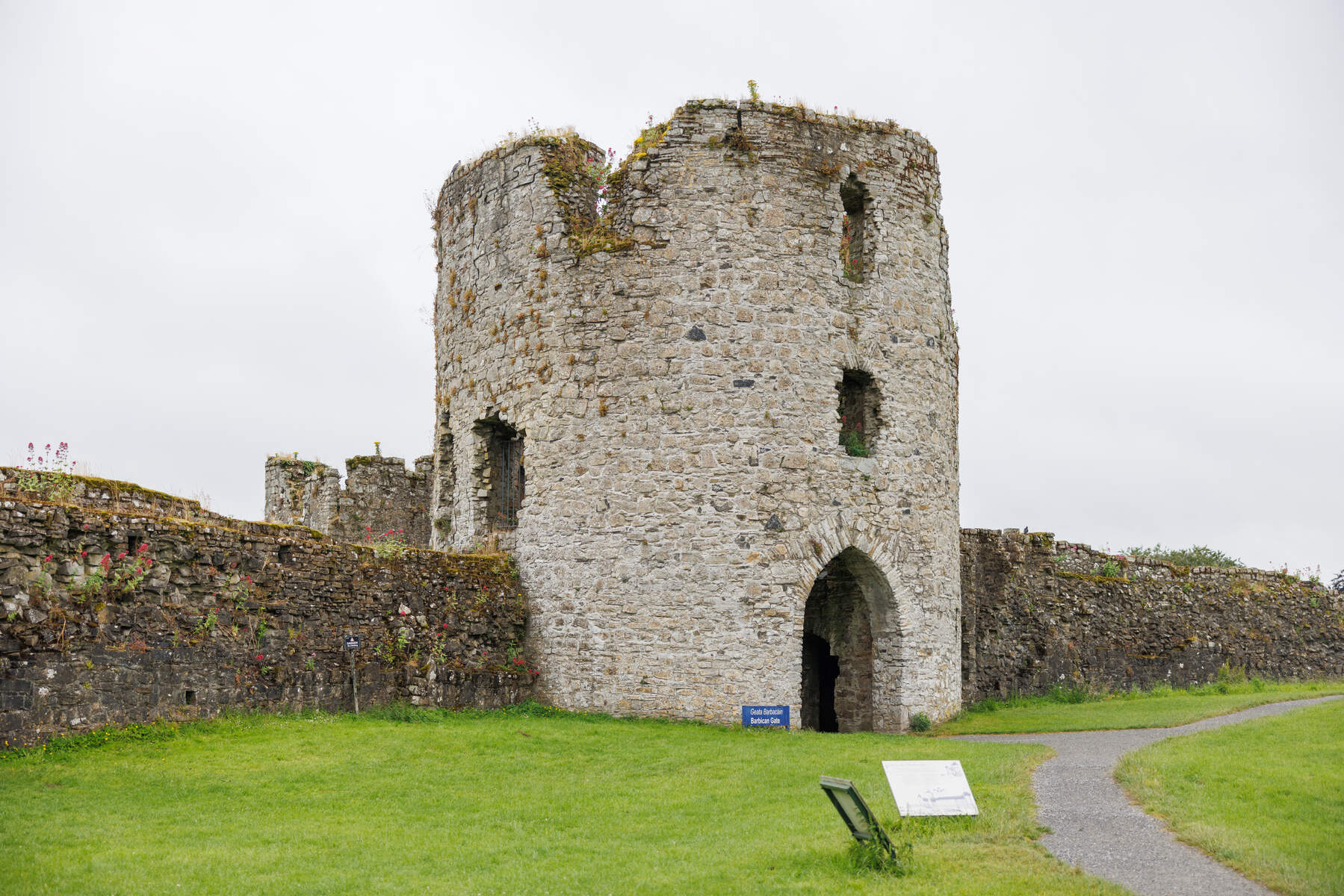
Nearby attractions – The Hill of Tara forms part of the Boyne Valley Drive. Within a short drive you can visit Newgrange, Knowth, Trim Castle
Preservation note – The M3 motorway, opened in 2010, runs a few hundred metres from the hill and sparked a high‑profile protest campaign. Tara remains a protected national monument, listed on the World Monuments Fund’s 2008 Watch List, and ongoing archaeological research continues to reveal new features beneath the surface.
Whether you are drawn by the myth of the High Kings, the astronomical alignments of ancient tombs, or simply the panoramic Meath landscape, the Hill of Tara offers a tangible connection to Ireland’s deep past.