
Overview
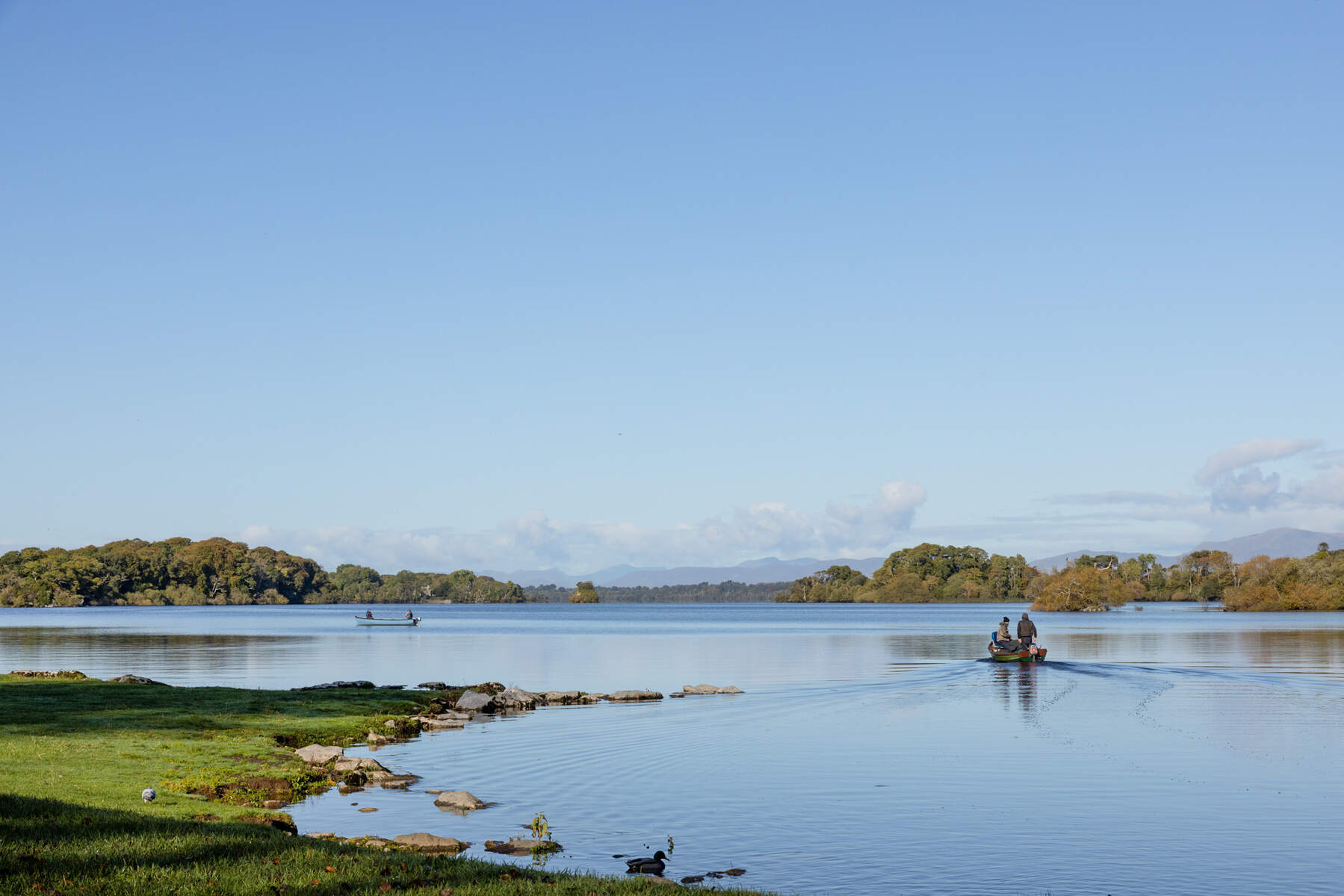
Inisfallen Abbey crowns the centre of Inisfallen Island, a 21‑acre wooded oasis that drifts on Lough Leane in Killarney National Park, County Kerry. The island lies about 1.5 km north of Ross Castle and a short boat ride from Killarney town brings visitors onto a tranquil shore lined with ancient stone. Here the ruins of a once‑thriving monastic settlement sit beside sweeping lake vistas and the surrounding mountains of the park, creating a place where history and nature intertwine.
History / Background
The monastic community was founded in the 7th century, traditionally attributed to Saint Finan (often identified with Saint Finian), a disciple of Saint Columba. The early settlement chose the island’s isolation for contemplation and learning, and for roughly 950 years it grew into a centre of prayer, agriculture and scholarship.
- Annals of Innisfallen – Between the 7th and 15th centuries the monks produced the famed Annals, a chronicle of Irish and world events now housed in the Bodleian Library, Oxford.
- Architectural development – The original early‑Christian structures have largely vanished. The western two‑thirds of the abbey church date to the 10th century, rebuilt in a robust Romanesque style with rounded arches and a fine sandstone two‑light window. The remainder of the church and the main priory complex were rebuilt in the 13th century. A distinct 12th‑century Hiberno‑Romanesque oratory, with its red‑yellow sandstone doorway and a small ringed‑cross, stands to the north‑east of the main ruins. The cloister, unusually positioned north of the church, mirrors the layout of St Augustine’s Abbey in Canterbury.
- Turmoil and decline – Viking raids in the 12th century and later attacks by the O’Donoghues left their mark. The monastery was finally dispossessed on 18 August 1594 by order of Elizabeth I. The island passed through private hands before becoming state‑owned in 1973 as part of the Muckross Estate, now fully integrated into Killarney National Park.
Archaeological finds – fragments of illuminated manuscripts, metalwork and everyday objects – illuminate the daily life of the monks and underscore the abbey’s role as a scholarly hub.
What to See & Do
- The Western Abbey Church – The surviving nave and chancel walls rise about six metres, framed by a characteristic Romanesque doorway and pre‑Romanesque antae. A faint bullaun stone near the western gable hints at ritual use.
- The Oratory – A single‑cell limestone structure with a striking Hiberno‑Romanesque doorway; a small carved face, possibly St Finian, peers from the arch.
- The Cloister Garth – Low‑wall reconstructions outline the original courtyard, offering a sense of the monastic layout.
- The “Abbot’s Church” – A 12th‑century Romanesque building divided by a reconstructed cloister arch, featuring another carved face traditionally linked to St Finian.
- Nature and Wildlife – Deer (often sika) wander the island’s trees, and on clear days a white‑tailed sea eagle may be seen nesting on the shoreline. The lake provides reflective photo opportunities, especially at sunrise or sunset.
- Photography & Sketching – The interplay of light on weathered stone, the surrounding water and the distant mountains makes the site a favourite for photographers and artists.
Practical Information
- Getting there: Regular boat trips operate from Killarney town’s pier and from Ross Castle. Tours typically last 30‑45 minutes and include a brief commentary on the island’s history.
- Opening times: The island is open year‑round; however, boat services are seasonal (generally April to October) and may be reduced in winter.
- Entry: Admission to the island is free; you only pay for the boat crossing.
- Facilities: There are no visitor facilities on the island – no toilets, café or shelter. Bring water, sturdy walking shoes and weather‑appropriate clothing.
- Parking: Free parking is available at the Killarney lakeside pier where the boats depart. Limited spaces can fill quickly in summer, so arrive early.
- Accessibility: The terrain is uneven and includes stone steps; the site is best suited to visitors with moderate mobility.
- Best time to visit: Early morning or late afternoon in the summer months offers softer light, fewer crowds and a higher chance of spotting wildlife.
- Guides: Local guides are available on many boat tours and can provide deeper insight into the Annals, the monastic layout and the surrounding landscape.
- Conservation: As part of Killarney National Park, visitors are asked to stay on marked paths, avoid disturbing flora and fauna, and take any litter home.
Nearby Attractions
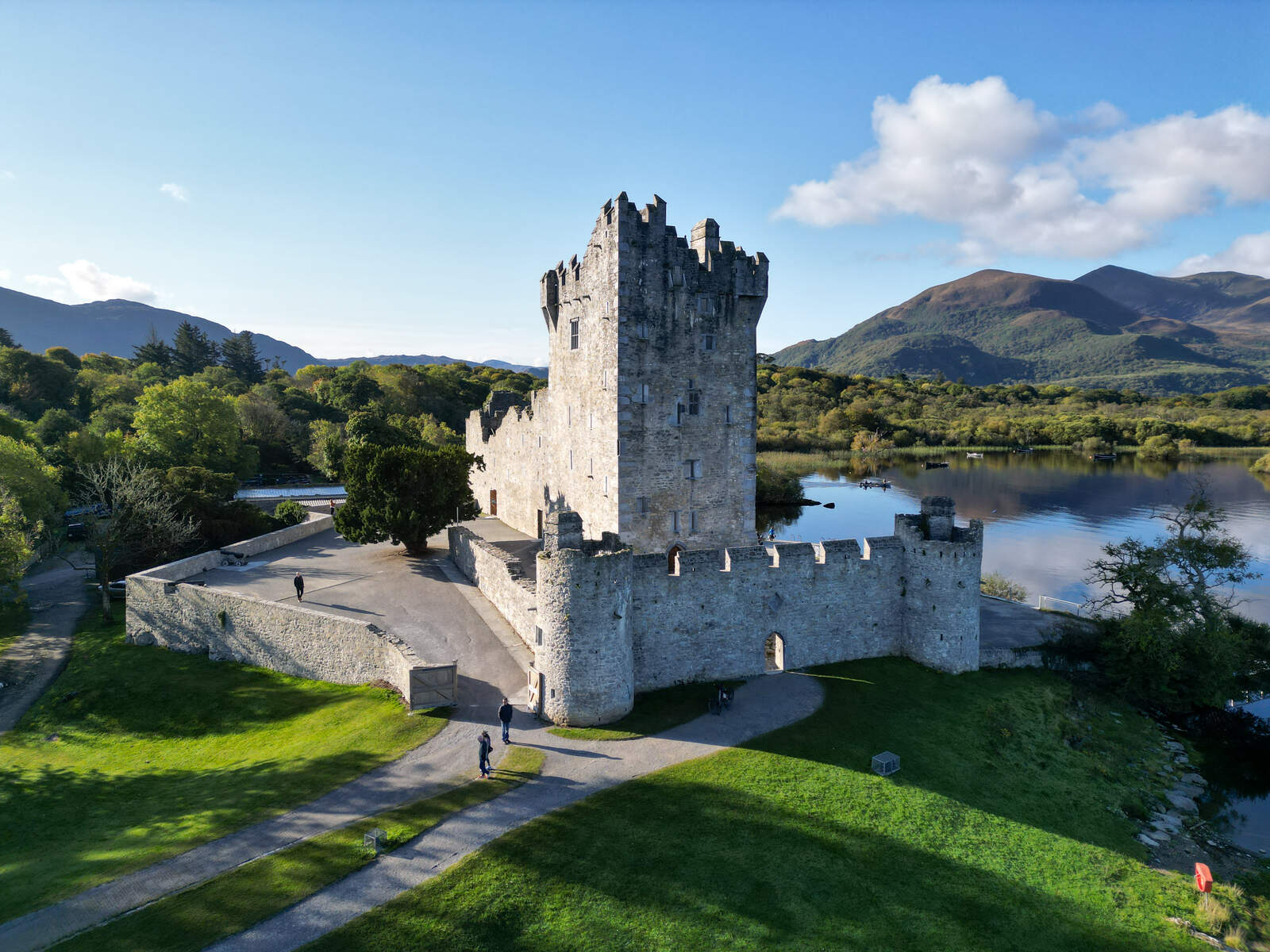
- Ross Castle – A 15th‑century tower house on the eastern shore of Lough Leane, reachable by the same boat services that stop at Inisfallen.
- Muckross Estate – Home to Muckross House, traditional farms and the beautiful Muckross Gardens; all lie within walking distance of the pier.
- Killarney National Park – The wider park offers walking trails, Torc Waterfall and the famous Gap of Dunloe for day‑trippers.