
Overview
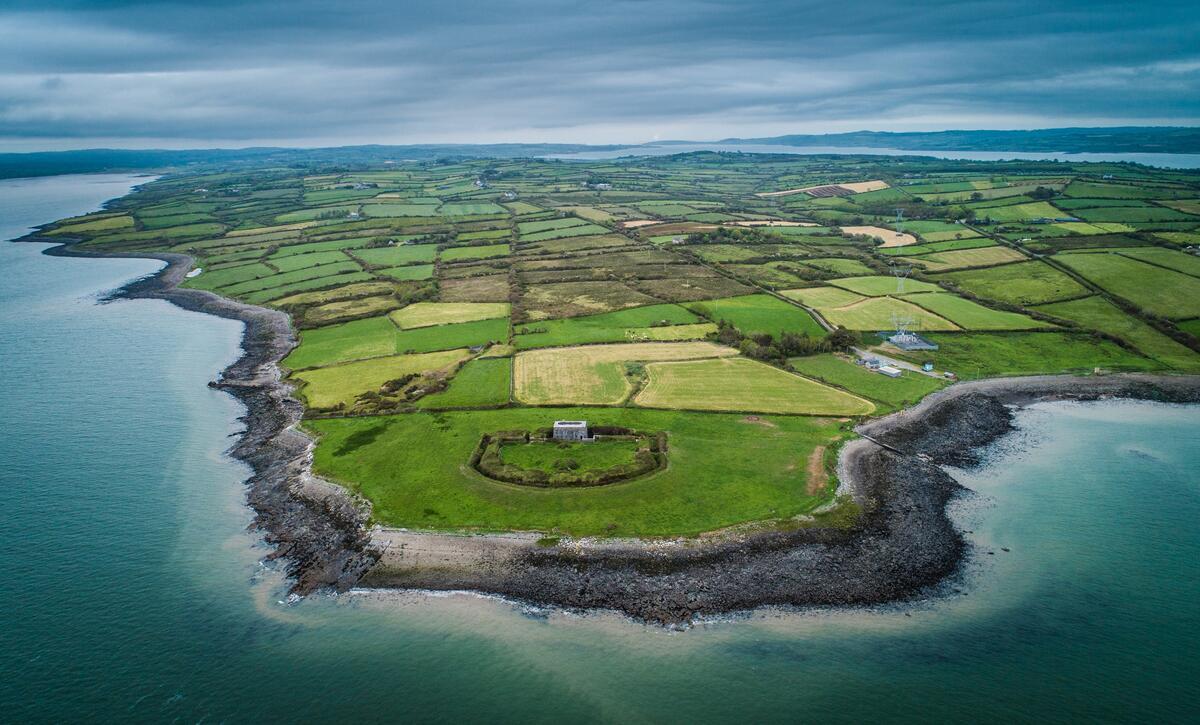
Kilkerrin Battery Fortress crowns the Kilkerrin Peninsula just outside the charming village of Labasheeda in West Clare. Constructed between 1811 and 1814, the limestone blockhouse formed part of a short‑lived chain of six battery forts built by the British to deter a feared French invasion of the Shannon Estuary. Today it is the best‑preserved example of this coastal defences system, offering visitors sweeping views across the estuary toward County Kerry, Clonderlaw Bay and the rolling hills of County Clare. The site is freely accessible and can be reached on foot or by bike from Labasheeda.
History / Background
The British government acquired the Kilkerrin Peninsula in March 1811 and, within three years, completed a detached six‑bay, single‑storey limestone ashlar fort over a basement. Its purpose was to create a cross‑fire corridor that would make any French fleet think twice before attempting a landing on Irish soil. Armed with 24‑pounder cannons and 5½‑inch howitzers mounted on traversing platforms, the battery housed a garrison of about 20 soldiers. Although the guns never saw combat – Napoleon’s defeat at Waterloo in 1815 rendered the forts redundant – the troops used the surrounding fields for vegetable gardens and even joined the locals for a pint at the nearby pub. Local tradition records céilí dances signalled by flag‑semaphore to the sister fort at Tarbert, which was later demolished during the construction of an oil‑fired power station.
A training exercise once shook the blockhouse so violently that a steel cable was fitted around the structure as a lightning conductor and to reinforce a cracked wall. The battery remained in use throughout most of the 19th century before being abandoned. In 1973 the nine‑acre parcel, including the fort, was sold to a local farmer. Community‑led restoration in the 1980s stabilised the walls, cleared the dry moat and repaired the drawbridge pulleys, but further conservation work is still required.
What to See & Do
- Dry moat and drawbridge remains – Walk along the 14 ft‑wide moat (widening to 19 ft at the rear) and spot the original iron pulleys that once lifted the drawbridge.
- Gun loops and cannon rails – Examine the musket‑loops and gun‑loops on the lower and upper façades; many are now blocked but their external splays remain visible.
- Blockhouse exterior – The massive stone blockhouse (54 ft × 33 ft, walls 6–7 ft thick) shows the characteristic 1:12 slope of Martello‑style forts. Large windows at each end provide light and ventilation.
- Panoramic views – From the ramparts you can see the Shannon Estuary, Clonderlaw Bay and the Kerry coastline on a clear day.
- Ecological interest – An ecological survey in 2019 recorded a colony of the nationally‑important Lesser Horseshoe Bat roosting in the fort’s upper chambers. The site is now monitored in partnership with the Vincent Wildlife Trust and the National Parks and Wildlife Service.
Getting There & Parking
- By car: From Ennis, follow the R473 north‑west for about 30 km to Labasheeda. The battery is a short walk from the village centre. Limited roadside parking is available on the main street; a small lay‑by near the quay can also be used, but it fills quickly in summer.
- Public transport: Bus services run between Ennis and Kilrush with a stop in Labasheeda. The nearest rail station is Ennis (Iarnród Éireann).
- Bike hire: A cycle station with a pump and repair tools is located at Labasheeda Cross, making it easy to cycle to the peninsula.
- Walking: A well‑marked footpath leads from the village to the fort; the walk takes about 5‑10 minutes and is suitable for most abilities.
Walking, Cycling & Events
Labasheeda is a hub for outdoor activity. Popular routes include:
- Quinn’s Road Walk – a gentle 5 km loop that passes the battery and offers coastal scenery.
- Peninsula Walk – an almost 10 km circuit taking in St Kieran’s Church ruins, Killofin Cemetery and several viewpoints over the Shannon Estuary.
- Cycling routes – Lightly‑trafficked roads and dedicated cycleways link Labasheeda with the Wild Atlantic Way. Maps are displayed at the cycle station.
- Patricia Corbett Memorial Walk/Run – held each February, this community event starts and finishes near the battery and showcases the peninsula’s natural beauty.
Nearby Attractions & Heritage
- St Kieran’s Church ruins – 6th‑century stone arch linked to the patron saint of Labasheeda.
- Killofin Cemetery – 15th‑century Augustinian church ruins with historic graves and stunning estuary views.
- Labasheeda Quay – a pleasant spot for swimming, kayaking and picnicking in summer; a plaque commemorates local emigrants from the Great Famine.
- Irish Republican Army plaque – located at the quay, honoring volunteers of D. Company, Labasheeda, 1916‑1921.
- St Kieran’s Community Centre – built in 1988, hosts the Dan Furey Festival, fitness classes and other community events.
- Old Schoolhouse (built 1887) – historic building next to the community centre.
- The Blessed Well – traditionally associated with eye‑cures; originally discovered on the Kilkerrin townland.
- Cliffs of Moher – the iconic cliffs are a 30‑minute drive north‑west and make an excellent day‑trip from the battery.
Wildlife & Conservation
Beyond the Lesser Horseshoe Bat colony, the Kilkerrin Peninsula supports a range of coastal wildlife. Birdwatchers can spot curlews, waders and occasional dolphins from the shoreline. The nearby Mountshannon Park bird hide provides additional opportunities for water‑fowl observation. Regular sightings include stoats, pine martens, foxes, badgers and the occasional dolphin. The area is also home to a healthy population of curlews, a species of conservation concern in Ireland.
Accommodation & Glamping
Beds of Silk – a luxury, adults‑only glamping site on the Labasheeda Peninsula offering shepherd’s‑hut cabins with private sauna, hot‑tub, sea‑weed baths and on‑site bike rentals. The site overlooks the Shannon Estuary and provides a tranquil base for visitors wishing to extend their stay.
Facilities & Amenities in Labasheeda
- Public restrooms in the village centre.
- Casey’s Pub – a friendly local bar serving food and drinks; a good spot to hear local stories.
- Charm Bee Pottery & Café – pottery painting and light meals.
- Adventure Playground at Shannon Gaels Pitch – zip line, swings, ball maze and all‑weather astro‑turf for team sports.
- Cycle station (pump, repair tools, bike racks) at Labasheeda Cross.
Practical Information
- Access: Free entry. The exterior and surrounding grounds are open year‑round; the interior is not a museum.
- Facilities: No visitor centre or toilets on site – plan accordingly. Public restrooms are available in Labasheeda village.
- What to bring: Sturdy walking shoes, a wind‑proof jacket (the peninsula can be breezy), and a camera for the spectacular vistas. If you plan to explore the shoreline, check tide tables.
- Safety: Stay on the established paths, especially near the dry moat edges, and be mindful of tide times if walking along the shoreline.
- Accessibility: The path to the battery is uneven and not wheelchair‑friendly.
Kilkerrin Battery Fortress offers a rare blend of military history, dramatic coastal scenery and living wildlife – a compelling stop for anyone exploring West Clare’s heritage trail.