
Overview
Kilmongan (Irish: Cill Mhurchon) lies in the north‑east of the Corran barony, within the civil parish of the same name, in County Sligo. The townland is a quiet, tree‑lined crossroads that shelters the ruins of a modest 17th‑century church and an adjoining burial ground that has served both Catholic and Protestant communities for over three centuries. Though the site is modest in scale, its layered history—from early monastic foundations to Penal‑era clandestine worship—offers a vivid glimpse into the spiritual and social fabric of rural Ireland.
History
Early Foundations
Scholars suspect that Kilmongan began as a monastic settlement, a hypothesis supported by the presence of an encircling enclosure—a hallmark of early Irish monasteries. The dedication to St. Murchu (or Murchan) links the site to a saint recorded in the 17th‑century Martyrology of Donegal, whose feast day falls on 12 June. Earlier martyrologies do not mention this figure, suggesting a complex hagiographic tradition that may have merged several local saints under one name.
The 17th‑Century Church
The surviving stonework dates from the 1600s, a period when the Penal Laws severely restricted Catholic worship. The church measured roughly 20 m by 7 m, with a pitched eastern gable that still frames a tall, narrow, rounded window. The south wall retains a two‑light window whose entire frame was carved from a single stone—a rarity noted by the Royal Historical & Archaeological Association in 1889 as the only known example of its kind in Ireland.
Decline, Penal Times, and the Mass Rock
Around 1704, Kilmongan parish was united with neighbouring Emlaghfad, and the church fell into disuse as Penal restrictions forced the Catholic faithful to worship outdoors. The Mass Rock of Doo, a nearby natural outcrop, became the clandestine altar for the community. When the Penal Laws relaxed in the late 18th century, a thatched chapel was erected near the Mass Rock, later replaced by the present St. Joseph’s Church of Doo in the 19th century.
The Burial Ground
The adjoining graveyard, covering about 38 m by 22 m, continued to be used well into the 20th century. Its oldest legible headstone dates to 1716, and the site contains a mixture of Protestant and Catholic monuments, including a prominent limestone mausoleum erected by merchant Morgan McDonagh in 1822. Overgrown weeds now veil many stones, but the layout still reveals the original church’s footprint, with several headstones set within the ruined walls.
Legends and Landscape
Local folklore adds a layer of mystery: a 19th‑century account claims the church was originally built at Cloonamahon, then moved to Lough Cronan (now Corran) before finally settling at Kilmongan. A parallel legend concerns the graveyard, suggesting an earlier location at Newpark townland. While no physical evidence of the Cloonamahon structure survives, the stories underscore the community’s deep attachment to the site and its perceived continuity across centuries.
What to See & Do
- Explore the Ruins – Walk around the remaining gable and walls to appreciate the craftsmanship of the single‑stone two‑light window and the modest dimensions of the original nave.
- Visit the Mausoleum – The McDonagh family vault, with its limestone construction and carved stone plaque, offers a striking example of early‑19th‑century funerary architecture.
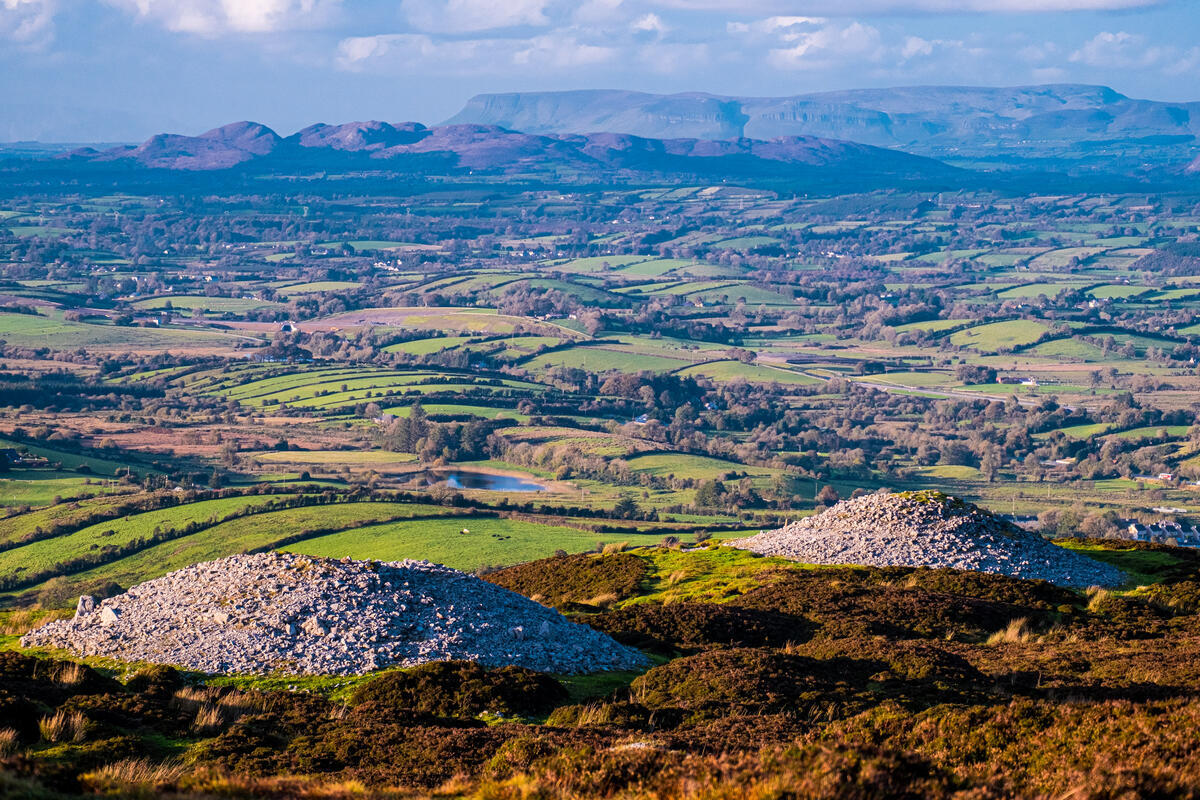
- Interpret the Landscape – Look northward to the standing stone at Knockminna and the nearby Neolithic mound and cairn in the Doo region, remnants of a pre‑Christian cult landscape that likely influenced the monastery’s siting.
- Reflect at the Ritual Well – Though the well itself is not marked on modern maps, local tradition places a holy well to the north of the church, a quiet spot for contemplation.
- Photography – The juxtaposition of weathered stone against the surrounding oak‑lined fields creates atmospheric photo opportunities, especially in the soft light of early morning or late afternoon.
| Feature | Approx. Size / Detail |
|---|---|
| Church footprint | 20 m × 7 m |
| Burial ground area | 38 m × 22 m |
| Notable window | Single‑stone, two‑light, rounded top |
| Mausoleum | Limestone, pitched roof, 1822 |
Getting There
Kilmongan is reached via a narrow, paved lane off the R291 road between Ballymote and Drumfin. The nearest public‑transport link is the Ballymote bus stop (Bus Éireann route 70), about 5 km away; a short taxi ride or a walk of roughly 45 minutes will bring you to the site. There is no formal car park; visitors usually park along the roadside where space permits. Because the lane can be slippery after rain, sturdy footwear and a flashlight (for winter visits) are recommended.
Walking & Cycling
The ruins sit on the edge of the Corran Loop, a low‑grade walking route that links several historic sites, including the standing stone at Knockminna and the Carrowkeel Megalithic Complex (Carrowkeel). Cyclists can incorporate the site into a broader ride along the R291, which offers gentle gradients and scenic farmland views. The Benbulben Forest Walk (Benbulben Forest Walk) is a popular 7‑km loop a short drive away, providing an option for a longer day of walking.
Nearby Attractions
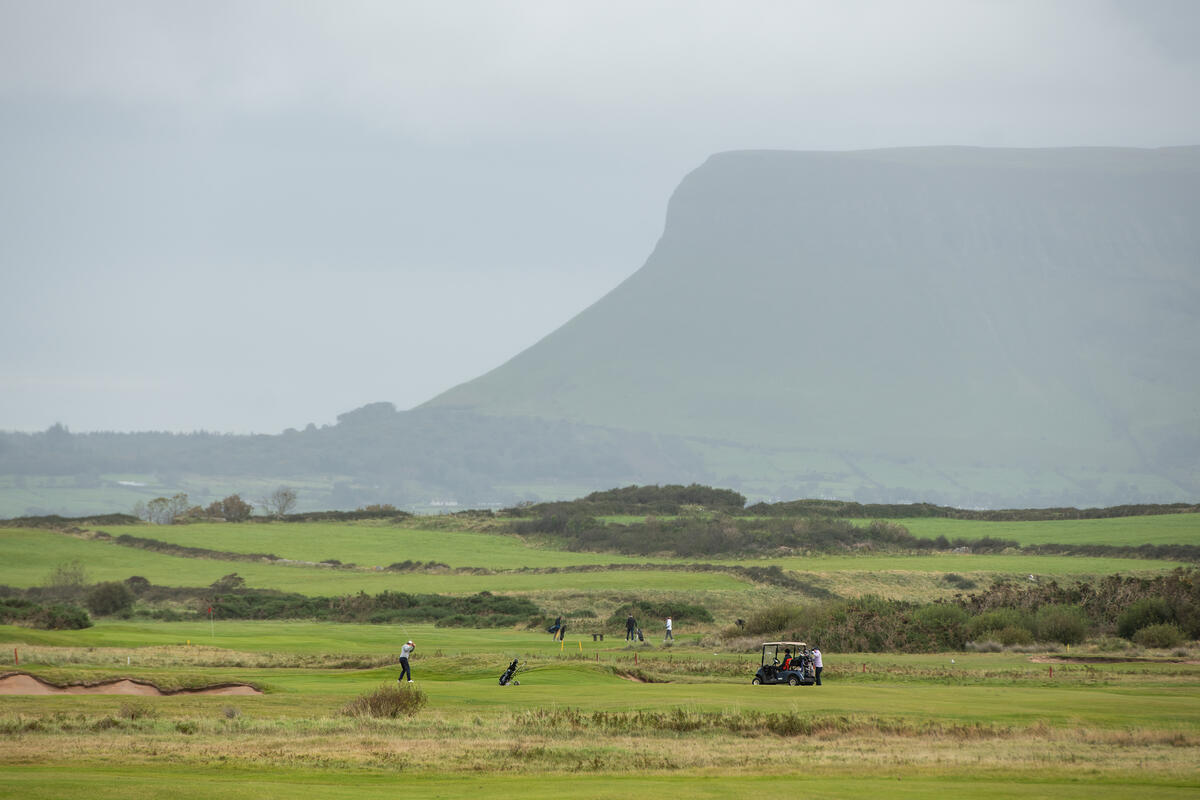
- Benbulben – The iconic tabletop mountain dominates the skyline and is reachable via the Benbulben Forest Walk.
- Carrowkeel Megalithic Complex – A short 10‑minute drive north brings you to one of Ireland’s most important Neolithic passage‑tomb sites.
- Ballymote Castle – Explore the well‑preserved medieval fortress in the nearby town of Ballymote.
- St. Joseph’s Church, Doo – The 19th‑century church that succeeded the Mass Rock worship site.
- Lough Gill & Hazelwood Forest – Ideal for a lakeside stroll or bird‑watching, reachable via the R291.
Practical Information
- Opening hours – Open year‑round, free of charge.
- Parking – Roadside parking along the R291; no dedicated car park.
- Facilities – No visitor centre, toilet or café on site. The town of Ballymote (≈5 km) provides restrooms, food and accommodation.
- Accessibility – The uneven ground and overgrown vegetation mean the site is not wheelchair‑friendly, although the main gable and a short stretch of the south wall can be approached on a relatively level path.
- Visitor tips – Bring water, a map or GPS (coordinates 54.100833, ‑8.436389), and wear sturdy shoes. Early morning or late afternoon light enhances the atmospheric quality of the ruins.
- Further research – The National Inventory of Architectural Heritage and the Dúchas.ie Schools Collection hold additional records on Kilmongan’s ecclesiastical history.
Kilmongan may lack the crowds of larger heritage attractions, but its quiet stone remnants, layered legends, and panoramic rural setting provide a rewarding experience for anyone keen to walk the hidden pathways of Ireland’s monastic past.