
Overview
Kilmurry McMahon (Irish: Cill Mhuire Mhic Mhathúna) sits on the southern edge of County Clare, just a short drive west of Ennis. The village forms the heart of a civil and Catholic parish that stretches from the Shannon Estuary in the south to the rolling fields of the north‑west. Its name honours the local church dedicated to the Virgin Mary, while the suffix McMahon recalls the powerful McMahon clan whose stronghold was Clonderlaw Castle. Today, the parish is a patchwork of small townlands, two villages – Labasheeda and Knock – and a scattering of historic sites that together tell the story of a community that has weathered centuries of change.
History
The origins of Kilmurry McMahon are intertwined with the spread of Christianity in early medieval Ireland. The original church, from which the settlement takes its name, was established long before the 19th‑century rebuilding that dominates the village skyline today. Over the centuries the area fell under the influence of the McMahon clan, a Gaelic family that controlled much of the surrounding countryside from Clonderlaw Castle. Although the castle now lies in ruins, its earth‑work foundations are still visible on the hill overlooking the estuary, offering a tangible link to the clan’s medieval power.
A tangible reminder of the area’s defensive past is Kilkerrin Battery Fort near Labasheeda. Built in the early 19th century as part of a coastal defence system, the earth‑work battery overlooks the Shannon Estuary and offers striking views of the waterway.

Population figures illustrate the dramatic demographic shift that rural Clare has experienced: from 7,932 inhabitants in 1831 the parish now numbers around 650 people (2014). The decline mirrors the broader story of emigration, famine and agricultural consolidation that reshaped the west of Ireland. Yet the cultural fabric remains strong, anchored by two Roman Catholic churches – St Ciarán’s in Labasheeda and St Mary’s in Drumdigus – and two holy wells, Tullyrcrine and Mountshannon, which continue to attract locals seeking a moment of reflection.
Notable Residents
One of the parish’s most celebrated modern figures was Michael Lorigan (1935‑2023), a native of Benvoran, Kilmurry McMahon. Lorigan taught for decades at the Model School in Limerick and became a well‑known cyclist, taking part in the Clare 250‑mile cycle many times. His life and legacy are remembered in local history and in the parish records held by the Clare County Library.
What to See & Do
Churches and Holy Wells
Visitors can step inside St Ciarán’s Church, a modest yet beautifully maintained building that serves the Labasheeda community. Its neighbour, St Mary’s Church in Drumdigus, offers a quiet space for contemplation and is a focal point for parish events. Both churches are free to enter and welcome all who wish to experience their simple, unadorned interiors.
The two holy wells, tucked away in the surrounding countryside, are traditional pilgrimage sites. Tullyrcrine Well, set near the townland of the same name, is reputed for its clear water and tranquil setting. Mountshannon Well, perched on a gentle rise, provides a picturesque backdrop for a short walk.
Walking, Cycling & Bird‑watching
The Shannon Estuary Way – a 207 km circular route – passes directly through Kilmurry McMahon. The section around the village is flat and well‑signposted, making it ideal for leisurely walks or a gentle cycle. Bird‑watchers will find the mud‑flats at low tide a haven for waders, swans and occasional raptors.
A short detour to Kilkerrin Battery Fort adds a historic viewpoint to any walk, while the nearby Clonderlaw Bay offers a quiet spot for a picnic or a brief dip in the estuary’s calm waters during summer.
Gaelic Football and Community Sport

Sport is a vital thread of local life. The Shannon Gaels Gaelic football club fields teams on a pitch located in Ballyguiry, just a kilometre from Clonderlaw Bay along the R473 road. The club’s colours and history – three Clare Senior Football Championships, the latest in 1971 – are a source of pride. Adjacent to the pitch, St Mary’s Athletic Club offers facilities for a range of activities, making the area a hub for both spectators and participants.
Ferry Connection
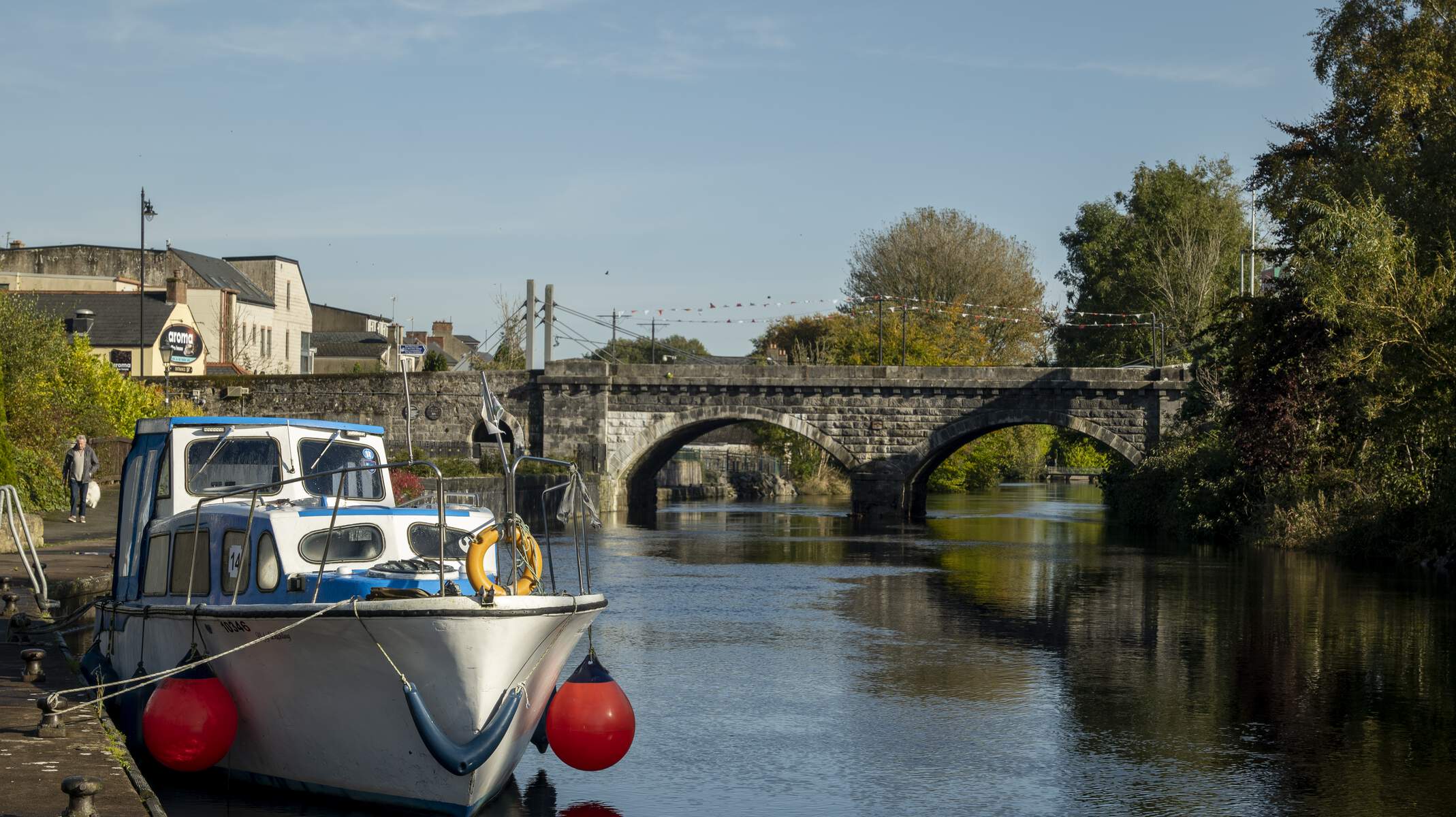
A practical advantage for travellers is the proximity of the Killimer‑Tarbert car ferry, less than ten minutes’ drive from the village. The service links County Clare with County Kerry and Limerick, cutting several hours off a road journey and offering a scenic crossing of the Shannon.
Day Trips & Nearby Attractions
Kilmurry McMahon makes an excellent base for exploring West Clare’s highlights. Within a 30‑minute drive you can reach the Aillwee Cave and Birds of Prey Centre (Aillwee Cave), a spectacular underground world and wildlife attraction. The historic Clare Museum in Ennis (Clare Museum) provides deeper insight into the county’s heritage. For coastal scenery, the Cliffs of Moher and the Loop Head Peninsula are reachable in under an hour, offering dramatic sea‑cliffs and lighthouse walks.
Genealogy & Local History
The parish’s church records, gravestone inscriptions and 19th‑century Ordnance Survey maps are held by the Clare County Library and are frequently consulted by family‑history researchers. Notable entries include the 1838 marriage of blacksmith Michael Moloney to Bridget Green, recorded on the WikiTree site, and numerous 19th‑century civil registrations listed on the library’s online catalogue. These sources provide a vivid picture of everyday life in Kilmurry McMahon during the nineteenth century.
Practical Information
Kilmurry McMahon is accessed via the R473 road, which connects the village to the Shannon Estuary Way and the surrounding coastal towns. Public transport is limited, so a car is the most convenient way to explore the area. Parking is generally available free of charge near the churches, the football pitch and the Kilkerrin Battery Fort viewpoint.
The two churches operate on regular parish schedules; visitors are welcome outside of Mass times. No admission fee is required for any of the historic sites, holy wells or the football facilities. For those interested in genealogy or local history, the Clare County Library hosts a collection of gravestone inscriptions and 19th‑century Ordnance Survey maps that can be consulted online.
If you plan to stay overnight, a range of holiday cottages and B&Bs are listed on the Clare tourism website and on popular rental platforms such as Airbnb. Booking in advance during the summer months is advisable, as the region’s limited accommodation can fill quickly.
Getting there: Fly into Shannon Airport (SNN) and rent a car for a 30‑minute drive north to the village. Alternatively, the Killimer‑Tarbert ferry provides a scenic entry point from the south.
Seasonality: The village’s quiet charm is evident year‑round, but the estuary’s bird migrations and the longer daylight of summer make the warmer months especially rewarding for walkers and cyclists.
For the most up‑to‑date visitor information, see the official Clare tourism page for Kilmurry McMahon: visitclare.ie/places/kilmurry-mcmahon.