
Overview
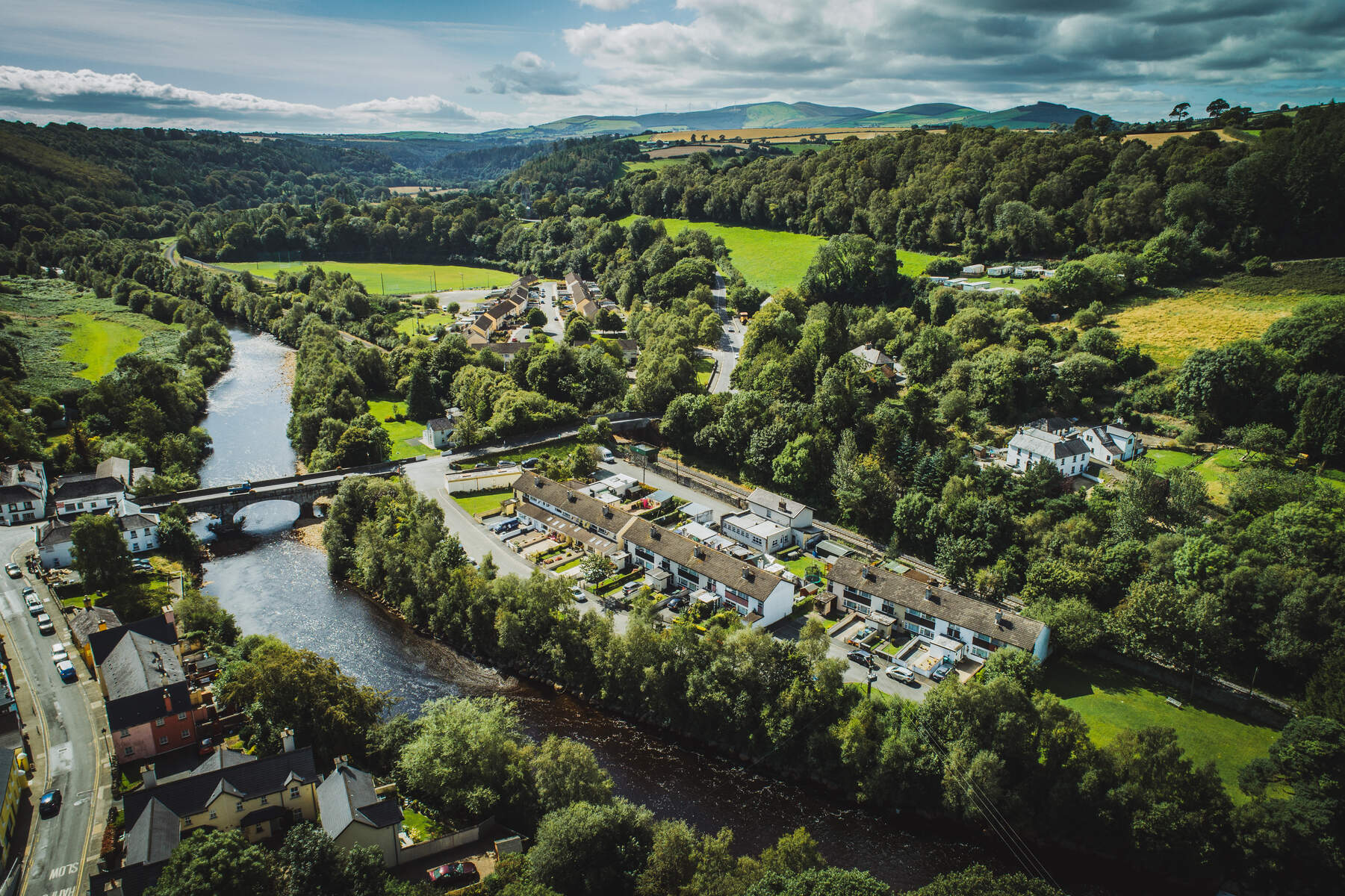
Kindlestown Castle crowns the slopes of Kindlestown Hill, just north of Delgany in County Wicklow. The ruin – dominated by an intact north wall, a projecting north‑west tower and a barrel‑vaulted ground floor – offers sweeping views across the rolling Wicklow countryside and out over the Irish Sea. Directly below, Kindlestown Wood spreads across the eastern edge of the Kings River Valley. It is the finest remaining sessile‑oak woodland near Dublin, interspersed with ash, birch, holly, rowan and a colourful understorey of woodrush, bilberry and heather. Together the castle and wood form a historic‑natural landscape that attracts photographers, history lovers and wildlife enthusiasts alike.
History / Background
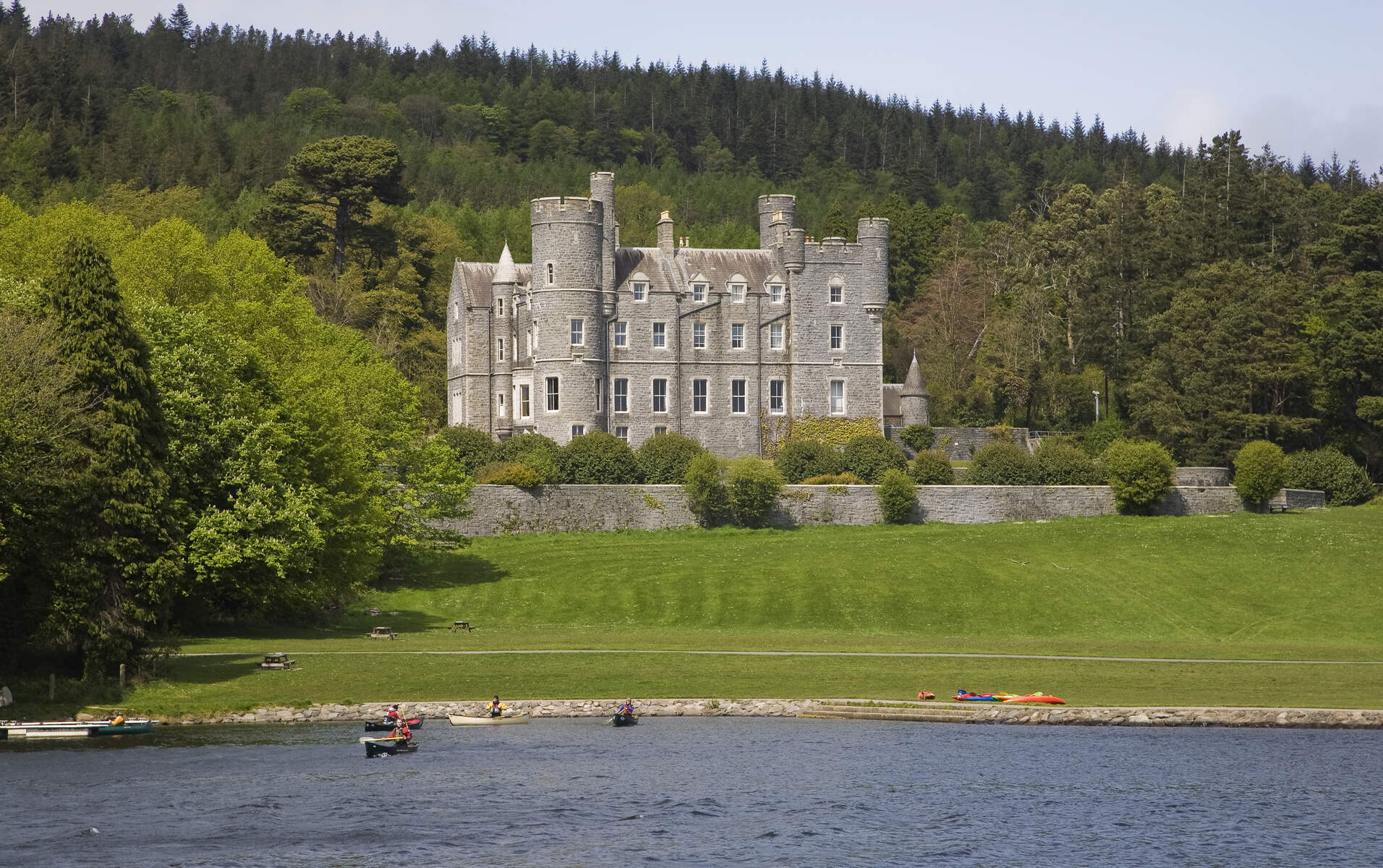
The name “Kindlestown” derives from Albert de Kenley (also recorded as de Kinley), Sheriff of Kildare in 1301, who is believed to have erected the core of the castle in the early 14th century. Earlier speculation links the site to a 1225 foundation by Walter de Bendeville, but the surviving masonry aligns with the later Anglo‑Norman style. The castle was built to protect the Kenley estates from the O’Byrne clan, who were active in the region. It fell to the O’Byrnes in 1377, was recaptured by Lord Chancellor Robert Wikeford, and later passed to the Archbold family, who defended it against another O’Byrne assault in 1402. By the early 17th century the estate comprised a manor of 400 acres and a water mill; financial pressures forced Edward Archbold to sell Kindlestown to William Brabazon, 1st Earl of Meath, in 1630. Archaeological work in 2001 and 2006 revealed continuous occupation from the 14th to the 18th century, with post‑holes, hearths and even 19th‑century brick ovens. The south and west walls were rebuilt in drystone during the 1800s, incorporating fragments of the original vault.
The surrounding wood was once part of the expansive Bellevue Estate, celebrated in Victorian times for its “luxurious softness, combined with grandeur and significance”. The estate’s remnants survive as impressive specimen trees, linking the present woodland to its genteel past. Beneath the hill, subtle earthworks suggest an Iron Age hill‑fort, adding a prehistoric layer to the site’s heritage.
What to See & Do
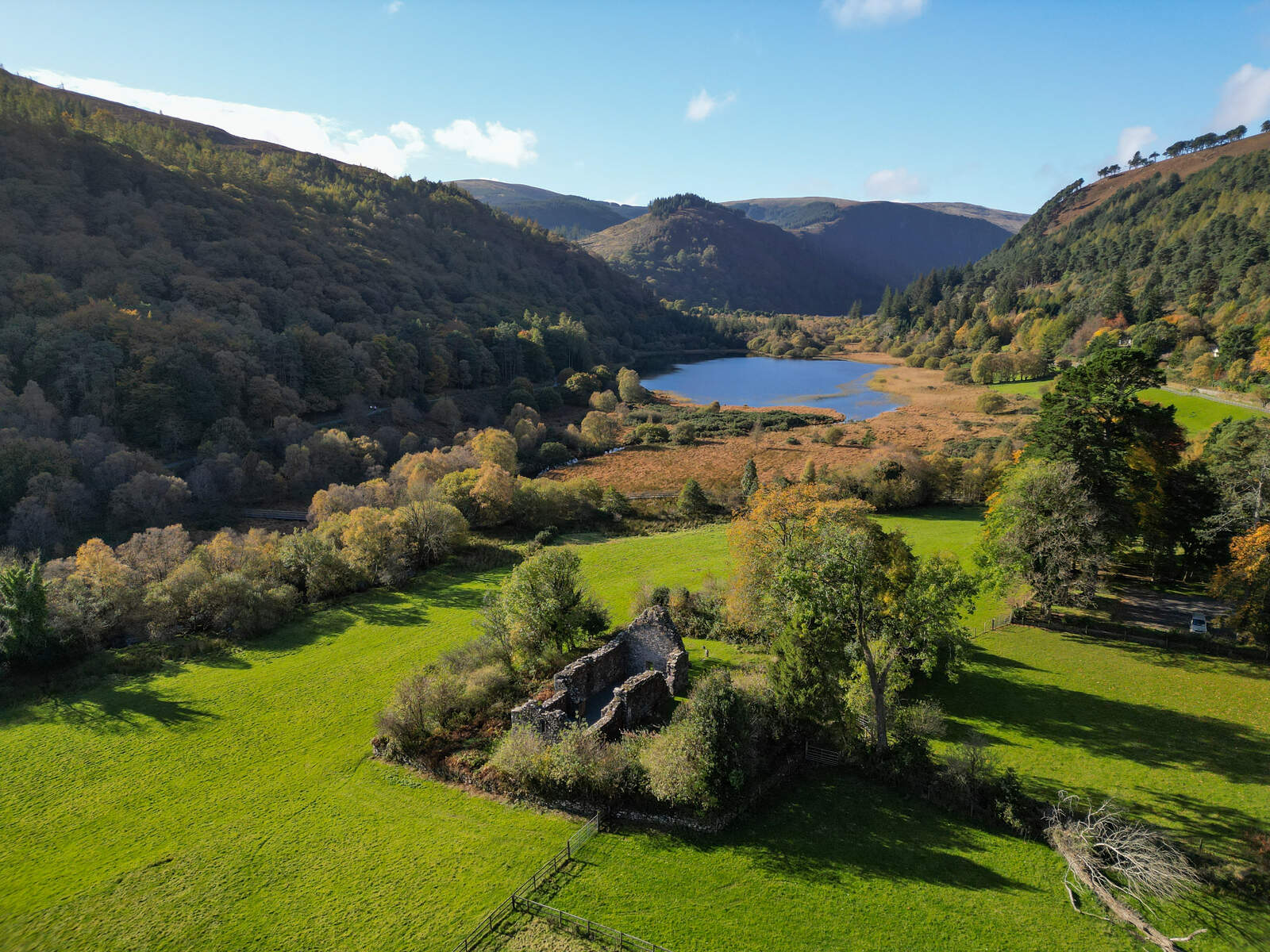
- Castle Ruins: Walk along the surviving north wall to the parapet, where the original stone string‑course and remnants of a slated parapet are visible. The north‑west tower retains a cross‑loop window, garderobe chutes and an internal chamber that hint at its defensive purpose. Inside, the barrel‑vaulted ground floor still shows traces of its original wicker centring.
- Kindlestown Trail: A 1 km (return) linear, flat and well‑maintained path marked “Access for All”. It welcomes wheelchairs, buggies and visitors with limited mobility and takes roughly 30 minutes to complete.
- Flora & Fauna: The dominant sessile oak canopy is interspersed with ash, birch, holly, rowan and introduced beech, sycamore and sweet chestnut. Conifers such as Scots pine, Corsican pine, noble fir and Sitka spruce add diversity. Birdwatchers can spot 21 breeding species, including song thrushes, blackbirds and occasional raptors.
- Scenic Vistas: A short detour leads to an outcrop offering panoramic views of Greystones, Bray Head to the north and Wicklow Head to the south, with the Irish Sea beyond. The hill‑fort earthworks near the summit provide a glimpse of prehistoric activity.
- Community Walks: The Delgany Community Council organises monthly guided walks from the car park at 10 am, offering local insight into the wood’s natural and cultural heritage.
Film & TV
County Wicklow is a well‑known location for film and television productions, with many sites used for international series such as Vikings: Valhalla and The Winx Saga. While Kindlestown Castle itself is not listed as a specific filming location, its atmospheric ruins and surrounding oak woodlands exemplify the type of scenery that attracts location scouts to the Wicklow area.
Practical Information
- Access: The site is a state‑owned National Monument cared for by the Office of Public Works (OPW). It is unguided; visitors explore at their own pace and assume responsibility for personal safety.
- Opening Hours & Fees: Kindlestown Wood is free to enter and open year‑round. The castle ruins are accessible at any time; there is no admission charge.
- Parking: A small car park is located at the southwestern corner of the wood, near the trailhead. As with any isolated parking area, keep valuables out of sight.
- Getting There: From the N11, turn onto Bohilla Lane and follow signs to Delgany. The castle and wood are a short five‑minute drive north of the Firehouse Bakery in Delgany.
- Facilities: No permanent visitor facilities are on site, but the nearby village of Delgany offers cafés, restrooms and public transport links.
- Safety Note: The OPW disclaims liability for injuries or loss on the premises; visitors should wear sturdy footwear, stay on marked paths and watch for uneven stonework.
Visitor Tips
- The trail is fully wheelchair‑accessible and suitable for pushchairs.
- Dogs are permitted on the trail but should be kept on a lead, especially during bird‑watching season.
- Bring a water bottle and a light jacket – the hill can be windy even in summer.
- Early morning or late afternoon provides the best light for photography of the ruins and sea views.
Nearby Attractions
- For a coastal walk with spectacular sea cliffs, consider the Bray Head Coastal Walk, which can be combined with a visit to Kindlestown for a full day of scenery.
- The historic village of Baltinglass lies a short drive inland and offers a medieval abbey, craft shops and a pleasant café scene, making it a good complement to a day spent exploring Kindlestown Castle and Wood.