
Overview
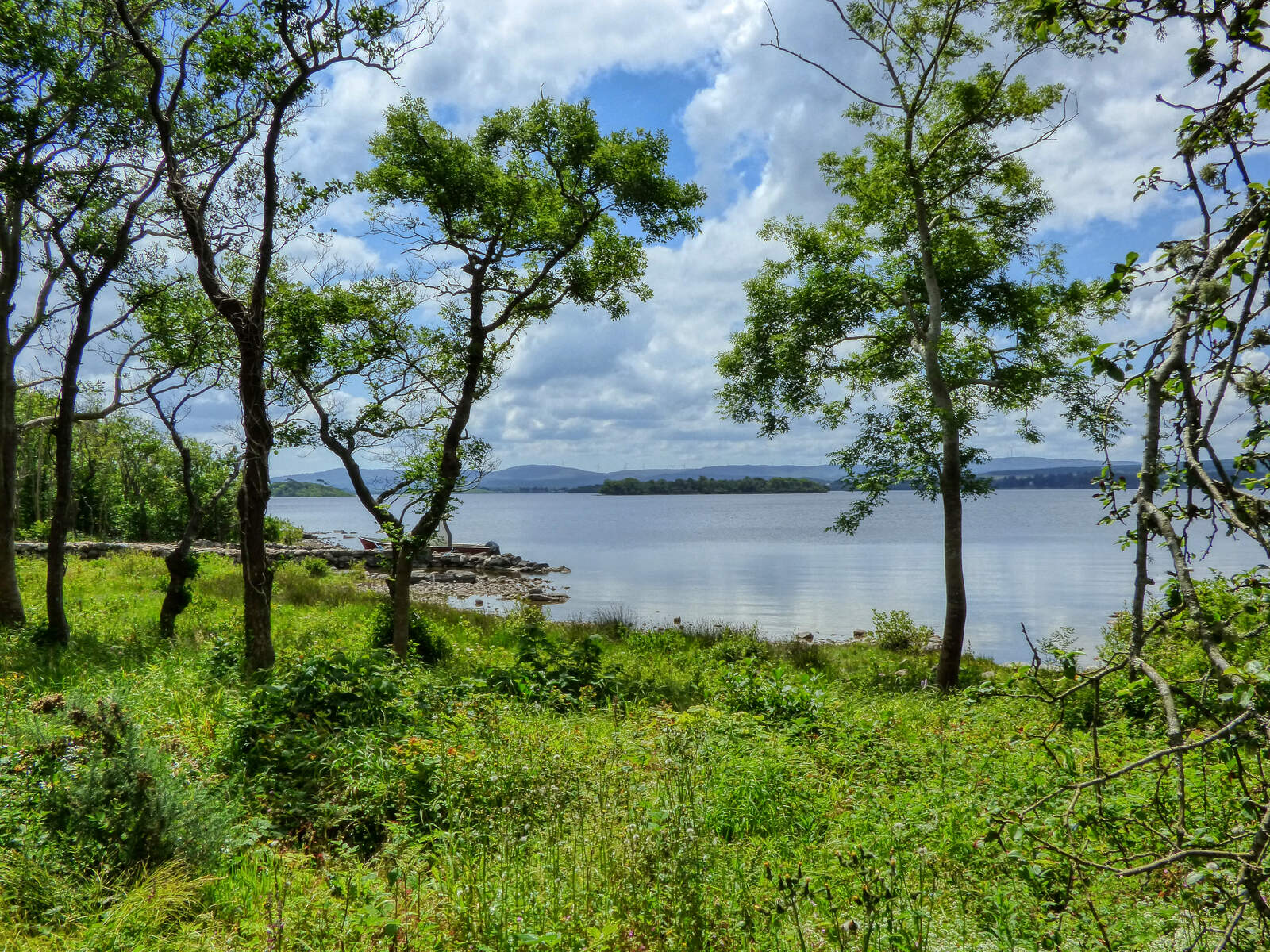
Perched on a half‑acre island in the sparkling waters of Lough Corrib, Kirk Castle – popularly called Hen’s Castle – is one of Ireland’s most evocative ruins. The stone keep rises from the lake like a solitary sentinel, its square angle‑towers still hinting at the defensive strength it once wielded. Though the interior is now a mass of stones and weeds, the silhouette of the two‑storey tower against the horizon is instantly recognisable and makes for a striking photograph.
The castle is a National Monument under the guardianship of the Office of Public Works (OPW). It is closed to the public; visitors can only view it from the water. The site is unguided, and the OPW stresses that visitors assume full responsibility for their safety while on the island.
History
Early origins
The earliest phase of Kirk Castle dates to the early 12th century, making it one of the oldest mortared castles in Ireland. It was built by the sons of Ruaidrí na Saide Buide, a Connacht king, with assistance from the Anglo‑Norman lord William FitzAldelm. The original structure was a rectangular keep with square towers at each corner – a design that would become typical of later Irish tower houses.
Shifting allegiances
The castle’s strategic position on Lough Corrib meant it changed hands frequently. In 1225 the Lord Justice Sir Edmond Butler forced the local chieftain Odo O’Flaherty to surrender the castle to Aedh Ua Conchobair, King of Connacht, as a guarantee of loyalty. Some sources record a later hand‑over to Odo O’Connor in the same year. Only eight years later, in 1233, the castle was destroyed during an attack by Hugh de Lacy, Earl of Ulster, but it was promptly rebuilt by Fedlimid, son of Cathal Crobhdearg Ua Conchobair.
The pirate queen and the Hen’s Castle legend
The most colourful chapter of Kirk Castle’s story involves the legendary Grace O’Malley (Gráinne Mhaol), the 16th‑century pirate queen of Connacht. At age 16 she married Dónal an‑Chogaidh O’Flaherty, nicknamed “the Cock” for his fierce temperament. In return, Grace was affectionately called “the Hen”. After Dónal’s murder by the rival Joyce clan in 1565, Grace led a daring assault, recapturing the stronghold and earning the moniker Hen’s Castle for the site.
Later centuries and decline
The castle continued to serve as a fortified residence until it fell to Cromwellian soldiers in 1654. By the 19th century, local stone‑cutters had pilfered hundreds of stones to build nearby homes, leaving the keep in a ruinous state. In the 20th century the OPW declared the site a National Monument, protecting what remains today.
Myth and magic
Local folklore adds a supernatural layer to the castle’s history. One tale tells of a witch who, with the aid of a magical cock and hen, built the castle in a single day and night. The witch left a magic hen to guard the fortress, warning that the castle would stand as long as the hen was cared for. When famine forced the inhabitants to eat the hen, the protective spell broke, and the castle eventually fell.
What to See & Do
- The keep’s ruins – Even in their ruined state, the four corner towers and the thick limestone walls (about 10 ft thick) are impressive. The vaulted ceiling and spiral stair remnants can still be imagined.
- Panoramic lake views – From a boat, you can circle the island and capture the castle framed by the surrounding lake and the Connemara hills.
- Historic Environment Viewer – For a deeper dive into the archaeological record, explore the OPW’s Historic Environment Viewer.
- Boat trips – Several local operators in Oughterard and Cong offer short boat trips or kayak rentals that bring you within a few metres of the ruins. While the castle itself is not open, the experience of gliding across Lough Corrib to a medieval keep is unforgettable.
Nature & Wildlife
Lough Corrib is a designated Ramsar site and Special Area of Conservation, supporting a rich mosaic of habitats. From the water you may spot otters slipping between reeds, kingfishers darting over the surface, and a variety of waterfowl such as swans, ducks and the occasional goldeneye. The lake is famed for its trout and pike, making it a popular spot for anglers – though fishing from the island is prohibited. Early‑morning trips often bring the chorus of birds and the gentle hum of insects, adding a sensory layer to the historic visit.
Nearby Attractions
- Aughnanure Castle – A well‑preserved 16th‑century tower house just a short drive from Oughterard, offering interior access and guided tours.
- Cong – The charming village of Cong, famous for its medieval abbey ruins and the iconic Ashford Castle, lies a few kilometres north‑east of the island. Both the village and the abbey are easily reached from the same boat launch points used for Kirk Castle.
- Ashford Castle – While a luxury hotel, its grounds overlook Lough Corrib and its own historic tower house can be viewed from the water.
Visiting Tips
- Getting there – The most common launch points are the Oughterard boat ramp (parking available, free but limited) and the Lisloughrey Pier in Cong (small car park). Both are sign‑posted from the main road.
- Public transport – Bus Éireann route 450 runs from Galway to Oughterard (about 1 hour). From the bus stop, it is a 5‑minute walk to the launch.
- Boat operators – Companies such as Oughterard Boating, Lough Corrib Kayak Tours, and Cong Boat Tours run regular summer services (May‑September). Trips typically last 30‑45 minutes and cost €12‑€18 per person. Advance booking is recommended in peak season.
- Facilities – The island has no amenities; bring water, snacks and sun protection. Toilets are available at the Oughterard launch area.
- Dog‑friendliness – Dogs are allowed on the boats but must be kept on a leash. They cannot disembark on the island.
- Accessibility – Access is by boat only; there is no wheelchair‑friendly provision.
- Safety – Weather on the lake can change quickly. Check forecasts and wear appropriate footwear for a wet deck.
Practical Information
Kirk Castle is not open for interior visits; the site is restricted and closed to the public. The only way to experience it is from the water. Visitors should arrange a boat from Oughterard (the nearest village) or from Lisloughrey Pier in Cong. Private hire, guided tours, and kayak rentals are all available, though prices vary and are not listed by the heritage authority.
Because the island has no facilities, bring any necessities (water, snacks) with you. The OPW notes that the site is unguided and that visitors must exercise caution at all times. The agency disclaims liability for any injuries or loss of personal items.
For those holding a Heritage Card, unlimited access to heritage sites across Ireland is included, though the card does not grant entry to the interior of Kirk Castle.
Opening hours & admission
| Season | Opening hours | Admission |
|---|---|---|
| All year | Closed (viewable from boat only) | Free (boat operators set their own fees) |
Getting there
- By car: From Galway, take the N59 north to Oughterard (approx. 45 km). Parking is available at the Oughterard boat launch.
- By public transport: Bus services run from Galway to Oughterard; from the bus stop, a short walk leads to the launch point.
- By boat: Local operators such as Oughterard Boating and Lough Corrib Kayak Tours provide regular trips during the summer months.
Contact
For the most up‑to‑date information on boat schedules, contact the Oughterard tourist office or the individual boat operators. The official Heritage Ireland page is linked above.
Kirk Castle may be a ruin, but its walls still echo the clamor of medieval battles, the daring of a pirate queen, and the whispered spells of a witch’s hen. Whether you’re a history enthusiast, a lover of Irish legend, or simply seeking a dramatic lakeside vista, a boat ride to this isolated keep offers a uniquely Irish adventure.