
Overview
Knockagh Hill rises to 390 m (1,230 ft) above sea level on the outskirts of Greenisland, County Antrim. At its summit stands the Knockagh Monument – a 110‑ft (34 m) basalt obelisk that is the largest war memorial in Northern Ireland. The site is a favourite stop for photographers, walkers and history enthusiasts because it combines a solemn tribute to the fallen of the World Wars with one of the most expansive vistas in the province. From the top you can see Carrickfergus Castle, the bustling harbour of Belfast, the shimmering waters of Belfast Lough and, on a clear day, the distant Mourne Mountains and even the outline of Scotland.
History
The monument’s story begins in the aftermath of the First World War. A committee, chaired by High Sheriff Henry Barton, set out to raise £25,000 for a basalt obelisk that would list the names of every County Antrim man who died in the Great War. The foundation stone was laid on 7 October 1922, but financial setbacks delayed construction for more than a decade. After Barton’s death in 1935, the Antrim Rural District Council took over the project and the monument was finally completed in 1936.
Following the Second World War the memorial was rededicated to honour those who fell in both conflicts. Two major refurbishments have kept the structure in good condition: a 1985 restoration funded by the ten local councils of County Antrim, and a £50,000 overhaul in 2006 when each council contributed £1,500. The 2006 ceremony was led by Lord Lieutenant Lord O’Neill and Rev. Canon E. J. Moore.
Designed as a half‑scale replica of the Wellington Monument in Dublin’s Phoenix Park, the obelisk is built from locally quarried basalt. Its inscription, adapted from the hymn “O Valiant Hearts” by John S. Arkwright, reads:
“NOBLY YOU FOUGHT, YOUR KNIGHTLY VIRTUE PROVED YOUR MEMORY HALLOWED IN THE LAND YOU LOVED.”
Although individual names are not etched on the stone, bronze panels originally listed over 800 Antrim men who perished in the two world wars, making the monument a collective place of remembrance.
What to See & Do
The Monument Itself
Visitors can walk around the base to view the four smaller columns that bear the emblems of the Army, Navy, Air Force and Merchant Navy. The broad square plinth and the two inscription tablets (the original dedication and the 2006 rededication) provide insight into the memorial’s evolving significance.
Panoramic Views
The summit’s elevation offers a 360° outlook. Highlights include:
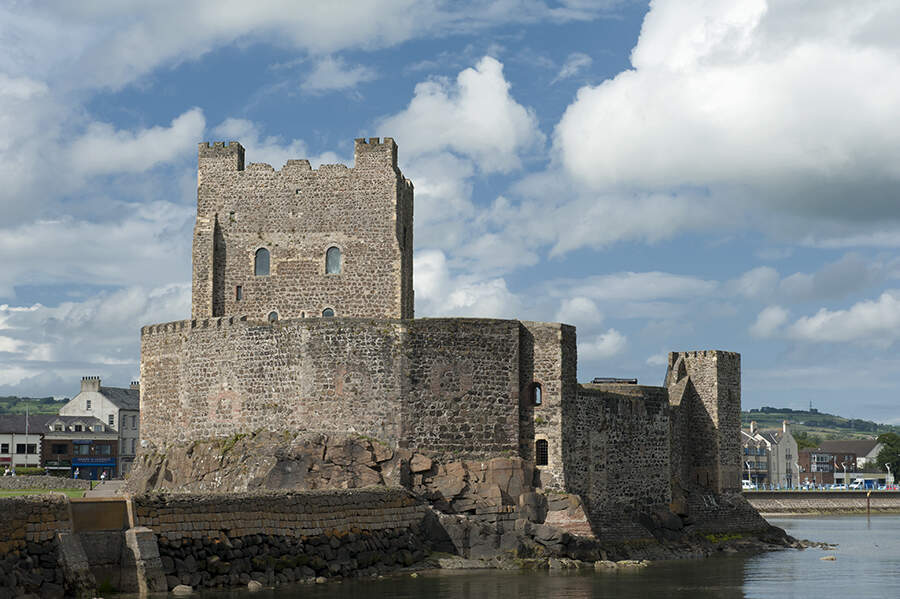
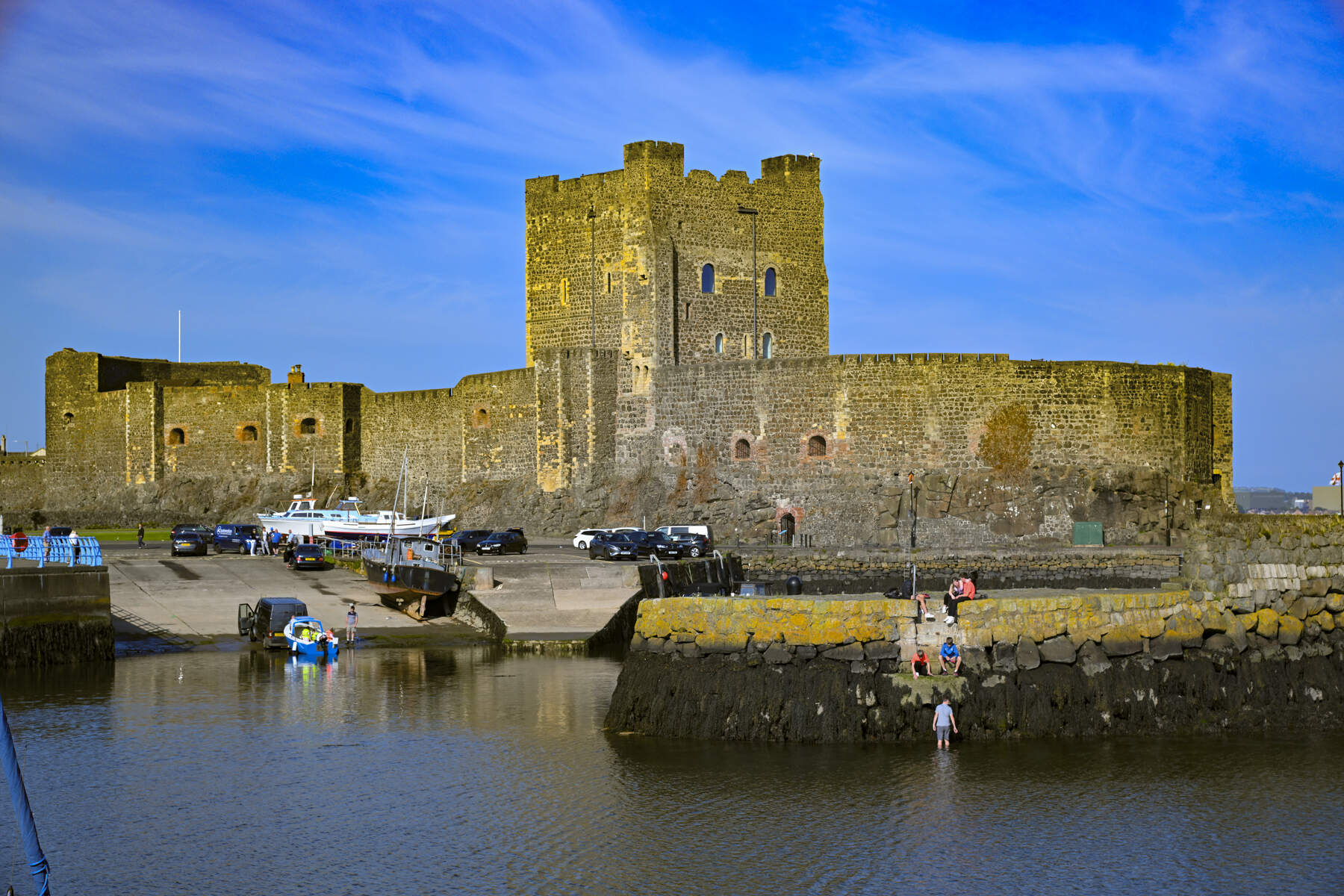
- Carrickfergus – the historic Norman castle and town lie just a few kilometres to the east.
- Belfast City – the Harland & Wolff ship‑building cranes and the River Lagan are visible on clear days.
- Belfast Lough – the lough stretches out to the north, with the Copeland Islands and Bangor on the horizon.
- North Down Coast – Helen’s Bay, Crawfordsburn and the Antrim coastline are framed by rolling hills.
- Mourne Mountains – on exceptionally clear days the peaks of the Mournes dominate the distant skyline.
- Scotland – a faint silhouette of the Scottish coast can be glimpsed across the Irish Sea.
Walking and Cycling
The hill is a hub for several marked routes. The 12.1‑mile circular cycle loop starts at Carrickfergus Castle, climbs past Woodburn Forest, reaches the monument at roughly 240 m, and returns via Greenisland. The route offers a mix of road riding and quiet country lanes, with opportunities to stop for a coffee in Carrickfergus or a picnic at the monument.
For walkers, a 16.3 km out‑and‑back trail gains about 425 m in elevation and takes 4½–5 hours. The path follows public roads, so cyclists should be aware of traffic, but the reward is a steady succession of sweeping viewpoints and the chance to explore the surrounding countryside.
Nearby Attractions
- Carrickfergus Castle (2.7 mi) – a 12th‑century Norman fortress.
- Cairn Bay Lodge and other local cafés for a post‑visit meal.
- Glens of Antrim and the Causeway Coastal Route for longer day‑trips.
- Belfast Hills for additional walking and scenic options.
- Antrim Coast and Glens for a coastal itinerary.
Practical Information
| Item | Details |
|---|---|
| Opening hours | Open all year; evenings, Mondays and Sundays (verify exact times) |
| Admission | Free |
| Parking | On‑site free parking (charges may apply during special events) |
| Access | Accessible by car via Monument Road, Greenisland (BT38 8QG). The nearest town is Carrickfergus (≈2.6 mi). Public transport is limited; most visitors drive or join a guided tour. |
| Facilities | Benches and a small shelter are available. No permanent visitor centre. |
| Contact | +44 (0) 28 9335 8222 |
| Coordinates | 54.71138, ‑5.87945 |
The monument is open year‑round with no entry charge, making it an easy addition to any itinerary. Parking is available on the hilltop, and the short drive from Belfast (≈15 km) or from Carrickfergus is straightforward. For cyclists, the loop described above provides a scenic yet manageable challenge; walkers should allow extra time for the ascent and for enjoying the views.
Getting There
From Belfast, follow the A2 north‑east towards Carrickfergus, then take the B90 to Greenisland and follow signs for Monument Road. The address is Monument Road, Greenisland, County Antrim BT38 8QG. For detailed directions, see the Google Maps link.
Best Time to Visit
While the site is open all year, the golden hours of early morning and late afternoon provide the most dramatic light for photography. Late spring and early summer (May‑June) offer the longest daylight and the freshest greenery, whereas autumn brings colourful foliage that frames the lough. Winter can deliver crisp, clear days with exceptional visibility of the Mournes and, on rare occasions, the Scottish coast.
Visitor Experience
The combination of a striking war memorial and a natural lookout creates a contemplative atmosphere. Many visitors pause at the base to read the inscription, then walk to the edge of the viewpoint to take in the sweeping seascape. The site is popular for quiet reflection, group wreath‑laying ceremonies on Remembrance Day, and informal picnics during the summer months.