
Overview
Lag na Sassenach, literally “Hollow of the English”, is a dramatic sea‑cut ravine tucked beneath the ruins of Kinbane Castle on the iconic Causeway Coast of County Antrim. The hollow sits on a white‑limestone promontory that juts into the Atlantic, offering a stark contrast between sheer cliff faces, the roar of the ocean, and the quiet echo of history. Though the name may sound ominous, it simply marks the spot where English soldiers met a grim fate during the mid‑16th‑century sieges of Kinbane Castle. Today, the site attracts history enthusiasts, photographers and anyone seeking a touch of the wild Irish coastline.
History
Kinbane Castle was erected in 1547 by Colla MacDonnell, a member of the powerful MacDonnell clan that dominated the Antrim coast. The castle’s strategic position on a white‑limestone headland (the Gaelic Kinbane means “White Head”) made it a natural defensive stronghold against English incursions. In 1551 and again in 1555 the castle endured brutal sieges by English forces under Sir James Croft, leaving the fortress scarred by cannon fire.
Beneath the castle’s ruined keep lies the narrow, water‑filled hollow now known as Lag na Sassenach. Contemporary accounts describe an ambush in which English troops, attempting a surprise assault, were trapped in the cave and killed by the defending MacDonnells. The name stuck, preserving the memory of that violent episode for centuries to come. After Colla’s death in 1558 the castle passed through the hands of his brother Sorley Boy MacDonnell, then to the MacAlister family, before being abandoned in the 18th century. The ruins, the cliff‑top headland, and Lag na Sassenach together tell a story of Gaelic resistance, coastal warfare, and the relentless power of the Atlantic.
Geology & Landscape
The headland is formed from Carboniferous limestone, a rock type that erodes quickly under the force of Atlantic waves. Over centuries the sea has cut a deep, narrow gorge – the hollow – creating a dramatic natural amphitheatre that frames the castle ruins. The limestone cliffs support a sparse, hardy flora of thrift, sea‑rocket and heather, while the fissures provide nesting sites for seabirds.
What to See & Do
- Descend into Lag na Sassenach – Roughly 140 concrete steps lead down the cliffside to the mouth of the hollow. The steps are steep but well‑maintained, with green safety rails at the upper section. At the base you can peer into the narrow gorge where the English soldiers once perished.
- Explore Kinbane Castle ruins – The remaining two‑storey stone tower offers a glimpse of 16th‑century Gaelic architecture. Inside the tower you’ll find fragmented stonework and a small information board summarising the castle’s turbulent past.
- Panoramic coastal views – From the headland you can see Rathlin Island, the Iron Age fort of Dunagregor, and on clear days the sweeping Atlantic horizon. The site is a favourite spot for photographers chasing dramatic light and sea spray.
- Wildlife spotting – Seals are often seen on the rocks below, and the surrounding cliffs provide nesting sites for guillemots, razorbills and kittiwakes. The occasional dolphin or basking shark may be spotted far out at sea.
- Historical reflection – Take a moment on the grass‑covered outcrop to contemplate the centuries of conflict that shaped this landscape. The silence of the hollow, punctuated only by the wind, makes for a powerful, almost meditative experience.
Photography
The best light occurs during the golden hours just after sunrise or before sunset, when the low sun accentuates the texture of the limestone and creates dramatic shadows in the hollow. A wide‑angle lens helps capture the full depth of the gorge, while a telephoto can isolate the castle tower against the sky. Keep an eye on the tide – high water can obscure the lower part of the steps.
Seasonal Highlights
- Spring (April‑May) – Early wildflowers add colour to the cliff tops and bird activity increases.
- Summer (June‑August) – Longer daylight makes the descent easier; occasional summer food vans appear in the car park.
- Autumn (September‑October) – Rich autumnal hues contrast with the grey stone; seas are often calmer, offering clearer views of Rathlin Island.
- Winter (November‑March) – The site can be windy and the steps slippery; however, the stark winter light can produce striking photographs. Check weather forecasts before visiting.
Practical Information
Lag na Sassenach is part of the Kinbane Castle historic monument, which is open 24 hours a day and free of charge. While the site never officially closes, the on‑site toilets in the car park lock at sunset, so plan your visit accordingly.
| Service | Details |
|---|---|
| Opening hours | Open 24 hours – free access |
| Admission | Free of charge |
| Parking | Large free gravel car park at the top of the headland; ample spaces and public toilets (toilets close at sunset) |
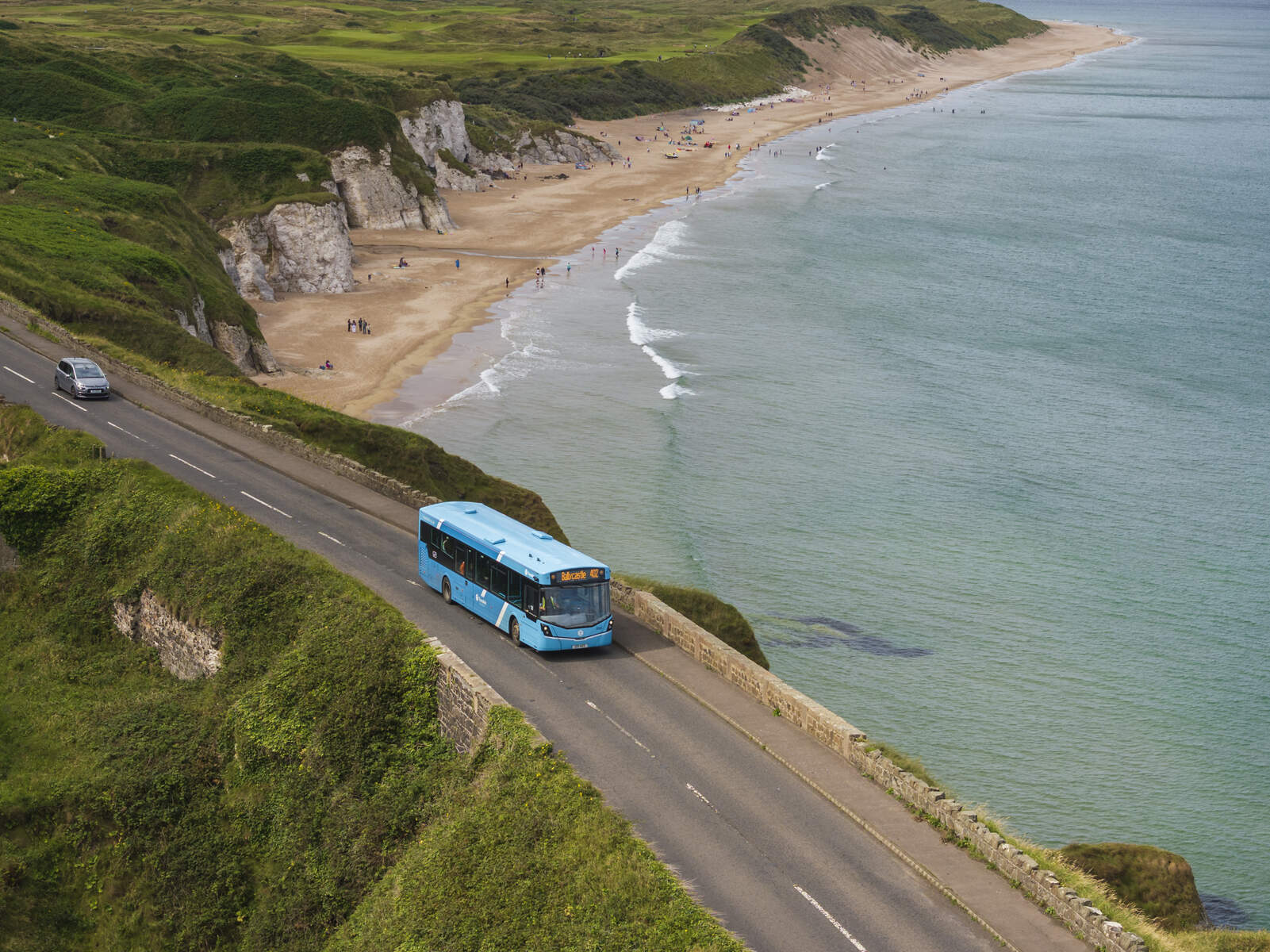
| Access | From the B15 road turn onto the single‑lane Whitepark Road; follow signs for Kinbane Castle. The 402 bus from Ballycastle or Coleraine drops you at the Kinbane Castle stop, a 15‑minute walk to the car park. |
| Safety | 140 steep steps; no railings beyond the upper section; not suitable for wheelchairs or very young children. Strong winds and wet conditions can make the path hazardous. |
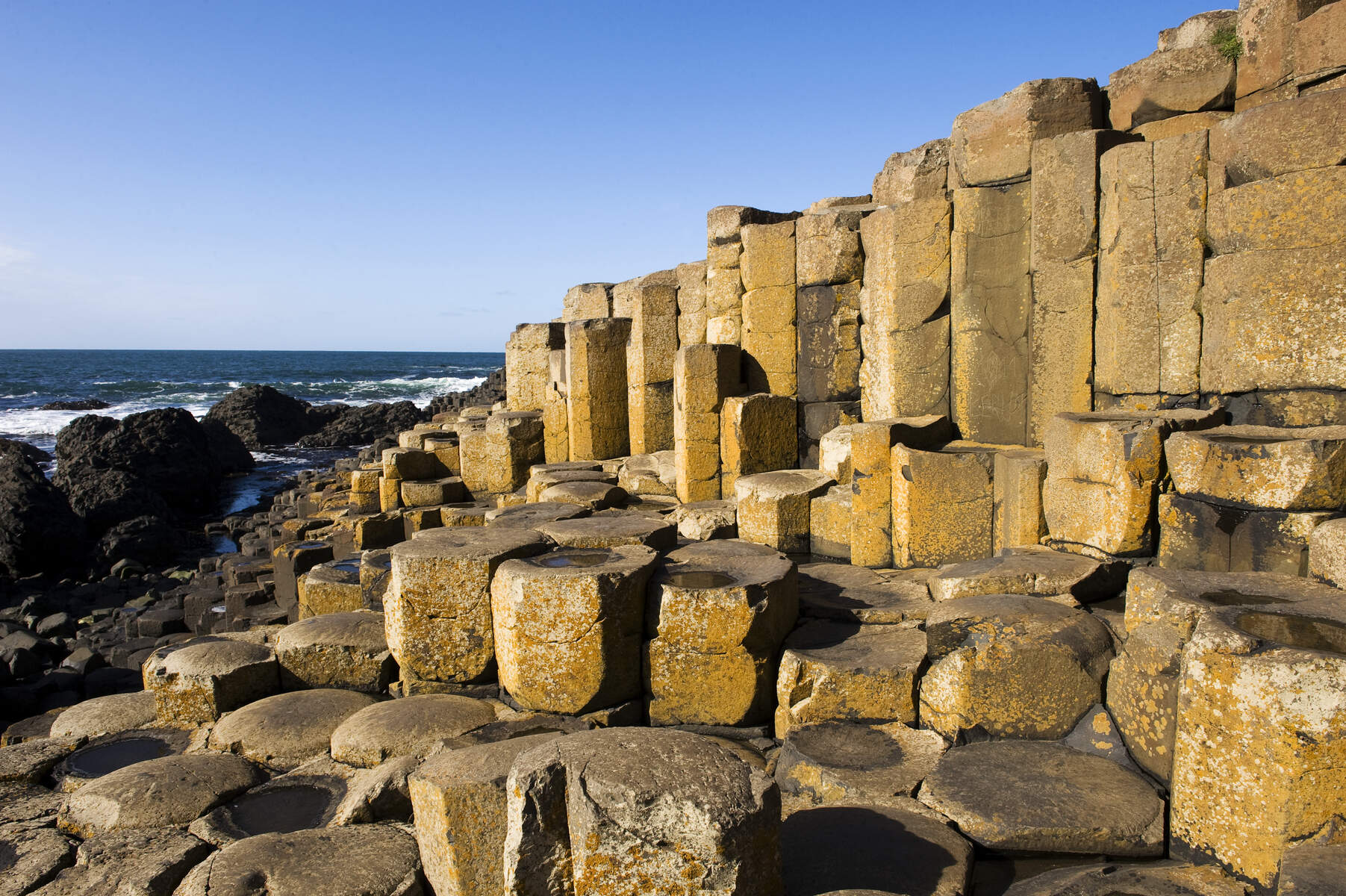
| Nearby attractions | Ballintoy Harbour (20 min drive), Carrick‑a‑Rede Rope Bridge (10 min drive – external link), Giant’s Causeway (30 min), Dark Hedges (45 min), Antrim Coast and Glens (regional area) |
Getting There
Kinbane Castle lies roughly a 60‑minute drive from Belfast, 30 minutes from Coleraine, and 7 minutes from Ballycastle. The most convenient way to reach Lag na Sassenach is by car; the narrow, single‑lane road to the car park is well‑sign‑posted. If you prefer public transport, the 402 bus serves the Kinbane Castle stop, after which a short walk brings you to the parking area.
Visiting Advice
Because the descent is steep and the ground can become slippery after rain, most visitors choose a dry, sunny day for the walk. The site has no on‑site staff, so you are entirely responsible for your own safety. The cliffs have been fitted with protective nets in recent years, but there are still no railings along the headland edge. Children should be kept close and discouraged from wandering near the cliff lip. Bring water and a snack, as there are no cafés on site; a seasonal food van sometimes appears in the car park during summer months.
Conservation
The site is managed by the Causeway Coast and Glens Borough Council. Efforts have been made to stabilise the steps and install safety nets to prevent rockfall. Visitors are asked to take any litter home and to stay on the designated pathways to protect the fragile limestone habitat.
For more detailed information, see the official Kinbane Castle page on Discover Northern Ireland.