
Overview
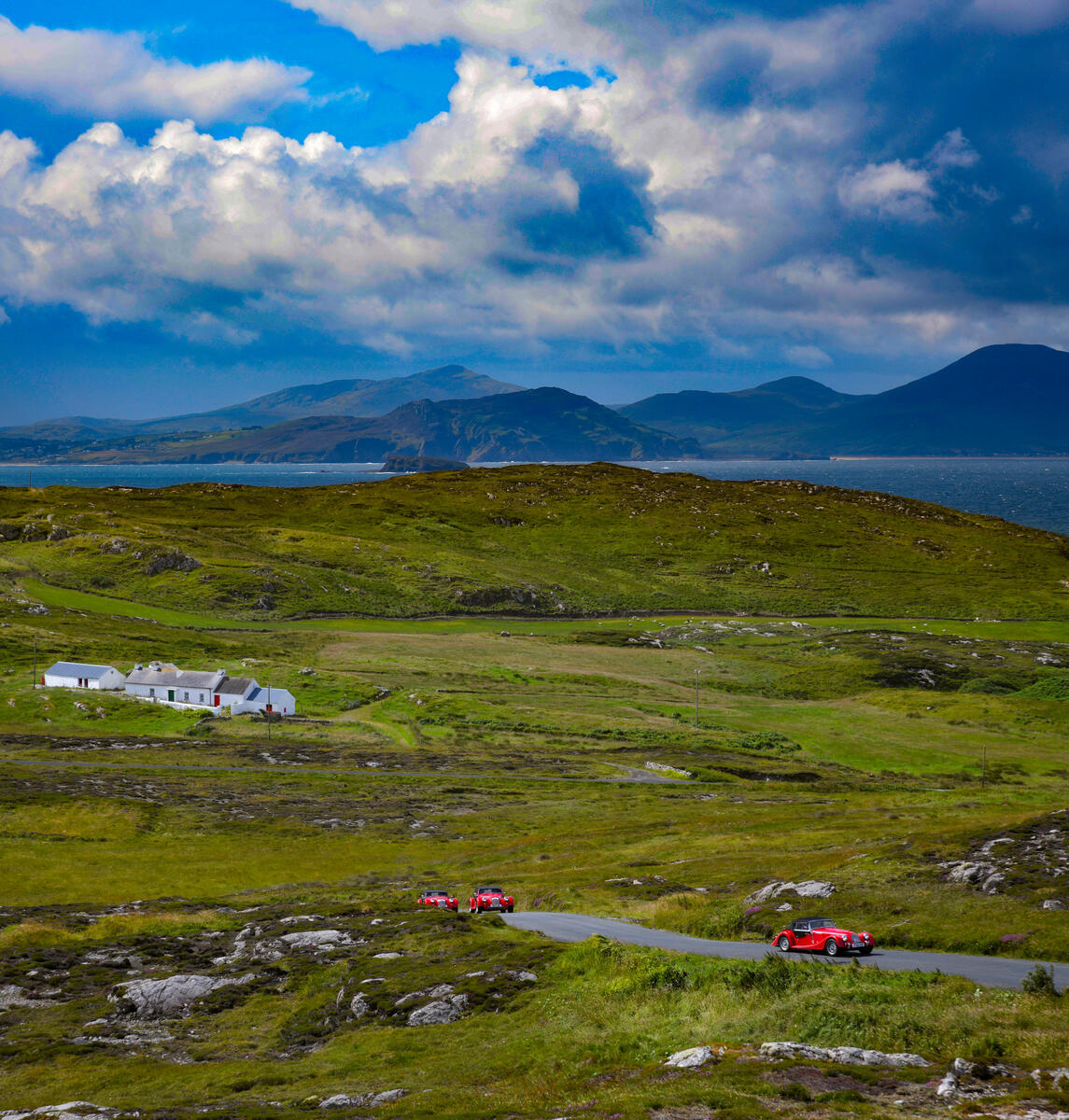
Lloyds Signal Tower dominates the rugged headland of Banba’s Crown, the highest point on Malin Head – the most northerly tip of the Irish mainland. Locally known simply as “The Tower”, the stone structure stands as a silent sentinel over the Atlantic, offering visitors a tangible link to the pioneering days of wireless telegraphy and a spectacular base for exploring the surrounding cliffs, sea caves and wildlife.
History
The tower’s story begins in 1805 when Lloyds of London, under Admiralty direction, erected a signal tower to aid maritime navigation along the treacherous north‑west coast. Nearly a century later, in 1902, the site became a focal point for Guglielmo Marconi’s groundbreaking wireless experiments. A battery‑powered spark transmitter, supplied by the Marconi Radio Company, sent the first commercial wireless message – the simple phrase “Malin Head calling” – to the steamship S.S. Lake Ontario on 3 April 1902. This achievement cemented Malin Head as a key trans‑Atlantic communication hub and linked America and Europe via the airwaves for the first time.
The tower itself was repurposed as a Lloyds signal station, relaying news and ship movements between the British Isles and the wider world. Its strategic importance continued through World War I, when the German fleet passed the headland, and later during the Titanic disaster, when Marconi’s equipment at Malin Head helped relay distress signals. Today, the derelict yet dignified building is a reminder of these historic milestones, and its silhouette is a favourite subject for photographers capturing the wild beauty of Donegal’s coastline.
Architecture & Heritage
The three‑storey stone tower was built c. 1805 on a square plan and features characteristic machicolations at the south‑east and south‑west corners and a central parapet. Original rendered chimneystacks with clay pots once topped the south elevation. Over the years the tower served as a weather‑met station (c. 1870), a Lloyds semaphore station (c. 1890) and a post‑office telegraph station (c. 1910). The structure is recorded in the National Inventory of Architectural Heritage (buildingsofireland.ie) as a protected historic monument, noted for its robust rubble‑stone construction, pronounced batter to the base and the now‑infilled square‑headed doorway on the north façade.
Recognition & Visitor Rankings
Lloyds Signal Tower is listed as a protected historic monument by the National Inventory of Architectural Heritage and appears on Komoot’s “Top 20 Natural Monuments in Donegal”. It also ranks as the #1 most‑reviewed attraction in the Ardmalin electoral division on Top‑Rated.Online, with an average rating of 4.70 from over 1,200 reviews. This strong visitor feedback reflects its blend of history, dramatic scenery and easy access.
What to See & Do
- The Tower – While the interior is not open to the public, the exterior offers a striking photo opportunity. The stone walls, weathered by sea spray, convey the sense of an era when the Atlantic was a frontier of technology.
- Coastal Walk – From the tower, a newly developed cliff‑top path leads southward along dramatic sea cliffs. Benches are spaced at scenic outlooks, allowing you to pause and take in the sweeping vistas of the Atlantic, Inishtrahull Island’s historic lighthouse, and, on clear days, the distant Scottish hills.
- Hell’s Hole – A short detour takes you to this impressive subterranean cavern, about 250 ft long and 8 ft wide, where the tide surges with powerful force, creating a dramatic natural spectacle.
- Devil’s Bridge – Nearby, a natural arch known as the Devil’s Bridge frames the sea in a perfect rock‑frame, ideal for a quick stop and a memorable snapshot.
- Birdwatching – Malin Head is a prime location for spotting seabirds such as gannets, shearwaters, skuas, choughs and the elusive corncrake. The headland’s cliffs also attract migratory species during spring and autumn.
- Geology & Flora – The area is a living laboratory of post‑glacial geology. The raised beach at Ballyhillion, just east of Banba’s Crown, showcases rare semi‑precious stones like agate and jasper, while the surrounding dunes rank among Europe’s largest.
Natural Monument Status
Komoot lists Lloyds Signal Tower among Donegal’s natural monuments, highlighting its rugged coastal setting, sea‑cave formations and the geological interest of the surrounding cliffs. The designation underscores the tower’s importance not only as a historic structure but also as a landmark within a protected natural landscape.
Cycling
Malin Head marks the northern terminus of the celebrated Mizen‑to‑Malin Atlantic Way cycling route, a 1,200 km challenge that draws cyclists from around the world. The tower’s car park provides a convenient start‑ or finish‑point, with secure bike racks and clear signage. Cyclists can enjoy sweeping sea‑views before heading south along the Wild Atlantic Way.
Virtual Experience
For those unable to visit in person, a free, detailed 3D model of Lloyds Signal Tower is available on Sketchfab. The model reproduces the tower’s three‑storey square plan, machicolations and parapet, allowing a virtual exploration of its exterior and surrounding landscape.
3D Model Details
The Sketchfab model, created by Pete the Geek, can be viewed online or downloaded for offline use under a Creative Commons Attribution licence. It includes high‑resolution textures and a turn‑around animation that helps users visualise the tower’s height and its relationship to the cliffs. A direct link is provided in the “Virtual Experience” paragraph above.
Visitor popularity
Lloyds Signal Tower consistently ranks among the top‑reviewed attractions in the Ardmalin electoral division, with an average rating of 4.7 / 5 from over a thousand visitor reviews on popular travel platforms. Its blend of history, dramatic scenery and accessible walks makes it a favourite stop on the Wild Atlantic Way.
Accessibility & Visitor Tips
- Parking – A large car park at Banba’s Crown (the same site as the meteorological station) provides free parking. A disabled viewing area has been created as part of an EU‑funded marine tourism project, offering wheelchair‑accessible paths and benches.
- Weather – The headland is exposed to Atlantic winds; bring waterproof clothing and sturdy footwear. The tower’s position offers some shelter from the strongest sea breezes.
- Dog‑friendly – Dogs are permitted on the coastal walk and in the car park, but keep them on a lead near cliffs and during bird‑watching season.
- Facilities – No café or toilet facilities are on site; the nearest amenities are in Malin village.
Events & Heritage Week
During County Donegal’s annual Heritage Week (mid‑August), the tower and surrounding area often feature in guided walks and interpretive talks that explore its role in maritime communication and early wireless technology. While specific programmes vary each year, visitors can check the Heritage Week website for any scheduled events at or near the tower.
Wildlife & Birdwatching
The cliffs around Lloyds Signal Tower support thriving seabird colonies. In summer, large numbers of gannets and northern gannets can be seen diving for fish, while puffins nest on the more sheltered ledges. Spring and autumn migrations bring flocks of skuas, razorbills and the occasional barnacle goose. The inland dunes host rare flora such as sea thrift and wild thyme, adding colour to the coastal landscape.
Getting There by Car
The most reliable way to reach the tower is by car via the R250 and the coastal road that runs along the north side of Trawbreaga Bay. Ample free parking is available at the Banba’s Crown car park. Public transport to Malin Head is limited; the nearest Bus Éireann stop is in the village of Malin (approximately 4 km away). There is no railway service in the area – the closest train station is Derry, about 30 km north, requiring a onward taxi or bus connection. Visitors are therefore advised to travel by private vehicle or arrange a local taxi.
Practical Information
Lloyds Signal Tower is open daily, all day and free of charge. The site is part of the broader Malin Head visitor experience, which includes a meteorological station (operational since 1955) and a network of walking trails.
| Opening Hours | Admission |
|---|---|
| Open daily, all day | Free |
Getting there – The tower is accessed via the coastal road that runs along the north side of Trawbreaga Bay. Ample parking is available at the Banba’s Crown car park, and a disabled viewing access area has been created as part of the EU‑funded marine tourism project, ensuring that visitors with reduced mobility can enjoy the panoramic outlooks.
Contact & Further Details – For the latest updates, visitor enquiries can be directed to the Donegal tourism office at +353 749 363 451 or via the official PDF booklet: Malin Head Visitor Guide.
Seasonal notes – The headland is renowned as the sunniest spot in Ireland, offering clear views of the Scottish islands in summer and dramatic, wind‑swept scenery in winter. While the weather can change quickly, the tower’s location provides shelter from the strongest sea breezes, making it a comfortable stop regardless of conditions.
Nearby attractions
After exploring the tower, consider extending your walk to the famous Five Finger Strand, the historic Banba’s Crown lighthouse, or the nearby Inishtrahull Island lighthouse, a two‑century‑old beacon visible from the headland. For more information on the northernmost point of Ireland, see Banba’s Crown.
Enjoy the blend of history, technology and natural grandeur that makes Lloyds Signal Tower a highlight of any Donegal itinerary.