
Overview
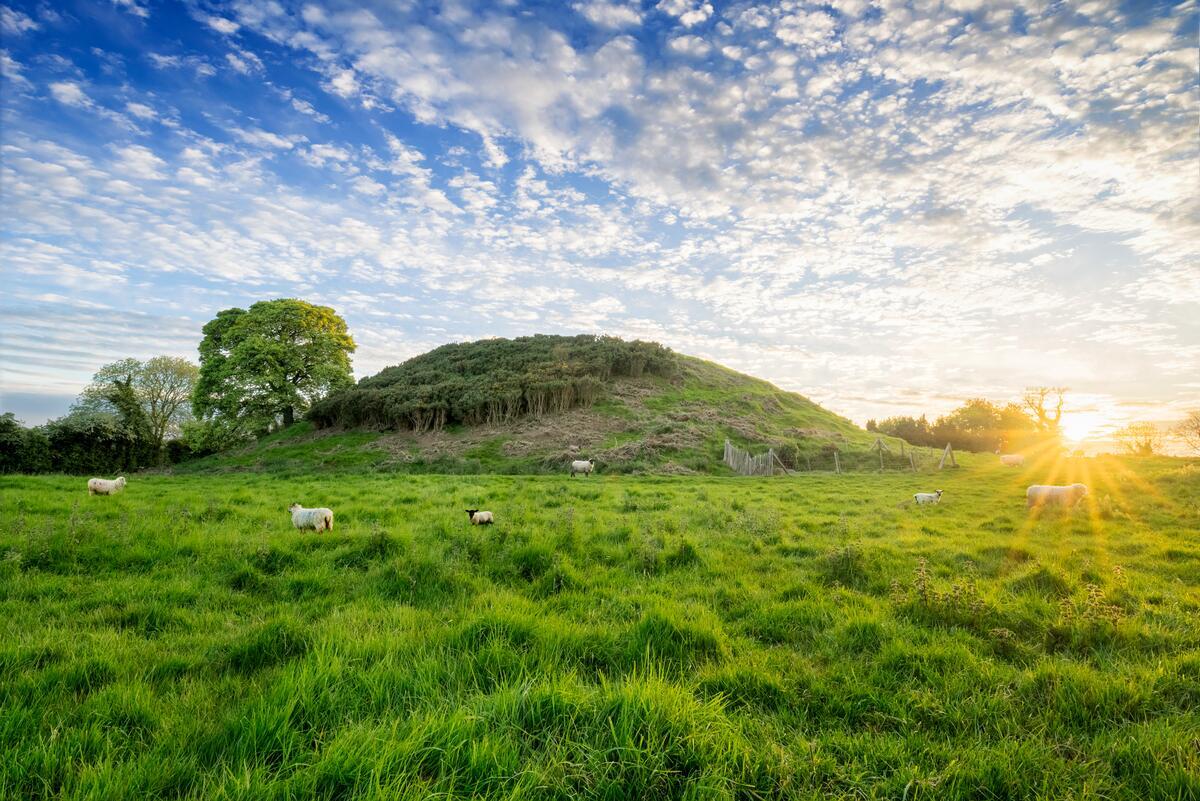
Loughcrew (Irish: Loch Craobh, “lake of the tree”) crowns the Slieve na Calliagh range in County Meath, overlooking the Boyne Valley. The site is famed for the Loughcrew Cairns – a cluster of roughly twenty‑odd Neolithic passage tombs, the most celebrated being Cairn T (the Great Cairn). Below the ancient stones lies the Loughcrew Estate, a 200‑acre landscape that includes a 17th‑century house, formal gardens, a medieval motte, St Oliver Plunkett’s family church and a playful Fairy Trail for children. Open year‑round and just an hour’s drive from Dublin Airport, it offers a compact yet richly layered day out for history lovers, garden enthusiasts and families.
History / Background
Neolithic monuments
The cairns were erected in the 4th millennium BC (around 3300 BC), making them older than the Egyptian pyramids and contemporary with Newgrange. Carved from local green gritstone, the tombs display a distinctive repertoire of petroglyphs – spirals, lozenges, leaf motifs and radiating lines. Cairn T contains a narrow passage that aligns with the rising sun on the spring and autumn equinoxes, flooding the backstone with light – a ritual likely marking the agricultural calendar.
Folklore
Local legend names the hills Slieve na Calliagh – “the mountain of the witch”. The tale tells of the Cailleach Béara, a giant hag who dropped stones from her apron, forming the cairns and giving the landscape its mystical aura.
Estate development
The estate’s story begins in 1625 when Saint Oliver Plunkett, later canonised, was born on the grounds. His 17th‑century family church and an adjoining tower house survive beside a medieval motte that marks an earlier fortification. After Plunkett’s execution in 1681 the property changed hands, becoming an 18th‑century landscape garden with sweeping vistas and naturalistic planting. The 19th century added Victorian formalities – box hedges, canals and ornamental terraces. In 1997 contemporary designers introduced a post‑modern grotto, twisted stone pillars, a giant‑insect walk and fantasy‑tree sculptures, creating a dialogue between ancient, historic and modern layers.
What to See & Do
- Great Cairn (Cairn T) – climb to the summit of Carnbane East and experience the cruciform chamber’s spiralled orthostats. Visit on an equinox to witness the sunrise illuminate the backstone.
- Other cairns – explore the remaining Neolithic tombs spread across Carnbane West and Patrickstown, each bearing unique petroglyphs and offering panoramic views across up to eighteen Irish counties.
- Loughcrew Gardens – stroll down the lime‑tree avenue, wander the rolling lawns, and discover the historic Yew Walk. The Victorian terraces lead to a modern grotto with twisted pillars and a whimsical sculpture trail, perfect for children and photo‑hunters.
- Medieval motte & St Oliver Plunkett’s church – glimpse the defensive earthwork and the 17th‑century church that survived Cromwellian damage.
- Fairy Trail – a short, family‑friendly path dotted with fairy‑themed installations, ideal for a quick adventure with the little ones.
- Panoramic viewpoints – from any of the three hilltops, enjoy sweeping vistas of the fertile plains of Meath, Cavan and Westmeath.
Getting There
By car – From Dublin Airport take the M1 north to Navan, then the R162 east to Oldcastle. Follow the signs for Loughcrew; the estate entrance is about 3 km east of Oldcastle. The drive takes roughly 1 hour and offers scenic countryside views.
Public transport – Bus Éireann route 102 runs between Navan and Oldcastle; alight at the Oldcastle bus stop and catch a local taxi (approximately €10‑12) for the final 5 km to the estate. Check the latest timetables before travelling.
Parking – A large car park is available at the estate entrance (free for garden visitors). A smaller, limited‑capacity lot sits near the cairns; early arrival is advisable in the summer months.
Practical Information
- Opening times – Open daily, year‑round. The cairns are free to access; the estate garden charges a modest entry fee (check the on‑site notice for current rates).
- Facilities – Visitor centre with restrooms, a café serving local produce, and a gift shop featuring crafts inspired by the cairns.
- Guided tours – Seasonal guided walks focus on Neolithic astronomy, the Plunkett family history, and the garden’s design evolution. Book in advance during the summer months.
- Accessibility – Garden paths are mostly level and suitable for wheelchairs; the cairns involve uneven stone steps and are not fully accessible.
- Best times to visit – Sunrise on the spring or autumn equinox for the light show in Cairn T; late spring to early autumn for garden blooms; winter for atmospheric mist over the cairns.
Events & Seasonal Highlights
- Equinox Sunrise – On the spring (≈21 March) and autumn (≈22 September) equinoxes, the backstone of Cairn T is illuminated by the rising sun – a popular moment for photographers and archaeology enthusiasts.
- Summer Garden Walks – From June to August the estate runs short, family‑friendly guided walks highlighting the sculpture trail, the grotto and seasonal planting.
- Winter Mist Walks – Occasionally the estate organises evening walks in January and February when mist drifts over the cairns, offering a dramatic, atmospheric experience.
Nearby Attractions
- Bective Abbey – Ruins of a 12th‑century Cistercian abbey set in tranquil parkland, a 20‑minute drive north.
- Athboy Heritage Trail – A self‑guided walking route through the historic market town of Athboy, showcasing medieval architecture and local folklore.
- Bective House – An elegant Georgian house with formal gardens, ideal for a quick stop on the way back to Dublin.
- Carnaross – A charming village with a historic church and easy access to the Boyne Valley Greenway.
- Boyne Valley – The wider landscape that includes the World Heritage sites of Brú na Bóinne, the Battle of the Boyne visitor centre and scenic riverside walks.
Enjoy a journey that weaves together five millennia of myth, art and landscape – all within a single, unforgettable hilltop experience.