
Overview
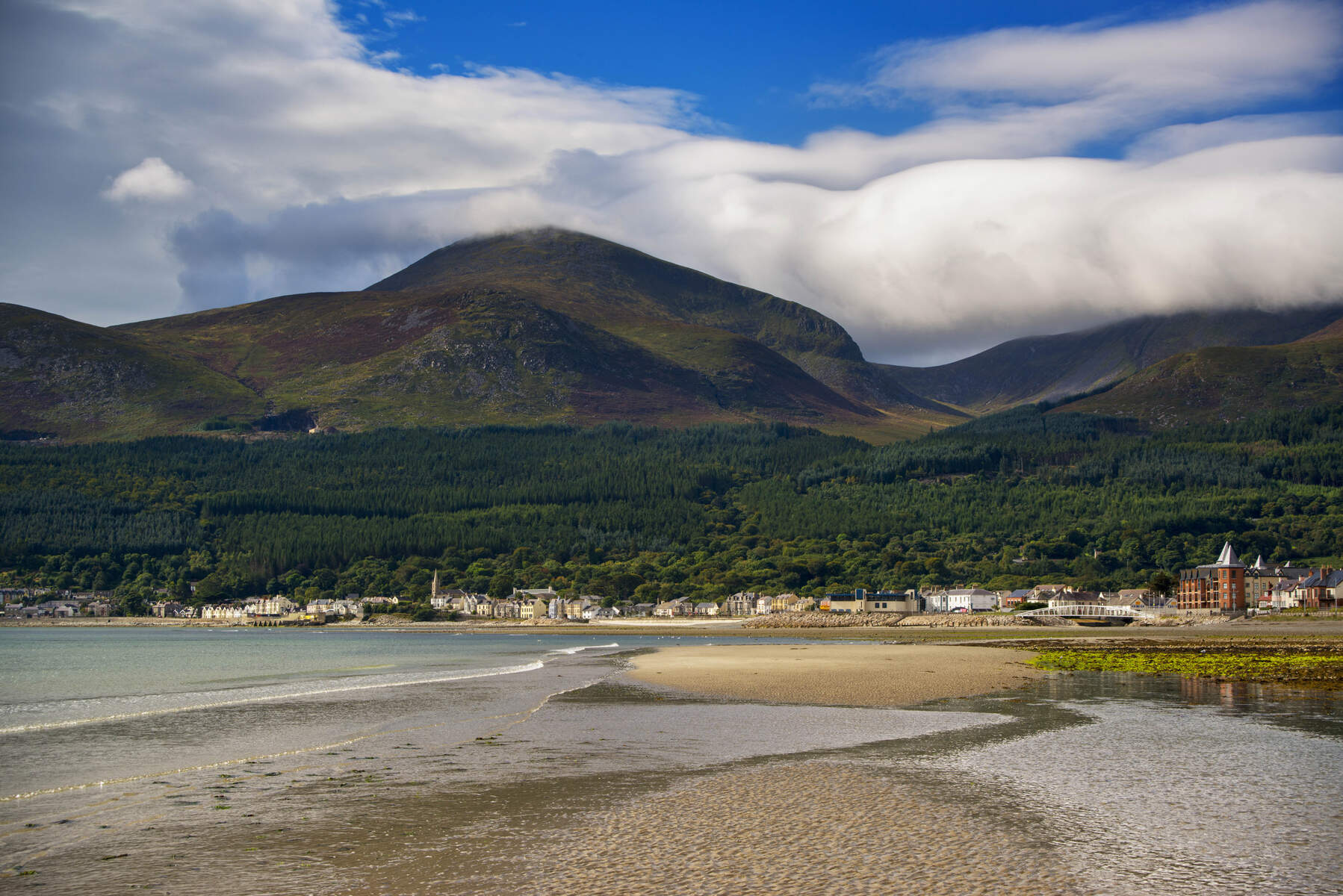
Magennis Castle, more commonly known as Dundrum Castle, crowns a rocky hill overlooking the south‑facing Dundrum Bay in County Down. The site commands sweeping views of the Mourne Mountains, the plains of Lecale and the distant Slieve Croob. Today the ruin is a popular picnic spot, a free‑entry historic monument, and a vivid reminder of the turbulent medieval politics of Ulster.
History
The castle’s origins trace back to around 1177 when the Anglo‑Norman knight John de Courcy erected a fortification to dominate the main land route between Downpatrick and Drogeda. Early defences were likely earthworks and timber, but by the early 13th century a stone curtain wall encircled the upper ward. In 1204 de Courcy was expelled by Hugh de Lacy, Earl of Ulster, who reinforced the site with a massive round keep—still the strongest surviving structure, 46 ft in diameter with 8.5 ft thick walls.
The keep’s interior reveals a three‑storey layout: a ground‑floor storage cellar with a cistern, a great chamber on the first floor, and private chambers above. A spiral staircase and a surviving fireplace flue attest to its medieval domestic comfort.
In 1210 King John seized the castle, but de Lacy was restored to his earldom in 1226. The 13th‑century addition of a twin‑towered gatehouse (1260) gave the fortress a distinctive silhouette. By the 14th century the Magennis clan, senior branch of the ancient Clanna Rory and Lords of Iveagh, held the castle, and the stronghold became colloquially known as Magennis Castle. The Magennises added a second outer wall, further fortifying the site.
The castle changed hands repeatedly during the 16th century, captured by the Earl of Kildare (1517) and Lord Deputy Grey (1538). In 1601 Phelim Magennis Mac Artáin surrendered it to Lord Mountjoy. Subsequent owners included Sir Francis Blundell (1636) and the Parliamentarians, who dismantled much of the structure in 1652. The Blundell family rebuilt a modest L‑shaped mansion in the outer bailey after 1660, but by the early 19th century the whole complex lay in ruins.
The site entered State Care in 1954 under the 7th Marquess of Downshire. Archaeological interest remains high; a Time Team episode aired on 24 February 2013, and a well discovered in 1959 explains why the keep occupies its precise location—providing fresh water during sieges. A medieval lime kiln uncovered in 2013 adds another layer to the industrial heritage of the castle grounds.
The Magennis Clan & Heraldry
The Magennis (or Mac Guinness) family were the dominant Gaelic lords of Iveagh from the 12th to the 17th centuries. Their coat of arms bears the motto “SoLA SALUS SERVIRE DEO” – translated as “To serve God is the only salvation.” The clan’s influence stretched across south Down, with seats at Loughbrickland and later at the ruins of Magennis Castle itself. Their legacy is still evident in local place‑names and the continued use of the Magennis name throughout the county.
Wider Connections
The Magennis name is linked historically to the famous Guinness brewing family. Both share the same heraldic arms (plate # 71 in the Irish Book of Arms) and a common Gaelic ancestor, Mac Guinness. While the Guinness brewery developed in County Kildare, the Magennis clan remained a powerful force in County Down, illustrating the spread of the family across Ireland.
What to See & Do
- The Round Keep – Climb the remaining stone walls to appreciate the massive 8.5 ft thickness and imagine the three‑storey living quarters that once housed the lord’s family.
- Twin‑Towered Gatehouse – The lopsided gate, with a single projecting tower, offers a dramatic photo opportunity against the backdrop of the bay.
- Curtain Walls & Ditch – Walk the remnants of the polygonal curtain wall and the deep defensive ditch that once protected the inner ward.
- Views – From the highest points you can see the Mourne Mountains, Dundrum Bay, and the rolling plains of Lecale. The vista is especially striking at sunset.
- Lime Kiln & Well – Small interpretive signs near the kiln and the 1959 well give insight into the castle’s self‑sufficiency.
- Time Team Filming Spot – The 2013 television excavation left a short interpretive panel; fans often pause here for a photo.
Harbour & Navigation Details
Adjacent to the castle lies Dundrum Harbour, a small tidal inlet that provides a protected anchoring pool for shallow‑draft vessels. Navigation into the harbour requires careful timing because a shifting sandbar at the entrance often leaves only about 0.3 m of water at low tide. Vessels should therefore aim to enter on a rising tide, in settled sea conditions and with good visibility.
Key points for boaters (sourced from eOceanic):
- Minimum depth: 2 m (6.5 ft) at high water.
- Tidal range: Approx. 3.8 m at high water, 1.8 m at low water.
- Approach: The sandbar lies directly in front of the channel; a tide of at least 1 m over the bar is recommended.
- Restrictions: The entrance channel passes close to the Ballykinler firing range. Access must be avoided when the range is active.
- Anchoring waypoint: 54° 15.362’ N, 5° 50.411’ W (about 3 mi out from the shoreline) aligns with the castle’s bearing and provides a safe holding ground.
- Facilities: No permanent mooring buoys; anchoring is the usual method. The quay dries at very low water, so plan departure accordingly.
Getting There & Practicalities
By Car – The castle is accessed via the A2 coastal road. From Belfast, follow the A2 south‑west for about 30 mi; turn off for the Dundrum turn‑off and follow signposts to the car park opposite the castle. The drive offers coastal scenery and passes the villages of Annalong and Newcastle.
Public Transport – The nearest railway station is Newcastle (Northern Ireland Railways), roughly 4 mi away. Ulsterbus route 93 serves Dundrum village; check the latest timetables for exact stops. A short taxi ride from the station or bus stop brings you to the castle car park.
Parking – A free on‑site car park sits at the foot of the hill, just a few minutes’ walk up to the ruins. Spaces fill quickly on sunny weekends, so early arrival is advisable.
Opening Hours – The site is open year‑round, but visitors should only explore during daylight hours for safety.
Accessibility – Some areas of the ruin are uneven and may be inaccessible to visitors with limited mobility. The car park and main path are level.
Events & Filming
Magennis Castle was the focus of a Time Team excavation broadcast on 24 February 2013. The programme uncovered the 1959 well and the medieval lime kiln, and a short interpretive panel now marks the spot where the dig took place. The site occasionally hosts local heritage talks during the summer walking festivals organised by Down District Council.
Nearby Attractions
A visit to Magennis Castle pairs well with a stroll along Dundrum Bay, where you can explore the sandy beach and the historic quay. Within a short drive, Tollymore Forest Park offers woodland walks, waterfalls and a visitor centre. The town of Newcastle provides additional dining options and a heritage railway museum.
Practical Information
Magennis Castle is managed by the Northern Ireland Environment Agency and is open year‑round. There are no set opening hours; visitors may explore the site at any time during daylight. Admission is free and a free car park is available adjacent to the castle grounds.
| Service | Details |
|---|---|
| Admission | Free |
| Parking | Free on‑site car park |
| Accessibility | Some areas uneven; limited mobility access to car park and main path |
| Nearest Town | Dundrum (4 mi from Newcastle, <30 mi from Belfast) |
| Address | Dundrum Castle, Castle Road, Dundrum, Newcastle, County Down BT33 0NF |
| Google Maps | Find it on Google Maps |
Note: While the castle is free to enter, the surrounding village amenities (cafés, shops) operate on their own schedules. Check local listings if you plan to dine in Dundrum.
Magennis Castle stands as a silent sentinel over centuries of conflict, culture, and community. Its ruins invite you to step back in time while enjoying some of the most spectacular coastal scenery Northern Ireland has to offer.