
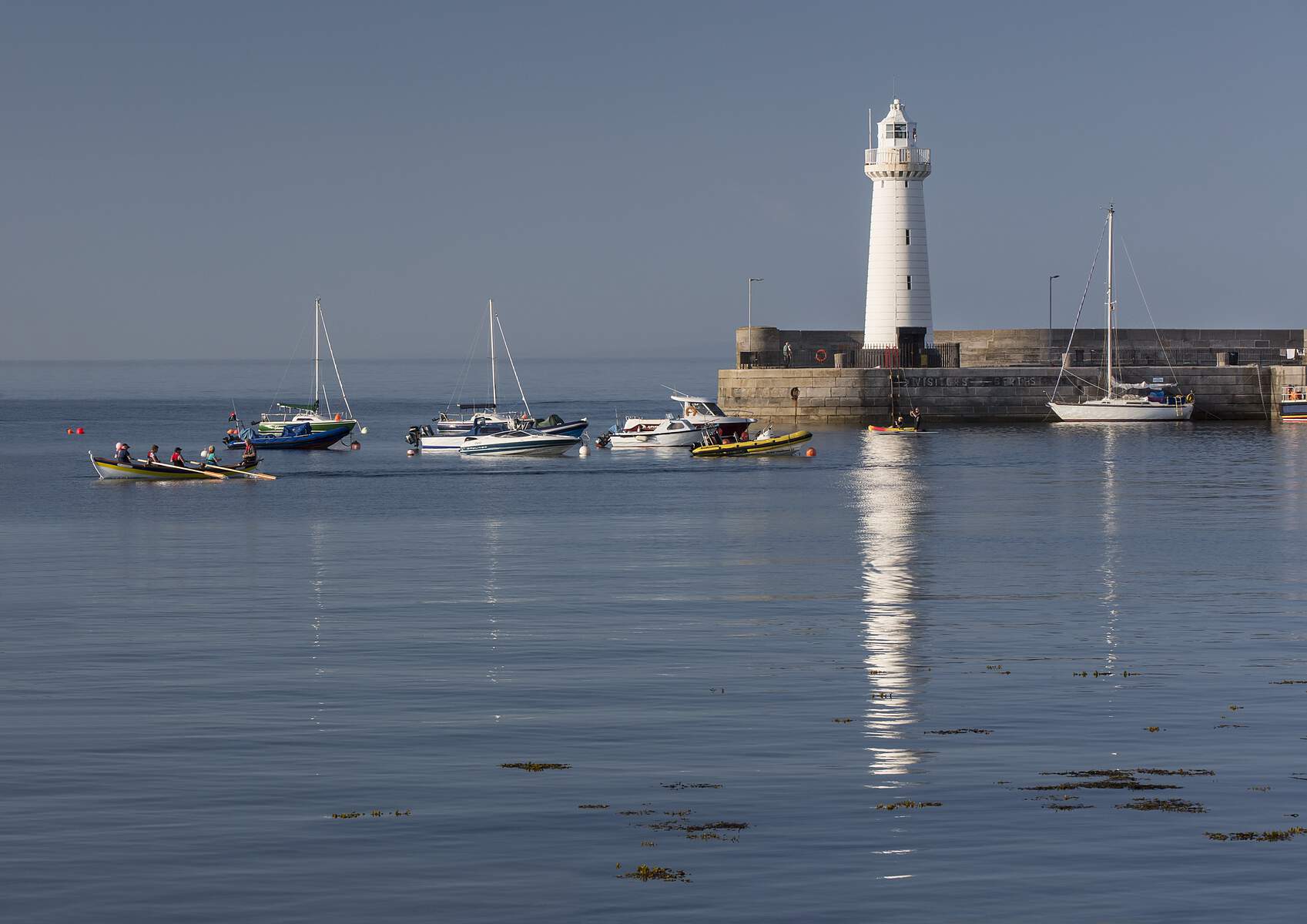
Overview
The Maidens Islets (Irish: Na Bheanáin / Na Bheannach / Na Bheannaí) are a pair of rugged outcrops and a scattering of skerries that jut out of the North Channel about 9 km (5 mi) off the County Antrim coast, near the village of Ballygalley. Locally they are known as the Eastern (Southern) Rock and the Western (Northern) Rock. Geologically they are the exposed tip of an olivine‑dolerite sill, the same volcanic plumbing that created the world‑famous Giant’s Causeway, dating back to the Paleogene‑Neogene volcanic episode.
The East Rock still bears the Maidens Lighthouse, an automated beacon that flashes three white lights every 15 seconds, visible for 23 nautical miles. The West Rock’s tower stands as a weather‑worn shell, de‑commissioned in 1903. The rocks and surrounding waters are a hotspot for seals, harbour porpoises and occasional dolphins, making the site a favourite for boat‑tour operators and wildlife watchers.
History / Background
- 1819 – Merchants from Larne and Admiral Benjamin Hallowell Carew petitioned the Ballast Board for a light to protect vessels navigating the treacherous North Channel.
- 1824 (August) – Inspector of Works George Halpin recommended twin towers; Trinity House approved the scheme.
- 1828‑1829 – Both towers were erected on the two rocks, spaced roughly 800 yards (≈ 730 m) apart. They were first lit on 5 January 1829.
- West Tower (Northern Rock): 84 ft (≈ 23 m) above high water, originally visible for 13 nm.
- East Tower (Southern Rock): 94 ft (≈ 29 m) above high water, originally visible for 14 nm.
- Life on the rocks – Keepers and their families lived year‑round in isolated stone cottages, tending oil lamps, later Fresnel lenses, and fog signals.
- 1903 (12 March) – The West Tower was de‑commissioned after the East Tower received an upgraded light that rendered the twin unnecessary.
- 1977 – The East Tower was fully automated; today it is monitored remotely from Ferris Point, with an on‑site attendant ensuring reliability.
- Auxiliary light – In 1889 an auxiliary light was added to the East tower to cover the nearby Highland Rocks.
The twin‑tower origin, the harsh keeper life, and the later automation together illustrate the evolution of Irish maritime safety from the early 19th century to the modern era.
What to See & Do
| Activity | Details |
|---|---|
| Lighthouse viewing | The East Maidens Lighthouse flashes three white lights every 15 seconds. It can be seen from the sea and from coastal viewpoints near Ballygalley. The tower itself is not open to the public. |
| Boat tours | Local operators run half‑day trips that circle the islets, offering close‑up views of the towers, dramatic rock formations and opportunities to spot seals, porpoises and dolphins. (Check individual operator websites for timetables and pricing.) |
| Photography | The twin silhouettes against sunrise or storm‑lit skies are a favourite subject. The best light is early morning or late afternoon from the Ballygalley promenade or from a boat. |
| Wildlife watching | Seals often haul out on the skerries; harbour porpoises and occasional dolphins play in the surrounding channel. Seabirds such as guillemots and razorbills also nest on the rocks. Bring binoculars and a waterproof camera. |
| Coastal walk | A short, wheelchair‑friendly walk along the Antrim coast from Ballygalley provides panoramic views of the islets and interpretive panels about the volcanic geology and lighthouse history. |
Practical Information
- Getting there: The islets are inaccessible on foot; the only way to approach them is by boat. Several local companies based in Ballygalley and Larne offer scheduled trips (check seasonal timetables). Private vessels may anchor in the sheltered lee, but a licensed pilot is recommended due to strong currents.
- Parking & facilities: Ballygalley village offers a free car park on the main road (near the promenade), a small café and public toilets. No facilities exist on the islets themselves.
- Best time to visit: Late spring to early autumn offers calmer seas and abundant wildlife. Winter visits are possible for dramatic storm photography, but boat services may be limited.
- Weather & safety: The North Channel can be windy and foggy. Dress in layers, wear non‑slip footwear on the boat, and heed local marine warnings.
- Accessibility: The coastal walk from Ballygalley is wheelchair‑friendly up to the viewpoint; the lighthouse itself is not accessible.
- Entry fees: There is no charge to view the lighthouse from the sea or the shore. Boat tour prices vary by operator.
- Conservation: The rocks are a protected seabird and marine‑life habitat. Visitors are asked to keep a respectful distance from wildlife and to avoid littering.
Nearby Attractions
- Antrim Coast and Glens – The wider coastal area is part of the Antrim Coast and Glens Area of Outstanding Natural Beauty, offering further walks, cliffs and historic sites.
- Ballygalley – A small fishing village with a harbour, café, and interpretive panels about the Maidens Islets.
- Giant’s Causeway – About 30 km north, the world‑famous basalt columns share the same volcanic origin as the Maidens rocks (see the Giant’s Causeway page for details).
The Maidens Islets combine striking geology, poignant maritime heritage and thriving wildlife, making them a compelling day‑trip destination for anyone exploring the Antrim coastline.