
Overview
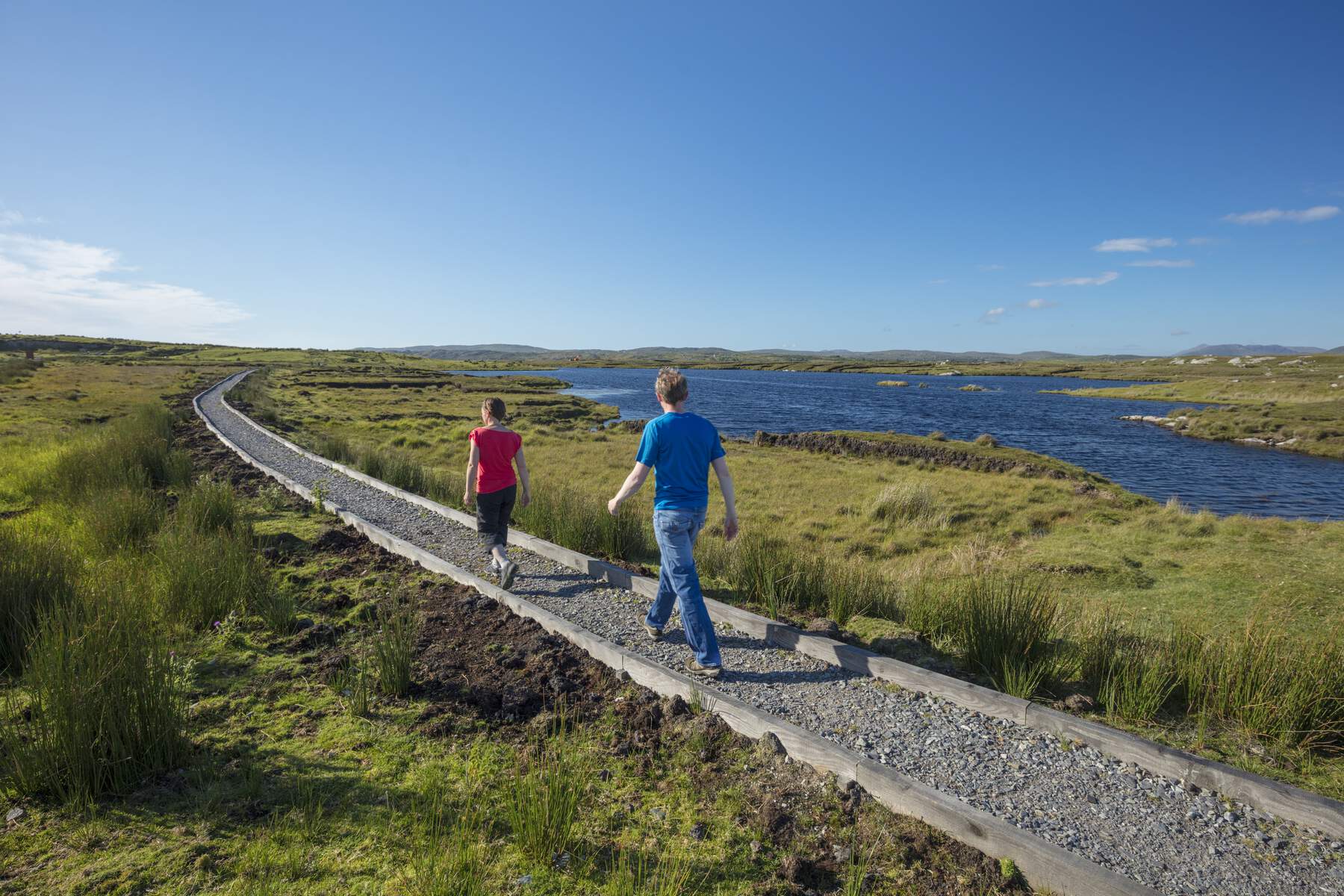
Perched on the windswept expanse of Derrigimlagh Bog, just north‑east of the charming town of Clifden (coordinates 53.446054 N, ‑10.022492 W), the Marconi Station marks the Irish end of the world’s first commercial trans‑Atlantic wireless telegraph service. The site is now a Signature/Derrigimlagh Discovery Point on the Wild Atlantic Way, sign‑posted by a distinctive purple‑arrow trailhead off the R341. Visitors can wander a short, well‑marked loop that weaves through peatland, native flora and the skeletal remains of the once‑mighty radio complex.
History / Background
In 1905 Guglielmo Marconi chose the remote bogland of Connemara for its proximity to the Atlantic, abundant peat (used to fire six boilers) and low‑population setting that reduced radio interference. Construction of the high‑power transmitter began that year and the complex soon comprised:
- A power house with peat‑fired boilers capable of generating 150 kW at 15 000 V.
- Separate condenser, transmitter and receiver blocks.
- Eight wooden masts, each 61 m (210 ft) tall, supporting a 12 km aerial wire that stretched eastward over the bog.
On 17 October 1907 the station opened for commercial signalling to its sister site at Glace Bay, Nova Scotia. The inaugural message – the letters “L‑O‑N‑D‑O‑N” – crackled across the Atlantic, heralding a new era of rapid, cable‑free communication.
The duplex operation, with a second high‑power transmitter at nearby Clifden sending westward traffic, quickly became the standard for both commercial and military radiotelegraphy. Over the following decades the station:
- Relayed news of the Titanic disaster (1912).
- Broadcast the first trans‑Atlantic voice message (1919).
- Carried a royal broadcast from King George V (1924).
- Became a strategic target during the Irish War of Independence; republican forces stormed the site in July 1922.
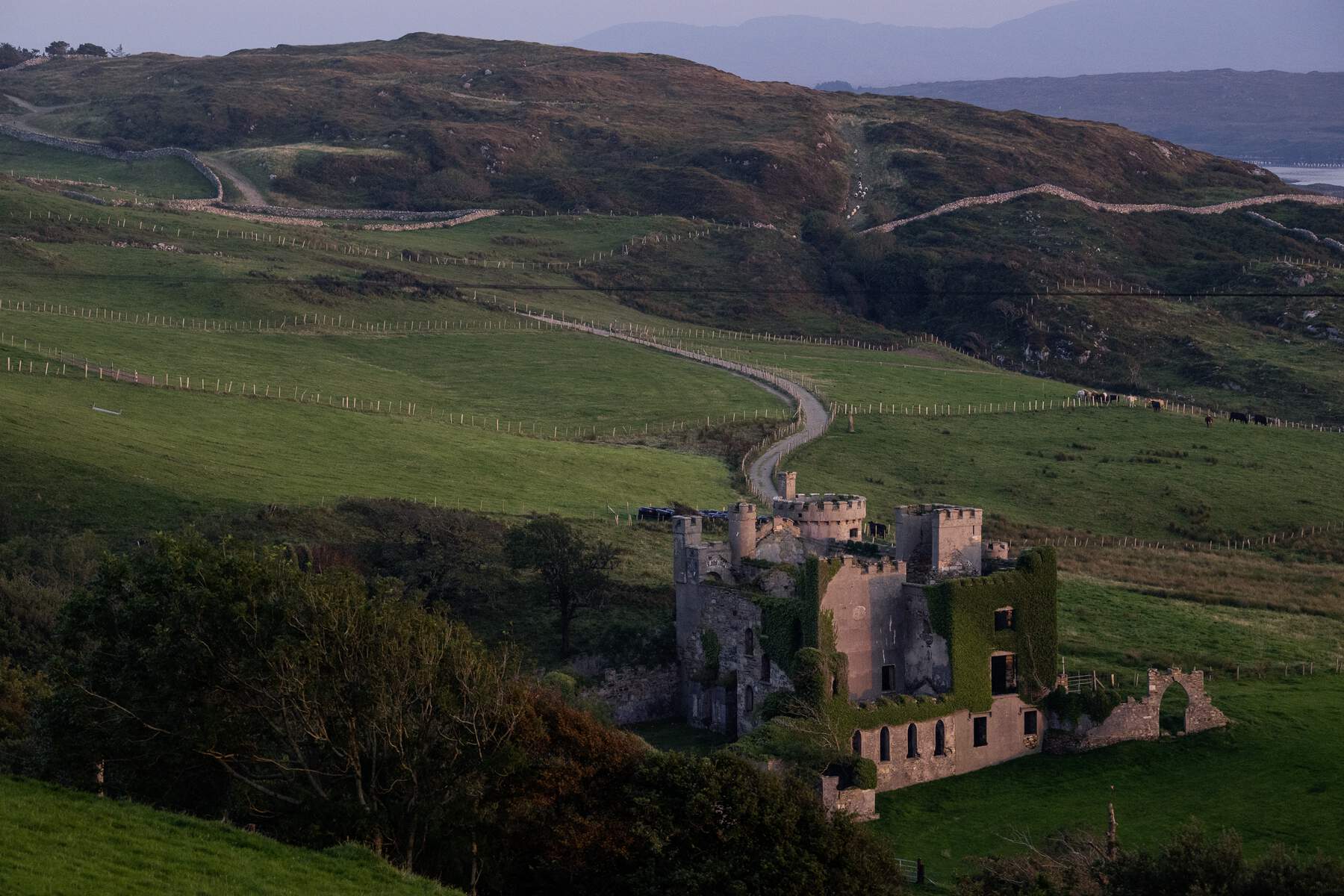
The original buildings have long since vanished, but the ruins and interpretive panels preserve the story of this pioneering technology.
What to See & Do
- Marconi Station ruins – the concrete foundations of the power house, condenser and transmitter blocks, plus the remaining wooden mast bases.
- Interpretive panels – scattered along the loop, they explain the engineering marvel, the 150 kW sparks that could be heard for miles, and the historic messages sent.
- Alcock & Brown crash site – a short detour leads to a modest plaque marking where the pilots of the first non‑stop trans‑Atlantic flight landed on 18 June 1919 after their heroic crossing. See the dedicated page at Alcock & Brown Crash Site.
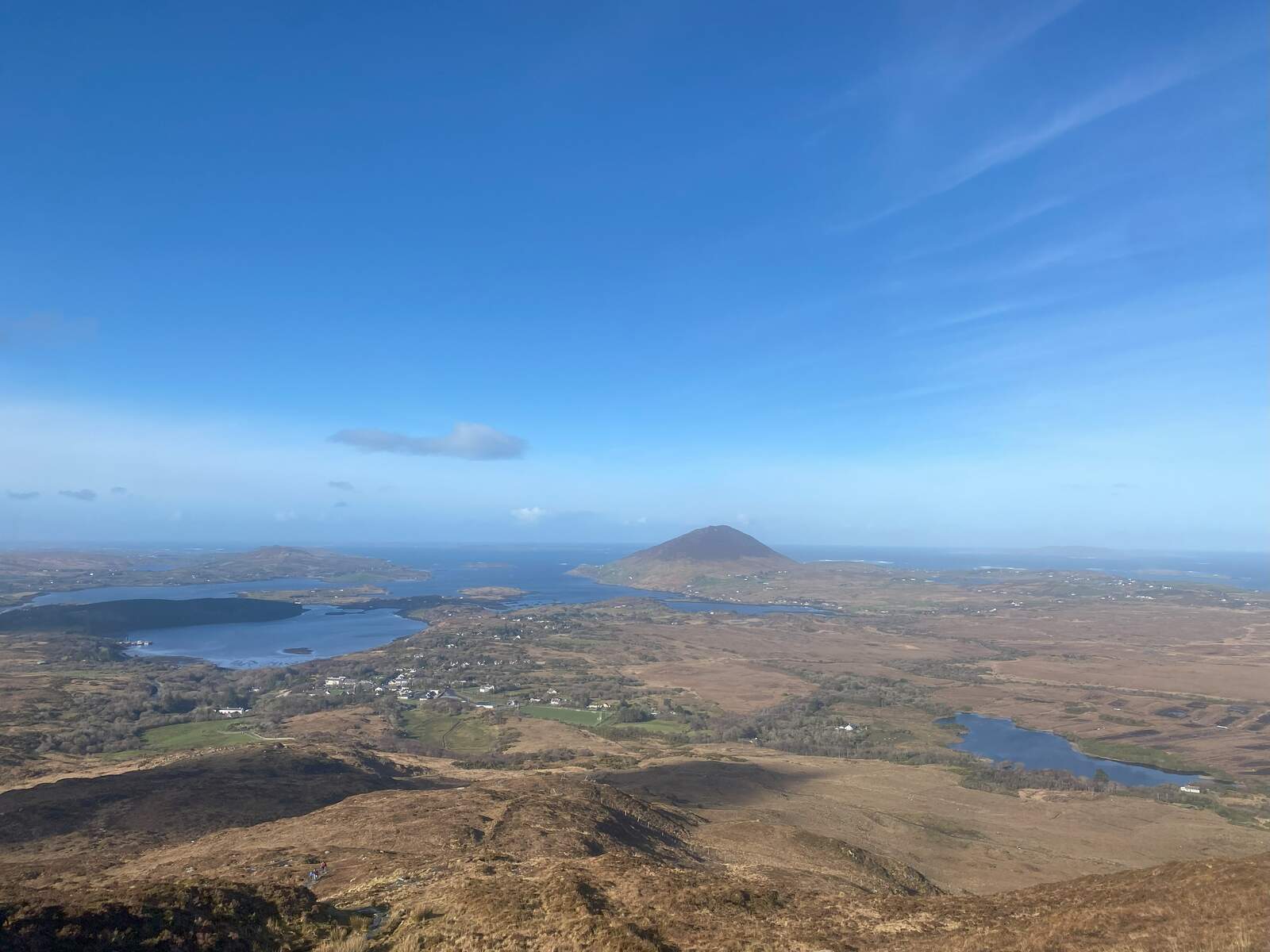
- Scenic vistas – sweeping views of Ballinakill Bay, the Twelve Bens and the Atlantic horizon frame the walk, offering excellent photo opportunities.
- Wildlife & habitat – the board‑walk sections protect sensitive bog flora while allowing walkers to experience the unique peatland ecosystem.
Practical Information
- Access: Turn off the R341 at the Marconi Station signpost (purple arrow). A small car park is provided at the trailhead.
- Length & difficulty: Circular route of 4.5–5 km (≈ 1 hour 45 minutes), flat with only 30 m of ascent – suitable for most fitness levels.
- Dog‑friendly: Pets are welcome on a lead.
- Facilities: Free self‑guided walk; interpretive boards are in English. Toilets are available at the nearby Clifden visitor centre.
- Opening: Open year‑round; the site is free to visit.
- Management: Maintained by the Clifden and Connemara Heritage Society in partnership with Fáilte Ireland.
- Safety: Stay on marked paths, especially on board‑walk sections, and respect the delicate bog environment.
Getting There
From the centre of Clifden, follow the R341 north‑east for about 5 km. Look for the purple‑arrow sign indicating the Marconi Station trailhead on the left. A modest, free car park sits immediately beside the sign. The site is also reachable by bicycle via the same road, though the route is narrow and traffic‑free only in sections.
Nearby Attractions
- Alcock & Brown Crash Site – the historic landing spot of the first non‑stop trans‑Atlantic flight, just a short walk from the main loop.
- Ballinakill Bay – a scenic harbour with opportunities for kayaking and coastal walks.
- Twelve Bens – a range of dramatic peaks popular with hikers; the trailhead at Gleninagh is a short drive from the station.
- Clifden town centre – browse local craft shops, enjoy a meal, or visit the Clifden Visitor Centre for additional information on Connemara.
Enjoy a walk through the very landscape where the first trans‑Atlantic wireless messages leapt across the ocean, and feel the echo of sparks that once lit the Atlantic sky.