
Overview
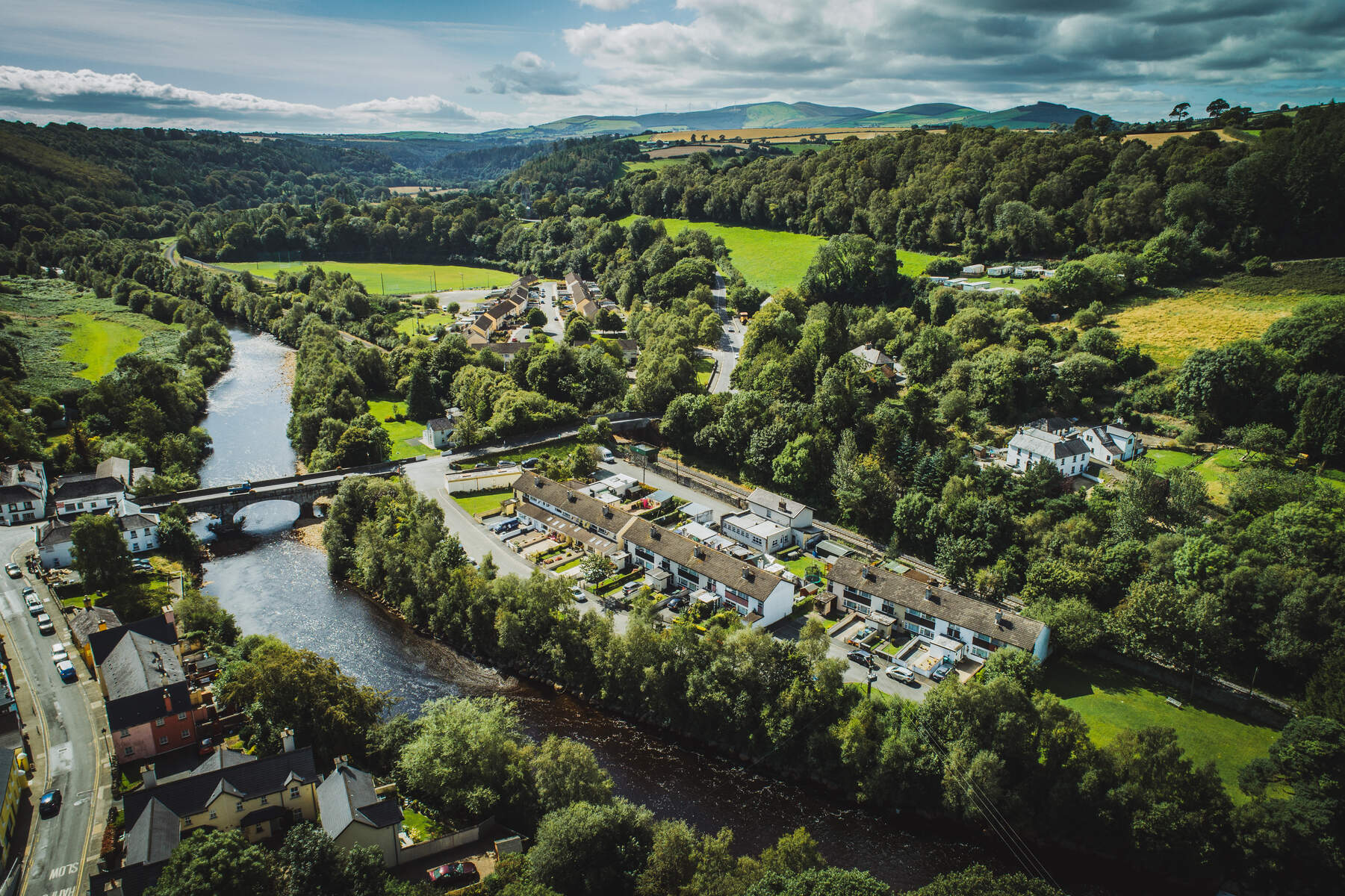
The Meeting of the Waters sits just 13 km inland from Arklow, in the lush Avoca Valley of County Wicklow. Here the Avonmore and Avonbeg rivers converge, giving birth to the winding Avoca River that later flows through the famous “Sweet Vale of Avoca” celebrated by Ireland’s National Bard, Thomas Moore. The site is a tranquil, picture‑perfect spot where the water’s gentle rush, the surrounding woodlands and the distant hills create a landscape that feels both timeless and intimately Irish.
Visitors are greeted by a modest interpretive park that offers panoramic views of the confluence, a bronze bust of Thomas Moore, and a series of panels that explain the natural and cultural history of the area. The park is open 24 hours a day, free of charge, and provides paved paths and a ramp, making it accessible for families, wheelchair users and anyone seeking a peaceful riverside retreat.
History & Heritage
The meeting point of the Avonmore and Avonbeg has been a source of inspiration for centuries. In the early 19th century, poet Thomas Moore visited the site and penned the lyric “The Meeting of the Waters,” a verse that captures the valley’s lyrical beauty and has since become a staple of Irish cultural memory. A bronze bust of Moore now stands near the riverbank, commemorating his contribution to Irish literature.
Long before Moore’s verses, the Avoca Valley was a centre of copper extraction. Archaeological evidence shows that copper was first mined locally around 2,000 years ago, but industrial‑scale operations only began in the 1760s. The mines supplied the region with copper for over two centuries before closing in the early 1980s. While the industry brought prosperity, it also left a legacy of environmental pressure: acid‑mine drainage still leaches heavy metals into the river, affecting aquatic habitats.
The river authority’s ecological notes highlight this ongoing challenge, noting that water draining from former Avoca mines carries toxic concentrations of heavy metals. Despite these pressures, the valley remains a haven for wildlife, most notably the re‑introduced Red Kite. Since 2011, the soaring bird has become a regular winter roosting visitor, often seen circling the slopes above the village of Avoca.
What to See & Do
- Witness the Confluence – Stand on the viewing platform and watch the Avonmore and Avonbeg merge in a graceful swirl of water. The sight is especially striking at sunrise when the light catches the ripples.
- Interpretive Panels – The park’s signage explains the geological formation of the rivers, the history of copper mining, and the literary legacy of Thomas Moore. It also details the Red Kite’s re‑introduction programme, offering a deeper appreciation of the valley’s biodiversity.
- Poetic Inspiration – Read Moore’s verses etched on stone tablets and imagine the poet’s awe as he listened to the waters. The bust of Moore provides a perfect photo opportunity for literature lovers.
- Wildlife Spotting – Keep an eye on the sky for Red Kites, especially during winter months when they gather in large roosts nearby. The river’s banks also attract horses that often come to drink, adding a pastoral charm to the scene.
- Picnic by the River – Several wooden tables are scattered along the paved paths, inviting families and couples to enjoy a leisurely lunch while the river murmurs beneath them.
- Walking Trails – The paved pathways link to broader Wicklow trail networks, allowing for longer hikes that explore the surrounding hills, woodlands and historic mining sites.
Practical Information
| Item | Details |
|---|---|
| Opening Hours | Open 24 hours – the park is freely accessible day and night. |
| Admission | Free entry – no ticket required. |
| Parking | Adjacent public parking zones are available at no charge. |
| Accessibility | Ramp and paved paths throughout the site make it wheelchair‑friendly. |
| Facilities | Picnic tables, interpretive panels, and a bronze bust of Thomas Moore. |
| Nearest Town | Avoca (approximately 13 km from Arklow). |
| Website | Visit Arklow – Meeting of the Waters |
The park’s 24‑hour accessibility means you can plan a sunrise visit to capture the first light on the waters, or a quiet evening stroll under the stars. Parking is free in the nearby zones, and the paved walkways make it easy to navigate with a stroller or mobility aid. While there are no formal visitor centres, the interpretive panels provide a self‑guided educational experience that covers everything from the valley’s mining heritage to the modern conservation efforts for the Red Kite.
If you’re interested in extending your day, the Avoca Valley offers several nearby attractions: the historic Avoca Handweavers, the scenic Wicklow Way, and the historic village of Avoca itself, where you can sample local crafts and food. The Meeting of the Waters serves as a natural focal point for exploring this rich cultural landscape.
Whether you are a poetry enthusiast, a wildlife watcher, or simply seeking a serene spot to pause and reflect, the Meeting of the Waters delivers a blend of natural beauty, literary heritage, and ecological intrigue that epitomises the charm of County Wicklow.